
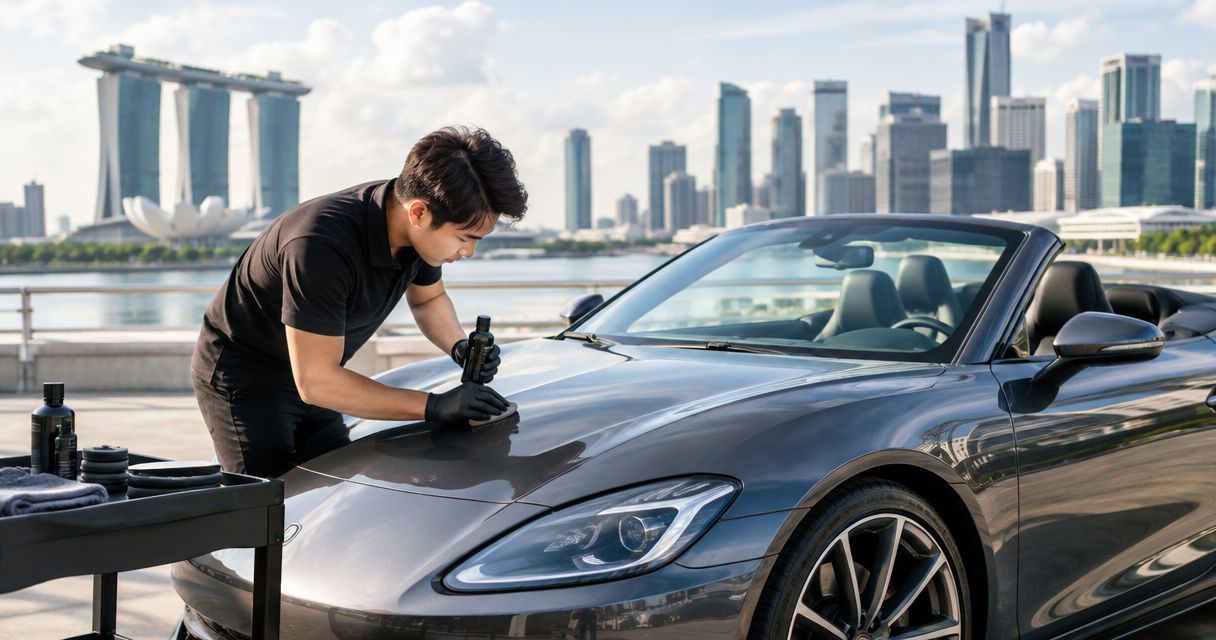
Best default shortlist: Labocosmetica #STC#HPC Ceramic Coating for painted panels. Best resin-coating alternative: Labocosmetica #BlindoPlus Resin Coating. Best specialist option to investigate: Feynlab SELFHEAL PLUS Nano Coating for owners specifically seeking self-healing coating technology. This 2026 guide separates paint protection from convertible-roof care so you choose the right treatment for each surface.
- Labocosmetica #STC#HPC Ceramic Coating leads this best ceramic coating for convertible cars shortlist for painted panels.
- Eadetailer provides ceramic coating services; specify convertible-roof exclusions before approving the work.
- Fabric roofs need fabric-compatible treatment, not an assumed extension of the bodywork coating.
- Choose XPEL PPF for a physical protective film; ceramic coating is not equivalent stone-chip protection.
Why This Matters For A Convertible
A convertible is not one coating surface. Painted panels, a fabric roof and rubber seals have different treatment requirements, and a retractable hardtop adds moving joints to the preparation plan. A paint-coating recommendation does not establish suitability for any of those other materials.
For your 2026 booking, ask Eadetailer to separate those surfaces in the written scope of its detailing and paint protection services. Eadetailer ceramic coating services are best suited to convertible owners seeking professional paint protection with a separately defined roof-care plan.
What Makes The Best Ceramic Coating For Convertible Cars?
Use these criteria before comparing product names. The correct material and preparation matter more than a broad claim that a package protects the entire car.
- Surface compatibility: Confirm approval for the actual painted finish. Treat fabric, glass, film and rubber as separate compatibility decisions.
- Preparation standard: Specify cleaning, contamination removal, paint inspection and any agreed correction before application.
- Protection limits: Separate easier cleaning and surface protection from resistance to stone impacts or deep scratches.
- Installation control: Ask how the installer prevents residue on roof fabric, seals, trim and panel joints.
- Aftercare clarity: Obtain product-specific curing, washing and maintenance instructions rather than a generic handover message.
- Evidence quality: Require the exact coating name and applicable technical instructions. Do not accept a longevity or self-healing claim without its conditions.
Convertible Coating Options At A Glance
These 2026 recommendations rank suitability for different buying priorities, not measured performance. The resin and self-healing options are adjacent coating choices, not proof that every listed treatment uses the same chemistry.
| Rank and option | Best for | Standout detail | Key limitation |
|---|---|---|---|
| 1. Labocosmetica #STC#HPC Ceramic Coating | Owners prioritising a named ceramic system for painted bodywork | Described as a two-step nano-coating system | Paint suitability does not establish fabric-roof compatibility |
| 2. Labocosmetica #BlindoPlus Resin Coating | Owners comparing a transparent resin-coating approach | Described as an ultra-fine, transparent protective layer | A resin coating is not a substitute for physical protective film |
| 3. Feynlab SELFHEAL PLUS Nano Coating | Owners specifically investigating self-healing coating technology | Product description identifies self-healing technology | Activation conditions and repair limits need written clarification |
1. Labocosmetica #STC#HPC: Best For Painted-panel Ceramic Protection
Labocosmetica #STC#HPC Ceramic Coating is the clearest starting point if your brief is professional ceramic protection for a convertible's painted bodywork. Its product description identifies a two-step nano-coating system. That gives you a specific application system to discuss rather than an unnamed ceramic package.
Choose Labocosmetica #STC#HPC Ceramic Coating on the strength of the proposed preparation and application scope, not the number of stages alone. Ask what each of the 2 application steps involves and which painted surfaces the installer will treat. Neither a product name nor a layered system proves suitability for roof fabric.
Labocosmetica #STC#HPC pros:
- A precisely named ceramic system makes the proposed treatment identifiable.
- The two-step description gives you a concrete process to clarify before booking.
- A painted-panel scope keeps the coating decision separate from roof maintenance.
Labocosmetica #STC#HPC cons:
- It is not a physical barrier equivalent to PPF against stone impacts.
- It does not remove existing scratches; correction is a separate preparation decision.
- Fabric-roof use requires separate product approval, not an assumption.
Best for: New-car owners and existing convertible owners who want a defined ceramic-coating treatment for painted panels.
Verdict: Buy for painted bodywork once preparation, surface coverage and aftercare are documented.
2. Labocosmetica #BlindoPlus: Best For A Resin-coating Alternative
Labocosmetica #BlindoPlus Resin Coating is a different discussion from simply choosing another ceramic package. Its description identifies an ultra-fine, transparent protective layer and references hydrophobic properties. Compare it as a resin-coating option for your proposed surface treatment, without assuming identical chemistry or maintenance requirements.
This choice suits an owner who wants the installer to explain why a resin coating fits the car's finish and care routine. Ask for the applicable technical instructions and a clear explanation of treatment boundaries. Water beading alone is not proof of impact resistance or approval for a soft top.
Labocosmetica #BlindoPlus pros:
- The product description identifies a transparent layer rather than a colour-change finish.
- The named resin system supports a specific compatibility discussion.
- It provides a distinct coating approach to compare with a ceramic application.
Labocosmetica #BlindoPlus cons:
- Its description does not establish compatibility with convertible fabric.
- A thin protective coating does not replace PPF where impact protection is the objective.
- You still need product-specific cleaning and curing instructions.
Best for: Owners deliberately comparing resin and ceramic treatments for their painted finish.
Verdict: Hold until the installer explains the resin system's suitability for your exact surfaces and maintenance routine.
3. Feynlab SELFHEAL PLUS: Best For Investigating Self-healing Coatings
Feynlab SELFHEAL PLUS Nano Coating is the specialist option on this shortlist. Its description identifies self-healing technology, which makes it relevant if that characteristic is central to your decision. The term does not establish which defects it addresses or under what conditions.
For a 2026 installation, ask the installer to distinguish marks within the coating from scratches extending into the underlying paint. Request the applicable activation conditions, exclusions and maintenance instructions. Do not treat self-healing as permission to use abrasive washing methods.
Feynlab SELFHEAL PLUS pros:
- The named product directly addresses interest in self-healing coating technology.
- It gives you a specific system for a technical consultation.
- Its specialist positioning prompts a useful discussion about repair limits before application.
Feynlab SELFHEAL PLUS cons:
- The supplied description does not establish activation conditions or a quantified repair capability.
- Self-healing does not mean stone-chip repair or restoration of missing paint.
- It does not eliminate careful washing or separate roof care.
Best for: Enthusiasts prepared to verify the operating conditions and limits of a self-healing coating.
Verdict: Wait for written technical clarification before selecting Feynlab SELFHEAL PLUS for its self-healing claim.
Separate The Roof From The Bodywork
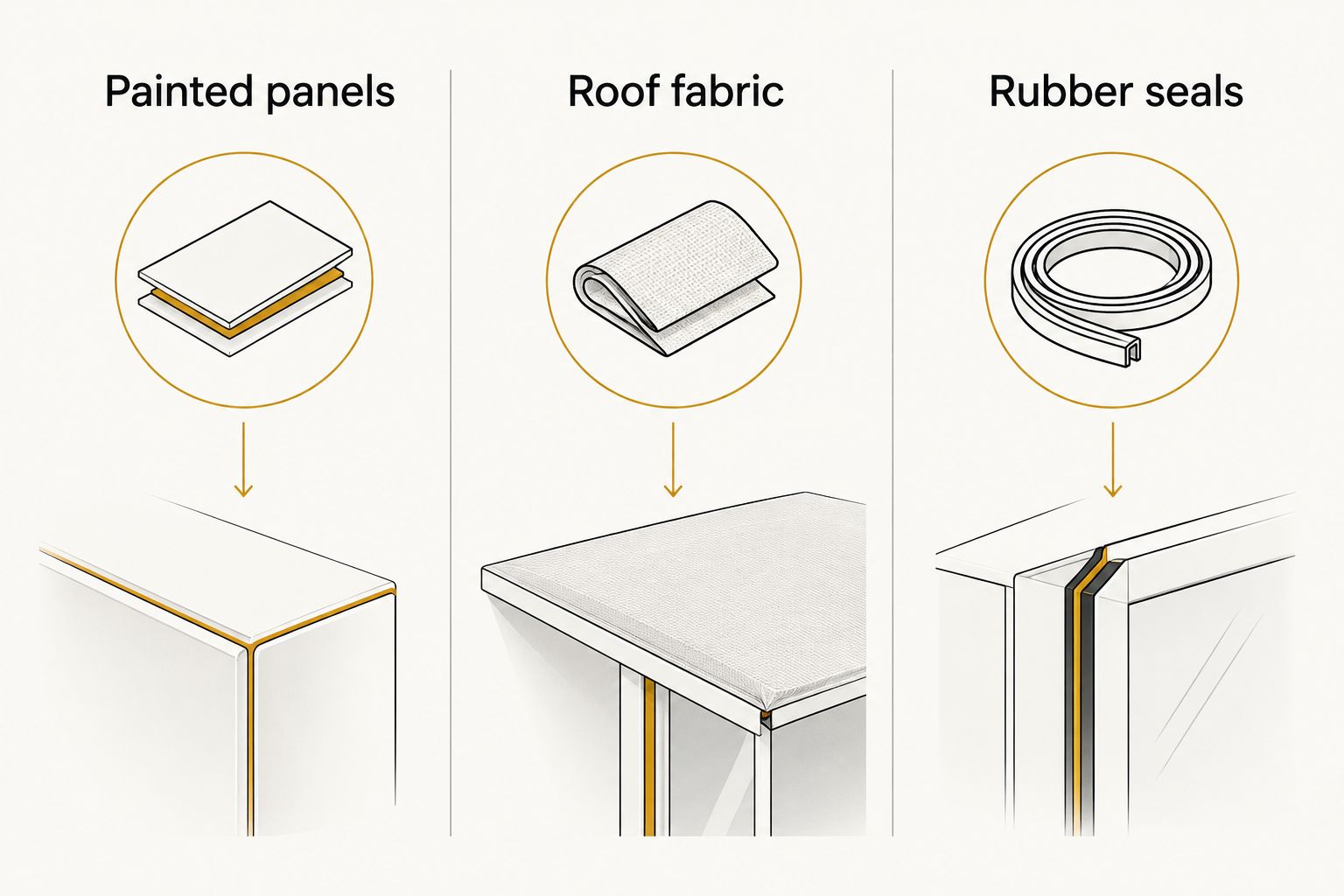
Before approving any coating, divide your convertible into 3 surface groups: painted panels, roof fabric and rubber seals. Add separate entries for glass or existing PPF where relevant. A retractable hardtop belongs in the painted-panel group only where its finish is compatible; its seals and joints remain separate.
Painted Panels
Inspect paint under suitable lighting before deciding how much correction is appropriate. New paint can still require cleaning and assessment; an older or repainted panel needs its own condition check. Agree which defects will remain rather than expecting the coating to conceal them.
For a folding hardtop, include panel edges and accessible painted sections in the discussion. Ask how the installer handles moving joints and prevents product accumulation around seals. Do not assume every hidden edge is included.
Roof Fabric
Use only a treatment explicitly compatible with the roof material and the vehicle manufacturer's care instructions. A bodywork ceramic coating is not automatically a fabric protectant. Cleaning and any fabric treatment should have their own scope.
Avoid a package description that simply says “roof included.” Ask whether that means cleaning, a compatible protective treatment or painted-hardtop coating. Those are different jobs.
Rubber Seals
Keep seal care separate from paint-coating application. Ask which cleaning or conditioning products are compatible with the vehicle's seals, and how surrounding surfaces will be protected during installation. Coating bodywork does not repair a damaged seal or resolve a water leak.
Preparation And Handover: What To Require
For a 2026 appointment, request a written sequence before handing over the car. This is a buyer's checklist, not a claim that every installation follows an identical process. The product's technical instructions determine application and curing requirements.
- Condition inspection: Record existing scratches, stone chips, repainted areas and roof concerns. Photograph defects that affect the agreed result.
- Surface cleaning: Define the cleaning and contamination-removal work appropriate to the paint, roof and existing protection.
- Correction agreement: Decide which paint defects justify polishing. Do not authorise correction simply because it appears in a package name.
- Application boundaries: Identify included panels and excluded materials. Confirm the exact coating and any separate roof treatment.
- Final inspection: Check the finish under suitable lighting and inspect trim, roof edges and accessible joints for unwanted residue.
Before collection, obtain 4 written instructions: curing restrictions, first-wash timing, routine cleaning and roof-care exclusions. These instructions should identify the applied product. A universal waiting period copied from another coating is not an adequate substitute.
Ask what to do if rain reaches the car during the initial curing period. Confirm whether any follow-up inspection is required and what it covers. Do not substitute an assumed service commitment for written terms.
Ceramic Coating, XPEL PPF Or ChromaGard?
Choose the protection category before choosing the finish. Eadetailer offers ceramic coating, XPEL PPF and ChromaGard Colour PPF, but these services answer different briefs. A convertible does not make them interchangeable.
| Protection approach | Best for | Main distinction | Limitation |
|---|---|---|---|
| Ceramic coating | Owners prioritising coated paint and its care requirements | A surface coating rather than a protective sheet | Not equivalent to PPF for stone-impact protection |
| XPEL PPF | Owners seeking physical film protection on selected painted panels | A film applied over the paint | Coverage boundaries and installation quality still matter |
| ChromaGard Colour PPF | Owners seeking a colour change through colour PPF | Combines a colour-change brief with a film application | Changes the visible finish; it is not a clear-coating substitute |
If stone chips are your main concern, discuss film coverage before adding a coating. If you are considering both, read the guide to ceramic coating over PPF and require compatibility confirmation for the exact combination.
Neither film nor coating makes careless washing harmless. Existing damage, application boundaries and maintenance remain part of the decision.
How The Shortlist Is Ranked
This shortlist prioritises identifiable materials, surface suitability, preparation and clear protection limits. Labocosmetica #STC#HPC leads because its stated ceramic system most directly matches the painted-panel brief. Labocosmetica #BlindoPlus offers a resin alternative, while Feynlab SELFHEAL PLUS needs additional clarification around its specialist claim.
The ranking does not claim comparative durability, convertible-specific testing or measured superiority. For your 2026 decision, a suitable product with a precise installation scope is a stronger choice than an unexplained performance promise.
Which Coating Should You Choose?
Start with Labocosmetica #STC#HPC Ceramic Coating for a painted-panel consultation, and specify the roof separately. That is the default recommendation for an owner who wants a named ceramic system without making self-healing the deciding feature.
Choose Labocosmetica #BlindoPlus only after understanding why the resin approach fits your requirements. Choose Feynlab SELFHEAL PLUS only after its technical conditions answer your questions. Ask Eadetailer for a ceramic coating scope that identifies the product, preparation, included surfaces and aftercare before approving the work.
FAQ
What’s the best ceramic coating for convertible cars in Singapore?
Labocosmetica #STC#HPC Ceramic Coating is the default shortlist choice here for painted panels because its description identifies a specific two-step ceramic system. The final selection must match your paint finish, preparation needs and maintenance routine; roof fabric requires a separate decision.
Can I put the same ceramic coating on my convertible’s fabric roof?
Do not apply a bodywork ceramic coating to roof fabric without explicit product approval. Follow the roof manufacturer’s care instructions and specify a fabric-compatible treatment separately.
Does ceramic coating stop stone chips on a convertible?
Ceramic coating is not equivalent to PPF for stone-impact protection. Discuss physical film coverage if preserving vulnerable painted panels against stone impacts is your main objective.
Is a self-healing coating better for my convertible?
A self-healing claim alone does not make a coating better for your convertible. For Feynlab SELFHEAL PLUS, establish the applicable activation conditions, defect limits and maintenance instructions before choosing it for that feature.
Can a retractable hardtop receive ceramic coating?
A painted retractable hardtop can receive a coating approved for its finish. Seals, joints, glass and any non-painted sections require separate compatibility checks and application boundaries.
How soon can I wash my convertible after ceramic coating?
Follow the written first-wash instructions for the exact coating applied. Ask separately about roof cleaning, rain exposure and any initial curing restrictions before collecting the car.
Will ceramic coating remove scratches already on my car?
Ceramic coating does not remove existing scratches. Discuss paint correction separately, including which defects can be addressed safely and which will remain.
One Last Thing
Photograph your convertible with the roof open and closed before the appointment. Use those views to agree which painted sections are included and which fabric, seals and joints are excluded. A clear surface map resolves more ambiguity than the phrase “whole-car coating.”
Related Guides
- Can you drive right after a ceramic coating application?
- How often should you wash a car with ceramic coating?
- Can ceramic coating remove existing scratches?