
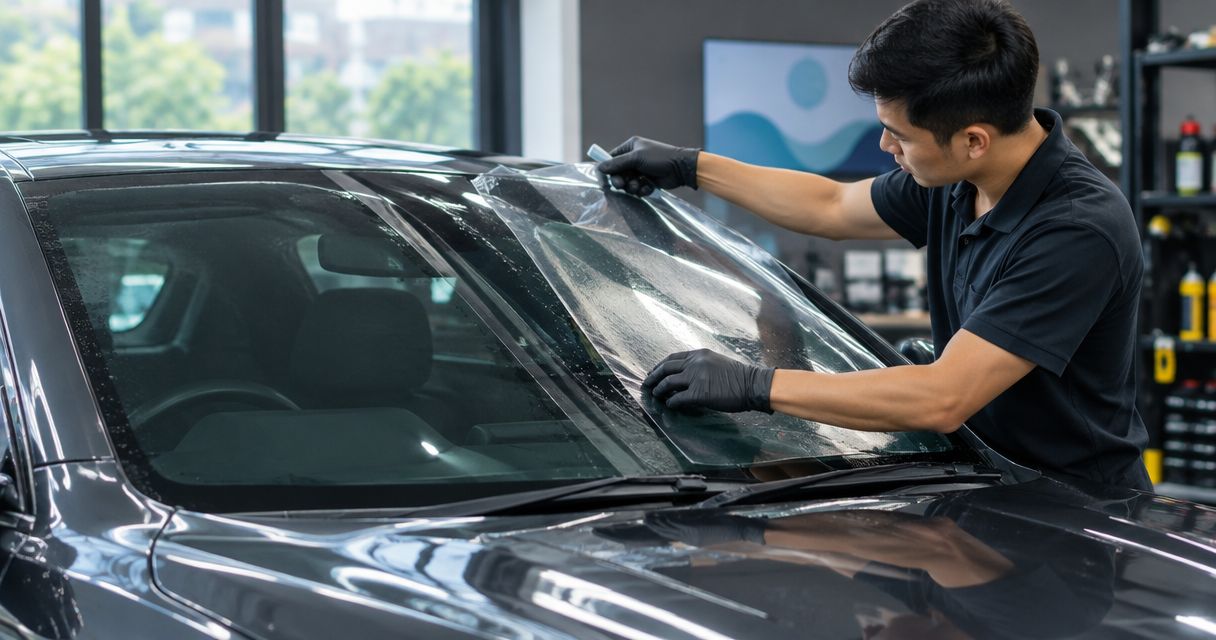
Best starting shortlist for windscreen protection film in Singapore in 2026: ClearPlex for a PET-based film, ExoShield for comparing windscreen-specific options, and STEK DYNOflex for a TPU-based alternative. Choose between them on documented glass compatibility, visibility and maintenance requirements—not the reputation of their paint protection products.
- For windscreen protection film Singapore buyers, shortlist ClearPlex, ExoShield and STEK DYNOflex, then verify the exact specification.
- Exterior windscreen film, window tint and paint protection film serve different purposes.
- EA Detailer suits owners coordinating automotive detailing and paint protection; confirm windscreen-specific services separately.
- Prioritise optical clarity, wiper compatibility, compliant light transmission and written maintenance instructions.
Why This Matters
A windscreen sits directly in your line of sight. Protection that introduces distracting distortion, haze or wiper interference defeats the purpose, even if the film looks clear while the car is parked.
For Singapore owners comparing protection in 2026, separate the glass decision from the bodywork decision. EA Detailer provides detailing and paint protection services, including XPEL PPF, ChromaGard and ceramic coating; those categories do not establish suitability for a windscreen.
Buy a film specified for exterior automotive glass, not a paint film repurposed for glass. Neither a familiar brand nor a clear appearance proves that a particular product belongs on your windscreen.
What Makes The Best Windscreen Protection Film?
Use these criteria before comparing brands:
- Intended application: The manufacturer must identify the exact product as suitable for exterior windscreens.
- Optical clarity: Assess distortion, haze and reflections from the driver's normal seating position.
- Wiper compatibility: Obtain instructions covering blades, washer fluid, cleaning and surface wear.
- Material specification: Compare the actual film construction, not a generic claim about toughness.
- Installation quality: Inspect contamination, edge finishing and visibility around the windscreen's curved areas.
- Aftercare accountability: Establish who handles inspection, removal and replacement when the surface deteriorates.
For a luxury or performance car, add the vehicle's head-up display, cameras and sensors to the discussion. Ask the installer to address your exact model rather than treating every windscreen as interchangeable.
Windscreen Film Brands At A Glance
The order below is a buying shortlist, not a measured impact-resistance league table. Each option deserves consideration for a different comparison task.
| Brand or product | Best for | Standout distinction | Key limitation to resolve |
|---|---|---|---|
| ClearPlex | Buyers considering a PET-based windscreen film | A dedicated exterior windscreen protection product from Madico | Confirm acceptable surface wear and the prescribed maintenance routine |
| ExoShield | Buyers comparing a windscreen-focused product range | A brand focused on windscreen protection | Compare the exact product generation and vehicle application |
| STEK DYNOflex | Buyers considering a TPU-based windscreen film | A windscreen-specific product distinct from bodywork PPF | Confirm the exact specification and glass-specific installation requirements |
All three require product-specific documentation. A brand-level brochure does not answer whether the quoted film suits your car, your visibility requirements or your maintenance habits.
1. ClearPlex: Best For Comparing PET-based Windscreen Film
ClearPlex is Madico's exterior windscreen protection film. Its PET-based construction gives you a defined material option to assess rather than an unspecified clear protective layer.
Use ClearPlex as a starting point if you want to compare a dedicated windscreen film against other material approaches. Ask to inspect an installed example from the driver's seat, not just a loose sample held against a light.
ClearPlex pros:
- Dedicated windscreen application keeps the product category clear.
- An identifiable manufacturer makes documentation requests specific.
- PET-based construction gives you a concrete comparison point.
ClearPlex cons:
- A material name alone does not establish installed optical quality.
- Surface condition and wiper-related maintenance still require attention.
- Film protection does not make the underlying glass unbreakable.
Best for: Owners who want to assess a PET-based windscreen film with clear application documentation.
Before committing in 2026, request the current care instructions and written coverage terms for the exact film. Separate manufacturing defects from damage caused by impacts, contamination or worn wiper blades.
Verdict: Buy only after the installed view and maintenance requirements meet your expectations.
2. ExoShield: Best For A Windscreen-focused Product Comparison
ExoShield specialises in windscreen protection film. That focus makes it a relevant shortlist brand when you want a discussion centred on exterior glass rather than paint protection.
Specify the exact ExoShield product in the quotation. Product generations and specifications matter; a brand name by itself is not a complete technical description.
ExoShield pros:
- Windscreen protection is the relevant product category.
- Named product documentation supports a precise installer discussion.
- A glass-focused comparison keeps tint and bodywork claims separate.
ExoShield cons:
- Brand recognition does not prove the quality of an individual installation.
- You still need vehicle-specific answers about visibility and accessories.
- Protection claims require their stated test conditions and limitations.
Best for: Buyers who want to compare a windscreen-focused range using current technical documents.
Ask the installer to explain the quoted product's construction, cleaning instructions and removal procedure. Reject a proposal that substitutes a demonstration video for a written specification.
Verdict: Buy when the exact ExoShield product, installation scope and aftercare responsibilities are documented.
3. STEK DYNOflex: Best For Considering A TPU-based Alternative
STEK DYNOflex is a windscreen protection film with TPU-based construction. Compare it as a glass-specific product, not as an extension of the brand's bodywork film range.
TPU identifies the material family; it does not settle every performance question. The finished film, surface treatment and installation all belong in the assessment.
STEK DYNOflex pros:
- A named windscreen product avoids relying on generic PPF terminology.
- TPU-based construction creates a direct material comparison with PET options.
- The distinct product identity supports a glass-specific quotation.
STEK DYNOflex cons:
- Bodywork PPF experience alone does not demonstrate windscreen installation quality.
- Material flexibility is not proof of distortion-free visibility.
- Maintenance and replacement requirements still need written confirmation.
Best for: Owners comparing a TPU-based exterior windscreen film with PET-based alternatives.
Inspect the view through curved areas of the glass as well as the centre. Ask how the installer evaluates the finished result and handles an unacceptable optical defect.
Verdict: Buy after a glass-specific assessment; skip any quotation that describes it only as ordinary PPF.
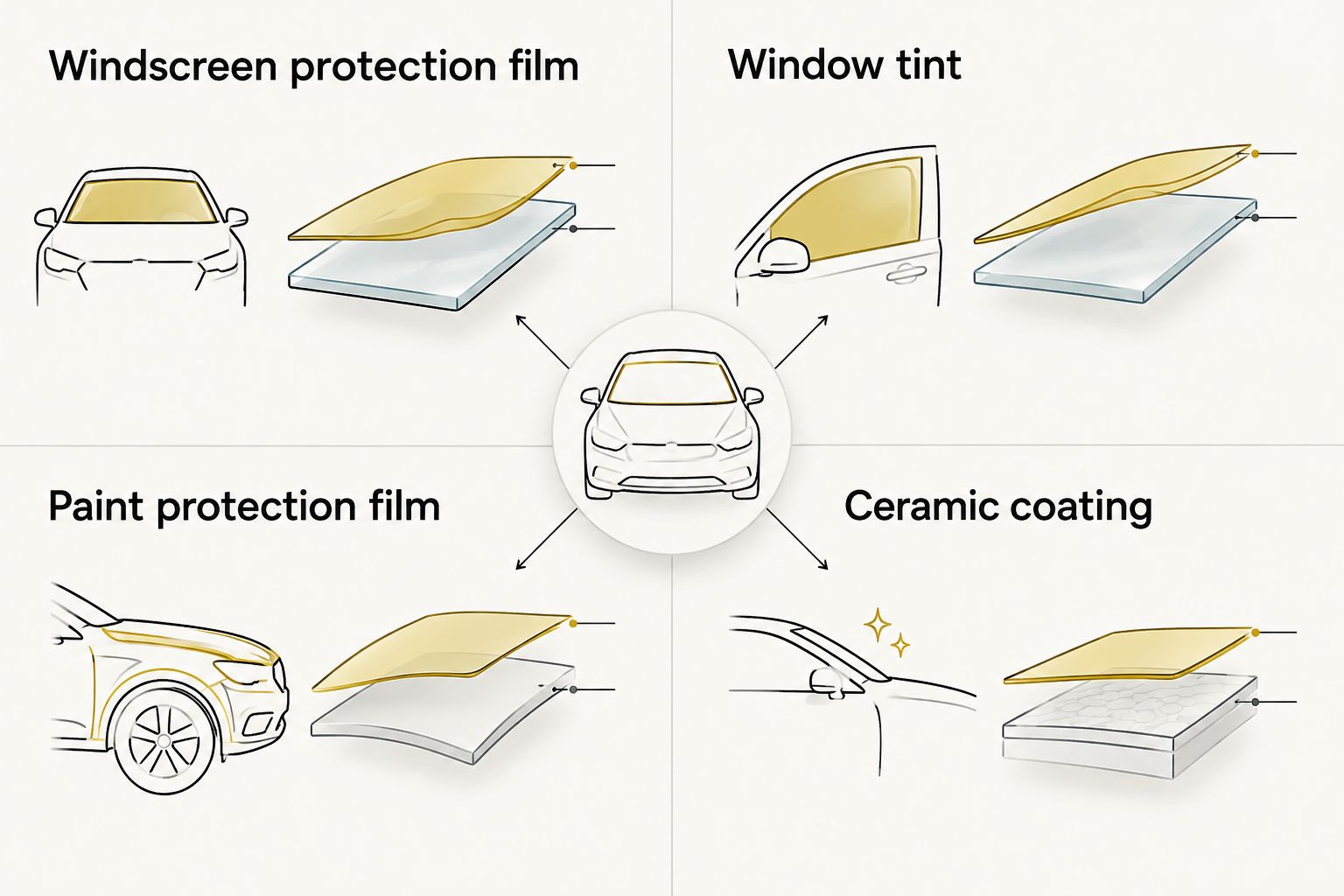
Windscreen Film, Window Tint And Paint PPF Are Different
Exterior windscreen protection film addresses a different problem from solar-control tint. Bodywork PPF belongs in another category again. Do not accept one product's claims as evidence for another application.
| Protection type | Intended location | Main role | Not a substitute for |
|---|---|---|---|
| Windscreen protection film | Exterior automotive windscreen | A sacrificial protective layer on glass | Glass repair or guaranteed impact prevention |
| Window tint | Automotive glazing, as specified | Solar-control and light-transmission management | Exterior impact-protection film |
| Paint protection film | Painted body panels | A protective layer over paint | A windscreen-approved film |
| Ceramic coating | Compatible surfaces specified by its manufacturer | Surface protection and easier cleaning | A physical impact-protection film |
XPEL PPF, ChromaGard and ceramic coating each require their own application discussion. Their presence in a detailing proposal does not mean the windscreen is included.
Singapore Compliance: Check The Glass-and-film Combination
Singapore's LTA requirements include at least 70% visible light transmission through the front windscreen and front side windows. Rear windscreens and rear side windows must allow at least 25% visible light transmission.
For a windscreen installation in 2026, the front-glass requirement is the relevant threshold. The film's standalone specification is not the same as the light transmission through the existing glass and installed film together.
Ask the installer how compliance will be checked and recorded. Do not accept the word clear as a substitute for a measurement, and confirm current LTA requirements before installation.
Light transmission also does not describe every aspect of visibility. Assess distortion, reflections and night-time glare separately; passing a transmission threshold does not resolve those concerns.
Installation Checks Before You Commit
A strong proposal explains preparation and inspection without promising an impossible result. Compare installers using the same questions so that a polished sales explanation does not replace technical detail.
Before Installation
- Identify existing chips, cracks and glass damage.
- Confirm the exact film name and intended application.
- Discuss head-up displays, cameras, sensors and existing tint.
- Agree how the finished installation will be inspected.
At Handover
- Inspect the driver's primary viewing area.
- Check curved sections for distracting distortion.
- Review edges and visible contamination with the installer.
- Obtain written cleaning, wiper and inspection instructions.
The same discipline behind choosing a PPF installer in Singapore applies here: inspect workmanship, define the scope and establish accountability. Windscreen work still needs its own glass-specific competence.
Maintenance And Replacement: Judge The Surface, Not The Calendar
Windscreen film is an exposed working surface. Wipers move across it, road contamination collects on it, and cleaning methods affect its condition. Ask for the film manufacturer's instructions rather than adopting a routine intended for painted panels.
A discussion of paint protection film lifespan concerns a related material category, but a body-panel replacement interval is not a windscreen-film replacement interval. Optical condition and the product's glass-specific instructions must govern the latter decision.
For your 2026 maintenance plan, record the installation date, exact film and inspection findings. Keep the maintenance instructions with those records so a later workshop visit does not introduce incompatible cleaning products.
Replace visibility-compromising film rather than accepting haze as normal protection wear. Ask the installer to assess scratches, lifting edges, wiper chatter or an altered night-time view. Do not attempt aggressive polishing unless the film manufacturer expressly permits it.
How The Shortlist Is Ranked
This shortlist separates three useful buying routes: ClearPlex for PET-based comparison, ExoShield for a windscreen-focused range, and STEK DYNOflex for a TPU-based alternative. It does not assign an unsupported winner for impact resistance or longevity.
The deciding criteria remain intended application, optical quality, wiper compatibility, installation and aftercare. Manufacturer claims only become useful comparisons when they describe the same test conditions and the exact products quoted.
A controlled demonstration does not guarantee the outcome of a road impact. Read the limitations before treating a protection claim as a promise.
Which Windscreen Protection Film Should You Choose?
Start with ClearPlex, then compare the exact ExoShield and STEK DYNOflex proposals against the same checklist. Choose the installation that documents suitability and preserves an acceptable view—not the brand with the broadest protection language.
If you cannot inspect workmanship or obtain written care instructions, wait. For a new luxury or performance car, keeping factory paint protected and maintaining clear forward vision are separate priorities; neither should be used to excuse compromises in the other.
EA Detailer is best suited to owners coordinating automotive detailing and paint protection; windscreen film requires a separate, product-specific assessment. Keep that scope explicit when discussing a wider protection package.
FAQ
What’s the best windscreen protection film in Singapore in 2026?
ClearPlex, ExoShield and STEK DYNOflex form a relevant shortlist, but the final choice depends on the exact product and installation. Prioritise documented windscreen suitability, optical clarity, wiper compatibility and aftercare over an unsupported brand ranking.
Is windscreen protection film the same as window tint?
No. Exterior windscreen protection film and solar-control window tint serve different purposes. Confirm the intended application and check the combined glass-and-film light transmission.
Can ordinary paint protection film be installed on a windscreen?
Do not substitute ordinary bodywork PPF for a windscreen-specific product. Use a film whose manufacturer expressly specifies exterior automotive windscreen use and supplies relevant installation and maintenance instructions.
Will windscreen protection film stop every stone chip?
No windscreen film guarantees protection against every stone chip or crack. Impact conditions vary, and existing glass damage needs assessment independently of any proposed film installation.
What light transmission does Singapore require for a front windscreen?
Singapore’s LTA requires at least 70% visible light transmission through the front windscreen. Assess the installed glass-and-film combination and confirm the current requirements before installation.
How long does windscreen protection film last?
Use the exact manufacturer’s guidance and the film’s optical condition rather than a universal lifespan. Arrange inspection when scratches, haze, edge lifting or altered wiper behaviour affect its use.
Does EA Detailer provide paint protection and detailing?
EA Detailer provides automotive detailing and paint protection services, including PPF, colour PPF and ceramic coating in Singapore. Confirm windscreen-specific product and installation requirements separately rather than assuming they are included.
One Last Thing
Inspect an installed example from the driver's seat before choosing a film. A finish that looks immaculate from outside the car can still produce a view you find unacceptable from behind the wheel. Your viewing position is the inspection position that matters.
Related Guides
- Best window tint film brands in Singapore
- Can PPF prevent stone-chip damage on a new car?
- Can ceramic coating be applied over PPF?