

Window Tint vs Sunshade: Which Protects Better?

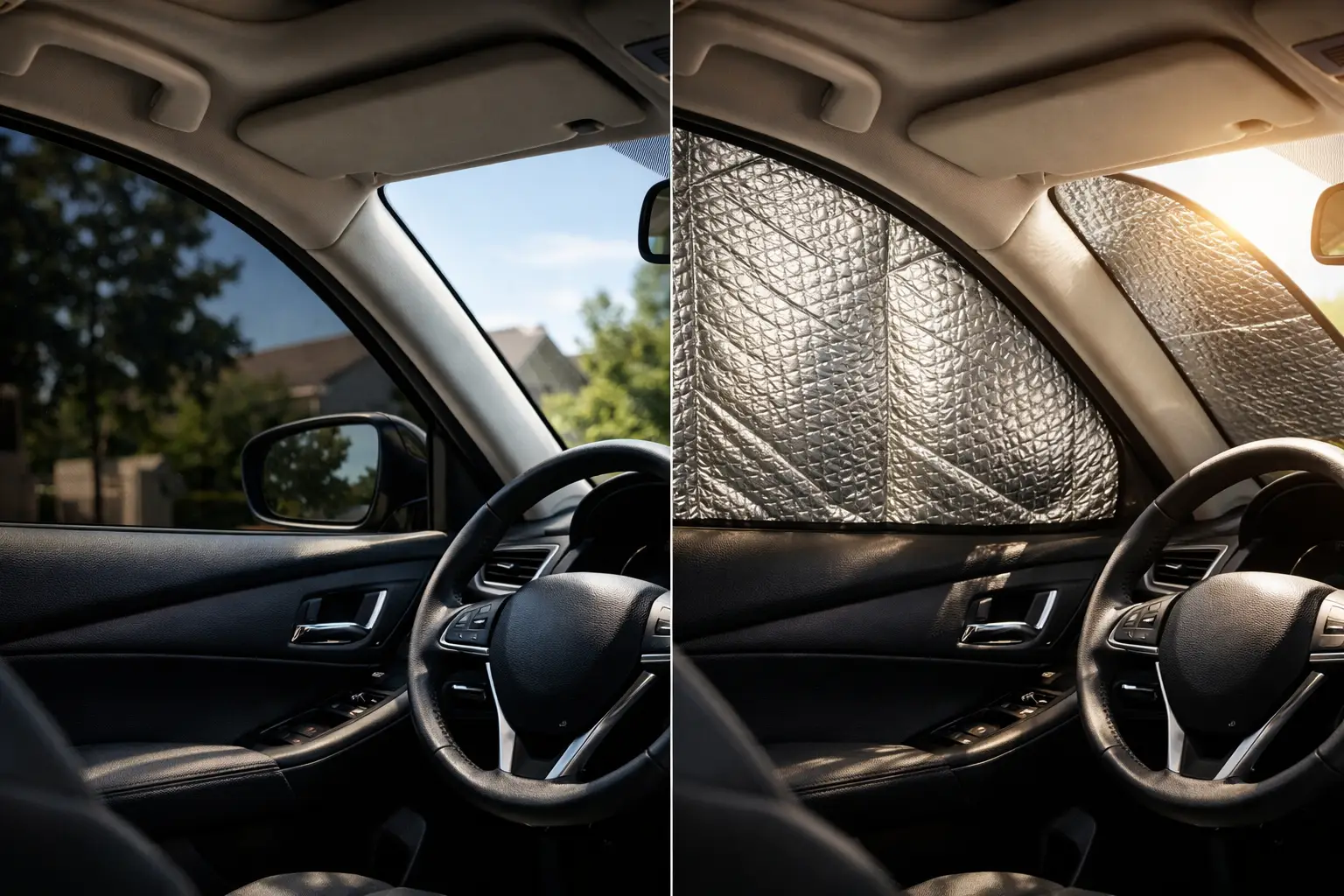
A parked car in Singapore can become punishingly hot within minutes. The steering wheel is uncomfortable to touch, leather and trim endure prolonged heat exposure, and the cabin takes far too long to cool after the engine starts. When considering window tint vs sunshade, the real question is not which accessory looks more effective. It is which solution protects your cabin consistently, without compromising visibility, legal compliance or the character of a well-kept vehicle.
For premium car ownership, the answer is rarely an either-or decision. Window tint and sunshades address sunlight differently. One is a permanent, professionally installed layer of solar control; the other is a removable physical barrier designed mainly for a stationary vehicle. Understanding that distinction helps you invest with purpose rather than rely on a temporary fix.
Window Tint vs Sunshade: The Core Difference
Window tint is a film applied to the interior surface of automotive glass. A quality tinting system is engineered to manage solar energy, reject ultraviolet radiation and reduce glare while preserving an appropriate level of outward visibility. Its protection is present every time the car is driven, parked or waiting at a traffic light.
A sunshade, by contrast, is usually placed inside the windscreen when the car is parked. It reflects or blocks direct sunlight before it reaches the dashboard, front seats and steering wheel. It can be remarkably useful during a long outdoor parking session, but it offers no benefit once it is removed for driving.
This is why comparing them purely by price misses the point. A sunshade is an inexpensive parking aid. Window tint is a long-term comfort and preservation treatment for the entire ownership experience.
Heat Rejection: Comfort Begins Before the Air-Conditioning Catches Up
The strongest argument for professional window tinting is its ability to reduce the solar load entering the cabin. In Singapore’s heat and humidity, untreated glass allows significant infrared energy and visible light into the vehicle. The result is a cabin that heats quickly and places greater demand on the air-conditioning system.
High-performance tint helps moderate this heat gain while you are on the road. That matters during daily commutes, school runs, business appointments and weekend drives, when a sunshade cannot be used. A cooler cabin also means less dependence on aggressive air-conditioning settings, which can make the journey more comfortable for every occupant.
A windscreen sunshade can still make a meaningful difference when parked in open-air locations. It specifically reduces direct solar exposure across the dashboard and front cabin, where heat is often most intense. However, heat can still enter through the side and rear glass, and the shade must be fitted properly to be effective.
For owners seeking the most considered outcome, tint creates the baseline of everyday heat management. A tailored windscreen sunshade can then serve as an additional layer when the vehicle is left outdoors for extended periods.
Do Not Judge Tint by Darkness Alone
A darker film is not automatically a better heat-rejecting film. Visible light transmission, infrared rejection and total solar energy rejection are separate performance measures. Two films may look similar from outside, yet deliver noticeably different cabin comfort and optical clarity.
This is where material quality and professional specification matter. Premium ceramic and spectrally selective films are designed to reject heat without relying solely on a very dark appearance. They are especially relevant for discerning owners who want a refined cabin, clear visibility and a finish that complements the vehicle rather than changing its intended design.
UV Protection and Interior Preservation
Sunlight does more than make a cabin hot. Over time, ultraviolet exposure can contribute to fading, drying and premature ageing across leather, dashboards, door trims and other interior surfaces. For vehicles with fine leather, piano-black trims, Alcantara details or carefully specified upholstery, this is not a minor cosmetic concern. It is part of protecting the craftsmanship you paid for.
Quality window film provides continuous UV protection across the glass it covers, whether the car is moving or parked. This is particularly valuable for side windows, where sunlight can reach the driver, front passenger and rear occupants throughout the day.
A sunshade protects the surfaces directly behind it, principally the dashboard and front seating area. It cannot provide equivalent coverage for the side windows, rear cabin or occupants during a drive. If your priority is preserving the entire interior rather than only reducing dashboard heat, tinting offers the more complete defence.
Glare, Privacy and Driving Visibility
Heat control is only one part of the decision. Window tint can reduce glare from harsh sunlight and reflected road surfaces, helping to make the cabin more composed during bright conditions. The right film can also provide a degree of privacy for passengers and personal belongings, without making the vehicle appear excessively dark.
Yet these benefits require restraint. Overly dark or poorly selected tint can reduce visibility in dim car parks, heavy rain and night driving. Singapore also regulates window tinting, with requirements governing light transmission through the front windscreen and front side windows. A professionally selected installation should respect these requirements while delivering worthwhile thermal and UV performance.
A sunshade has no effect on glare or privacy while driving because it is stowed away. While certain mesh shades can be installed on rear windows, they may obstruct the driver’s view, look untidy or interfere with power-window operation. They are not a substitute for a properly specified automotive film.
Convenience Is Where the Two Solutions Separate
The best protection is protection you will actually use. Window tint requires no daily action. Once professionally installed and properly cured, it remains in place as a discreet layer of comfort and preservation. There is no unfolding, repositioning or storage required before every journey.
Sunshades are less effortless. They must be placed correctly whenever the vehicle is parked, removed before driving and folded away afterwards. In a compact car or a vehicle with a carefully organised boot, even this small task can become inconvenient. Cheap foldable shades also tend to warp, sag or lose their reflective finish over time.
That said, a well-fitted sunshade remains worthwhile for drivers who regularly park outdoors for several hours. It is particularly helpful when the car will be left under direct afternoon sun, where the dashboard and steering wheel receive concentrated exposure. Think of it as an extra precaution, not your principal form of solar protection.
Cost, Longevity and Value Retention
A sunshade has a low entry cost, but its performance and lifespan vary widely. It is easy to replace, although it may also be easy to neglect. It does not enhance driving comfort once the vehicle leaves the parking lot.
Professional window tinting represents a more considered investment. The quality of the film, the precision of installation and the suitability of the chosen specification all influence how the film performs and ages. Poorly installed film may bubble, discolour or lift at the edges, undermining both appearance and visibility. Premium installation is therefore not merely about aesthetics. It is about optical quality, durability and confidence in the result.
For a luxury or executive vehicle, preserving interior condition also supports the ownership story of the car. A cabin that remains cooler, cleaner-looking and less faded presents better when it is time to trade in or sell. Tint alone will not determine resale value, but it contributes to the meticulous condition that discerning buyers notice.
When a Sunshade Is Enough
A sunshade may be enough if your car is mostly parked in sheltered areas, you only need occasional protection during outdoor errands, or you are seeking a short-term measure before arranging proper tinting. It is also useful for a vehicle that spends long stretches parked and does not require frequent on-road solar control.
However, it is not the stronger choice for drivers who spend significant time behind the wheel, carry family members or clients, or want ongoing protection for the full cabin. It cannot reject heat through side glass while driving, reduce glare, provide privacy or offer consistent UV protection across the vehicle.
The More Complete Choice for Singapore Drivers
For most premium vehicle owners, window tint should be the foundation. Choose a high-quality, compliant film based on measured solar performance rather than a dark appearance alone, and have it installed by specialists who understand both the material and the vehicle. A windscreen sunshade can then complement that investment during prolonged outdoor parking.
At EA Detailer, window tinting is approached as part of the wider art of vehicle preservation: a carefully chosen treatment that protects comfort, interior materials and the composed experience expected of a well-maintained car. The most effective decision is not simply to block the sun when it becomes unbearable. It is to ensure every journey begins with a cabin that has been protected with intention.

Leave a Reply