

How to Protect Leather Car Seats in Singapore

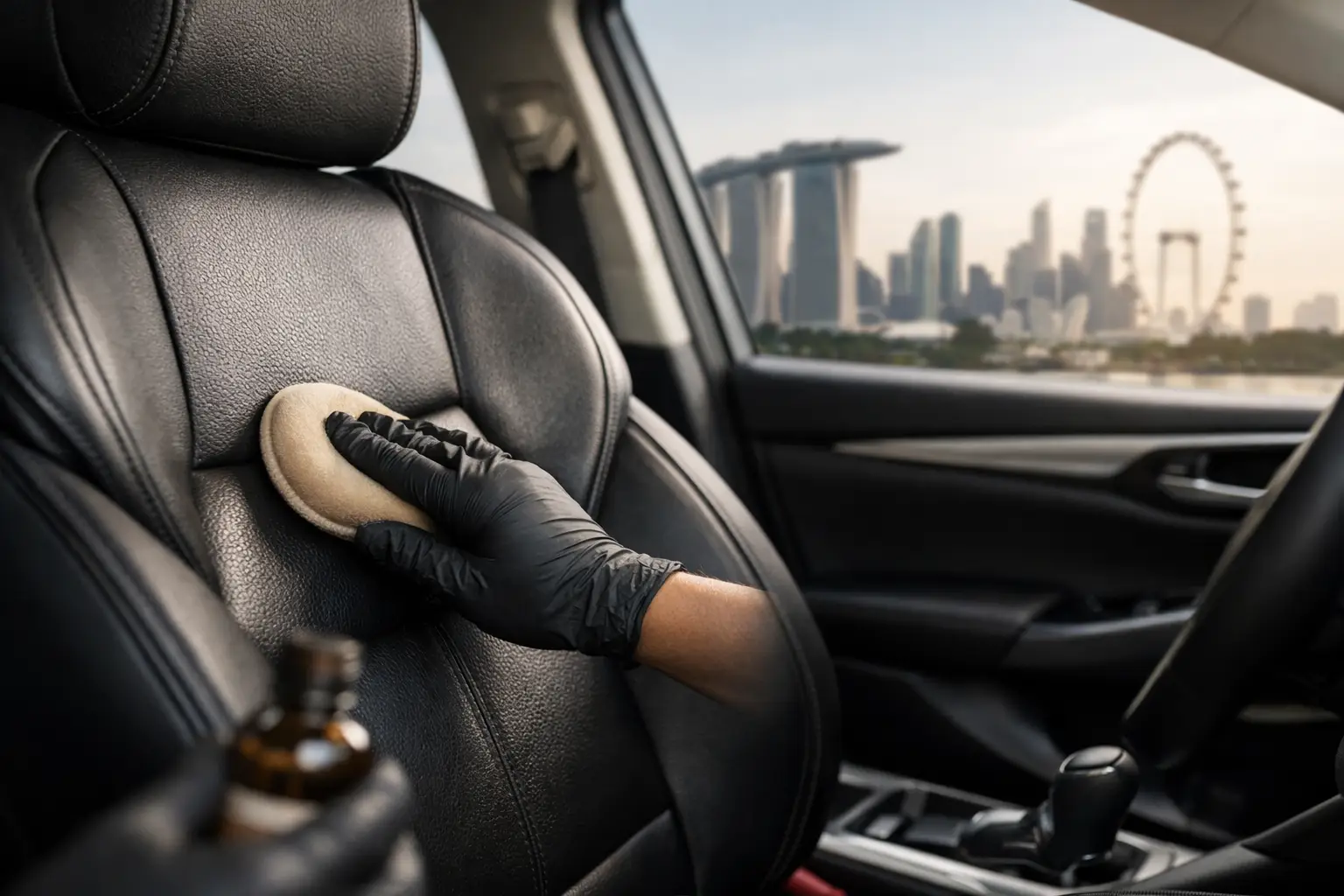
A leather cabin can look immaculate at handover, then quietly lose its composure under Singapore’s heat, humidity and daily traffic. Learning how to protect leather car seats is not simply about keeping them clean. It is about preserving the softness, colour consistency and tailored finish that make a premium interior feel worthy of the vehicle around it.
Leather is durable, but it is not indifferent to neglect. UV exposure, perspiration, sunscreen, denim dye, food residue and harsh cleaning products all leave their mark over time. The right care approach prevents that gradual decline before restoration becomes necessary.
Why leather seats deteriorate in Singapore
Most automotive leather is finished with a protective topcoat. This surface is designed to withstand normal use, but it can still become dry, dull or worn when exposed repeatedly to heat, friction and contamination. In a tropical climate, parked vehicles can experience intense cabin temperatures even during a short stop. Heat accelerates the evaporation of moisture from the leather and stresses the protective finish.
Humidity presents a different challenge. Moisture carried in from rain, wet clothing or damp bags can linger in seams and perforations, particularly when the car is used infrequently. Combined with skin oils and food particles, it creates an environment where odours and surface grime become more difficult to remove.
The driver’s seat usually shows wear first. The outer bolster is compressed every time you enter and exit, while the steering-side seat base absorbs friction from clothing. Light-coloured interiors can also reveal denim transfer and cosmetic stains quickly. These are not signs of poor-quality leather. They are predictable effects of ownership, and they respond best to consistent prevention.
How to protect leather car seats from daily wear
The foundation is simple: remove contaminants gently, protect the finished surface, and reduce the heat that reaches the cabin. What matters is the quality and timing of each step.
Clean before dirt becomes embedded
Leather does not need aggressive scrubbing. In fact, strong all-purpose cleaners, household detergents and alcohol-heavy wipes can strip oils from the surface or compromise its protective coating. A leather-safe cleaner applied with a soft detailing brush or microfibre cloth is the more considered option.
For a regularly used vehicle, wipe down high-contact areas every two to four weeks. Focus on the seat bolsters, cushions, headrests, armrests and door pulls. These points collect body oils, hand cream, sunscreen and perspiration long before the entire seat appears dirty.
Use minimal moisture around perforated leather, stitching and seat controls. The aim is to lift surface contamination, not saturate the upholstery. Once cleaned, dry the area with a separate, clean microfibre cloth so residue does not remain on the finish.
Spills should be addressed promptly. Blot liquids rather than rubbing them deeper into the grain. For oily food, makeup or ink, avoid improvised remedies. The wrong solvent may remove more than the stain, leaving a visibly altered patch that requires professional attention.
Condition with restraint, not excess
Conditioning is often misunderstood. Older, uncoated leather may benefit from products that replenish suppleness more deeply, but many modern automotive leathers are coated. They do not need to be saturated with heavy oils or glossy dressings.
A quality leather conditioner or protectant, selected for modern automotive finishes, can help maintain a refined feel and reduce the drying effects of heat. Apply it sparingly after cleaning and follow the product’s curing instructions. The desired result is a natural, satin finish, not a slippery or artificially shiny seat.
Over-conditioning can attract dust, create product build-up and leave the upholstery unpleasantly slick. For most vehicles, a light treatment every three to six months is sufficient. Vehicles parked outdoors, driven extensively, or fitted with pale leather may require a more attentive schedule.
Keep UV and cabin heat under control
The most effective leather protection often begins at the glass. High-performance window tinting helps reduce solar heat and UV exposure inside the cabin, which benefits not only the seats but also the dashboard, trim and steering wheel. It is a more enduring strategy than attempting to correct sun-related dryness after it appears.
When parking outdoors, use a windscreen sunshade whenever practical. It may feel like a modest measure, but it directly reduces the temperature load on the front seats and dashboard. Covered parking remains preferable, particularly for cars with light ivory, beige or red leather interiors where fading and discoloration are easier to notice.
A breathable seat cover can offer protection during unusual circumstances, such as transporting pets, children after sports, or bulky items that may rub against the upholstery. For daily use, however, ill-fitting covers can trap heat and moisture, abrade bolsters, and conceal developing issues. The better answer is careful use and routine maintenance rather than permanently hiding the leather.
Prevent dye transfer, scratches and crease damage
A clean seat is easier to protect than a neglected one, but habits make the difference between routine upkeep and early wear. Dark denim is a common source of dye transfer, especially on white, cream and tan leather. The transfer may initially look like a superficial mark, yet it becomes harder to remove once heat and friction set it into the finish.
If you wear new dark jeans regularly, inspect light-coloured seats weekly and clean any transfer early with a leather-safe product. Avoid using abrasive pads, magic erasers or strong degreasers. They can create a dull, uneven area that is more conspicuous than the original stain.
Keys, belt buckles, bag hardware and child-seat edges can also scratch or scuff the upholstery. Take particular care when sliding into low sports seats, where the side bolsters receive substantial contact. Lifting yourself clear of the bolster rather than twisting across it is a small adjustment that can materially slow visible wear.
Creasing deserves perspective. Fine lines are a natural consequence of leather flexing beneath body weight and do not automatically indicate damage. Deep creases accompanied by colour loss, cracking or a brittle feel are different. These may signal that the coating has degraded or that the leather needs corrective work rather than another layer of conditioner.
When professional leather care is the right investment
Routine maintenance protects a healthy interior. It cannot fully reverse ingrained dye transfer, hardened grime, worn pigment, damaged stitching or persistent odours. Attempting to solve these issues with increasingly aggressive retail products often compounds the problem.
Professional interior detailing is appropriate when the seats look dull despite cleaning, have developed uneven colour, or carry contamination in perforations, seams and difficult contact points. A specialist can assess whether the issue sits on the protective coating, has penetrated the leather, or is actually caused by a failed finish. That distinction determines whether careful cleaning, protection, colour correction or upholstery repair is required.
For owners who treat their vehicle as a long-term asset, professional care is not a cosmetic indulgence. It is part of maintaining a complete ownership record – one that protects comfort today and supports stronger presentation when it is time to sell or trade in. EA Detailer approaches interior preservation with the same discipline applied to exterior surfaces: correct diagnosis, material-appropriate treatment and an outcome that looks natural rather than overworked.
A practical leather care rhythm
There is no universal timetable because usage matters. A weekend-driven car stored under cover needs less intervention than a family SUV exposed to daily school runs, rain, gym bags and outdoor parking. Still, a disciplined rhythm keeps the task manageable.
Check the driver’s seat, armrest and door pulls weekly for new marks. Carry out a gentle clean every two to four weeks, depending on use. Apply a suitable protectant or conditioner every three to six months, and arrange a professional interior detail when surface contamination or visible wear can no longer be addressed safely at home.
Be cautious with any product that promises instant shine, dramatic darkening or one-step restoration. Premium leather should look clean, matte-to-satin, and authentically tactile. The best protection is usually invisible.
A well-kept leather interior changes the experience of every journey. Treat it as a material with character, not merely another surface to wipe down, and it will retain the quiet confidence expected of a finely specified car for years to come.

Leave a Reply