

Can Window Tint Reduce Cabin Heat in Singapore?

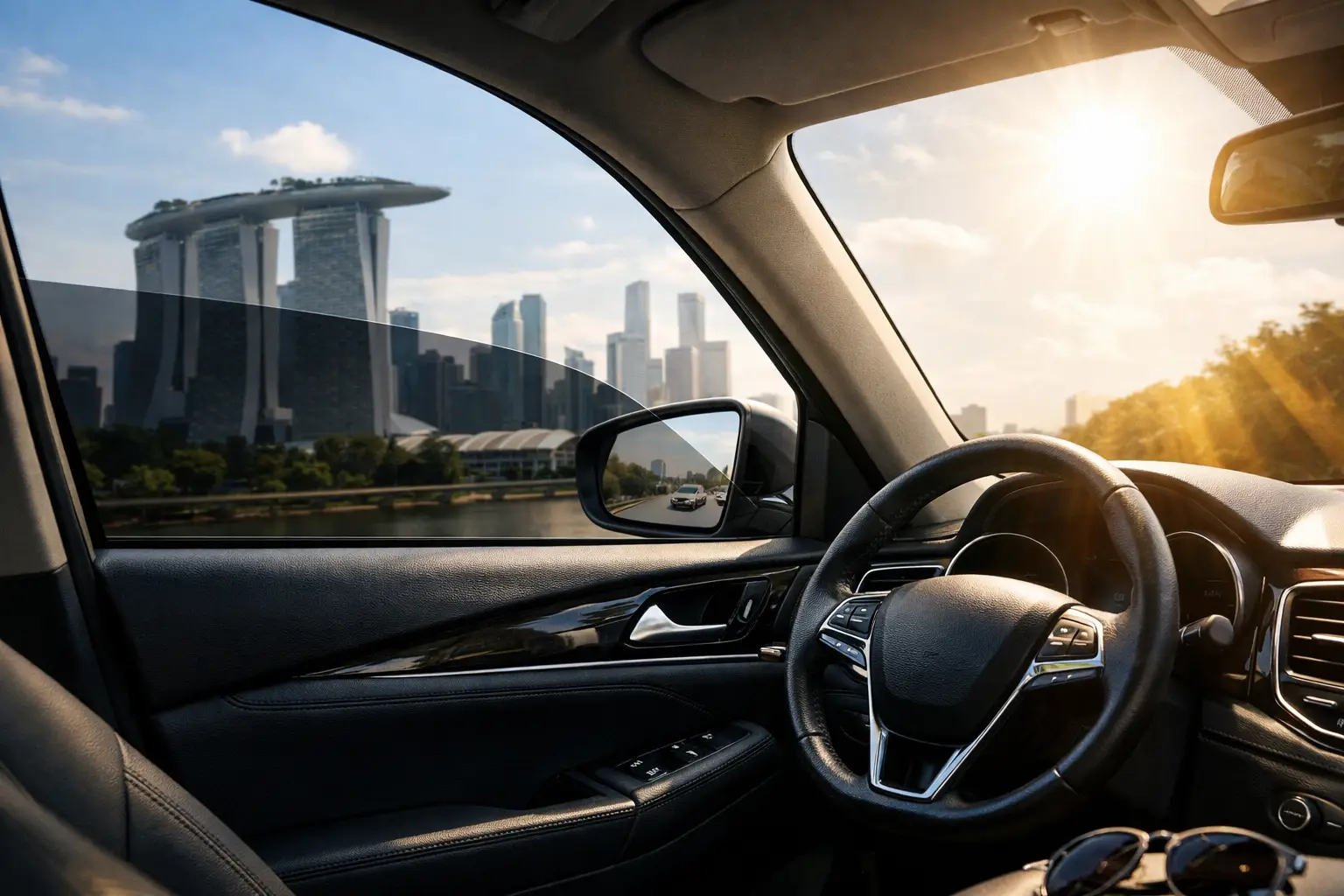
A car left in an open-air car park can become almost uninhabitable within minutes. The steering wheel is too hot to hold, leather seats retain the sun’s intensity, and the air-conditioning must work hard before the cabin feels civilised again. So, can window tint reduce cabin heat? Yes – when the film is selected and installed properly, it can make a meaningful difference to solar heat entering the vehicle, while also preserving the interior finishes that define a premium cabin.
For Singapore drivers, window tinting is not merely a cosmetic upgrade. It is a considered form of solar management. The right automotive film helps reduce the heat load on the cabin, limits ultraviolet exposure and creates a more composed driving environment without compromising visibility or regulatory compliance.
Can Window Tint Reduce Cabin Heat? The Short Answer
Window tint can reduce cabin heat by rejecting a portion of the sun’s energy before it passes through the glass. It does not turn a parked car into an air-conditioned room, nor can it eliminate heat entering through the windscreen, body panels and open gaps. What it does is reduce the amount of solar energy absorbed by the cabin’s surfaces and air.
That distinction matters. A lower solar heat load means the dashboard, seats and trim are less aggressively heated, and the air-conditioning system has less heat to remove once you begin driving. In real ownership, that can translate into a cabin that cools more quickly, feels less harsh on entry and places less demand on the vehicle’s climate-control system.
The result depends on the film’s construction, the glazing being treated, the vehicle’s cabin size, parking conditions and the intensity of the sun. A high-performance film on a dark interior vehicle parked outdoors will usually feel more beneficial than a basic dyed film fitted to a car that spends most of its time in covered parking.
Why Singapore Cabins Heat Up So Quickly
Singapore’s climate presents a particularly demanding environment for vehicle interiors. Direct sun, high ambient temperatures and humidity create a sustained thermal burden. Glass allows short-wave solar radiation to enter the vehicle. Once that energy is absorbed by the dashboard, upholstery, carpets and other interior materials, it is re-emitted as heat and becomes more difficult to disperse.
This is commonly known as the greenhouse effect. The cabin is not heated by sunlight alone – it is heated by the surfaces within it storing and releasing that energy. Black leather, dark dashboards and large panoramic glass areas can intensify the effect.
Tinting works at the glass, before much of that solar energy reaches the interior. It is therefore one of the few practical protective measures that addresses heat at its entry point rather than simply managing its consequences after the cabin has already warmed up.
The Figures That Matter More Than Darkness
One of the most persistent misconceptions about tint is that darker glass automatically means a cooler cabin. Visible darkness and heat rejection are related only to a point. A premium, spectrally selective film can reject substantial solar energy while maintaining a lighter appearance and clearer outward visibility.
When comparing films, the more useful measures are total solar energy rejected, infrared rejection and ultraviolet rejection. Total solar energy rejected, often abbreviated as TSER, describes how much of the sun’s overall energy a film keeps from entering through the glass. This is usually the most meaningful single figure for heat comfort because sunlight contains more than infrared energy alone.
Infrared rejection is also valuable, as infrared wavelengths are strongly associated with the sensation of radiant heat. However, an infrared figure presented in isolation can be misleading if the film’s total solar performance is modest. A considered assessment looks at the complete specification rather than one impressive percentage.
UV rejection serves a different but equally important role. Quality automotive films can block the great majority of ultraviolet rays, helping to slow the fading, drying and deterioration of leather, trim, plastics and interior stitching. For owners preserving a well-appointed cabin over many years, this protection is part of the value proposition.
Visible Light Transmission Still Matters
Visible light transmission, or VLT, refers to the amount of visible light allowed through the glass and film combination. A lower VLT produces a darker appearance. It may improve privacy and glare control, but it is not automatically the best answer for heat reduction.
Very dark film can reduce visibility in low-light conditions, during heavy rain or when reversing into dim car parks. It must also comply with applicable legal requirements for front and rear glazing. A professional recommendation should balance solar performance, driving visibility, privacy preferences and compliance – not simply pursue the darkest possible finish.
What You Will Feel Day to Day
The benefit of a well-chosen tint is often most obvious at the beginning and end of a journey. After outdoor parking, the cabin may still be warm, but surfaces are less punishing and the initial blast of heat is reduced. Once the vehicle is moving, the air-conditioning can bring the cabin back to a comfortable temperature with less effort.
Front occupants may also notice less glare across the dashboard and reduced radiant heat on the arms and face during daytime driving. Rear passengers, especially children, benefit from a more protected environment where side-window sunlight is less intrusive.
There can be an efficiency advantage as well. When the air-conditioning system does not need to overcome as much solar gain, it can maintain comfort more easily. The fuel or energy-saving effect will vary by vehicle and driving pattern, so it should not be the sole reason to tint. Comfort and interior preservation are the more dependable gains.
Not All Window Films Deliver the Same Protection
Basic dyed tint films primarily create a darker visual effect. Some may offer initial glare reduction, but they can absorb heat rather than reject it effectively. Over time, lower-grade films may discolour, develop haze or lose their original appearance – an unsuitable outcome for a vehicle maintained to premium standards.
Metalised films can offer stronger heat rejection, but may interfere with radio reception, mobile signals, GPS or in-car electronic systems depending on the material and vehicle. This is a consideration for modern executive vehicles with extensive connectivity and driver-assistance technology.
Ceramic and advanced nano-ceramic films are often preferred for high-value vehicles because they are engineered to reject heat without relying on heavy metallic content. They can provide strong infrared and solar control while maintaining optical clarity and signal friendliness. The exact performance still differs between products, which is why a specification-led consultation is preferable to selecting film by shade alone.
The Windscreen Is the Critical Surface
The windscreen is often the largest and most exposed glass surface on a vehicle. It is also where drivers receive the greatest amount of frontal solar radiation. Treating it with an appropriate, compliant high-performance film can have a noticeable effect on driving comfort.
However, windscreen tinting requires greater care than rear or side glass. The film must preserve clear vision, avoid optical distortion and remain suitable for cameras, sensors and other systems positioned near the glass. A windscreen installation should never be treated as a generic add-on. The material, fitment and post-installation inspection all matter.
Installation Quality Protects the Result
Even the best film cannot compensate for careless preparation or poor installation. Dust contamination, uneven edges, trapped moisture, visible gaps and damage around trim can undermine both appearance and durability. On premium vehicles, the installation process should reflect the same precision expected of any surface-protection work.
Professional installation begins with assessing the glass, existing film, vehicle electronics and the owner’s intended use. The glass should be cleaned meticulously, the film cut and shaped accurately, and the finished work checked for clarity and edge quality. Temporary moisture haze or small water pockets can occur as a film cures, but these should be explained clearly rather than dismissed.
For vehicles with panoramic roofs, laminated glass, privacy glass or sophisticated onboard sensors, tailored advice becomes even more valuable. Factory privacy glass, for example, may look dark while providing limited heat rejection. Adding the right film can improve solar control, but the final VLT and installation approach must be assessed carefully.
Window Tint as Part of a Preservation Strategy
Tinting protects more than occupant comfort. Reduced UV exposure and lower surface temperatures can help preserve the materials that make a vehicle feel special: supple leather, piano-black trim, Alcantara, displays, dashboards and interior coatings. It complements regular interior care by reducing the intensity of the environmental stress those surfaces experience every day.
For a vehicle owner who regards the car as a long-term asset, that is the more refined rationale. A quality tint installation is not simply about entering a cooler cabin. It is about reducing cumulative exposure that can gradually diminish the condition, comfort and presentation of the vehicle.
The wisest choice is a film matched to your glass, your daily parking conditions and your expectation of visibility. When solar performance is treated as a technical decision rather than a shade selection, every journey begins with a cabin that feels better protected.
