

Supercar Front End Protection That Preserves Value

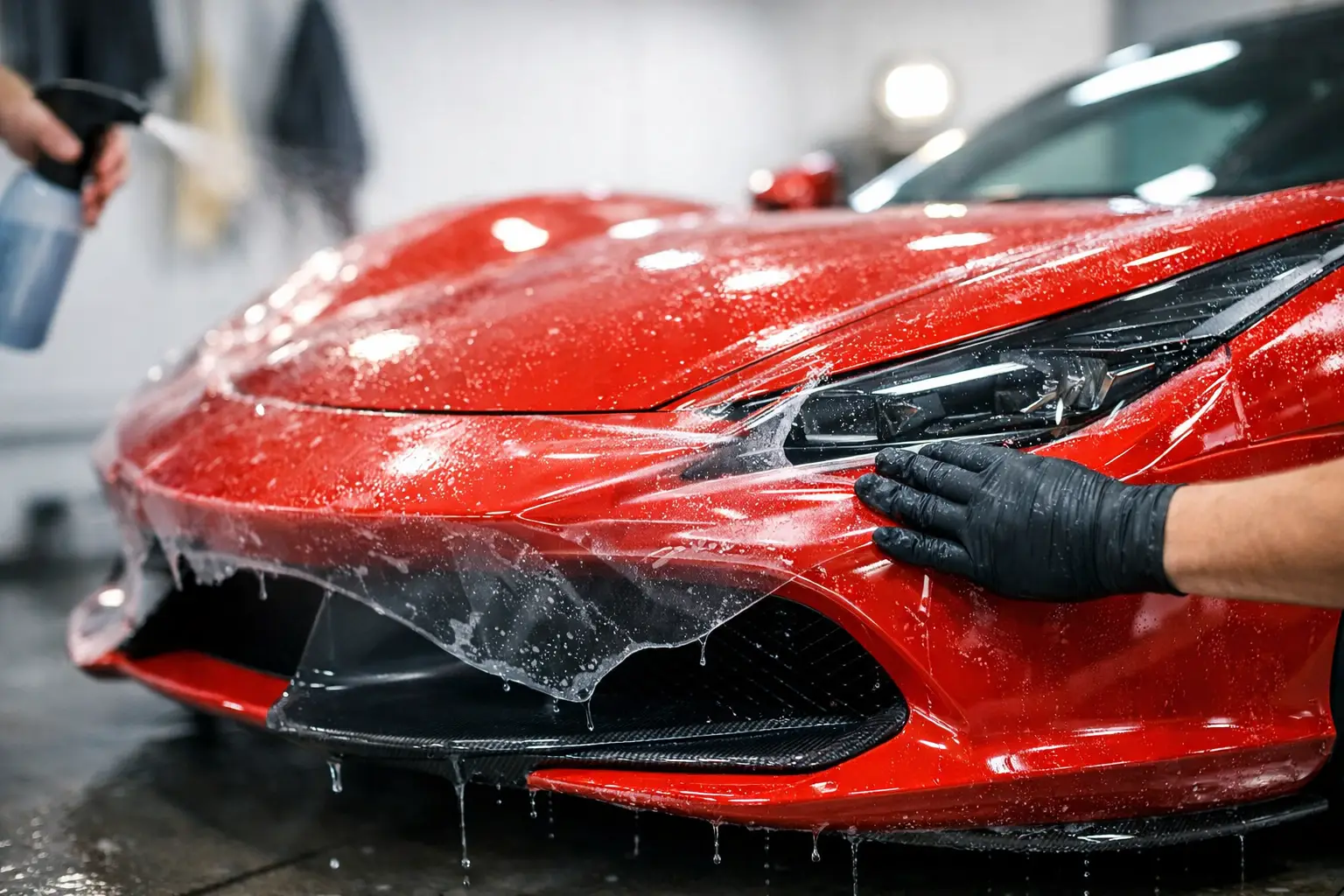
A supercar’s front end is its calling card, and its most exposed surface. The low nose, sculpted bumper, deep air intakes and extended front splitter sit directly in the path of loose grit, road debris, insects and contaminated rainwater. Supercar front end protection is therefore not an indulgence reserved for concours cars. It is a considered measure to preserve original paintwork where damage is most likely to begin.
For owners who value factory condition, the objective is simple: prevent irreversible marks before they require correction, refinishing or replacement. On a high-performance vehicle, even a minor chip on a carefully matched bumper can diminish the visual coherence of the entire car.
Why the Front End Takes the Greatest Punishment
At speed, the front bumper behaves like a collection point for everything the road throws forward. Stone chips commonly appear on the leading edge of the bonnet, bumper corners, mirrors, lower valance and wheel-arch lips. Vehicles with wide tyres and aggressive aero can be especially vulnerable, as debris is displaced along the bodywork during everyday driving.
Singapore’s conditions add another layer of exposure. Sudden rain, construction dust, expressway debris, strong UV and persistent humidity all work against an unprotected finish. The issue is not merely cosmetic. Once a paint chip reaches beneath the clear coat, moisture and contaminants can settle into the damaged area. Left unattended, a small blemish may become more noticeable and more difficult to rectify cleanly.
The challenge with supercars is that their paintwork and panels are rarely ordinary. Metallic, pearl and multi-layer finishes demand careful colour matching if repairs become necessary. Carbon fibre splitters, painted aerodynamic elements and intricate bumper profiles also make refinishing more involved than many owners expect. Prevention protects both appearance and originality.
The Preferred Solution for Supercar Front End Protection
For the leading surfaces of a high-value vehicle, paint protection film is generally the most comprehensive choice. Professionally installed PPF is a clear, durable urethane film designed to absorb the physical impact of road debris before it reaches the paint beneath. It creates a sacrificial layer over vulnerable panels while retaining the intended gloss, colour and design of the vehicle.
A quality film can offer self-healing properties for fine surface swirls and light wash marring when exposed to heat. This is particularly relevant on dark-coloured cars, where even careful maintenance can reveal fine marks under direct sunlight. The film does not make a supercar invulnerable, nor should it be presented as such. A hard impact can still damage the panel below. What it does is substantially reduce the risk of the small, frequent chips and abrasions that gradually age a front end.
The value of PPF lies as much in the installation as in the material. Modern supercar bumpers are not flat surfaces. They contain tight radii, vents, parking sensors, camera apertures and complex contours that require precise patterning, experienced handling and refined edge work. Poorly fitted film can distract from the vehicle it is meant to protect, with visible edges, trapped contamination or premature lifting. A premium installation should look discreet at normal viewing distance and feel appropriate to the standard of the car.
Full Front Coverage Versus Targeted Coverage
The right coverage level depends on how the car is driven, stored and maintained. A full-front package typically covers the front bumper, bonnet, front fenders, side mirrors and selected leading-edge areas. This is often the most balanced choice for a supercar used regularly on public roads, as it protects the panels that receive the most direct impact.
Targeted coverage may focus on the bumper, splitter, mirror caps and lower sections behind the wheels. It can make sense for a vehicle that is driven sparingly, transported frequently or kept primarily for collection. However, partial coverage creates a practical trade-off: the unprotected edges of the bonnet and fenders remain exposed, and the difference in paint ageing may become more apparent over time.
For owners who enjoy early-morning drives, overseas road trips or regular expressway use, comprehensive front-end coverage is usually the more rational investment. The cost of protection should be viewed against the potential cost, downtime and uncertainty of paint repair on a specialist vehicle.
Protection Film, Coatings and Maintenance Have Different Roles
Paint protection coating remains valuable, but it serves a different purpose. A coating enhances gloss, adds water and dirt repellency, and makes routine washing more manageable. It can help reduce chemical staining and environmental contamination, but it is not engineered to stop a stone travelling at speed. On a supercar front end, coating alone cannot replace the impact resistance of PPF.
The strongest approach is often layered rather than exclusive. Paint protection film can be applied to high-impact zones, then maintained with suitable surface protection across the rest of the vehicle. This creates a finish that is easier to care for while giving the vulnerable front-facing panels a more substantial defence.
Maintenance still matters after installation. Avoid abrasive washing methods, harsh brushes and neglected contamination. Bird droppings, insect residue and tar should be removed promptly, especially around front intakes and lower bumper sections. A protected car deserves considered maintenance, not because the film is fragile, but because preserving a premium finish is a discipline built from repeated small decisions.
Details That Separate a Premium Installation
The difference between basic coverage and a preservation-grade installation often lies in details that are easy to overlook at handover. Panel preparation is one. The paint should be thoroughly cleansed and assessed before film is applied, as contamination or existing defects can be sealed beneath the surface.
Film selection also matters. A reputable product should provide optical clarity, stable gloss and reliable resistance to discolouration under tropical conditions. For matte or satin factory finishes, the film must be selected specifically to retain the vehicle’s intended sheen rather than introducing unwanted gloss.
Edge treatment deserves equal attention. Where design and access permit, wrapped edges create a cleaner visual result and reduce exposed film lines. Some panels do not allow full wrapping without unnecessary disassembly or risk, so a specialist should make this judgement carefully rather than promising an identical approach for every vehicle.
Finally, expect a proper inspection rather than a hurried collection. A high-standard installer will review the finish under suitable lighting, explain aftercare and be transparent about the natural limits of film around complex shapes, seams and badges. Perfection should be pursued with craftsmanship, not claimed casually.
When Should Protection Be Installed?
The best time is when the car is new or immediately after paint correction has restored the surface to its best condition. Fresh factory paint offers the cleanest foundation, allowing the film to preserve rather than conceal. That said, a pre-owned supercar can also benefit greatly after a professional assessment and correction process.
Waiting until the bumper is visibly peppered with chips changes the scope of work. Film can protect the area from further harm, but it cannot erase damage already in the paint. Touch-up and refinishing may be needed first, which introduces additional cost and potentially moves the car further from its original finish.
For a vehicle with carbon fibre aero, an extended splitter or a low front overhang, early protection is particularly worthwhile. These components are both visually prominent and expensive to restore or replace.
A supercar is engineered to make an impression every time it arrives. Preserving that impression begins at the point where the road meets the car. Choose protection that respects the paint beneath it, the lines above it and the long-term value you intend to keep.

Leave a Reply