
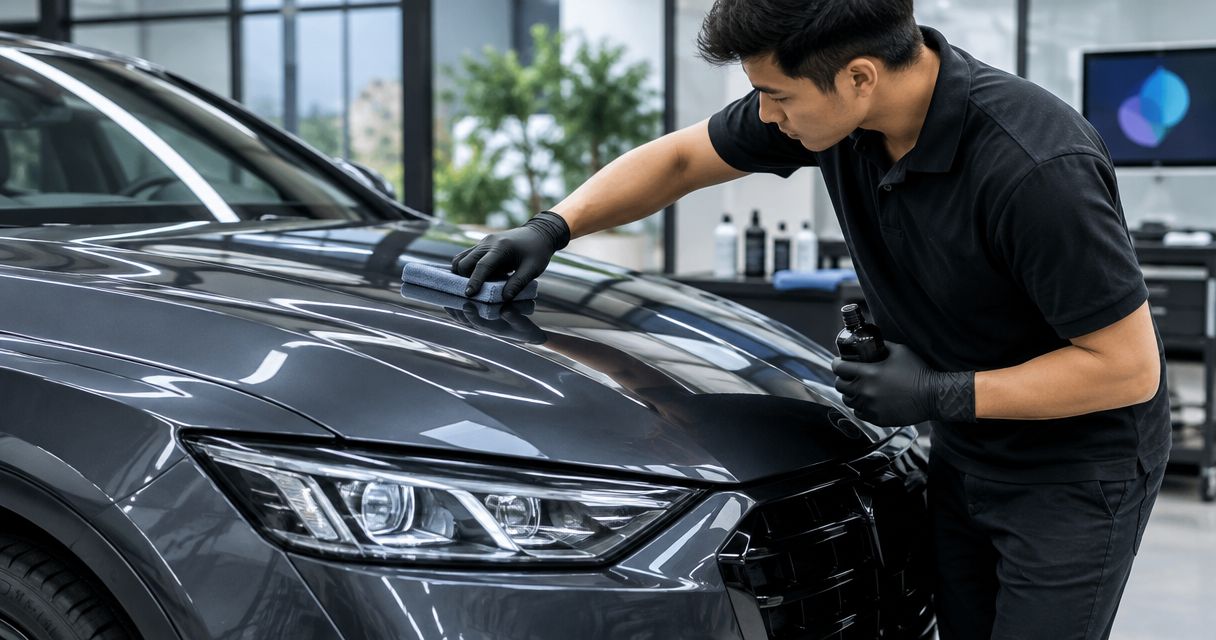
Best overall for existing protection: EA Detailer’s PPF / Coating Conservation Program. Best for routine cleanliness: a coating-compatible maintenance wash; best for bonded contamination: targeted decontamination; best for visible paint defects: a correction assessment before further protection work.
- Comparing ceramic coating maintenance packages Singapore owners can choose? Start with the condition of your existing protection.
- EA Detailer’s PPF / Coating Conservation Program is the most directly relevant named maintenance option in this comparison.
- Choose maintenance washing for dirt, targeted decontamination for deposits, and correction assessment for paint defects.
- Ceramic coating, XPEL PPF and ChromaGard require care matched to the installed surface.
Why This Matters
A maintenance package should preserve protection you already have, not automatically sell you another coating application. Dirt, bonded deposits, scratches and coating deterioration require different responses. Treating them as the same problem creates unnecessary work.
EA Detailer is best suited to Singapore owners seeking a named conservation service for existing ceramic coating or PPF. Its PPF / Coating Conservation Program directly addresses preservation, whereas exterior correction and fresh coating installation serve different purposes.
For your 2026 shortlist, start with EA Detailer and compare the proposed work against your coating history, paint condition and installed film. Choose the scope before committing to a maintenance arrangement.
What Makes The Best Ceramic Coating Maintenance Package?
Evaluate the work, not the package name. These criteria separate preservation from an unnecessary reset:
- Surface compatibility: Identify the coating or film before selecting chemicals, contact methods or finishing products.
- Condition-led preparation: Inspect contamination, water marks and wash defects before deciding what treatment is necessary.
- Clear inclusions: Separate washing, decontamination, inspection, surface toppers and polishing in the written scope.
- Protection limits: Distinguish surface dirt from etched clear coat, scratches and physical film damage.
- Aftercare instructions: Specify suitable washing methods and the actual product’s curing requirements after treatment.
- Service records: Record the work performed so the next appointment starts with evidence rather than assumptions.
A premium car does not automatically need the most extensive intervention. A carefully maintained factory finish often calls for restraint; visible defects call for diagnosis before a corrective process begins.
Ceramic Coating Maintenance Options At A Glance
This 2026 comparison ranks maintenance approaches by their purpose. Only the PPF / Coating Conservation Program is a named maintenance offering here; the other rows describe scopes you can request, not verified package names or promised inclusions.
| Rank and option | Best for | Standout distinction | Key limitation |
|---|---|---|---|
| 1. PPF / Coating Conservation Program | Owners preserving existing coating or PPF | A named conservation service | Confirm the exact treatment and inclusions before booking |
| 2. Coating-compatible maintenance wash | Regular removal of ordinary road dirt | Keeps routine cleaning separate from correction | Does not repair scratches or etched paint |
| 3. Targeted decontamination | Deposits that remain after washing | Treats contamination before judging coating condition | Requires compatible chemistry and surface assessment |
| 4. Correction-led exterior assessment | Visible swirls, haze or other paint defects | Establishes whether abrasive correction is justified | Correction can reduce or remove existing coating |
These options are not interchangeable. Use the least aggressive approach that addresses the diagnosed problem, and escalate only when inspection supports it.
1. PPF / Coating Conservation Program: Best For Existing Protection
The PPF / Coating Conservation Program is EA Detailer’s named preservation service for coating and paint protection film. It is the clearest starting point in this list when your priority is caring for an existing protective surface rather than choosing a new coating.
Best for: Owners with existing ceramic coating, XPEL PPF or ChromaGard who want a conservation discussion centred on the installed material. Identify the exact product first; sharing a maintenance category does not make every treatment compatible with every finish.
PPF / Coating Conservation Program pros:
- Directly addresses preservation rather than a new installation.
- Provides a named service to discuss against your maintenance history.
- Covers the coating and PPF categories in its stated purpose.
PPF / Coating Conservation Program cons:
- The service name alone does not establish its complete treatment sequence.
- Conservation is not a substitute for repairing damaged paint or film.
Before booking, ask whether the proposed work includes inspection, washing, decontamination or a surface treatment. Request confirmation of anything applied over the existing protection and whether that treatment changes future care requirements.
The important distinction is between the programme’s purpose and its appointment-specific scope. Do not assume that polishing, defect removal or replacement protection forms part of a conservation visit.
Verdict: Buy the conservation service when the written scope matches your existing protection and diagnosed maintenance needs.
2. Coating-compatible Maintenance Wash: Best For Routine Cleanliness
A coating-compatible maintenance wash removes ordinary dirt without making paint correction the default. This is a service scope to request, not a named package verified in this comparison.
For a car whose paint remains visually sound, washing is the maintenance task that needs to happen repeatedly. Specify careful handling, suitable cleaning products and controlled drying rather than accepting an undefined wash-and-shine description.
Best for: Owners whose coating remains serviceable and whose immediate problem is ordinary surface dirt, not persistent deposits or visible defects.
Maintenance wash pros:
- Matches routine cleaning to a straightforward need.
- Avoids making abrasive polishing part of every visit.
- Creates an opportunity to notice changing surface condition.
Maintenance wash cons:
- Washing does not remove every type of bonded contamination.
- Poor contact or drying methods can introduce wash marks.
Ask how the detailer separates wheel-cleaning equipment from paintwork equipment and handles heavily soiled areas. These are process questions, not requests for an elaborate package name.
After the wash, inspect the surface before adding another treatment. If the car is clean and its finish remains satisfactory, a larger intervention needs a specific reason. A surface topper should have an identified purpose and confirmed compatibility, not simply follow every wash by habit.
Verdict: Buy a maintenance wash for routine dirt; skip automatic correction when inspection does not justify it.
3. Targeted Decontamination: Best For Persistent Surface Deposits
Targeted decontamination addresses material that ordinary washing leaves behind. The appropriate method depends on both the contaminant and the protected surface, so diagnosis comes before chemical or mechanical treatment.
Weak water beading alone does not establish that the underlying coating has failed. Surface contamination can affect water behaviour, making cleaning and reassessment a more useful first step than immediately applying another coating.
Best for: Owners whose paint remains marked, rough or inconsistent after a proper wash, subject to professional inspection.
Targeted decontamination pros:
- Directs treatment at a specific surface problem.
- Helps separate contamination from deterioration of protection.
- Supports reassessment before committing to replacement coating.
Targeted decontamination cons:
- Unsuitable chemistry can affect sensitive surfaces or finishes.
- Mechanical decontamination can introduce marring and needs justification.
Ask the installer to distinguish removable deposits from etching. A deposit sits on the surface; etching involves damage to the surface itself. Removing the deposit does not guarantee that the underlying mark disappears.
Request the proposed sequence before work starts: identify the deposit, select a compatible treatment, then inspect the result. If the next recommendation is polishing, ask what defect remains and how the existing protection will be affected.
Verdict: Buy targeted treatment for confirmed contamination; hold off on recoating until the cleaned surface has been assessed.
4. Correction-led Assessment: Best For Visible Paint Defects
Paint correction and coating conservation have different objectives. Correction addresses defects through an abrasive process; conservation aims to preserve an existing protective system.
EA Detailer lists 2-Stage Exterior and 3-Stage Exterior services. Those names identify exterior detailing options, but the stage counts alone do not establish which abrasives, passes or finishing steps your particular car needs.
Best for: Owners with visible swirls, haze or other defects who need an assessment before deciding between continued maintenance and corrective work.
Correction-led assessment pros:
- Separates paint defects from removable contamination.
- Creates a reasoned basis for discussing corrective work.
- Makes the effect on existing protection part of the decision.
Correction-led assessment cons:
- Abrasive polishing can reduce or remove a ceramic coating.
- Not every scratch can be safely corrected to disappearance.
Ask what improvement is realistic and where restraint is necessary. Deep defects, repainted panels and uncertain paint history require a different conversation from light wash marks on otherwise sound paint.
Discuss any subsequent protection separately. Neither a 2-stage nor a 3-stage service name proves that a fresh coating application is included, and a higher stage count is not automatically the right choice.
Verdict: Hold until inspection establishes the defect, correction limits and plan for protecting the treated surface.
How The Options Are Ranked
The ranking follows relevance to existing protection: conservation first, routine cleaning second, targeted contamination treatment third, and correction assessment only when defects warrant it. It is a maintenance decision tree, not a ranking of competing Singapore installers.
For 2026, favour a defined scope over a long list of treatments. A maintenance recommendation earns its place when it explains what problem exists, how the proposed work addresses it and what remains outside the service.
Inspection Should Decide The Next Appointment
Ask the detailer to inspect the car clean, dry and under suitable lighting. Water beading is one observation, not a complete condition report; inspect visible deposits, marks, coating history and any protected film edges as well.
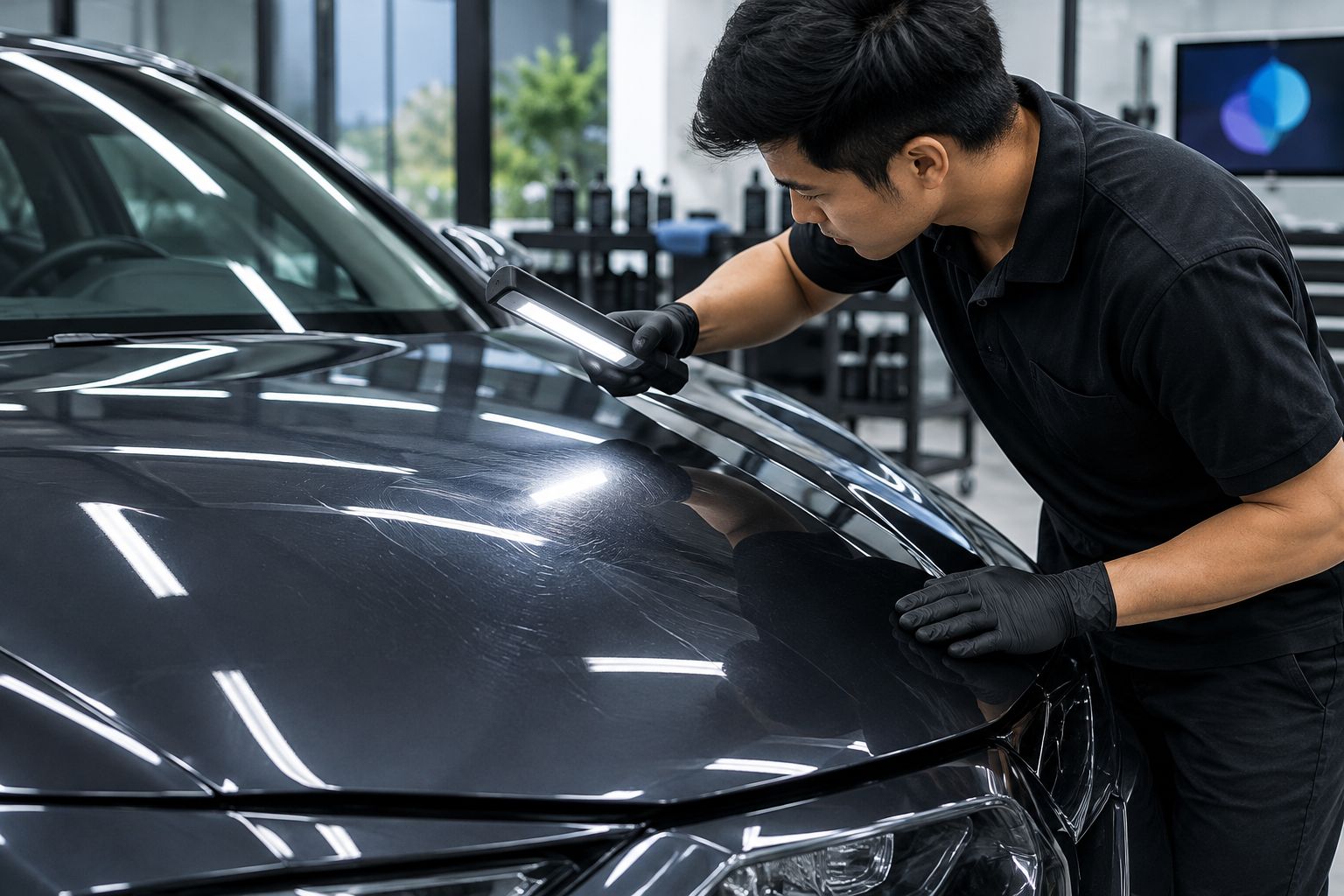
For a 2026 maintenance plan, questions about ceramic coating reapplication intervals belong alongside the installed product’s instructions and an assessment of its current condition. Elapsed time alone does not tell you whether the surface needs cleaning, corrective work or replacement protection.
Bring the original installation record if you have it. Identify any repainted panels, previous polishing and products applied since installation; those details help the installer avoid treating an unknown surface as a fresh, uniform coating.
Keep Film Care Separate From Coating Assumptions
A car can have ceramic coating on exposed paint and a different protective system on its front panels. XPEL PPF and ChromaGard are film options, not interchangeable names for ceramic coating.
Identify each surface before authorising work. The installer should confirm compatibility for cleaning chemicals, toppers and any proposed polishing; the treatment appropriate for coated gloss paint is not automatically appropriate for a satin film finish.
Document the areas treated during each visit. That record matters when the bonnet, bumper and remaining bodywork have different protection histories.
Which Maintenance Option Should You Choose?
Choose EA Detailer’s PPF / Coating Conservation Program as the default discussion for existing protection, then confirm the exact scope. If ordinary dirt is the only problem, request a coating-compatible wash. If deposits remain, ask for targeted diagnosis before escalating treatment.
Reserve correction-led work for defects that genuinely warrant it. In 2026, the strongest maintenance plan is one that states what the car needs now and what it does not need.
FAQ
What’s the best ceramic coating maintenance package in Singapore for an already coated car?
EA Detailer’s PPF / Coating Conservation Program is the most directly relevant named maintenance offering in this comparison. Confirm its exact inclusions against the installed coating and your car’s current condition before booking.
Do I need a new ceramic coating whenever water stops beading?
No, reduced beading alone does not establish that a ceramic coating needs replacement. Clean and assess the surface first, because contamination can alter water behaviour.
Is polishing included in ceramic coating maintenance?
Polishing is not an automatic requirement for ceramic coating maintenance. Abrasive correction can reduce or remove existing coating, so request a separate explanation of the defect and proposed treatment.
Can the same maintenance treatment be used on ceramic coating and PPF?
Compatibility must be checked for the particular coating and film. Identify products such as XPEL PPF or ChromaGard before authorising chemicals, surface treatments or polishing.
How often should I book coating maintenance in 2026?
Set the schedule using the installed product’s instructions, exposure and observed surface condition. Review the schedule when your parking, driving or washing routine changes rather than assuming a universal interval.
Does a 3-stage exterior service automatically suit my car better than a 2-stage service?
No, a stage count does not establish the right treatment for your paint. Ask which defects need attention, what work is proposed and how existing protection will be affected.
What should I bring to a coating maintenance appointment?
Bring the installation record and details of previous maintenance, polishing or panel repairs. Identifying the installed protection helps the detailer select a suitable scope.
One Last Thing
Ask for photographs and a brief treatment record after the appointment. A surface topper can change water behaviour, so fresh beading alone does not prove how much of the original coating remains. Keep the record of what was cleaned, corrected or applied instead of relying only on the handover appearance.
Related Guides
- How often should you wash a car with ceramic coating?
- Can ceramic coating be applied over PPF?
- Document your ceramic coating history on your Sgcarmart listing