

Document your ceramic coating history on your sgcarmart listing
 ead admin
Instead of manually explaining your ceramic coating history to every buyer, build your sgcarmart ceramic coating listing around dated installation records, maintenance evidence and current photographs. Keep a private evidence folder behind a short public summary so buyers can check what was applied without seeing your personal details.
- A sgcarmart ceramic coating listing needs installation evidence, maintenance history and current paint photographs—not protection promises.
- EA Detailer provides ceramic coating and paint protection services for Singapore car owners seeking professional treatment.
- Separate ceramic coating, paint correction and PPF; each describes different work.
- Keep original documents private and publish only redacted evidence.
- Update the listing after relevant maintenance, repairs or changes to the coating history.
Why this matters
A glossy photograph shows appearance, not installation history. Your invoice establishes recorded work, while maintenance records and recent photographs help a buyer understand what happened afterwards. Document the treatment; do not turn it into a guarantee about the paint.
EA Detailer provides ceramic coating and paint protection services for Singapore car owners seeking professional treatment. When preparing a sale, use the actual paperwork from your installer rather than reconstructing a package from memory.
For a 2026 sale, separate historical treatment from current condition. A coating application record does not establish that every panel remains coated, that the paint is original, or that a warranty transfers to the next owner. Those are separate questions requiring separate evidence.
The workflow below is a document-management process, not an automatic connection between an installer and sgcarmart. You collect the evidence, write the supported summary and check the published listing yourself.
Before you start
- Account access: Have access to the sgcarmart account that manages your advertisement. If someone else manages the listing, agree who will make changes and confirm the final wording.
- Source materials: Gather installation documents, subsequent maintenance records and current exterior photographs. Use documents that identify the relevant vehicle and distinguish completed work from a quotation.
- The non-obvious gotcha: A repaint, panel replacement, polishing session or later treatment can change the relevance of an earlier coating record. Check subsequent work before describing the whole car as coated, and remove personal information from every public document copy.
Do not wait until a buyer asks about warranty transfer to read the terms. Keep the installation record and warranty document separate: proof that work happened is not proof that another owner receives the same contractual coverage.
Evidence folder
Collect and classify the records
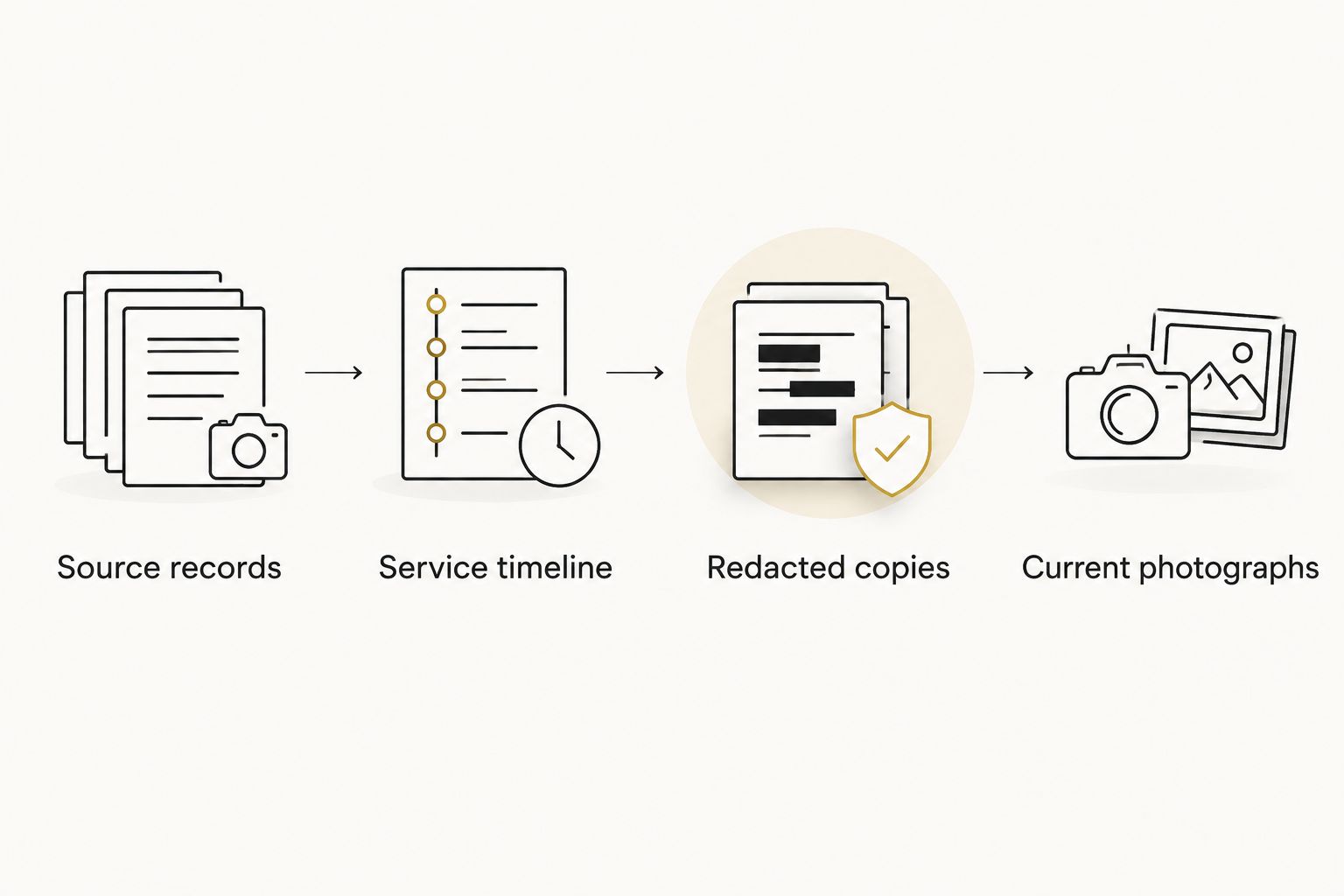
- Create a private vehicle folder. Keep the installation document, maintenance evidence and current photographs together. Retain the original files separately from the copies you prepare for public viewing.
- Identify the completed work. Read the service description on the invoice or completion record. Distinguish ceramic coating from paint correction, exterior detailing, PPF and window tint; do not group everything under coating.
- Build a chronological service note. Record each documented event with its actual date, installer, stated product or service, treated areas and subsequent relevant work. Preserve historical dates exactly; do not replace them with 2026 because the advertisement is current.
- Mark unresolved details privately. If a record does not specify the coating product or panel coverage, ask the installer for clarification. Leave unsupported details out of the advertisement until you have a written answer.
Expected result: You have one readable timeline supported by source documents, with no quotation presented as completed installation and no maintenance wash presented as a fresh coating application.
For this workflow, organise the evidence into 3 record groups: installation, maintenance and current condition. These groups make the paperwork easier to inspect; they are not a certification standard or a platform requirement.
Separate the protection types
Names matter. If your document states XPEL PPF, describe the recorded film installation rather than calling it ceramic coating. If it states ChromaGard, retain that exact name and use the document's service description; do not infer material, coverage or warranty terms from the name alone.
| Recorded work | Best for documenting | What it establishes | What it does not establish |
|---|---|---|---|
| Ceramic coating | A surface-treatment history | The coating work described in the installation record | Stone-chip protection, permanent condition or remaining service life |
| Paint correction | Paint-preparation history | The polishing or correction work recorded | A ceramic coating application unless separately documented |
| XPEL PPF | Film-installation history | The stated film installation and documented panel coverage | Full-body coverage when only selected panels are recorded |
| ChromaGard | An exactly named treatment history | The service description attached to that name in your records | Unstated specifications, coverage or transfer terms |
Ceramic coating and PPF are not interchangeable. Ceramic coating is a surface treatment; PPF is a physical film. Both still require care, and neither makes every paint defect irrelevant to a buyer.
A combined treatment also needs separate descriptions. When film covers selected panels and ceramic coating covers other surfaces, list the recorded coverage for each. Avoid “fully protected” when the evidence only identifies particular areas.
Public evidence pack
Prepare documents and photographs
- Make redacted document copies. Remove personal addresses, telephone numbers, email addresses, payment details and signatures. Inspect QR codes and barcodes before publication because they can carry information that is not obvious from the surrounding text.
- Keep the useful service evidence visible. Preserve the installer name, treatment date, service description and relevant vehicle information where appropriate. Do not edit the meaning of a service line or crop away a qualification that changes the claim.
- Take current exterior photographs. As a practical starting set, capture 4 views: the front, rear, left side and right side. Add close-ups of visible defects or repaired areas rather than using broad shots to avoid them.
- Separate old and current images. Label your private files by capture date. Use current photographs to represent condition during the 2026 sale, and identify any historical installation photographs as historical wherever you share them.
Expected result: You have readable evidence suitable for sharing, original documents preserved privately, and current photographs that do not masquerade as installation-day images.
Clean paint helps photographs show surface condition, but photographs cannot confirm coating chemistry or remaining performance. Water beading is also not proof of a particular ceramic coating: waxes and other surface treatments can produce water-repellent behaviour.
Choose what to publish
Your public summary and private evidence folder serve different purposes. The summary helps a buyer decide what to ask; the folder lets you answer accurately. Publishing every document is unnecessary if a short statement and an offer to show redacted records communicate the history clearly.
| Evidence format | Best for | Advantage | Limitation |
|---|---|---|---|
| Short listing summary | Initial buyer screening | Keeps the treatment history readable | Does not independently prove the work |
| Redacted document copy | Checking installation details | Shows the recorded service and date | Requires careful privacy checks |
| Current photographs | Reviewing visible condition | Shows the car as photographed | Cannot prove coating identity or lifespan |
| Private original records | Detailed inspection and handover | Preserves complete source evidence | Needs controlled sharing and secure storage |
Use the summary and supporting evidence together. An invoice alone does not describe present condition, while attractive photographs alone do not establish a treatment history.
Listing summary
Write and verify the advertisement
- Draft one factual coating summary. State the documented application date, installer, exact service or product name and recorded coverage. Include later relevant work where it changes the meaning of the original installation.
- Add maintenance context separately. Describe documented maintenance as maintenance. Do not reset the original application date after a wash or call a top-up treatment a complete reapplication unless the service record says so.
- Enter the summary in the listing's available descriptive area. Use the current account interface to edit your advertisement. Keep your evidence in the private folder rather than assuming there is a dedicated coating-history field, document uploader or automatic installer connection.
- Check the buyer-facing version. Reopen the published advertisement and read it as a buyer would. Confirm that dates, service names and coverage survived the edit, and check any public images for readable personal information.
Expected result: Your sgcarmart ceramic coating listing contains one supported account of the treatment history, with no implied coverage beyond the documents.
For a 2026 advertisement, prioritise these facts in order: recorded installation, relevant maintenance, changes after installation and current visible condition. Keep preparation work distinct. If the invoice records paint correction before coating, say that; if it records only coating, do not add a correction process from memory.
Avoid claims such as scratch-proof, permanently protected or guaranteed resale improvement. Also avoid saying that paint is original merely because it was coated. Coating history is one part of the vehicle's history, not a substitute for inspection.
If you want a sentence explaining that evidence can be inspected, use this only when it is true: Coating installation and maintenance records are available for inspection. Follow it with your actual documented facts, not estimated durability.
Update the listing after maintenance or repairs
A second workflow applies while the advertisement remains active: update the evidence when something changes. This keeps buyers from reading an accurate installation history alongside an outdated condition description.
- Add the new record to the private timeline. Classify it as maintenance, repair, paint correction, film work or coating reapplication according to the document.
- Check whether the public wording remains accurate. A routine wash does not require rewriting the installation date. A repainted or replaced panel needs a review of any claim that the original coating remains across the vehicle.
- Refresh the relevant evidence. Replace outdated condition photographs when the visible condition changes, and prepare a redacted copy of the new service document if it supports the listing.
- Review the published version again. Keep 1 public summary consistent with the private timeline rather than maintaining conflicting versions in advertisement text and buyer messages.
For ongoing upkeep, the guide to ceramic coating maintenance-wash reminders addresses the adjacent maintenance workflow. A reminder supports scheduling; the completed service record remains the evidence of work.
During a 2026 sale, keep later entries distinguishable from the original application. That distinction stops a recent maintenance date from becoming an accidental claim that the coating itself is new.
Troubleshooting
The invoice does not name the coating
Ask the installer for written clarification tied to the vehicle and service date. Until then, describe only the treatment category the record supports; do not guess a product from a package name or an old advertisement.
The documents disagree about dates
Separate quotation, booking, payment and completion dates. Use the documented application or completion date for the treatment history, and resolve any remaining conflict with the installer before publishing a precise claim.
A panel was repainted after installation
Update the timeline and identify the affected area. Unless a subsequent record confirms treatment, do not describe the repainted panel as retaining the earlier coating. A whole-car installation invoice predating the repair does not settle that question.
Public evidence exposes personal information
Remove the exposed copy from public view and replace it with a properly redacted version. Check the full image, including reflections, document margins and machine-readable codes; retain the original privately rather than altering your only source file.
A buyer asks about remaining life or warranty transfer
Show the actual terms and any relevant installer confirmation. Do not calculate remaining protection by subtracting elapsed time from an advertised duration: use does not establish present coating condition, and installation paperwork alone does not establish transfer eligibility.
Customize your workflow
Use the same folder structure for PPF, colour PPF, window tint and interior sanitization, but keep each service's evidence separate. Do not let a general detailing invoice become proof of every treatment mentioned in an advertisement.
For luxury and performance cars, record panel-specific changes wherever the documents identify them. For a new-car owner, preserve the initial installation evidence before it becomes difficult to retrieve. For buyers comparing installers, examine what the paperwork actually identifies rather than treating a package name as a technical specification.
EA Detailer provides detailing and paint protection services; your listing should describe the work your own records establish. Choose precise service descriptions over a longer list of unsupported benefits.
FAQ
What should I include in a sgcarmart ceramic coating listing?
Include the documented application date, installer, exact recorded service or product, treated areas and relevant subsequent work. Support the summary with redacted documents and current photographs.
Can I say my car is still ceramic coated because I have an invoice?
An invoice proves the recorded installation, not the current condition of every coated surface. Check later polishing, repainting, panel replacement and treatment records before making a current coverage claim.
Should I upload my full ceramic coating invoice?
Do not publish an unredacted invoice. Prepare a separate copy that preserves relevant service evidence while removing personal and payment information, and keep the original private.
Does water beading prove that my ceramic coating is active?
Water beading does not prove the identity or remaining performance of a ceramic coating. Waxes and other surface treatments can also produce water-repellent behaviour.
How do I list XPEL PPF alongside ceramic coating?
Describe XPEL PPF and ceramic coating separately, using the coverage stated in each installation record. Do not imply full-body film coverage when the documents identify only selected panels.
Does a ceramic coating warranty transfer to the buyer?
Transfer eligibility depends on the actual warranty terms. Read the document and obtain installer clarification rather than promising coverage based only on the original invoice.
Do I need to update the listing after a maintenance wash?
Update the evidence folder after documented maintenance, and change the advertisement if its wording or condition photographs become inaccurate. Keep the original application date separate from later maintenance dates.
One last thing
Before handing over the car, check that the public summary, private timeline and records you intend to share tell the same story. A single unexplained repaint can matter more to the accuracy of your coating claim than a folder full of wash receipts.
For your 2026 handover, preserve the original chronology. Let the buyer distinguish what was installed, what was maintained and what has changed.
Related guides
- Ceramic coating packages in Singapore
- How to choose a PPF installer in Singapore
- Full-front versus full-body PPF

Leave a Reply