
How often should you wash a car with ceramic coating?
 ead admin
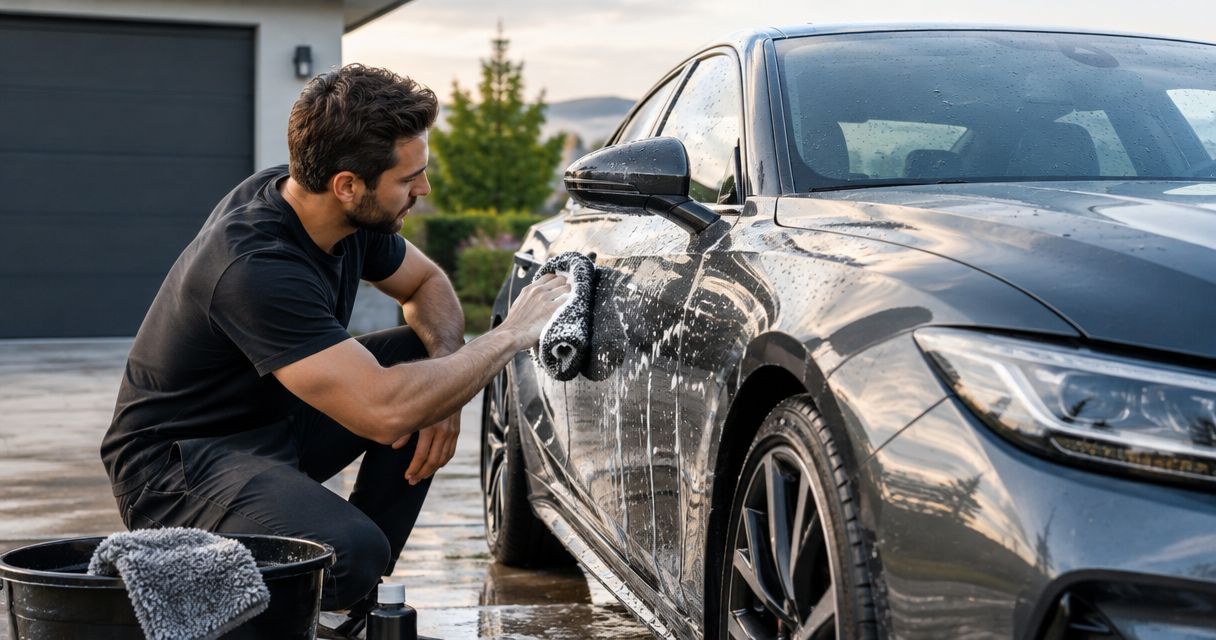
Wash a car with ceramic coating when dirt or road film builds up, and remove bird droppings, insect residue and tree sap promptly instead of waiting for your next scheduled wash. Follow the coating manufacturer’s maintenance instructions for routine washing; a newly applied coating also needs its specified curing period before the first wash.
- How often should you wash a car with ceramic coating? Follow its care instructions and wash sooner when contamination builds.
- Ceramic coating makes cleaning easier; it does not eliminate washing or prevent every water spot.
- Remove bird droppings promptly, and avoid rubbing grit across coated paint.
- EA Detailer provides ceramic coating services for Singapore car owners; maintenance remains necessary after application.
Why this matters in 2026
Ceramic coating reduces maintenance effort, not the need for maintenance. Dirt still settles on the surface, rain leaves contamination behind, and careless washing can scratch the clear coat beneath the coating. Your washing method matters as much as your washing schedule.
For a Singapore daily driver, judge the paint by its exposure and condition rather than its shine alone. A glossy bonnet can still carry road film. The separate guide to how long ceramic coating lasts explains the distinction between coating longevity and routine care.
How often should you wash a car with ceramic coating?
Use the coating manufacturer’s care instructions as your baseline, then bring the wash forward when the car becomes dirty. Do not treat the scheduled wash date as permission to leave contamination on the paint. A sheltered, lightly used car and a daily driver parked outdoors need different attention.
Use this condition-based comparison to decide what needs cleaning now and what belongs in the next full wash. These are maintenance situations, not guarantees about how long contamination remains harmless.
| Situation | Best for | Recommended action | Limitation |
|---|---|---|---|
| Visible road film across several panels | Daily-driven cars | Carry out a proper maintenance wash | A quick rinse does not reliably remove bonded or oily film |
| Bird droppings or insect residue | Localised contamination | Soften and remove promptly using a coating-compatible method | Aggressive rubbing can mark the finish |
| Rain followed by dirty splash marks | Cars used on wet roads | Wash once practical and dry thoroughly | Rainwater alone does not clean the car |
| Light dust on an otherwise clean car | Sheltered, lightly used cars | Inspect before deciding on a full wash | Dry wiping can drag particles over paint |
| Freshly applied coating | Newly protected cars | Follow the installer’s curing instructions | A normal wash routine is not automatically suitable yet |
For your 2026 maintenance plan, separate scheduled washing from contamination removal. The former keeps the whole car clean; the latter deals with a specific problem before the next appointment. Neither replaces the other.
What should trigger an earlier wash?
Bring the wash forward when the lower doors carry traffic film, the rear panel has dirty runoff, or contamination covers more than a small isolated area. Inspect the horizontal surfaces as well as the sides. Bonnet, roof and boot-lid contamination is easy to miss when you only look at the car from standing height.
Do not run your fingertips across dusty paint to decide whether it needs washing. Look under good light instead, then assess the surface during a properly lubricated wash. Touching dirty paint adds friction without giving you a useful maintenance diagnosis.
When is spot cleaning enough?
Spot cleaning suits an isolated deposit on otherwise clean paint. Soften the deposit with a suitable product, lift it gently and use a clean section of microfibre for each pass. Stop if the residue resists removal rather than increasing pressure.
Spot cleaning is not a substitute for washing a car covered in grit or road film. Cleaning a small patch in the middle of a dirty panel makes it difficult to keep contamination out of the towel. In that situation, wash the panel or the car properly.
Why ceramic-coated car wash frequency varies
The right routine follows actual use. These factors explain why a fixed calendar interval cannot describe every coated car:
- Parking exposure: Sheltered parking limits direct exposure, but it does not prevent dust or contamination picked up while driving.
- Road conditions: Wet-road spray and traffic film leave different contamination from light dust on a parked car.
- Driving pattern: Frequent use creates more opportunities for contamination than occasional outings.
- Localised deposits: Bird droppings, insects and sap need attention independently of the normal washing schedule.
- Coating instructions: Curing requirements, approved cleaners and maintenance treatments depend on the coating applied.
- Washing technique: Safe cleaning removes contamination without unnecessary abrasion; rough handling introduces another source of damage.
Keep a simple record during 2026: where the car was parked, what contamination appeared and whether the next wash removed it. Use that record to adjust your routine. A reminder is useful, but the surface condition takes priority.
How should you wash a ceramic-coated car?
Use a low-friction process that removes loose contamination before contact washing. Coating does not make a dirty towel safe, and additional pressure is not a substitute for the right cleaner. Work on cool panels, out of direct sunlight where practical.
1. Inspect
Check for bird droppings, insects, sap, tar and visible staining before starting. Identify anything requiring separate treatment so that you do not scrub it during the general wash. Check the coating’s care instructions before choosing specialist chemicals.
2. Pre-rinse
Rinse away loose dirt before touching the paint. Pay attention to lower panels and areas where road grit collects, without directing concentrated pressure into vulnerable trim or film edges. Follow the equipment and surface-care instructions rather than guessing a safe distance.
3. Contact wash
Use a coating-compatible shampoo and a clean, soft wash mitt. A pH-neutral maintenance shampoo is a common starting point, but the coating manufacturer’s instructions determine suitability. Keep wheel-cleaning tools separate from tools used on painted panels.
Clean with light pressure and prevent removed dirt from returning to the paint. Change or clean contaminated wash media instead of trying to finish the whole car with it. Avoid letting shampoo dry on the surface.
4. Rinse thoroughly
Remove shampoo from panel gaps, mirrors, badges and trim as well as the main painted surfaces. Residue left behind can confuse your assessment of the finish. If a mark remains, identify it before repeating the wash or reaching for a stronger product.
5. Dry gently
Dry with clean, soft microfibre towels or a suitable vehicle dryer. Avoid dragging a saturated or dirty towel across the paint. Check for trapped water that runs out of mirrors and trim after the main panels appear dry.
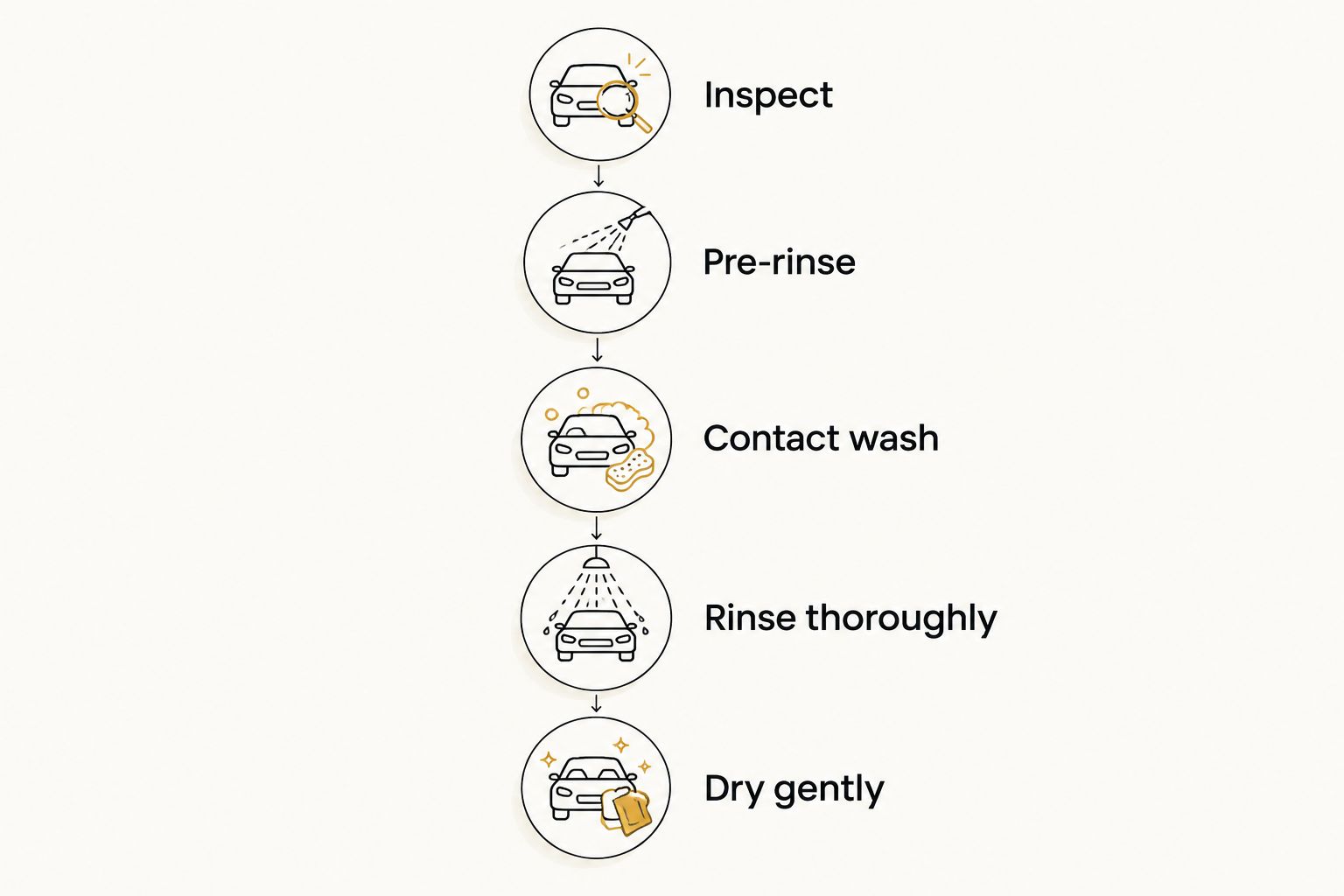
The process stays relevant throughout 2026, whether you wash the car yourself or use a detailing service. Ask whoever maintains the car to follow the same coating-specific instructions. Consistency matters more than adding an unfamiliar treatment at every visit.
What changes after a fresh ceramic coating application?
A newly coated car needs its own handover instructions before it joins your normal washing routine. Do not copy a curing period from another coating or another installer. Confirm when washing is permitted, which products are suitable and what to do if contamination lands during curing.
Ask for those instructions in writing when collecting the car. Keep the coating name, application record and maintenance requirements together, particularly if different people wash the vehicle. That prevents a routine wash from becoming an avoidable aftercare mistake.
If bird droppings land during the curing period, contact the installer for the appropriate removal method. Leaving the deposit indefinitely is not a care plan, but applying an unapproved chemical is not a sound alternative. The coating-specific instructions resolve that conflict.
What if your car also has paint protection film?
Ceramic coating and paint protection film perform different jobs. A coating changes surface behaviour and helps cleaning; PPF provides a physical film over the paint. Neither makes grit safe to rub across the surface.
For cars with XPEL PPF or ChromaGard, confirm the exact material and its care instructions before selecting cleaners or maintenance treatments. Do not assume the same chemical or polishing method suits every coated, filmed, gloss or matte surface. Product names alone do not establish compatibility.
If your car combines film and coating, tell the person washing it which panels have each treatment. Pay particular attention to film edges and avoid treating every visible mark as a paint defect. A surface-care decision should start with identifying the material underneath it.
Does poor water beading mean the coating has failed?
Reduced water beading alone does not establish coating failure. Surface contamination and product residue can change how water behaves, so assess the finish after a suitable wash before deciding that protection needs replacing.
Water behaviour is useful to observe, but it is not a complete durability test. Record where the change occurs and whether cleaning restores the expected behaviour. Avoid applying another product simply to disguise the symptom before the surface has been assessed.
Do not start machine polishing because beading looks weaker. Polishing is abrasive and can remove or alter the coating. Ask a detailer to distinguish contamination, water spotting and coating wear before choosing corrective work.
When should you use a professional detailer?
Use professional assessment when contamination survives a careful wash, staining remains visible, or you cannot identify the surface treatment. EA Detailer suits Singapore car owners seeking professional ceramic coating services. The relevant next step is an assessment of the finish, not an assumption that every mark requires recoating.
EA Detailer provides exterior detailing and paint protection services. When discussing maintenance, describe the coating applied, recent washing products and where the car is parked. Those details help frame the problem without relying on an unsupported diagnosis from appearance alone.
For a 2026 service discussion, ask for the proposed cleaning method and its protection limits. Confirm whether the work is routine washing, decontamination, polishing or coating application. These are different interventions, and you should understand which one is being recommended.
Can you wash a ceramic-coated car too often?
Frequent washing is not automatically harmful; contaminated tools, excessive friction and unsuitable chemicals are the problems to avoid. Wash because the car needs cleaning, not because repeated washing will strengthen the coating. Each unnecessary contact wash adds handling without necessarily solving a surface-care problem.
Is rain enough to clean a ceramic-coated car?
Rain is not a substitute for washing a ceramic-coated car. It does not reliably remove traffic film, and dirty spray adds contamination during driving. Inspect the finish after wet-weather use rather than assuming the rain has completed the maintenance.
Should you use a coating topper after every wash?
A coating topper is not automatically required after every wash. Follow the coating manufacturer’s maintenance instructions and confirm compatibility before adding one. A topper does not replace cleaning, and its water behaviour does not prove the condition of the underlying coating.
FAQ
How often should you wash a car with ceramic coating in Singapore?
Follow the coating manufacturer’s maintenance instructions and wash sooner when dirt or road film builds up. Remove bird droppings, insects and sap promptly rather than waiting for the next scheduled wash.
Can I wash my car straight after ceramic coating?
Wait until the coating’s specified curing instructions permit washing. Get the timing and approved cleaning methods from the installer rather than copying advice for a different coating.
Can I wipe dust off a ceramic-coated car?
Do not dry-wipe dusty coated paint. Dust particles can be dragged across the finish; use an appropriate lubricated cleaning method instead.
What shampoo should I use on ceramic coating?
Use a shampoo approved for the coating applied to your car. A pH-neutral maintenance shampoo is a common starting point, but compatibility and dilution instructions still matter.
Do I need to dry a ceramic-coated car after washing?
Dry the car after washing rather than relying on water beading alone. Water left to evaporate can leave mineral deposits, including on a coated surface.
Does ceramic coating stop scratches from car washing?
Ceramic coating does not make the paint scratch-proof. Clean wash media, lubrication and light pressure remain necessary to reduce washing-related marks.
Can EA Detailer help with ceramic coating maintenance?
EA Detailer provides professional exterior detailing and ceramic coating services in Singapore. Share the coating details and surface symptoms when discussing the appropriate maintenance approach.
One last thing
Put contamination removal on a separate reminder from the full wash. Your scheduled appointment handles routine cleaning; a bird dropping needs attention when you find it. That distinction is more useful than treating any fixed interval as a guarantee of safe paintwork.
Related guides
- Can ceramic coating be applied over PPF?
- Automatic reminders for ceramic coating maintenance washes
- Can you remove ceramic coating once it is applied?

Leave a Reply