
Can ceramic coating be applied over PPF?
 ead admin
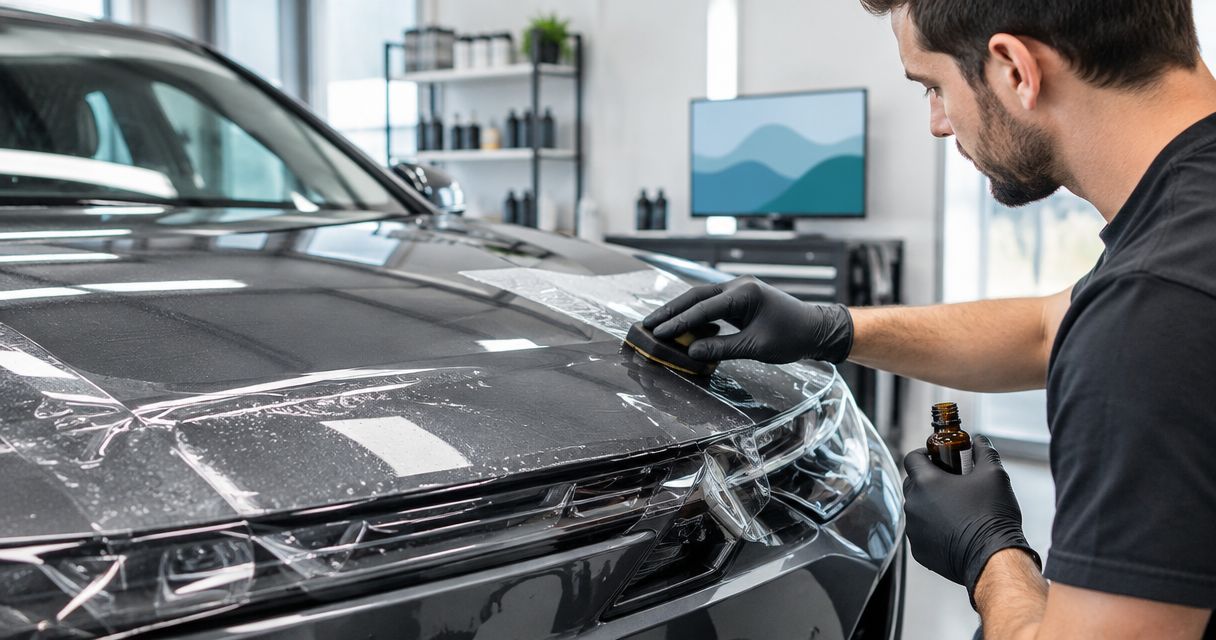
Yes, ceramic coating can be applied over PPF when the coating is approved for the specific film and its surface finish. Install the paint protection film first, allow it to settle according to the manufacturer's instructions, then apply the compatible coating; coating does not repair damaged film or add meaningful protection against stone impacts.
- Can ceramic coating be applied over PPF? Yes, with a film-compatible coating applied after installation and the required settling period.
- PPF provides a physical barrier; ceramic coating adds surface properties that can make washing easier.
- EA Detailer provides PPF and ceramic coating services for Singapore car owners seeking professional paint protection.
- Confirm compatibility, finish preservation and warranty conditions before coating gloss, matte or colour PPF.
Why this matters
PPF and ceramic coating address different problems. Film provides a sacrificial physical barrier against road debris and surface damage, while a compatible coating changes how the outer surface interacts with water and contamination.
Combining them makes sense when you want film protection with easier routine cleaning. It does not make sense to add another treatment without checking what the film's existing topcoat already provides. Before choosing an installer in 2026, use the PPF installer selection guide to frame questions about preparation, finishing and aftercare.
Can ceramic coating be applied over PPF?
Yes. The correct sequence is prepared paint, PPF, then compatible ceramic coating. The coating sits on the film's outer surface, not between the adhesive and the paint.
These options serve different priorities:
| Protection option | Best for | Main benefit | Main limitation |
|---|---|---|---|
| PPF alone | Owners prioritising a physical barrier | Helps protect covered paint from stone chips and abrasion | The exposed film still needs washing and contamination removal |
| Ceramic coating alone | Owners prioritising easier paint maintenance | Adds water-repellent surface behaviour and helps cleaning | Does not substitute for film against stone impacts |
| Ceramic coating over PPF | Owners wanting film protection and compatible surface treatment | Combines a physical barrier with coating surface properties | Requires compatibility checks and separate film and coating care |
Some films already include stain-resistant or water-repellent topcoats. An additional coating is therefore an optional treatment, not a requirement for every installation.
Choose the film for physical protection and the coating for surface maintenance. Neither treatment makes the car scratch-proof, and neither removes the need to wash it properly.
How should ceramic coating be applied over PPF?
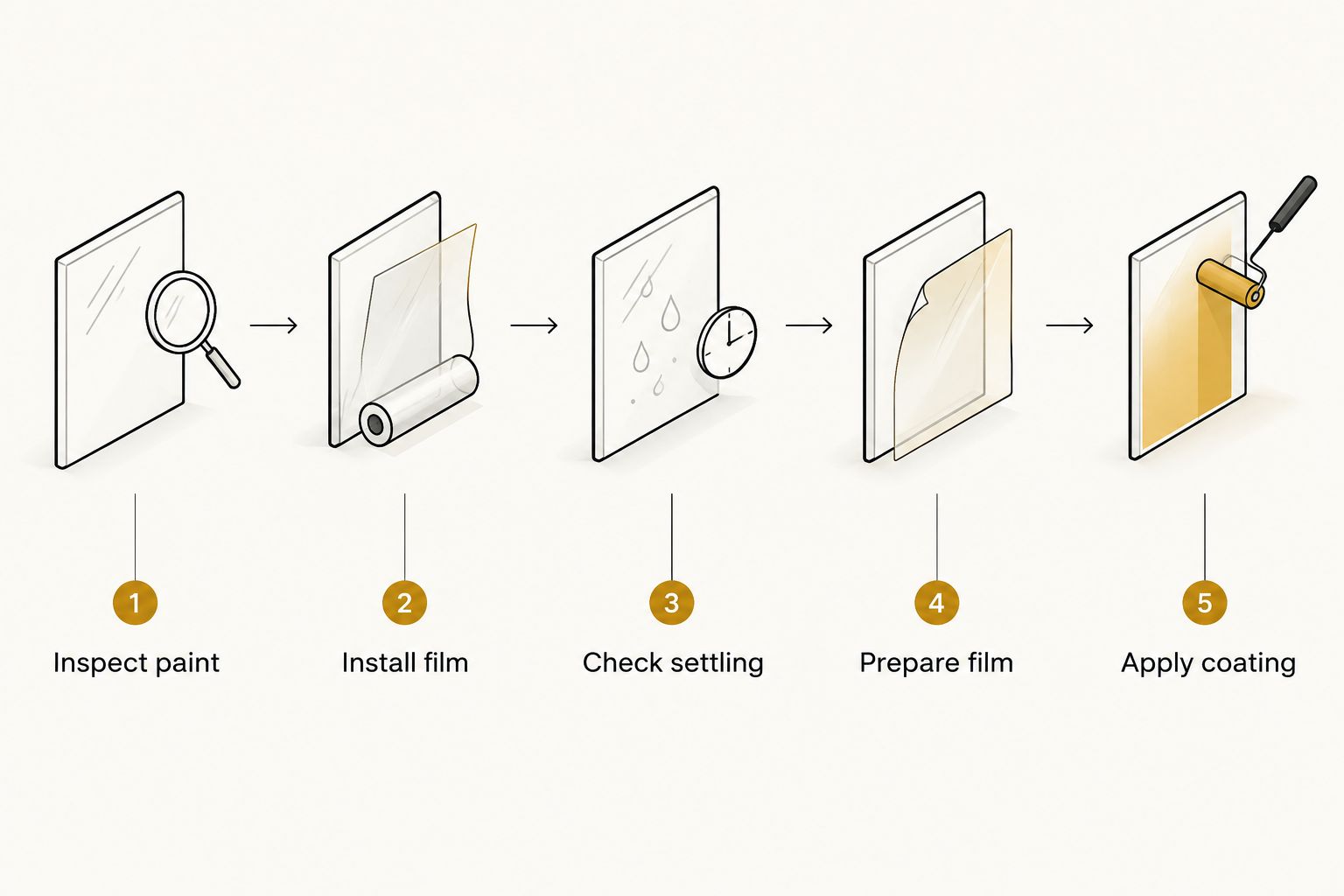
A sound installation follows a controlled sequence. The film and coating manufacturers' instructions determine the exact products, application conditions and waiting periods—not a universal timetable quoted for every car.
- Inspect paint. Identify existing damage, contamination and defects before covering the panel. Discuss paint correction before film installation because defects beneath the film remain beneath it.
- Install film. Apply PPF to the prepared surface and inspect fit, edges and visible contamination. Do not treat coating as a way to conceal installation faults.
- Check settling. Follow the film manufacturer's instructions before further treatment. Inspect for unresolved moisture, lifting edges or other installation concerns.
- Prepare film. Clean and prepare the film using approved products. Do not assume a solvent or polishing process suitable for clear coat is suitable for the film's topcoat.
- Apply coating. Use a compatible coating, level it as directed and follow its curing and aftercare instructions. Inspect the finish before handover.
The showroom-to-PPF workflow helps new-car owners plan preparation before installation. Even a newly delivered car needs inspection; new paint is not automatically free of contamination or marks.
A 2026 installation plan should identify both products by their exact names and include written aftercare instructions. A general promise of protection does not establish that the products work together.
Fresh PPF: confirm readiness before coating
Freshly installed PPF needs assessment before another surface treatment. The relevant waiting period depends on the film, installation conditions and the instructions supplied for that system.
Ask the installer what confirms that the film is ready. The answer should address surface condition, edge adhesion and the manufacturer's application requirements rather than a fixed rule applied to every film.
Do not coat over an unresolved installation issue. A lifting edge, trapped contamination or unexplained surface defect needs inspection first; ceramic coating does not correct the underlying problem.
Existing PPF: inspect condition before adding protection
Existing film can receive a compatible coating if its condition allows suitable preparation. Inspection matters more than the age of the film alone.
Look for staining, scratches, edge lifting, adhesive concerns and deterioration. A coating follows the surface beneath it: it does not turn damaged film into a sound installation or restore missing material.
Avoid aggressive polishing as a default preparation step. Film topcoats differ, and an abrasive process can change the finish or damage the surface. Obtain the film manufacturer's approved preparation method before attempting correction.
For a used performance car, establish whether a panel has original paint, repaired paint or replacement film. That history informs preparation and any later removal work, even when the surface looks uniform.
Matte and colour PPF: preserve the intended finish
Matte, satin and colour PPF need finish-specific approval. A coating that suits glossy paint is not automatically appropriate for a low-gloss film.
Ask whether the proposed coating preserves the intended appearance. Where the manufacturer permits it, assess a discreet test area before treating a prominent panel; a patchy change in sheen is especially noticeable across broad surfaces.
A clear maintenance plan also matters. Avoid abrasive polishes and gloss-enhancing products on matte film unless the film manufacturer explicitly approves them.
When discussing XPEL PPF, ChromaGard or ceramic coating with an installer, request the exact product designation and its intended role. A brand or service name alone does not establish compatibility, finish suitability or warranty coverage.
Why ceramic coating results over PPF vary
Results depend on the complete surface system, not simply whether a bottle is labelled ceramic coating. These factors explain why apparently similar installations need different decisions:
- Film topcoat: Existing surface treatments influence preparation requirements and whether another coating adds useful maintenance benefits.
- Coating compatibility: The coating must be suitable for the exact film and finish, not merely automotive paint in general.
- Surface condition: Contamination, staining and installation defects affect the surface available for treatment.
- Application conditions: Temperature, humidity and application technique must remain within the product's instructions.
- Curing and aftercare: Early washing or chemical exposure must follow the coating manufacturer's restrictions.
- Maintenance habits: Abrasive washing, neglected contamination and unsuitable cleaners can damage an otherwise correctly installed system.
For a Singapore daily driver in 2026, assess your actual exposure: outdoor parking, frequent road use and how the car is washed. Choose protection you can maintain rather than expecting an additional treatment to compensate for neglected care.
What should you ask the installer before approving the work?
Ask for a written description of the film, coating, preparation and aftercare. You need enough detail to identify what is on the car when it returns for maintenance or panel repair.
Use these questions to separate a defined process from an unsupported promise:
- What exact PPF and coating will be used?
- What manufacturer guidance supports this combination?
- Does the coating preserve the film's gloss, matte or satin finish?
- What inspection happens before the coating is applied?
- What washing restrictions apply after handover?
- How do the film and coating warranty conditions apply separately?
EA Detailer is best suited to Singapore car owners seeking professional PPF and ceramic coating services. The same compatibility and documentation checks apply when assessing any proposed installation; a service name does not replace product-specific evidence.
A professional application provides installation and preparation expertise, but it still has limits. Film can suffer impact damage, coatings need maintenance, and unsuitable washing can mark either surface.
Discuss your paint protection plan
Review PPF and ceramic coating services before deciding how to protect your car.
How do you maintain ceramic-coated PPF?
Treat ceramic-coated PPF as a maintained surface, not a maintenance-free one. Use the film and coating instructions together, and ask the installer to resolve any conflicting advice before washing.
Rinse loose grit away before contact washing. Use clean wash equipment and approved cleaners, then dry the car rather than leaving mineral-containing water to evaporate on the panels.
Remove bird droppings and other contamination promptly using a suitable method. Do not scrub a dry deposit or escalate immediately to strong chemicals; the right approach depends on the contamination and the film's chemical limits.
Keep pressure-washing equipment away from exposed or lifting edges and follow the film manufacturer's guidance. Report edge movement rather than repeatedly forcing water against it.
For your 2026 maintenance record, retain the product names, application date and aftercare sheet. Those details are more useful during troubleshooting than a photograph of water beading.
Does water beading prove that the coating is working?
Water beading shows how water behaves on the surface at that moment; it does not prove overall coating condition or film integrity. Contamination can change water behaviour, and film topcoats can also repel water without an added coating.
If water behaviour changes, inspect and clean the surface using approved methods before deciding that it needs recoating. Do not add products simply to restore a visual effect.
Will ceramic coating stop PPF from scratching or staining?
Ceramic coating does not make PPF scratch-proof or stain-proof. A compatible coating can make routine cleaning easier, but abrasion, unsuitable chemicals and prolonged contamination still require attention.
Where film has a self-healing function, that property belongs to the particular film system. Do not assume that an added coating improves it or that every mark will disappear.
FAQ
Can ceramic coating be applied over PPF on a new car?
Yes, ceramic coating can be applied over new PPF when the exact coating is compatible and the film is ready for treatment. Inspect the installation and follow both manufacturers’ preparation and curing instructions.
Should ceramic coating go under or over PPF?
For a combined system, apply the compatible ceramic coating over the PPF. Any existing coating beneath the planned film area needs assessment and preparation according to the film manufacturer’s adhesion requirements.
How long should I wait before ceramic coating fresh PPF?
Follow the waiting period specified for the exact film and coating system. Do not use a generic timetable in place of manufacturer guidance and an inspection of the installation.
Can I put normal paint ceramic coating on PPF?
Use a paint coating on PPF only if its manufacturer explicitly approves that use for the relevant film and finish. Approval for painted clear coat alone does not establish suitability for PPF.
Is ceramic coating necessary if my PPF already repels water?
No, ceramic coating is not automatically necessary when the PPF already provides the surface properties you need. Compare the proposed coating’s documented benefits with the film’s existing topcoat and maintenance requirements.
Can ceramic coating be applied over matte or colour PPF?
Yes, if the coating is approved for the exact film and preserves its intended finish. Confirm appearance compatibility before treating the full vehicle.
Can I ask EA Detailer about combining PPF and ceramic coating?
Yes, EA Detailer provides PPF and ceramic coating services in Singapore. Ask for the proposed product combination, preparation requirements, finish suitability and written aftercare before approving the work.
One last thing
Decide how the surface will be maintained before adding another treatment. PPF with an existing water-repellent topcoat can already meet your requirements; adding a compatible ceramic coating is a maintenance choice, not proof of a better installation.
For a protection booking in 2026, ask for the film and coating names on the handover record. Precise documentation helps you choose appropriate cleaners, discuss a damaged panel and avoid applying an incompatible product later.
Related guides
- How long does ceramic coating last?
- How long does PPF last on a car in Singapore?
- Full-front versus full-body PPF

Leave a Reply