
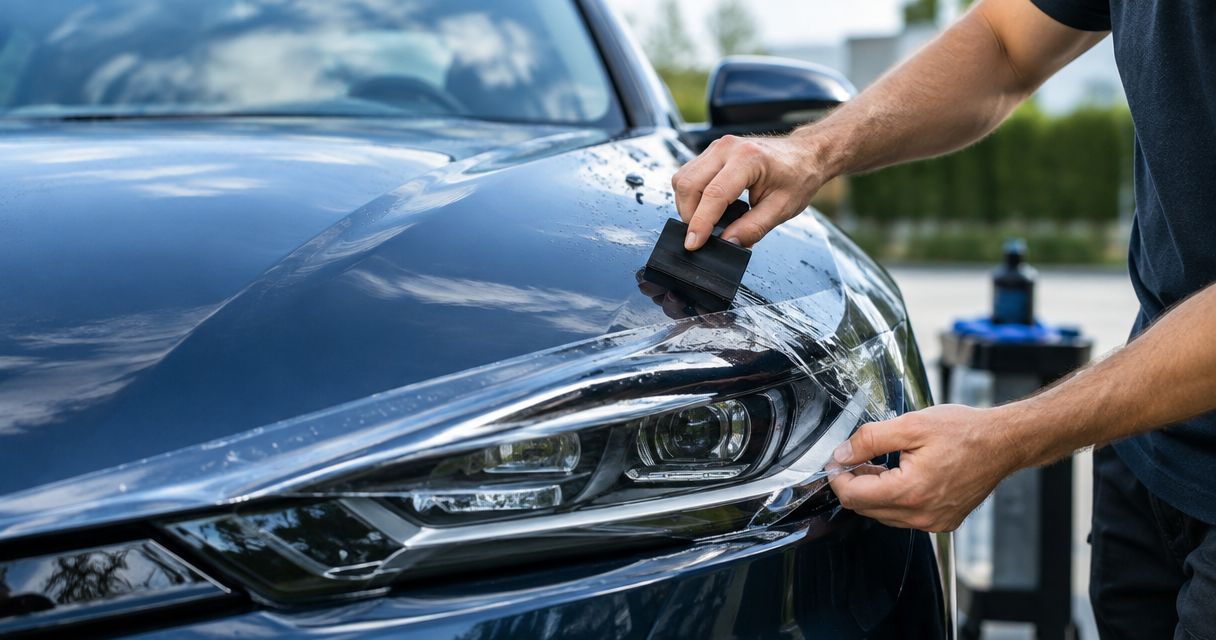
Yes, PPF can prevent stone chips from reaching your new car’s paint by placing a sacrificial film between the paintwork and road debris. It does not stop every impact: sharp stones, forceful strikes and debris hitting uncovered areas can still damage the paint.
- Can PPF prevent stone chips? Yes, but paint protection film reduces damage risk rather than making paint impact-proof.
- Prioritise exposed panels and documented coverage; ceramic coating is not a substitute for stone-chip protection.
- EA Detailer provides PPF services for Singapore car owners protecting new-car paintwork.
- Self-healing addresses suitable surface marks, not punctures, missing film or chipped paint underneath.
Why This Matters
A stone chip removes paint; washing and polishing cannot put that missing material back. Protecting intact paint therefore serves a different purpose from correcting swirl marks or improving gloss.
For a new car collected in 2026, arrange a paint inspection before choosing protection. New does not mean defect-free, and film preserves the surface beneath it rather than correcting that surface. A planned showroom collection to paint protection film workflow separates inspection, preparation and installation instead of treating them as one unexplained service.
Choose PPF for impact protection, not because you expect a maintenance-free or damage-proof car.
Can PPF Prevent Stone Chip Damage On A New Car?
PPF can absorb or spread some impacts that would otherwise strike paint directly. The film becomes the exposed surface, so an impact can mark the film while leaving the paint beneath intact. Protection depends on the impact, the film and whether the affected area is actually covered.
The distinction between PPF and ceramic coating matters here. Both belong in a paint-care discussion, but they do not perform the same job.
| Protection option | Best for | Main benefit | Main limitation |
|---|---|---|---|
| Paint protection film | Owners prioritising stone-chip protection | Adds a sacrificial physical barrier over covered paint | Can be cut, punctured or damaged; uncovered areas remain exposed |
| Ceramic coating | Owners prioritising easier cleaning and surface maintenance | Helps reduce dirt adhesion and supports water repellency | Does not provide equivalent protection against stone impacts |
| Unprotected paint | Owners accepting direct exposure and future paint repairs | Has no added film edges or protective layer to maintain | Road debris strikes the paint surface directly |
A coating over compatible PPF can serve a cleaning-related purpose, but it does not make the underlying film impenetrable. For a 2026 protection decision, identify the damage you want to reduce before comparing finish descriptions.
Full-front PPF: Best For Prioritising Frontal Exposure
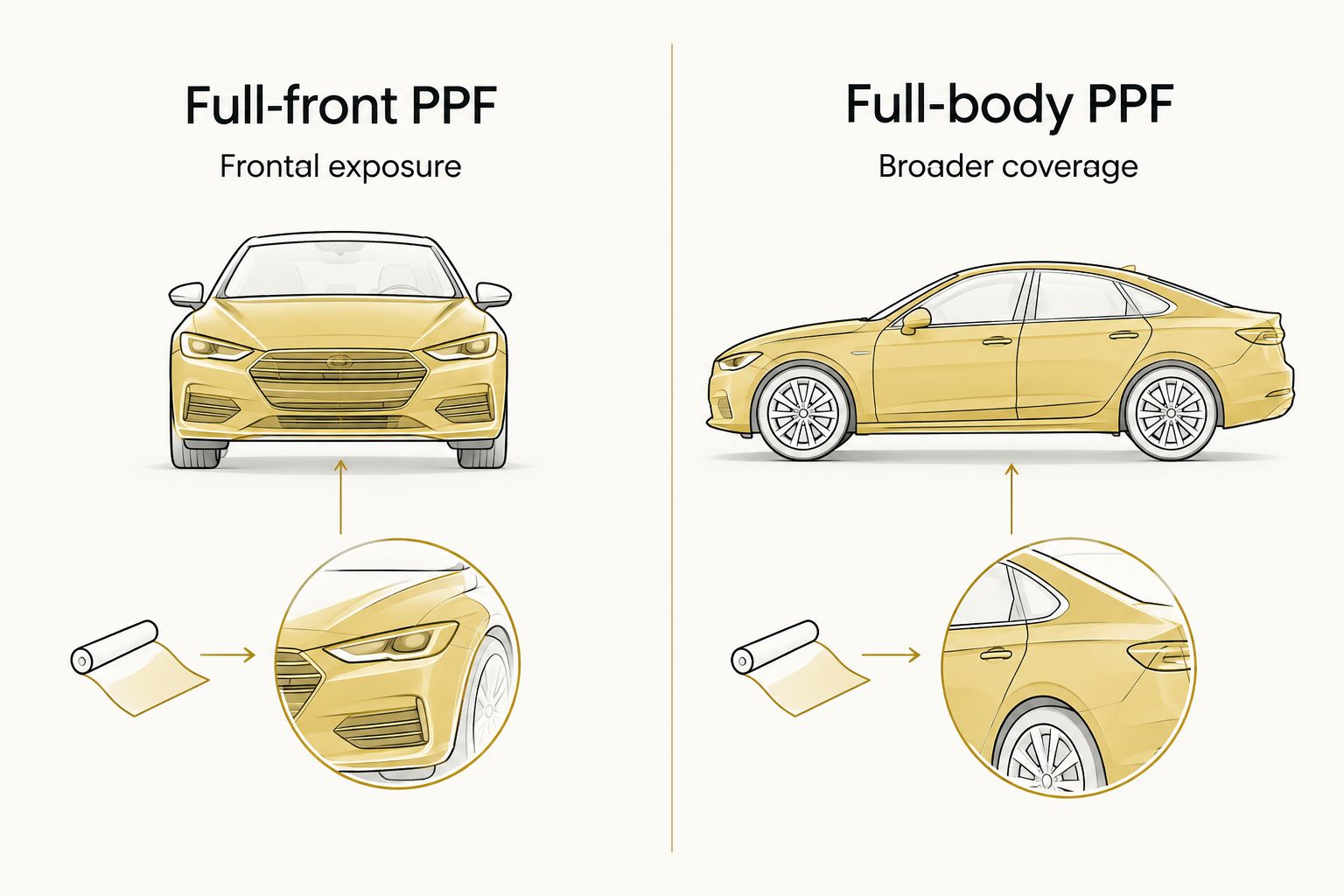
Full-front PPF is the focused choice when your main concern is debris striking the front of the car. Ask for the actual panel list rather than assuming every installer uses the same definition.
A proposed installation might include the front bumper, bonnet and front wings, but those areas must appear in the written scope. Mirror caps, headlights, lower sections and other details need separate confirmation. Do not infer their inclusion from a package name or a photograph.
The advantage is a concentrated protection plan for frontal exposure. The limitation is straightforward: doors, rear quarters and other excluded panels receive no film protection.
Check whether the bonnet receives complete coverage or only a leading-edge section. A partial panel leaves a boundary across the paint and leaves the remaining surface exposed. Neither approach is automatically wrong, but you should understand that compromise before approving the installation.
Full-body PPF: Best For Broader Painted-panel Coverage
Full-body PPF suits owners who want protection beyond the front of the car. It extends the coverage discussion to doors, rear quarters and other painted areas exposed to everyday use.
Broader coverage does not mean every surface is covered. Textured trim, badges, panel recesses and complex edges require clarification. Ask the installer to identify exclusions on your actual vehicle rather than relying on the phrase full-body.
The benefit is protection across more painted surfaces. The trade-off is a larger installation scope, more edges to inspect and more film-covered areas to maintain or replace if damaged.
For a luxury or performance car, look closely at lower side panels and the areas behind the wheels. Body shape and wheel position influence where debris reaches the paint. Select coverage around those exposed areas, not solely around the car’s badge or value.
Why Stone-chip Protection Varies
No single film description predicts the outcome of every stone strike. These factors explain why one impact leaves only a film mark while another reaches the paint:
- Impact energy: Faster-moving debris carries more energy, increasing the demand placed on the protective layer.
- Stone shape: A sharp edge concentrates force differently from a rounded surface and can puncture film.
- Impact angle: The direction of a strike changes how the debris meets the film and painted panel.
- Coverage boundaries: Exposed paint beside an edge, opening or excluded panel has no film barrier.
- Film condition: Cuts, lifting and existing damage require inspection rather than an assumption that protection remains unchanged.
- Paint condition: Existing chips, repairs and poorly bonded paint affect preparation and the risks associated with later removal.
Treat any claim that PPF prevents all stone chips as a reason to ask harder questions. A credible explanation includes failure limits as well as protective benefits.
What Should Happen Before Film Touches Your New Car?
For a new-car installation in 2026, preparation should start with inspection, not automatic polishing. The objective is a clean, suitable surface without removing sound paint unnecessarily.
- Inspect the paint. Examine the panels under suitable lighting and record existing chips, scratches, staining and any known repairs. Photograph defects before work starts.
- Clean and decontaminate. Remove dirt and bonded contamination using methods appropriate to the surface. Trapped contamination can remain visible beneath film and interfere with the finish.
- Agree on correction. Discuss which defects justify correction before installation. Do not assume every new car needs aggressive polishing or that film will conceal every mark.
- Confirm the pattern. Establish panel coverage, cut-outs, edge treatment and any areas requiring particular care. Ask how cutting near the paint is controlled.
- Inspect the completed work. Review alignment, contamination, edges and the installer’s explanation of settling and aftercare. Record concerns for follow-up rather than pressing or lifting the film yourself.
These steps are inspection criteria, not a claim that every installer follows an identical process. Ask the business to explain its own procedure and demonstrate the relevant work.
A clean-looking handover is not enough on its own. You also need to know what was covered, what preparation was performed and what to do if an edge changes afterwards.
Does Self-healing PPF Repair Stone-chip Damage?
Self-healing PPF does not regenerate missing material. Its surface properties can allow suitable light marks to diminish under the conditions specified for that film, but a cut or puncture is a different type of damage.
A useful distinction is whether the surface is merely marked or physically breached. A shallow surface mark and a hole through the film should not receive the same diagnosis.
Do not treat self-healing as a promise that stone damage disappears. Ask the installer to distinguish cosmetic surface recovery from damage requiring film replacement.
This distinction also applies when evaluating demonstrations in 2026. A demonstration involving fine surface scratches does not establish resistance to every road-debris impact. Request evidence relevant to the risk you are buying protection against.
What Happens If A Stone Damages The Film Or Paint?
Inspect the affected area before deciding that the paint needs repair. Damage can stop within the film, extend through it or occur beside an uncovered boundary. Those outcomes call for different work.
If the film is damaged but the paint is intact, the discussion concerns the affected film section and its replacement. If paint is missing, replacing the film alone will not restore the finish. The paint defect needs assessment before fresh protection is installed.
The same distinction matters when repairing a scratched bumper: a surface mark, damaged paint and damage to the bumper itself are different repair questions. A stone mark on PPF should not automatically become a recommendation to repaint or replace a body component.
Avoid pulling back film to inspect the paint yourself. Photograph the area and let the installer assess whether removal is necessary. Keep any replacement-film scope separate from paint repair so you understand exactly what each operation addresses.
Protection has done useful work when a replaceable layer takes damage that would otherwise have reached the original finish. That does not mean every damaged film section can remain in service indefinitely.
How Do You Judge A PPF Installer’s Proposal?
Compare proposals using the same coverage requirements. Otherwise, a detailed installation and a narrowly defined package can appear equivalent when they protect different surfaces.
Ask for the exact manufacturer and film designation, the intended finish, the panel list and the exclusions. Request the applicable manufacturer documentation rather than treating a generic claim about PPF as proof of a particular film’s properties.
Inspect examples of edge treatment and difficult panel shapes. Look for an explanation of why an edge is wrapped, trimmed or left with a defined margin. An absolute promise that every edge will be invisible ignores differences between vehicles and installation patterns.
EA Detailer provides PPF services for Singapore car owners seeking paint protection. Its services include XPEL PPF, ChromaGard Colour PPF and ceramic coating; these are different choices, not interchangeable descriptions of the same protection. Ask EA Detailer to specify the material, coverage and preparation proposed for your vehicle, then assess that proposal against your priorities.
Keep the decision tied to evidence: written scope, product documentation, completed-work inspection and clear aftercare. A premium label does not replace those checks.
How Should You Maintain PPF After Installation?
Follow the installer’s film-specific instructions before the first wash. Adhesive settling, edge behaviour and approved cleaning methods depend on the installation and material; a universal waiting period is not a substitute for those instructions.
Once washing is permitted, remove loose grit before making contact with the surface. Use clean wash equipment and compatible cleaning products. Film reduces certain damage risks, but dragging abrasive dirt across it can still mark the surface.
Keep concentrated pressure-washer spray away from film edges and avoid picking at lifted areas. If you notice lifting, staining or an impact mark, arrange an inspection instead of experimenting with solvents, abrasive polish or heat.
For your 2026 handover, request written instructions covering washing, contamination removal, edge concerns and inspection arrangements. Keep those instructions with the installation record so a later detailer does not mistake film for bare paint.
Maintenance supports the condition of the protective layer. It cannot reverse a puncture, restore missing film or guarantee that the paint beneath survived an impact.
Should You Install PPF Before Driving A New Car?
Installing PPF before routine driving reduces the opportunity for chips to occur before protection is fitted. It does not require skipping inspection or accepting rushed preparation.
Plan collection and installation together, then minimise unnecessary driving between them. If a chip appears before the appointment, disclose it and agree on treatment rather than asking the film to hide it.
Is Ceramic Coating Enough If Stone Chips Are Your Main Concern?
Ceramic coating is not equivalent to PPF for stone-chip protection. Choose it for its surface-care role, not as a replacement for a sacrificial impact barrier.
If both cleaning behaviour and impact protection matter, discuss compatible treatments and their separate maintenance requirements. Adding services makes sense only when each addresses a defined need.
FAQ
Can PPF prevent stone chips completely?
PPF cannot prevent stone chips completely. It reduces the risk of paint damage on covered areas, but sharp debris, forceful impacts and uncovered surfaces remain limitations.
Is PPF worth considering on a brand-new car?
PPF is worth considering when preserving intact paint against road-debris impacts is a priority. Inspect the new car before installation and choose coverage around the areas you want protected.
Will ceramic coating stop stones from chipping my paint?
Ceramic coating does not provide equivalent stone-chip protection to PPF. Its surface-care benefits should not be confused with a sacrificial film barrier.
Does self-healing PPF repair a hole caused by a stone?
Self-healing PPF does not repair a hole or replace missing film. Surface-mark recovery and puncture repair are different issues.
Can I put PPF over an existing stone chip?
PPF does not repair an existing stone chip. Have the defect assessed before installation and agree on whether paint repair is appropriate.
Do I need full-body PPF to protect a new car?
Full-body PPF is not necessary for every owner. Front-focused coverage suits a narrower protection goal, while broader coverage extends protection to additional painted panels.
Should damaged PPF always be replaced immediately?
Damaged PPF needs assessment before you decide on replacement. The appropriate response depends on whether the film is superficially marked, breached, lifting or concealing paint damage.
One Last Thing
Make a coverage record, not just a booking. Keep the panel list, film designation, preparation notes and photographs together. Those records help distinguish a failure within a protected area from damage on paint that was never covered.
After an impact, ask whether the paint survived—not merely whether the film looks marked. A visible mark in a sacrificial layer can be consistent with that layer doing its job. The meaningful outcome is the condition of the paint beneath it.
Related Guides
- Full-front vs full-body PPF
- How to choose a PPF installer in Singapore
- How soon can you wash your car after PPF installation?
- Can ceramic coating be applied over PPF?