

Is PPF Worth It for Car Owners in Singapore?

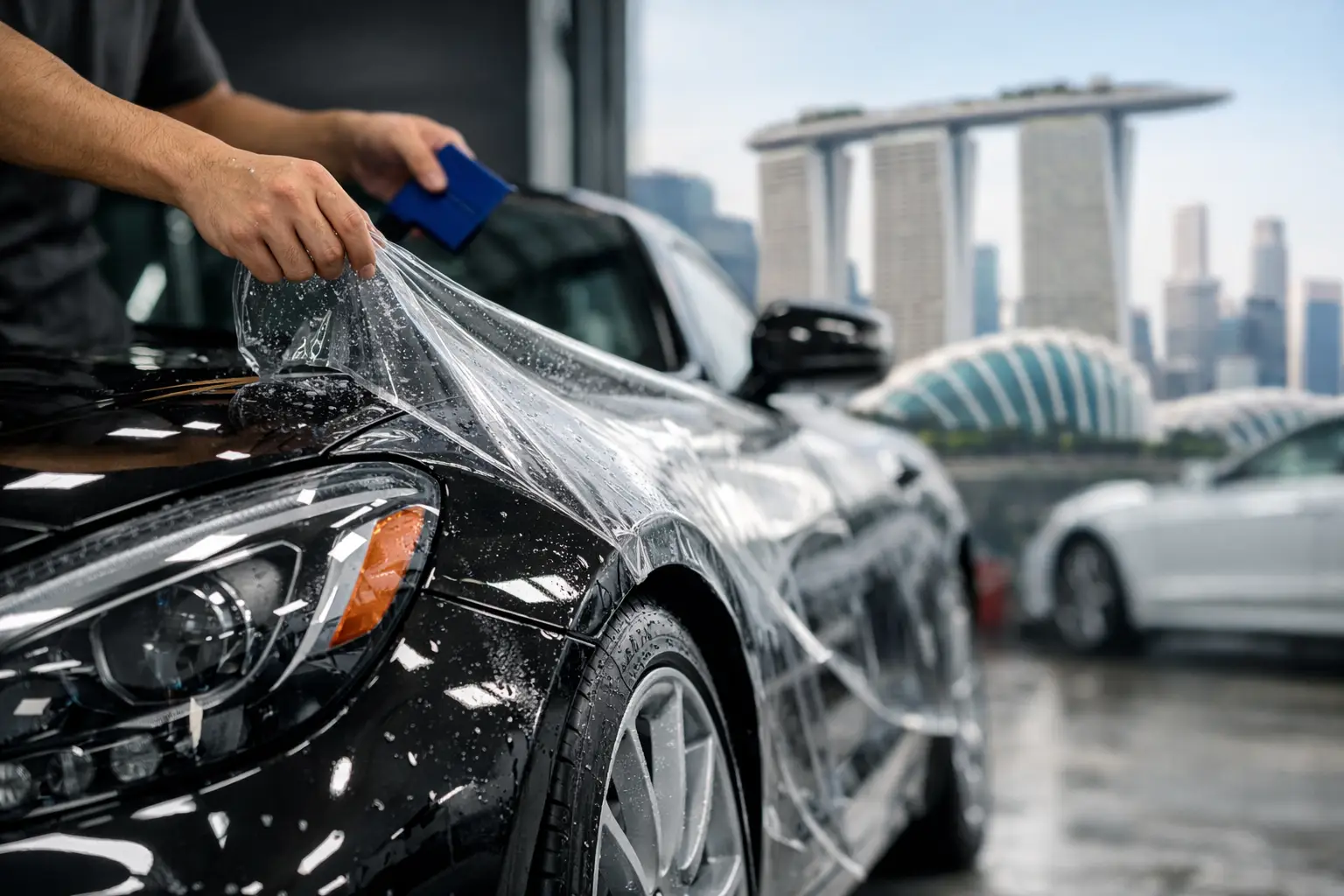
The first stone chip usually appears earlier than most owners expect. One expressway run behind a lorry, one careless door edge in a tight carpark, one season of relentless sun and road grime – and the factory finish no longer looks quite factory fresh. That is why so many owners eventually ask the same question: is PPF worth it?
In Singapore, that question deserves a more precise answer than a simple yes or no. Paint protection film is not a cosmetic indulgence for every car, and it is not a magic shield against every form of damage. But for the right owner, on the right vehicle, with the right installation, it can be one of the most rational preservation decisions you make.
Is PPF worth it in Singapore?
For many premium and high-value vehicles, yes – particularly if you care about preserving original paint, maintaining presentation, and avoiding repeated paint correction or panel resprays. Singapore is not a forgiving environment for exterior finishes. UV exposure is constant, heat builds quickly, humidity lingers, and roads carry fine debris, tar, grime, and contamination that slowly abrade appearance over time.
Even without high-speed highway mileage every day, local driving presents its own wear profile. Multi-storey carparks, narrow lots, frequent washing, roadside dust, bird droppings, tree sap, and urban fallout all contribute to paint deterioration. A modern paint system is durable, but it is still vulnerable at the surface. PPF exists to absorb that wear before your clear coat does.
The real value of PPF is not that it keeps a car immortal. It is that it helps preserve the finish that is hardest to replicate once lost – the original factory paint.
What you are really paying for
When owners compare PPF pricing against coating or routine detailing, the number can feel substantial. That is understandable. PPF is a premium material, and proper installation is skilled, labour-intensive work. It is not simply a liquid applied and buffed off. Panels are prepared meticulously, film is cut or templated for precision, edges are wrapped where possible, and installation quality determines both appearance and longevity.
So the better question is not whether PPF is expensive. It is whether the protection outcome justifies the cost for your ownership priorities.
You are paying for impact resistance against stone chips and road rash, a sacrificial barrier against light surface marring, resistance to chemical staining from common contaminants, and in many modern films, self-healing behaviour for minor swirl marks under heat. You are also paying for a reduction in future corrective work. If the film takes the abuse, your paint does not have to.
That distinction matters more on darker colours, softer paint systems, and vehicles with broad, exposed front-end surfaces. It matters even more on cars where repainting a panel may compromise originality, colour consistency, or resale confidence.
When PPF makes clear sense
PPF tends to make the strongest financial and practical case in a few specific scenarios. The first is a new or nearly new vehicle. Once paint has already accumulated chips, scratches, and wash marring, film can still protect it, but the preservation advantage is greatest when applied early.
The second is ownership of a luxury, performance, executive, or enthusiast vehicle. These vehicles often carry higher repaint costs, stricter cosmetic expectations, and stronger owner sensitivity to appearance. A front bumper peppered with chips may be tolerated on a basic commuter. On a prestige vehicle, it changes the whole impression.
The third is long-term ownership. If you plan to keep the car for years, the benefit compounds quietly. You spend less time correcting preventable damage and maintain a more consistent finish over the life of the vehicle. For owners who rotate cars quickly, the value depends more on usage and whether pristine presentation supports resale.
And then there is the owner profile itself. If you are particular about condition, notice every swirl under showroom lighting, and prefer prevention over rectification, PPF often feels worthwhile because it aligns with how you already care for the car.
When PPF may not be worth it
Not every vehicle needs full-body film, and not every owner will recover the cost in a way that feels satisfying. If the car is older, already has visible paint defects, and serves mainly as a practical runabout, extensive PPF may not be the most sensible allocation of budget. In that case, selective protection or a quality coating could be the more proportionate choice.
It may also be less compelling if you rarely keep cars beyond a short ownership cycle, park almost exclusively indoors, drive limited mileage, and are comfortable accepting normal wear. Some owners simply do not mind a few chips and marks. There is nothing wrong with that. PPF is most valuable to people who actively dislike cosmetic deterioration.
Another important point is expectation. If someone wants PPF to prevent dents, deep gouges, careless impact damage, or every possible scratch, disappointment usually follows. Film is highly capable, but it is still a protective layer, not armour plating.
PPF vs coating – where owners get confused
This is where many buying decisions go off course. Paint protection coating and PPF are not interchangeable, even though both sit under the broad category of paint protection.
A coating is excellent for gloss enhancement, easier maintenance, hydrophobic behaviour, and resistance to certain contaminants. It helps the paint stay cleaner and look sharper. What it does not do nearly as well as film is absorb physical impact. A coating will not meaningfully stop stone chips.
PPF, on the other hand, is designed primarily as a physical barrier. It can also deliver gloss, depth, and easier maintenance, but its standout advantage is impact and abrasion resistance. For that reason, many discerning owners choose them for different jobs rather than treating them as direct alternatives.
If your main fear is wash swirls and cleaning convenience, coating may be enough. If your main fear is chipped paint on the bumper, bonnet, fenders, mirrors, and high-impact areas, PPF is the more appropriate answer.
Is partial PPF worth it?
Very often, yes. Not every car requires a full-body installation to benefit meaningfully from film. In fact, for many owners, a front-end package offers the smartest balance between cost and protection.
The front bumper, partial or full bonnet, front fenders, side mirrors, headlights, and door cups tend to take the most punishment. Protecting those areas addresses the highest-risk zones without committing to the cost of wrapping the entire vehicle.
Full-body PPF becomes easier to justify when the vehicle is especially valuable, finished in sensitive paint, driven often, or expected to remain in collector-grade condition. For everyone else, selective coverage can still deliver substantial preservation value.
The installation matters as much as the film
A premium film poorly installed will never feel worth it. This is one of the most overlooked truths in the category.
Good PPF should look discreet, fit with precision, and sit cleanly on the panel. Poor work reveals itself through visible edges, trapped contamination, lifting corners, inconsistent alignment, or an orange-peel look that detracts from the car rather than elevates it. The material matters, but so do preparation standards, panel handling, cutting accuracy, and finishing discipline.
That is why PPF should be evaluated as both a product and a craft. The connoisseur’s guide is not just about what brand of film is used. It is about whether the installer understands how to preserve the visual integrity of the vehicle while delivering genuine protection.
See how EA Detailer approaches XPEL paint protection film installation in Singapore, including paint inspection, preparation, pattern fit and edge finishing.
The resale question
Will PPF guarantee higher resale? Not automatically. Buyers do not always pay back every dollar spent on protection.
What it often does, however, is help the car present better when the time comes to sell or trade in. Cleaner paint, fewer chips, fewer refinishing histories, and stronger overall condition can support confidence and desirability. On premium vehicles especially, originality and cosmetic integrity carry weight.
More importantly, the benefit is not only realised at resale. It is experienced throughout ownership. You get to live with a vehicle that remains closer to its intended finish, with less cumulative damage and fewer compromises.
So, is PPF worth it?
If you view your car as a depreciating appliance, perhaps not. If you view it as a high-value asset, a crafted object, or a reflection of standards you care about, the answer is often yes.
PPF makes the most sense when preservation matters more than patch-up work, when original paint matters more than repeated correction, and when the cost of prevention feels more intelligent than the cost of regret. In Singapore, where climate and daily use steadily test every exterior surface, that logic is hard to dismiss.
For owners who want their vehicle to look exceptional not just after delivery, but years later, PPF is less about extravagance and more about discipline. The masterpiece preserved is rarely the one repaired repeatedly. It is the one protected before damage becomes the new normal.
