

PPF vs Ceramic Coating: Which Fits Your Car?

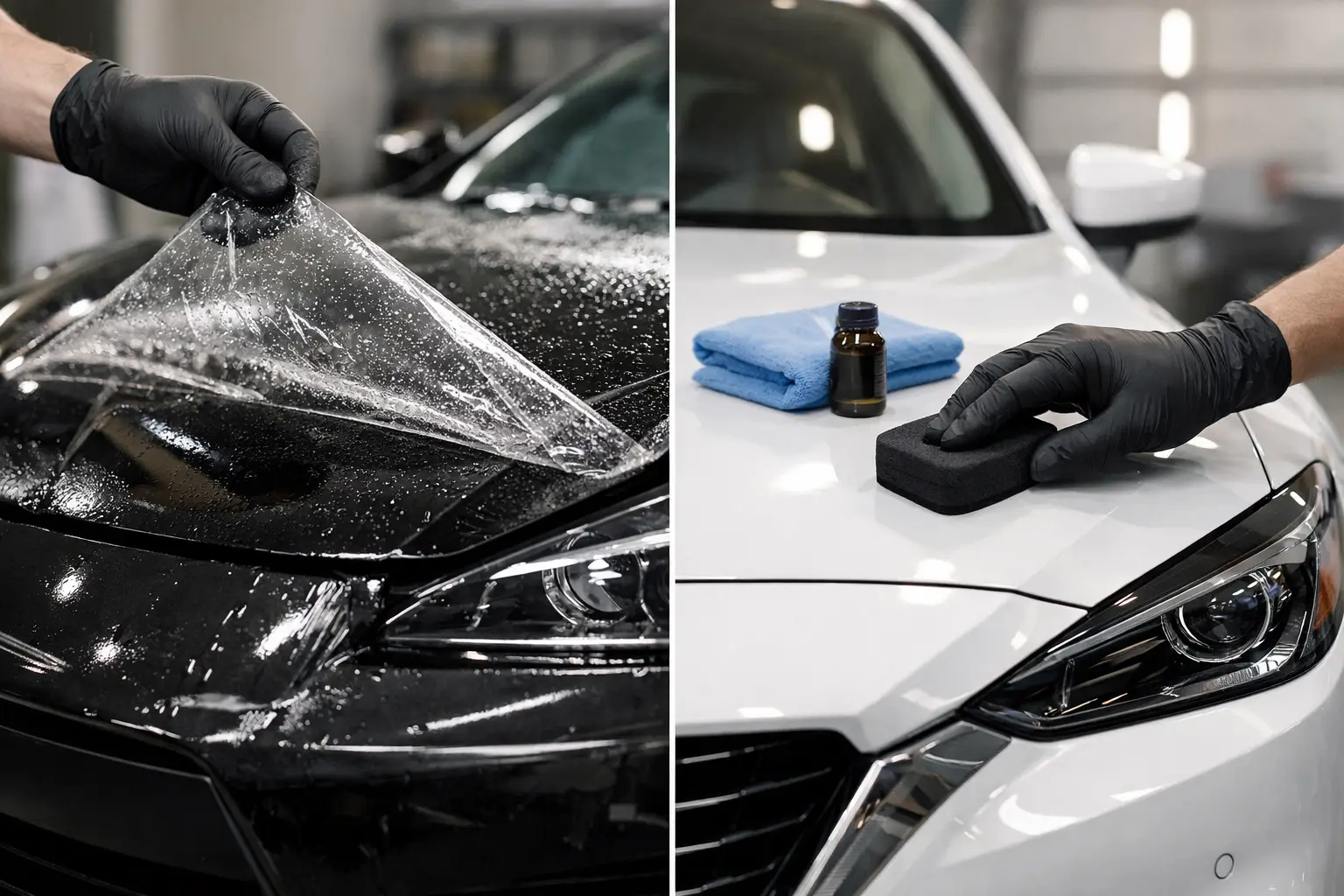
A single expressway run behind a lorry is often all it takes to change how you think about paint protection. Fine road grit, heat, UV exposure, tree sap, bird droppings, car park abrasion – Singapore may not have snow or salted roads, but it is still unforgiving on automotive finishes. That is why the question of ppf vs ceramic coating matters far more than aesthetics alone. It is a decision about how you preserve paint quality, ownership pride, and long-term resale value.
For premium and luxury vehicles especially, the right answer is rarely based on price alone. Paint protection film and ceramic coating serve different purposes. They are not direct substitutes in every sense, and that distinction is where many owners make the wrong call.
PPF vs ceramic coating: the core difference
If you want the cleanest way to understand ppf vs ceramic coating, think of them as two different classes of protection.
PPF, or paint protection film, is a physical urethane film applied over painted surfaces. Its primary role is impact resistance. It stands between your factory paint and the real-world abuse that causes chips, scuffs, light scratches, and wear on high-contact areas. Quality films also offer self-healing properties, which means minor swirl marks and surface marring can soften or disappear with heat.
Ceramic coating is a liquid-applied protective layer that bonds to the surface. Its primary role is surface performance. It improves gloss, adds chemical resistance, reduces staining, and makes the car easier to wash and maintain. Water beads more readily, dirt releases faster, and the paint tends to stay cleaner for longer.
So the simplest distinction is this: PPF is built to absorb damage. Ceramic coating is built to resist contamination and simplify maintenance.
What each option actually protects against
This is where the conversation becomes more practical for Singapore drivers.
On local roads, stone chips are not a theory. They happen on expressways, around construction traffic, and in everyday urban driving. PPF is the superior solution if your concern is preserving the actual paint surface from physical damage. Bonnets, bumpers, front fenders, side mirrors, door edges, and rear loading areas are common impact points, and film is specifically engineered for that kind of exposure.
Ceramic coating does not stop stone chips. It does not create a thick sacrificial barrier against road debris, shopping trolley taps, or the kind of abrasion that comes from poor wash technique. It helps reduce fine wash marks to a degree by making the surface slicker, but it is not impact armour.
Where ceramic coating shines is against environmental stress. Singapore’s heat, humidity, heavy rain, bird droppings, industrial fallout, and frequent outdoor parking all create a constant cycle of contamination. A coating helps prevent those contaminants from bonding as aggressively to the paint. That means lower staining risk, easier upkeep, and a finish that keeps its gloss with less effort.
If your top priority is defence from flying debris and physical wear, PPF leads. If your top priority is surface slickness, gloss, and easier maintenance, ceramic coating has a clear advantage.
Which looks better on the car?
Both can make a vehicle look exceptional, but they do so differently.
A well-installed ceramic coating tends to sharpen the appearance of the paint. Colours look richer, darker shades gain more depth, and metallic finishes appear crisper under direct light. Owners who enjoy that freshly detailed look often appreciate ceramic coating because it keeps the vehicle visually cleaner between washes.
PPF has evolved significantly, and premium films can deliver impressive clarity and gloss. Still, the visual outcome depends heavily on film quality, installation skill, and panel design. On a properly executed installation, the film should appear discreet and refined rather than obvious. Matte PPF can also completely transform the look of gloss paint for owners seeking a more individual finish.
For pure visual enhancement alone, ceramic coating often wins. For premium preservation with strong cosmetic integrity, PPF remains highly compelling.
PPF vs ceramic coating for daily driving in Singapore
In Singapore, many cars face a unique mix of threats. High UV exposure, frequent rain, moisture retention, urban dust, tight parking spaces, and regular expressway use all affect how protection should be chosen.
A daily-driven executive saloon that spends hours parked outdoors may benefit greatly from ceramic coating because the reduced dirt adhesion and easier maintenance are felt almost immediately. Wash routines become more efficient, and the risk of stubborn water spotting and contamination build-up is better controlled.
A luxury SUV or performance car that sees regular highway mileage may justify PPF much more strongly, especially at the front end. The faster and more often you drive, the more vulnerable the leading surfaces become. One poorly timed journey behind heavy vehicles can leave permanent evidence on unprotected paint.
This is why the best choice is often not either-or. It depends on how the car is used, where it is parked, and how exacting you are about preserving original paint condition.
The cost question, and why cheaper is often misleading
PPF costs more than ceramic coating because it is materially and technically more demanding. The film itself is more expensive, and installation requires precision cutting, surface preparation, controlled placement, and careful finishing. Full-body coverage is a substantial investment, though partial front-end packages are often the most strategic place to begin.
Ceramic coating is usually more accessible from a budget standpoint, but that does not mean it is basic. Proper paint correction, decontamination, and controlled application still require skill. The final result depends not only on the coating but on what the paint looks like before the coating locks that condition in.
The mistake is assuming ceramic coating is a lower-cost version of PPF. It is not. They solve different problems. Paying less for coating does not mean receiving less value if your real goal is ease of maintenance and chemical resistance. Likewise, paying more for film is justified if preventing physical paint damage is your priority.
Can you combine both?
Yes, and for many premium vehicle owners, that is the most complete answer.
PPF can be installed on the most vulnerable painted areas, then ceramic coating can be applied over the film and the remaining exposed surfaces. This approach gives you physical impact protection where the risk is highest and added hydrophobic, gloss-enhancing, easier-to-clean performance across the vehicle.
For example, a front-end PPF package on the bumper, bonnet, fenders, and mirror caps paired with ceramic coating on the rest of the car is a sensible balance. It preserves the high-impact zones without requiring a full-body film budget, while still delivering a polished, low-maintenance finish overall.
For owners who treat their vehicle as a long-term asset rather than a short-term possession, this layered strategy often makes the most sense.
Who should choose PPF vs ceramic coating?
If you own a new or high-value vehicle and want the strongest defence against chips, scuffs, and day-to-day paint damage, PPF is the more suitable choice. It is especially relevant for performance cars, luxury SUVs, executive vehicles, and owners who are particular about maintaining factory paint in near-pristine condition.
If your focus is easier cleaning, long-lasting gloss, and better resistance to stains and environmental contamination, ceramic coating is the smarter fit. It is ideal for owners who want their car to look refined with less maintenance effort and who understand that careful washing still matters.
If you are choosing protection for a prestige vehicle in Singapore and want a more complete preservation plan, combining both is often the most considered route. This is where specialist guidance matters. A proper recommendation should reflect your mileage, parking conditions, paint colour, ownership horizon, and expectations – not just a menu price.
The real mistake is choosing by marketing language
Many drivers are sold on exaggerated claims. Ceramic coating is sometimes described as if it makes paint scratch-proof. It does not. PPF is sometimes described as if it eliminates all maintenance. It does not. Both require proper aftercare, skilled installation, and realistic expectations.
The better question is not which product sounds more advanced. It is which one addresses the risk your vehicle actually faces.
That is the art of preservation. A black luxury saloon parked outdoors daily has different needs from a weekend sports car. A family SUV used on expressways has different priorities from a city-driven executive sedan. Premium protection should be selected with precision, not assumption.
For car owners who value finish, provenance, and long-term condition, ppf vs ceramic coating is not a contest with one universal winner. It is a decision about the kind of protection your vehicle deserves. When chosen well, the result is not just a glossier car – it is a masterpiece preserved.
