

Best Ceramic Coating Packages Singapore 2026: Full Ranking
 ead admin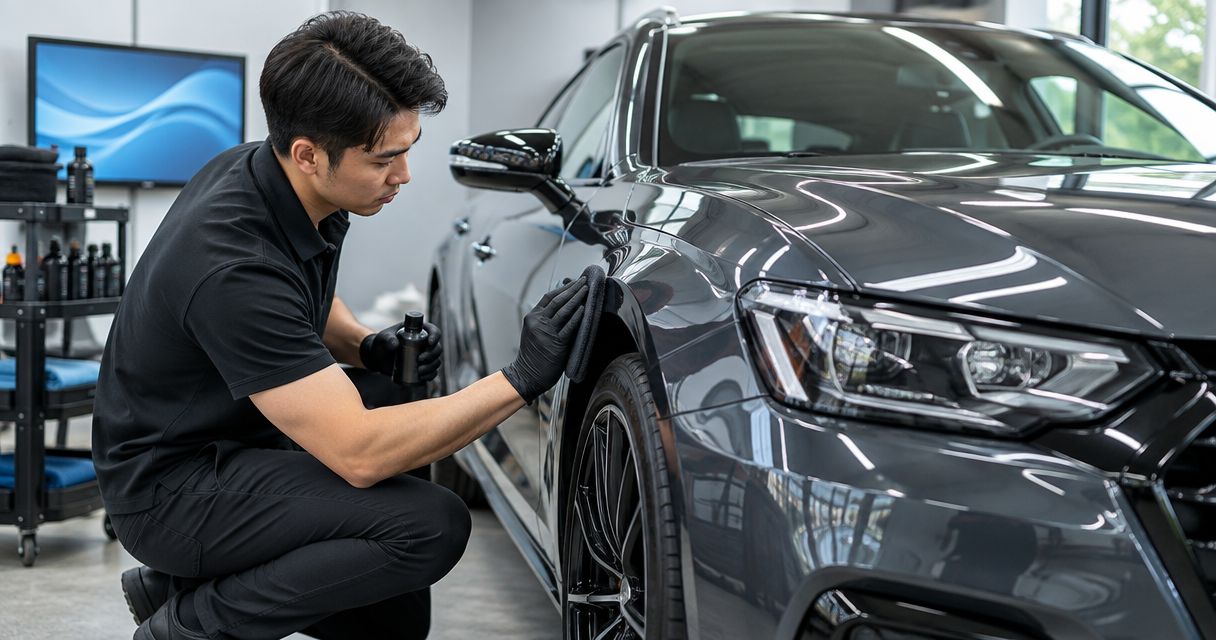
Ceramic coating packages sold in Singapore in 2026 range from a single graphene ceiling layer to a full ceramic-plus-PPF combo, and the right pick depends on the car, the paint condition, and how it's parked and driven — not on which package has the longest ingredient list.
- ChromaGard multi-layer ceramic coating wins for new or freshly-corrected paint on luxury cars in Singapore 2026.
- Single-layer graphene ceiling coating suits daily drivers who want gloss upkeep without a full-day bay booking.
- A ceramic coating plus PPF combo package is the only sensible route for performance cars exposed to stone chips.
- Coating top-up detailing only works on a coating that hasn’t already failed — it can’t rebuild one from scratch.
- Interior ceramic and fabric protection is an add-on for family cars, not a substitute for exterior work.
Why this matters
Singapore's climate is hard on clear coat: near-constant humidity, intense UV, and rain that carries road film and bird lime residue onto parked panels. A ceramic coating package changes how the paint surface reacts to all of that, but only if the layer count, prep standard, and cure conditions match what the car actually needs. EA Detailer builds packages around ChromaGard ceramic coating and separates them by use case rather than selling one generic tier to every car that comes through the bay.
The rest of this guide ranks the five package types that matter for Singapore car owners in 2026, tells you honestly where each one falls short, and ends with a straight recommendation for the undecided reader.
Best overall: ChromaGard multi-layer ceramic coating, built for new or recently paint-corrected cars. Best for daily drivers: single-layer graphene ceiling coating, which trades some hardness for a shorter bay time. Best for stone-chip exposure: a ceramic coating plus PPF combo package, which pairs film impact resistance with coating-level gloss and chemical resistance.
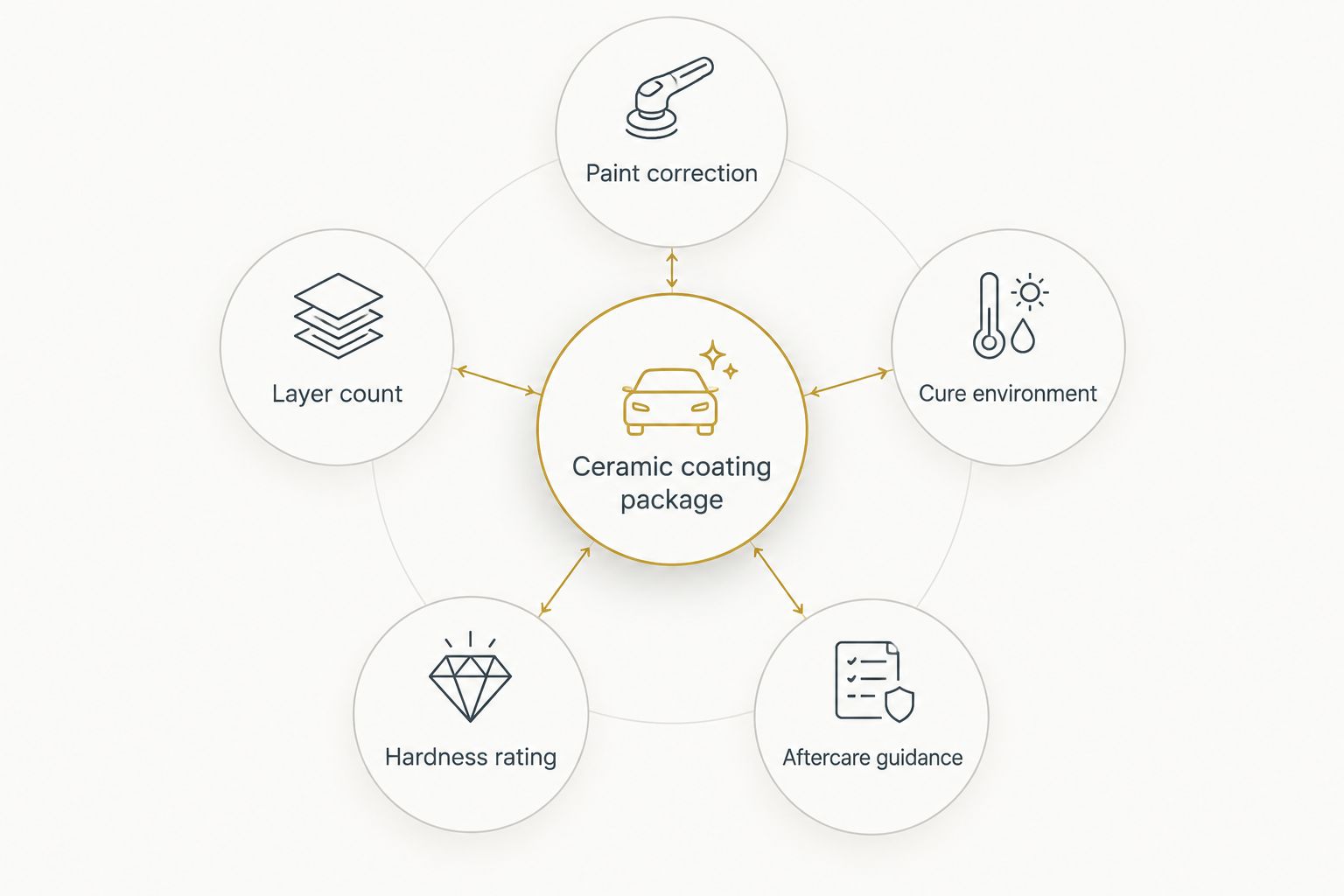
What makes the best ceramic coating package
- Paint correction depth before coating — a coating bonds to whatever condition the clear coat is in, swirl marks and all.
- Number of coating layers applied — each additional cured layer adds cumulative hardness, up to a practical limit.
- Cure environment control — temperature, humidity, and dust in the bay determine how evenly the coating levels.
- Coating hardness rating — most professional ceramic coatings are rated against the 9H pencil hardness scale used industry-wide.
- Aftercare and maintenance guidance included with the package — wash intervals and product compatibility affect how long the coating actually lasts.
At a glance
| Package | Best for | Standout feature | Key limitation |
|---|---|---|---|
| ChromaGard multi-layer ceramic coating | New or freshly-corrected paint | Bonded layers add cumulative hardness | Needs a full-day, dust-free bay booking |
| Single-layer graphene ceiling coating | Daily drivers wanting gloss upkeep | Faster turnaround, self-cleaning slickness | Shorter service life than multi-layer builds |
| Ceramic coating + PPF combo package | Performance cars exposed to stone chips | Film absorbs impact, coating adds gloss on top | Film edges need periodic inspection |
| Coating top-up / maintenance detail | Extending an existing coating's life | Reactivates hydrophobic behaviour without a strip-down | Can't restore a coating that has already failed |
| Interior ceramic + fabric protection | Family or multi-use vehicles | Protects seats and trim from spills and UV fade | Does nothing for exterior paint risk |
1. ChromaGard multi-layer ceramic coating: best for new or recently-corrected paint
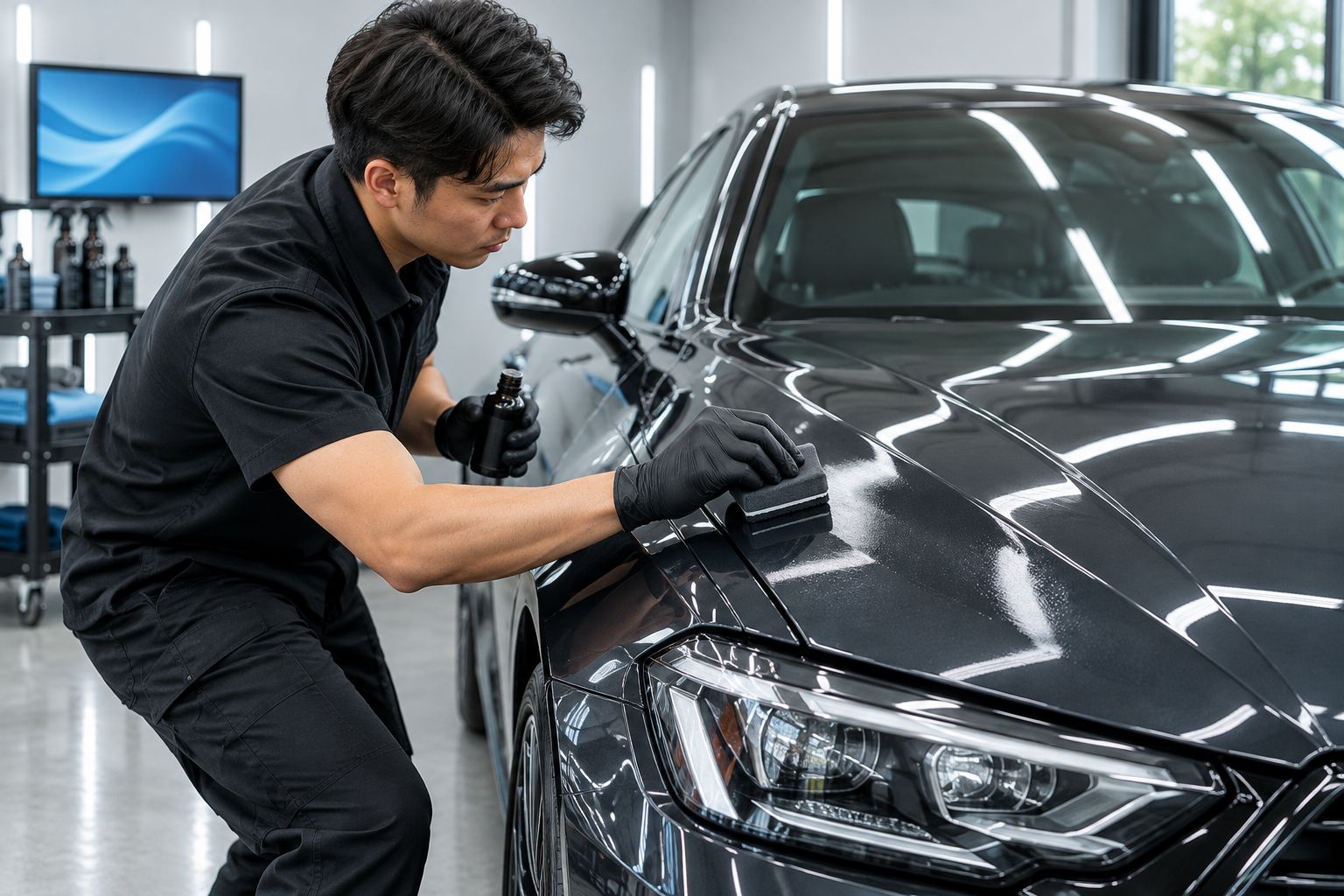
This package applies ChromaGard ceramic coating in multiple bonded layers over paint that has already had decontamination and, where needed, a light correction pass. Each layer cures before the next goes on, which is what pushes the total film toward the upper end of the 9H pencil hardness range rather than a single thin skim. It's the package EA Detailer builds around for new car owners protecting factory paint and for luxury cars coming off a full detail.
ChromaGard multi-layer ceramic coating pros:
- Highest hardness rating of the packages on this list once fully cured
- Longer realistic service interval before a full re-coat is needed
- Deepens gloss on dark paint noticeably more than a single layer
ChromaGard multi-layer ceramic coating cons:
- Requires a full day in a controlled bay, not a same-day service
- Needs paint correction first if the clear coat already has swirl marks
- Overkill for a leased daily driver that will change hands in two years
Best for: new or recently corrected luxury and performance paint. Verdict: Buy.
2. Single-layer graphene ceiling coating: best for daily drivers
A single-layer graphene coating sits over a decontaminated surface without a full correction pass underneath. It cures faster than a multi-layer build and delivers most of the hydrophobic and self-cleaning benefit drivers actually notice day to day: rain beads and rolls instead of sheeting into water spots.
Single-layer graphene ceiling coating pros:
- Shorter bay time than a multi-layer package
- Noticeably easier weekly wash-down
- Good entry point for a car without deep swirl marks to correct first
Single-layer graphene ceiling coating cons:
- Shorter service life than a multi-layer coating on the same paint
- Doesn't hide existing paint defects the way a corrected multi-layer build can
- Needs earlier top-up detailing to maintain the same beading behaviour
Best for: daily drivers who want gloss and easier maintenance without a multi-layer commitment. Verdict: Buy.
3. Ceramic coating + PPF combo package: best for stone-chip exposure
This package layers ceramic coating over paint protection film rather than over bare clear coat. XPEL PPF absorbs the physical impact from stone chips and road debris on the front end, and the ceramic layer on top restores gloss and adds chemical and UV resistance the film alone doesn't fully provide. It's the only package on this list built for cars that regularly hit the PIE or AYE at speed rather than sit in a covered carpark.
Ceramic coating + PPF combo package pros:
- Film handles impact damage that a coating alone can't resist
- Coating restores the gloss film sometimes lacks on its own
- Covers the highest-risk panels (bonnet, bumper, mirrors) most thoroughly
Ceramic coating + PPF combo package cons:
- Film sections need periodic edge inspection to catch lifting early
- Longest total installation time of any package on this list
- Colour-matching around film edges takes more prep care than a coating-only job
Best for: performance cars and frequent highway drivers exposed to stone chips. Verdict: Buy.
4. Coating top-up / maintenance detail: best for extending an existing coating
A top-up service reactivates the hydrophobic surface behaviour of a coating that's still structurally intact but has lost some of its beading and self-cleaning effect after months of washes and road film. It doesn't strip and rebuild the base layer — it works on top of what's already bonded to the paint.
Coating top-up / maintenance detail pros:
- Much faster than a full re-coat
- Extends the useful life of an existing multi-layer or single-layer build
- Cheaper time commitment than starting the coating process over
Coating top-up / maintenance detail cons:
- Doesn't fix a coating that has already delaminated or failed
- Only makes sense if the base coating is confirmed still sound
- Not a substitute for an initial ceramic coating package on bare paint
Best for: owners maintaining a coating that's already six to twelve months into its service life. Verdict: Hold — confirm the base coating hasn't failed before booking.
5. Interior ceramic + fabric protection: best for family or multi-use vehicles
This package extends ceramic and fabric-protection chemistry to seats, dashboard trim, and carpet rather than exterior paint. It's paired with interior sanitization to address spills, UV fade on dashboards, and general wear from multiple daily users rather than road exposure.
Interior ceramic + fabric protection pros:
- Protects seats and trim from spills and staining
- Reduces UV fade on dashboard and door card plastics
- Pairs naturally with an interior sanitization pass
Interior ceramic + fabric protection cons:
- Does nothing to protect exterior paint or address stone-chip risk
- Less visible day-to-day payoff than an exterior coating
- Not a package a new-car owner should choose instead of exterior protection
Best for: family cars and vehicles with multiple regular drivers. Verdict: Buy — as an add-on, not a replacement for exterior protection.
Get your car assessed before booking
Paint condition decides which package actually fits your car.
How we ranked
Each package above is scored against the same five criteria: paint correction depth required going in, number of cured layers, how tightly the cure environment is controlled, where the finished coating lands on hardness, and what aftercare comes with the package. A package that scores well on layer count but skips correction depth doesn't outrank one that gets both right — that's why the multi-layer ChromaGard build sits above the single-layer graphene option despite the longer bay time.
Which ceramic coating package should you choose?
If your car is new or was recently paint-corrected, book the ChromaGard multi-layer ceramic coating package — it's the strongest baseline for 2026 and the one that ages best against Singapore's humidity and UV load. If you drive daily and just want easier wash-downs without a full-day booking, the single-layer graphene ceiling coating covers that without over-committing. Cars that regularly pick up stone chips on the PIE, AYE, or ECP should skip straight to the ceramic coating plus PPF combo package — coating alone won't stop the chip, only the film underneath it will.
FAQ
What’s the best ceramic coating package in Singapore for a new car?
A multi-layer ChromaGard ceramic coating package is the strongest choice for new cars in 2026 because it bonds to factory paint before swirl marks or road film build up. Multiple cured layers push the finished hardness toward the top of the 9H pencil scale used across the industry.
Is a multi-layer ceramic coating better than a single layer?
A multi-layer coating generally lasts longer and reaches a higher final hardness than a single layer on the same paint. The trade-off is a longer bay booking, since each layer needs to cure before the next goes on.
How long does a ceramic coating package take to install?
A single-layer graphene coating takes less time than a multi-layer ChromaGard build, which needs a full day in a controlled, dust-free bay. Most professional coatings also need 24 to 48 hours before the car can safely get wet, and around five to seven days to reach full cure hardness.
Can ceramic coating be combined with PPF?
Yes — a ceramic coating plus PPF combo package applies XPEL PPF to high-impact panels first, then coats over the film for added gloss and chemical resistance. This is the standard route for performance cars exposed to stone chips on Singapore expressways.
How much maintenance does a ceramic coating package need after installation?
Regular rinsing and pH-neutral washes maintain the coating’s beading behaviour; harsh degreasers or automated car washes with brushes can shorten its effective life. A top-up detail every six to twelve months keeps a sound coating performing without a full re-coat.
Does ceramic coating protect against Singapore’s rain and UV exposure?
A cured ceramic coating raises the paint surface’s contact angle so rainwater beads and rolls off instead of sitting and drying into water spots. It also adds a UV-resistant layer over the clear coat, which matters given Singapore’s near-constant high UV index.
What’s the difference between ceramic coating and glass coating?
Ceramic coating and glass coating both bond a protective layer to the clear coat, but they differ in the silica formulation and how hard the finished layer cures. Ceramic formulations like ChromaGard are generally the more common choice for daily-driven cars in Singapore’s climate.
How often should a ceramic coating be topped up?
Most owners see beading behaviour start to fade after six to twelve months of regular washing, which is when a top-up detail makes sense. A top-up only works if the base coating is still structurally sound — it can’t rebuild a coating that has already failed.
One last thing
Singapore's average annual rainfall runs past 2,000mm, and rainwater sitting on unprotected clear coat under direct sun etches water spots into the paint within hours, not days. A cured ceramic coating package changes the surface's contact angle so that same rain beads and rolls off before it has time to dry onto the panel — which is the actual mechanism behind the "self-cleaning" claim every package on this list makes in 2026.

Leave a Reply