

Your Guide to Windscreen Protection Benefits

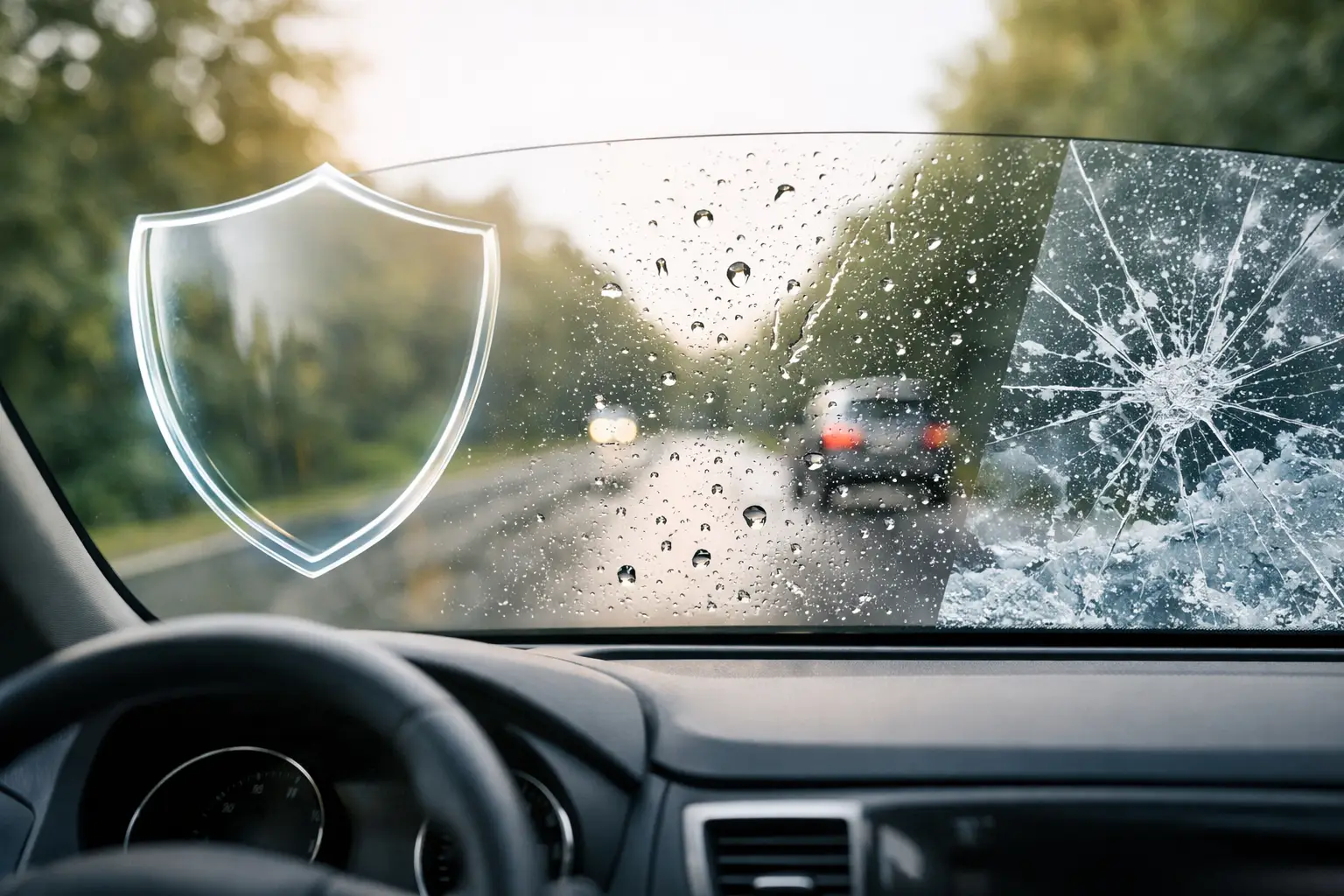
A windscreen chip rarely announces itself at a convenient time. It begins as a pinprick from road debris, then heat, rain, vibration and daily driving turn it into a visible crack across the driver’s field of view. This guide to windscreen protection benefits explains why protecting this single panel deserves the same considered attention as preserving factory paint.
For owners who value a vehicle’s condition, the windscreen is not merely a sheet of glass. It is a critical safety surface, an optical interface for modern driver-assistance systems, and one of the most exposed components on the road. In Singapore, intense UV exposure, sudden downpours, construction-zone debris and expressway driving create a demanding environment for untreated glass.
Why Windscreen Protection Is a Preservation Decision
A windscreen sits at the front line of every journey. It absorbs the impact of grit flicked up by passing vehicles, insects, contaminated rainwater, wiper friction and the thermal stress of a cabin cooling rapidly under air-conditioning after prolonged sun exposure. While laminated automotive glass is engineered for safety, it is not immune to surface damage or impact fractures.
Windscreen protection is designed to introduce a sacrificial protective layer over the glass. Depending on the system selected, this layer can help reduce the severity of minor road impacts, minimise fine surface marring and improve the way water clears from the driving surface. The objective is not to make a windscreen indestructible. It is to give a valuable and vulnerable panel a more considered margin of defence.
That distinction matters. Premium protection is about reducing avoidable deterioration and preserving clarity for longer, not making unrealistic promises about every stone, every speed or every impact angle.
The Core Windscreen Protection Benefits
Greater resistance to daily road hazards
Small stones, loose aggregate and sand are commonplace hazards, particularly around worksites and on high-speed roads. A protective film can absorb part of the energy from minor impacts before it reaches the glass itself. This may lower the likelihood of superficial damage and, in certain cases, help prevent a small strike from becoming an immediate repair concern.
The benefit is especially relevant for vehicles that travel frequently on expressways, follow heavy vehicles, or are driven daily through changing road conditions. Even when a film is marked by an impact, replacing a sacrificial layer may be preferable to facing windscreen repair or replacement.
Clearer vision in wet-weather driving
A quality windscreen protection solution can support better water behaviour on the glass surface. Rain may bead and disperse more efficiently at speed, helping the wipers maintain a cleaner sweep. During Singapore’s sudden, heavy showers, that extra clarity can make a meaningful difference to driving comfort.
However, water repellency should not be confused with a substitute for working wipers. Wiper blades remain essential, and worn or contaminated blades can damage any protective surface over time. Protection performs best as part of a properly maintained visibility system, alongside clean glass, suitable washer fluid and timely blade replacement.
Reduced fine scratches and wiper marring
Dust and grit trapped beneath wiper blades can create fine arcs across untreated glass. These marks are often most apparent when driving towards low sun, through rain at night, or under the glare of oncoming headlights. A protective layer can take the wear that would otherwise occur directly on the windscreen surface.
For owners accustomed to immaculate paintwork and crisp exterior finishes, this is a quieter but significant advantage. Optical clarity is part of a vehicle’s overall presentation. A windscreen free from excessive marring helps the entire front elevation look properly maintained.
Protection for an increasingly complex component
On many current premium vehicles, the windscreen is no longer a simple replacement item. It may accommodate cameras, sensors, heating elements, acoustic layers or head-up display technology. Replacement can involve more than fitting new glass. It can require correct specification matching, sensor calibration and additional time off the road.
Protecting the original windscreen therefore supports more than appearance. It helps preserve a factory-fitted component that is integrated with the vehicle’s safety and convenience systems. The financial case will vary by model, insurance terms and damage type, but avoiding preventable disruption is valuable in its own right.
Choosing the Right Protection for Your Driving Pattern
Not every owner requires the same level of windscreen protection. The right decision depends on the vehicle, its usage and the standard of preservation expected.
A weekend vehicle that spends most of its time in sheltered parking faces a different exposure profile from an executive saloon that covers substantial mileage each week. Similarly, a family SUV regularly used for cross-island travel may encounter more debris than a city-focused vehicle. Owners should consider where the car is driven, how often it is parked outdoors, and whether windscreen replacement would be particularly costly or inconvenient.
It also depends on priorities. Some drivers place greatest value on added resistance against minor stone strikes. Others are concerned with wet-weather visibility or keeping the windscreen looking pristine beside protected paintwork. A professional consultation should identify the dominant concern rather than treating every vehicle as identical.
What Professional Installation Changes
Windscreen protection demands precision because the surface is directly in the driver’s line of sight. A poorly installed product can introduce visible edges, contamination, distortion or premature wear. On a component so closely tied to visibility, workmanship is not a cosmetic detail. It is central to the result.
Professional preparation begins with a careful assessment of the glass condition. Existing chips, deep scratches, pitting and previous repairs should be identified before any protection is applied. The surface must then be thoroughly cleaned and decontaminated so the protection adheres consistently without trapping residue beneath it.
Correct sizing, alignment and finishing are equally important. Coverage should be tailored to the windscreen’s contours and its functional areas, with careful attention around edges and wiper zones. A specialist installer also provides practical guidance on curing, washing and wiper care so that the protection can perform as intended.
At EA Detailer, windscreen protection is approached as part of a wider preservation programme, not as an isolated add-on. When the windscreen, paintwork, wheels and cabin are maintained to the same standard, the vehicle retains a more coherent, showroom-grade presence.
The Trade-Offs Worth Understanding
A refined ownership decision accounts for limitations as well as benefits. Windscreen protection is a wear item, and its lifespan depends on exposure, driving frequency, wiper condition and maintenance habits. It will not eliminate damage from a high-energy impact, a large object or an already weakened area of glass.
There may also be an adjustment period for owners who are highly sensitive to visual changes. A properly selected and installed system should be designed for optical clarity, but product choice and installation quality matter greatly. Owners with head-up displays, advanced camera systems or specialist windscreens should have compatibility assessed before proceeding.
Cost is another consideration. A premium installation is more expensive than applying a basic glass treatment, but the two are not equivalent. A short-term hydrophobic coating may assist with water beading, while a purpose-designed protective film is intended to provide a more physical barrier against road wear. The better option depends on whether the priority is temporary convenience or a stronger preservation strategy.
Maintaining a Protected Windscreen
Protection does not ask for complicated care, but it does reward disciplined habits. Avoid dry-wiping dust from the glass, as this drags abrasive particles across the surface. Keep washer fluid topped up, clean wiper blades regularly and replace blades once they begin to chatter, streak or harden.
When washing the vehicle, use clean tools and avoid aggressive abrasives on the windscreen. If a stone strike occurs, inspect it promptly rather than assuming the protective layer has resolved every risk. A chip that reaches the glass may still require professional attention, especially if it sits within the driver’s primary viewing area.
The same principle applies to parking. Covered parking reduces prolonged UV exposure and limits the residue left by rain, tree sap and airborne contaminants. No protective solution removes the need for thoughtful ownership, but the right solution gives that care a stronger foundation.
A Small Surface With a Major Role
The value of windscreen protection is most apparent before a costly incident occurs. It preserves the clarity you depend on at speed, helps defend an increasingly sophisticated factory component and supports the calm assurance of driving a vehicle that has been properly cared for.
If your windscreen already shows wiper marks, road pitting or small chips, begin with an honest professional assessment. The most effective protection plan is not the most elaborate one on paper. It is the one suited to your vehicle, your driving environment and the standard of condition you intend to preserve.
