

How to Care for Tinted Windows Properly

A quality window tint does far more than darken glass. It moderates glare, improves cabin comfort, helps protect interior finishes from UV exposure, and gives the vehicle a composed, finished presence. Knowing how to care for tinted windows protects those benefits. The wrong cleaner, an impatient wipe during the curing period, or repeated abrasion from dust can leave even premium film looking tired well before its time.
For owners who regard their vehicle as an asset rather than a disposable convenience, tint care should be approached with the same discipline as paint protection and interior preservation. The process is straightforward, but the details matter – particularly in Singapore, where heat, humidity, rainfall and traffic residue place constant pressure on every exterior and interior surface.
Respect the Curing Period First
Newly installed window film needs time to bond fully to the glass. During this period, small water pockets, a mild haze or a slightly uneven appearance can be normal. These are remnants of the installation solution and typically dissipate as moisture evaporates through the film.
Do not wind the windows down while the film is curing. As a general rule, keep them closed for at least 48 to 72 hours, though the precise period depends on the film type, weather conditions and installer’s recommendation. In Singapore’s humid climate, full visual clarity may take longer than it would in a dry environment. Large bubbles, lifting edges or creases are different matters and should be assessed by the installer rather than pressed, pierced or manipulated at home.
Avoid cleaning the inside of newly tinted windows during this initial phase. A well-installed film does not need intervention to settle. Patience is the first measure of proper preservation.
How to Care for Tinted Windows During Routine Cleaning
Once the film has cured, gentle and consistent maintenance is far more effective than occasional aggressive cleaning. The interior side of tinted glass is where most care is required, because this is where the film is applied. Exterior glass can generally be cleaned as normal, although a soft wash method still prevents unnecessary scratching.
Start by removing loose dust with a clean, high-quality microfibre towel. Do not rub a dry, dusty window with pressure. Fine particles can act like an abrasive, creating light marks that become more visible when sunlight strikes the glass at an angle.
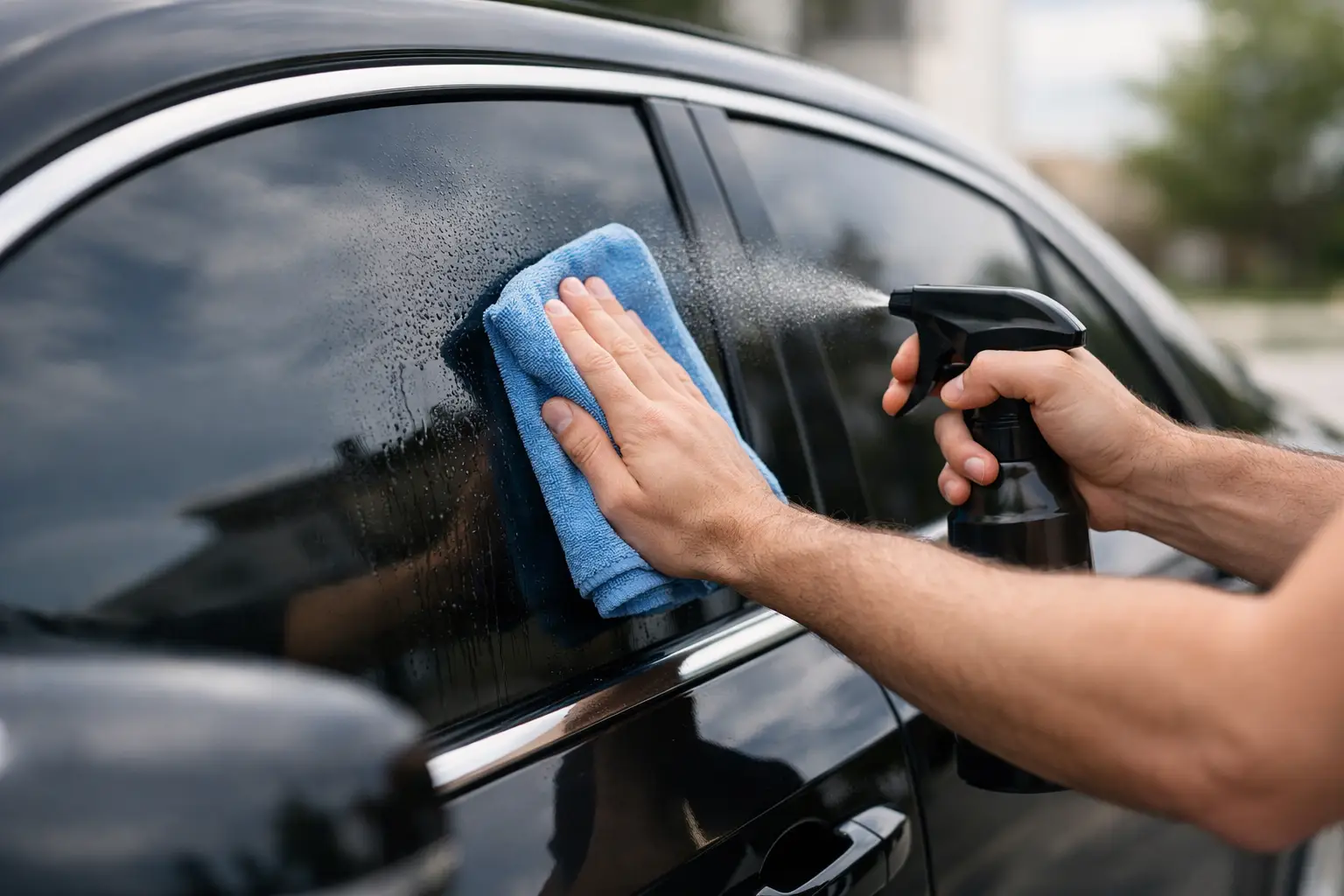
Use an ammonia-free, tint-safe glass cleaner. Spray the cleaner onto the towel rather than directly onto the window, especially around the lower edge of the glass. This gives you better control and reduces the chance of liquid collecting near the film edge or door trim. Wipe in smooth, light passes, then use a separate dry microfibre towel to buff away any remaining moisture.
A clean towel is not a minor detail. Fabric softener residue, accumulated grit and old dressing products can smear glass or compromise its crisp finish. Keep glass towels separate from towels used for paint, wheels or interior dressings. For a premium cabin, visual clarity is part of the ownership experience.
Choose Products With Restraint
The most common mistake in tint maintenance is reaching for a household glass cleaner without checking its formulation. Ammonia can dry out and discolour certain films over time, while harsh solvents and high-alkaline products may weaken adhesives or affect the film’s surface finish.
Avoid products marketed for heavy degreasing, bathroom cleaning or adhesive removal unless a tint professional specifically confirms they are suitable. Likewise, do not use scouring pads, rough paper towels, abrasive sponges or razor blades on the tinted side of the glass. They may remove stubborn marks quickly, but the trade-off is permanent surface damage.
For ordinary fingerprints, light haze and daily grime, a dedicated ammonia-free automotive glass cleaner is sufficient. If the windows have stubborn interior residue from vaping, air freshener overspray or neglected cleaning, use several gentle passes instead of escalating immediately to stronger chemicals.
Keep Window Seals and Mechanisms Clean
Tint film moves past the window seals every time the glass is raised or lowered. If dirt, sand or dried residue builds up along the rubber weatherstrips, it can drag against the film and produce vertical scratches over time. This is especially relevant after heavy rain, construction-zone driving or parking outdoors beneath dusty trees.
During a regular wash, gently clean the upper window seals and surrounding door frame with a soft detailing brush or microfibre cloth. The goal is not to saturate the seal with chemicals, but to remove the debris that can become trapped against the glass. If you hear persistent squeaking when operating a window or notice drag marks on the tint, arrange an inspection before the issue worsens.
Be mindful of aftermarket accessories as well. Clip-on shades, poorly fitted sunshades and objects stored against the glass can rub or press into the film. On frameless doors, take extra care when closing the door, as the glass moves slightly to seal against the upper frame.
Manage Heat, Humidity and Daily Exposure
Modern premium window films are engineered to withstand demanding conditions, but no film is entirely immune to neglect. Singapore’s tropical climate means vehicles are frequently exposed to strong sun, abrupt rain and prolonged cabin heat. Parking under cover when practical reduces thermal stress on the interior and helps preserve not only the tint, but also leather, trim and electronic displays.
Use a properly fitted windscreen sunshade when parked for extended periods. It does not replace tint performance, but it reduces the heat load placed on the cabin. This is particularly beneficial for vehicles with large windscreens, panoramic roofs or dark interiors, where heat accumulation can be significant.
Do not judge tint condition solely by darkness. A film can retain its visible shade while losing optical clarity, showing adhesive deterioration or developing subtle colour shift. Look for signs such as purple or brown discolouration, haziness that remains after cleaning, edge lifting, small blisters, or lines that appear when the window is lowered. These symptoms warrant professional evaluation.
Be Careful With Stickers, Labels and Accessories
The interior surface of a tinted rear windscreen is not an ideal place for repeated sticker changes. Adhesive-backed parking labels, event decals and suction-mounted accessories can leave residue or create uneven pressure on the film. Where a sticker is necessary, apply it thoughtfully and avoid repositioning it repeatedly.
Removing an old label is one of those jobs that can become expensive when rushed. Do not scrape it off with a blade. Instead, seek advice from a tint specialist, particularly if the film is older or if the label has been exposed to heat for a long period. The same caution applies to removing adhesive residue from the rear windscreen, where defogger lines add another layer of complexity.
For dashcams and electronic road-pricing units, ensure mounts are positioned appropriately and cables are routed without rubbing against glass edges. A clean installation preserves both visibility and the cabin’s overall finish.
When Professional Attention Is the Better Choice
There is a difference between normal maintenance and corrective work. Light dust, fingerprints and water marks are routine. Bubbling, peeling edges, deep scratches and persistent visual distortion are not issues to solve with stronger chemicals or online remedies.
A professional inspection can determine whether the concern comes from the film itself, adhesive ageing, contaminated seals, glass damage or an installation-related issue. This distinction matters because replacing a single damaged section may be possible in some cases, while other situations call for a more comprehensive re-tint to restore a consistent appearance across the vehicle.
For high-value vehicles, matching shade, heat-rejection performance and visual finish should be treated as part of the vehicle’s design integrity. EA Detailer approaches window tinting as a protection system, not merely a cosmetic add-on, with careful attention to material selection and installation standards.
A Simple Standard for Lasting Clarity
Tinted windows do not demand complicated upkeep. They reward controlled habits: allow proper curing time, clean with ammonia-free products, use fresh microfibre towels, keep seals free of grit, and address abnormalities early. These small disciplines preserve clear outward visibility and a cooler, more refined cabin for years to come.
The best window tint care is almost invisible – glass that remains clean, film that stays stable, and a vehicle that continues to present itself with the quiet precision it deserves.
