

Is Professional Car Polishing Singapore Worth It?

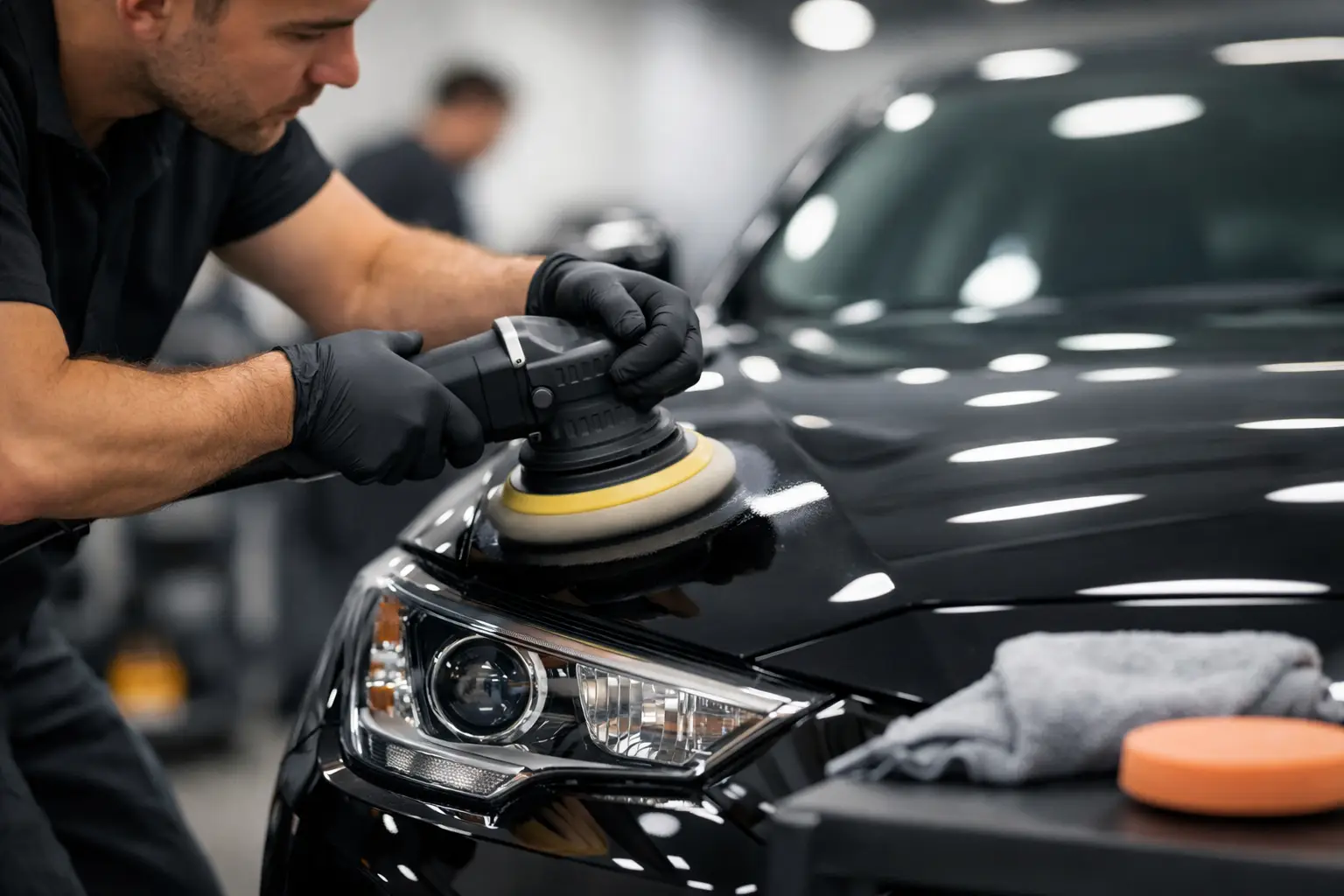
A black bonnet under a Singapore afternoon sun reveals everything: fine wash marks, dull patches, water-spot etching and the faint haze that makes paint look older than the car itself. Professional car polishing Singapore drivers choose is not a luxury wash with a more impressive name. It is a controlled paint-correction process designed to restore clarity, depth and visual precision while respecting the limited thickness of the vehicle’s clear coat.
For owners who see their vehicles as assets, the distinction matters. A properly polished finish improves the way paint reflects light, prepares it for a protective coating or paint protection film, and helps preserve the condition that supports pride of ownership and future resale appeal.
What Professional Car Polishing Actually Does
Modern automotive paint is usually made up of colour beneath a transparent clear coat. Most visible imperfections sit within or on this upper layer: circular wash marks, fine scratches, oxidation, mineral deposits, traffic-film staining and loss of gloss. Polishing uses carefully selected compounds, pads and machine techniques to level these defects safely, refining the surface so it reflects light more uniformly.
The result is not simply a shinier car. It is paint with greater optical clarity. Metallic flakes appear more defined, darker colours regain their depth, and lighter colours look cleaner and crisper rather than flat.
A professional detailer will assess the paint before choosing a correction approach. Some vehicles require a light refinement to improve gloss; others need multi-stage correction to address more pronounced marring. The objective should never be to chase every last mark at the expense of paint thickness. Preservation is the priority.
Why Singapore Paint Loses Its Finish Faster
Singapore’s climate is demanding on exterior surfaces. Persistent humidity, strong UV exposure, sudden rain and urban contaminants can leave paint looking tired even when a vehicle is washed regularly. Park under a tree, and sap or bird droppings may mark the surface. Drive through a construction-heavy route, and fine dust settles into every horizontal panel. Leave rainwater to dry repeatedly, and mineral deposits can etch into the clear coat.
Then there is routine washing. A quick wash performed with contaminated mitts, poor drying towels or aggressive techniques can introduce fine scratches over time. These defects are especially obvious on black, deep blue, graphite and other dark finishes, where direct sunlight reveals a web of circular marks.
Polishing corrects damage that has already affected the paint’s appearance. It does not stop new defects from forming. That is why the finest results are usually followed by a considered protection strategy rather than treated as a one-off cosmetic exercise.
Professional Car Polishing in Singapore Versus a Basic Grooming Service
The difference often lies in diagnosis, preparation and restraint. A basic grooming package may focus on speed: wash, wax, a quick machine pass and a glossy handover. There is a place for maintenance grooming, but it is not equivalent to paint correction.
Professional car polishing begins with decontamination. The paint must be cleansed of embedded industrial fallout, tar, iron particles and bonded contaminants before correction begins. Without this stage, polishing pads can drag contamination across the surface and create further marring.
Next comes paint inspection. A skilled technician evaluates defect severity, panel condition, paint hardness and previous repair work. Some repainted panels may have different characteristics from factory paint. Edges, body lines and intricate trim areas require particular care. The process is then tailored to the vehicle rather than forced into a standard package.
Finally, the finish should be inspected under appropriate lighting. A surface can look glossy under workshop lighting yet still show holograms or uncorrected haze in sunlight. Proper inspection is where craftsmanship becomes visible.
When Polishing Is the Right Investment
Polishing is particularly worthwhile when a vehicle has lost its visual sharpness despite regular washing, when swirl marks are apparent under direct light, or when the paint has accumulated water spots and light staining. It is also an essential preparation step before installing paint protection film or applying a premium paint protection coating. Protecting a flawed surface may preserve it, but it will not improve the appearance beneath.
For a newly acquired pre-owned vehicle, correction can be transformative. It removes the visual evidence of inconsistent care and gives the owner a clean foundation for long-term preservation. For a newer vehicle, a lighter polish may be sufficient to remove dealership wash marks and enhance the finish before protection.
There are limits. Deep scratches that catch a fingernail, stone-chip damage, failing clear coat and severe etching may require paint repair or refinishing instead. A credible specialist will explain this clearly rather than promise that every defect can disappear through polishing alone.
The Right Level of Correction Depends on the Car
A perfect-looking finish is an appealing idea, but responsible detailing requires judgement. Paint correction removes a minute amount of clear coat in order to level imperfections. Excessive or repeated aggressive correction is not a long-term preservation plan.
For many daily-driven vehicles, an enhancement polish that significantly improves gloss and reduces visible marring is the intelligent choice. It keeps more clear coat intact while delivering a substantial visual improvement. Enthusiast-owned cars, show vehicles or heavily marked finishes may justify more extensive multi-stage correction, provided the paint readings and condition support it.
The vehicle’s age, colour, ownership plans and parking habits all influence the recommendation. A car that spends most days outdoors needs durable protection and disciplined maintenance after polishing. A weekend car stored indoors may prioritise visual refinement differently. The correct treatment is not necessarily the most intensive one. It is the one that serves the car’s condition and the owner’s expectations.
What Should Follow Paint Polishing?
Freshly corrected paint is at its most visually impressive, but it is also a surface worth protecting. A paint protection coating can add chemical resistance, enhance gloss and make routine washing easier. Paint protection film offers a different form of defence, helping shield high-impact areas from road debris, abrasion and physical wear.
These solutions are complementary rather than interchangeable. Coatings are valued for their surface performance and maintenance benefits. Film is chosen where impact protection is a priority, such as the front bumper, bonnet, fenders, side mirrors and door-edge areas. A tailored combination can make sense for premium vehicles exposed to frequent expressway driving or daily outdoor parking.
Protection should also be matched with correct maintenance. Use pH-balanced wash products, clean tools and safe drying methods. Remove bird droppings, tree sap and fresh water spots promptly. Even the finest protective system benefits from careful ownership habits.
Questions to Ask Before Booking a Polishing Service
Before entrusting a vehicle to any detailing studio, ask how the paint will be assessed and whether the proposed service is enhancement polishing or true defect correction. Clarify what level of improvement is realistic, what defects may remain, and whether any deep damage needs repair instead.
It is also sensible to ask what preparation is included, how panels are inspected, and what protection is recommended afterwards. A professional consultation should feel specific to your vehicle, not like a menu being applied without consideration for its paint condition.
At EA Detailer, paintwork is approached as a surface with a future, not merely a finish to brighten for collection day. That perspective informs every decision, from the correction level selected to the protection installed afterwards.
A beautifully polished vehicle changes the ownership experience each time light moves across the bonnet or a clean reflection appears in the door panels. Choose the treatment when the paint deserves restoration, then protect that restored finish with the same care that created it.
