

Paint Touch Up vs Respray: Which Is Right?

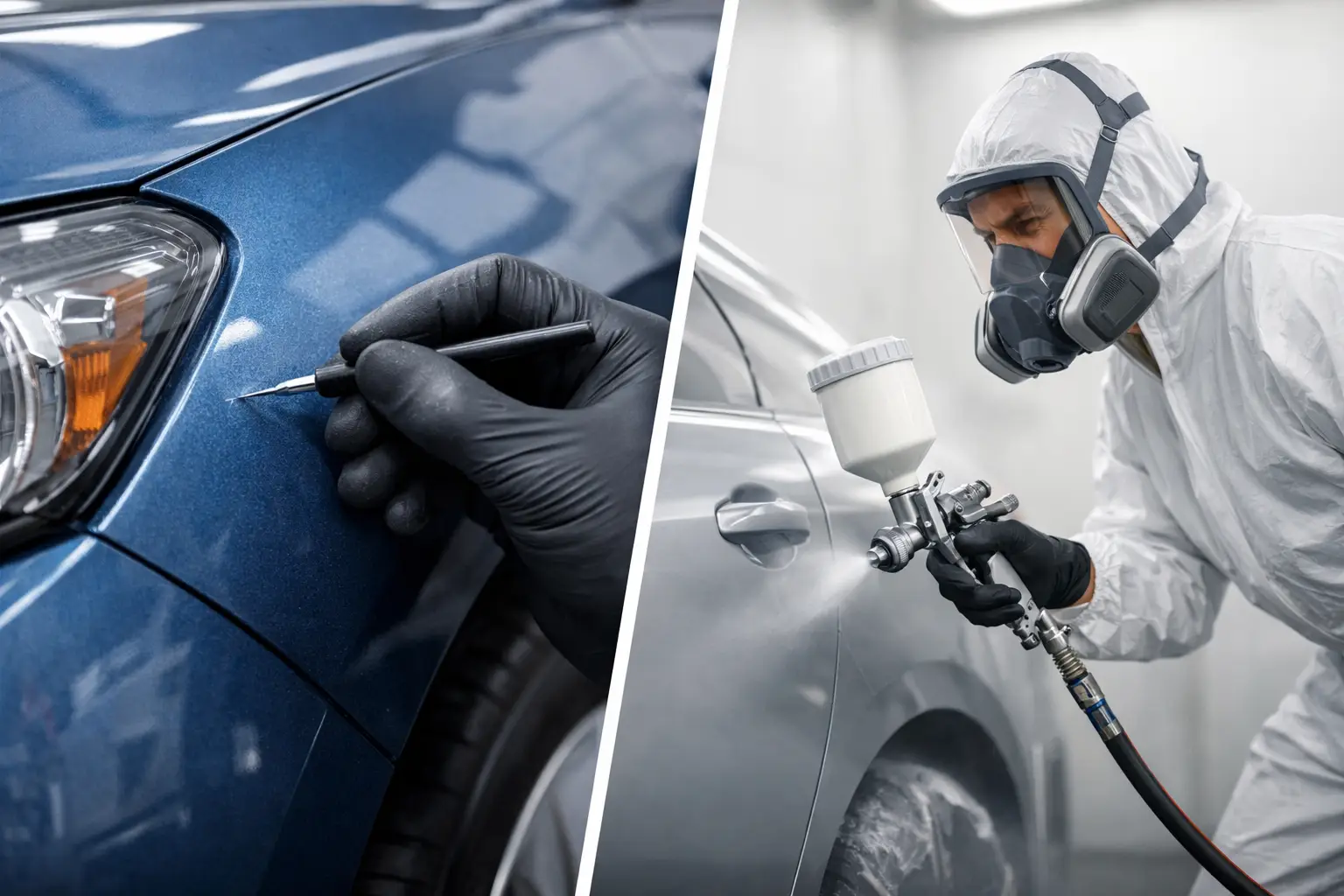
A stone chip on a bonnet can look minor from a standing distance, yet it can become the starting point for corrosion, staining and a visibly compromised finish. The decision around paint touch up vs respray is therefore not simply about making damage less noticeable. It is about choosing the right level of repair to preserve the integrity, appearance and value of your vehicle.
For premium vehicles, the cheapest-looking solution is rarely the most considered one. A precise assessment of the damage, paint system and panel condition determines whether a localised repair will honour the factory finish or whether refinishing is the more appropriate investment.
Paint Touch Up vs Respray: The Essential Difference
Paint touch up is a targeted repair for small, contained defects. It introduces matching paint only where material has been lost or damaged, such as a stone chip, narrow scratch or small scuff. The intention is protection first, with a meaningful cosmetic improvement when performed carefully.
A respray, by contrast, refinishes a larger area or an entire panel. The damaged surface is prepared, repaired where necessary, primed, colour-coated and clear-coated before being refined. It is the more comprehensive route when the defect cannot be invisibly corrected in isolation.
Neither option is automatically superior. A touch-up can be the disciplined choice for a handful of deep chips on otherwise excellent factory paint. A respray may be the proper answer for widespread clear-coat failure, a dent with broken paint, or a scratch that extends across a highly visible section of a door.
The aim should always be proportionate restoration: retain original paint where it remains sound, and refinish only when a lasting result demands it.
When Paint Touch Up Is the Right Choice
Touch-up repair is best suited to damage that is small, localised and stable. Typical examples include stone chips on the front bumper or bonnet edge, pinhead-sized chips around door handles, shallow isolated scratches that have penetrated the colour layer, and minor marks caused by car park debris.
The key question is depth. If a mark has only affected the clear coat, machine polishing may remove or substantially reduce it without adding paint at all. If the scratch has reached the colour coat or exposed primer, a measured touch-up can seal the area and reduce visual contrast. Where bare metal is exposed, prompt treatment matters even more in Singapore’s humid climate. Moisture can enter the damaged point and allow corrosion to develop beneath the surrounding paint.
A professional touch-up is more involved than applying paint with a generic brush. The affected area must be cleaned and decontaminated, stabilised if corrosion is present, and matched to the vehicle’s exact paint code and variant. Colour is then built in controlled layers, followed by clear coat where appropriate. Once cured, the repair can be carefully levelled and refined to minimise its edge.
There are limits. Even a skilful touch-up may remain detectable at close range, particularly on a horizontal panel under direct sunlight. Metallic, pearl and tri-coat finishes are especially demanding because their appearance depends on pigment orientation and layer depth. A credible specialist will set that expectation before work begins rather than promising an invisible result where one is not technically realistic.
Touch-up is often the intelligent option when you want to arrest damage, keep as much original paint as possible and avoid refinishing an entire panel for a defect no larger than a coin.
When a Respray Makes Better Sense
A respray becomes appropriate when damage is too broad, too deep or too visually prominent for a local repair to blend convincingly. Examples include a long key scratch, extensive bumper scuffing, paint cracked around a dent, lacquer peeling, bird-dropping etching that has gone beyond correction, or multiple chips concentrated over a large area.
Panel shape also matters. A scratch in the middle of a door or across a curved rear quarter panel can be difficult to disguise with a small repair because the eye naturally follows reflections across that surface. Refinishing the panel creates a consistent gloss, texture and clear-coat thickness across the visible area.
The quality of a respray rests on preparation. The panel needs to be cleaned, sanded correctly and repaired to a level surface before any colour is applied. Poor preparation may initially look acceptable, only to reveal sanding marks, sinkage, rough texture, weak adhesion or uneven gloss months later. Premium refinishing is not merely the application of new paint. It is the controlled rebuilding of a surface.
Colour matching is equally critical. Factory paint changes subtly with age, sun exposure and maintenance history. A paint code is the starting point, not the entire answer. An experienced refinisher evaluates the existing vehicle under proper lighting, adjusts the formula where needed and blends colour into adjacent sections when required. This is particularly relevant for silver, grey, white, red and complex metallic finishes, where even a small shift in tone can be visible.
A respray can deliver the cleaner cosmetic result for extensive damage, but it should never be treated as a casual substitute for good paint preservation. Factory paint is valuable. It has been applied in a controlled manufacturing environment and forms part of the vehicle’s original condition. Preserving it where possible remains a sound principle for owners who care about provenance and resale presentation.
The Factors That Should Decide the Repair
The visible mark is only one part of the assessment. A proper recommendation should account for the defect’s depth, size, location and the panel’s material. A chip on a plastic bumper does not carry the same corrosion concern as a chip on a steel bonnet, while aluminium panels require their own disciplined preparation process.
The age and condition of the surrounding paint also influence the decision. On a newer car with a well-maintained finish, a refined touch-up may integrate neatly. On an older panel with fading, oxidation or numerous previous repairs, a complete respray may produce the more coherent appearance.
Your ownership horizon matters as well. If you intend to retain a cherished vehicle for years, resolving a broad defect properly can protect both pride of ownership and future desirability. If the car is due for sale soon, it is still worth avoiding hurried, low-grade repairs. Buyers, dealers and experienced assessors can often identify uneven colour, overspray and poor masking immediately.
Finally, consider what sits over the paint. Paint protection film, ceramic coating and other protective layers need to be assessed before repair work begins. A damaged area beneath film may require film removal first. After refinishing, the paint must cure fully before it receives fresh protection. Applying a coating or film prematurely can interfere with solvent release and compromise the long-term result.
Why DIY Repairs Often Fall Short
DIY touch-up kits can be useful for a temporary seal on a small chip, especially when the objective is to prevent exposed metal from deteriorating before a professional appointment. However, they rarely provide the colour fidelity, paint control or finishing precision expected on a premium vehicle.
Common issues include excess paint sitting proud of the surface, a blob-like appearance, mismatched shade, contamination trapped in the repair and clear coat that does not blend with the surrounding gloss. Sanding or polishing an amateur repair too aggressively can also enlarge the affected area and make a later correction more complex.
The same caution applies to informal respray work. Dusty environments, inaccurate masking, poor-quality paint materials and rushed curing can leave a vehicle with overspray on trims, inconsistent orange peel or a panel that ages differently from the rest of the car. These are not simply aesthetic imperfections. They can undermine confidence in the vehicle’s care history.
Protect the Finish After Repair
Once the paint has been restored, the next decision is how to prevent the same issue from returning. Front bumper corners, bonnet leading edges, side mirrors, door edges and lower side skirts receive repeated impact from road grit and debris. These are logical areas for premium paint protection film, which creates a sacrificial barrier over vulnerable factory or refinished surfaces.
For panels where film is not required, a professionally selected paint protection coating can improve gloss, reduce contamination bonding and make routine washing safer. It is not armour against impact, but it supports easier maintenance and helps preserve the clarity of a well-corrected finish.
The best result also depends on disciplined aftercare. Wash with pH-neutral products, remove bird droppings and tree residue promptly, and avoid abrasive wiping on a dusty panel. In Singapore, heat, sudden rain and urban contaminants can make neglect visible surprisingly quickly.
A well-executed repair should disappear into the ownership experience rather than become a recurring concern. Whether your vehicle needs a precise touch-up or a properly managed respray, choose the route that respects the original finish, the complexity of the damage and the standard you expect every time you approach the car.
