

How to Choose Paint Protection Film for Your Car

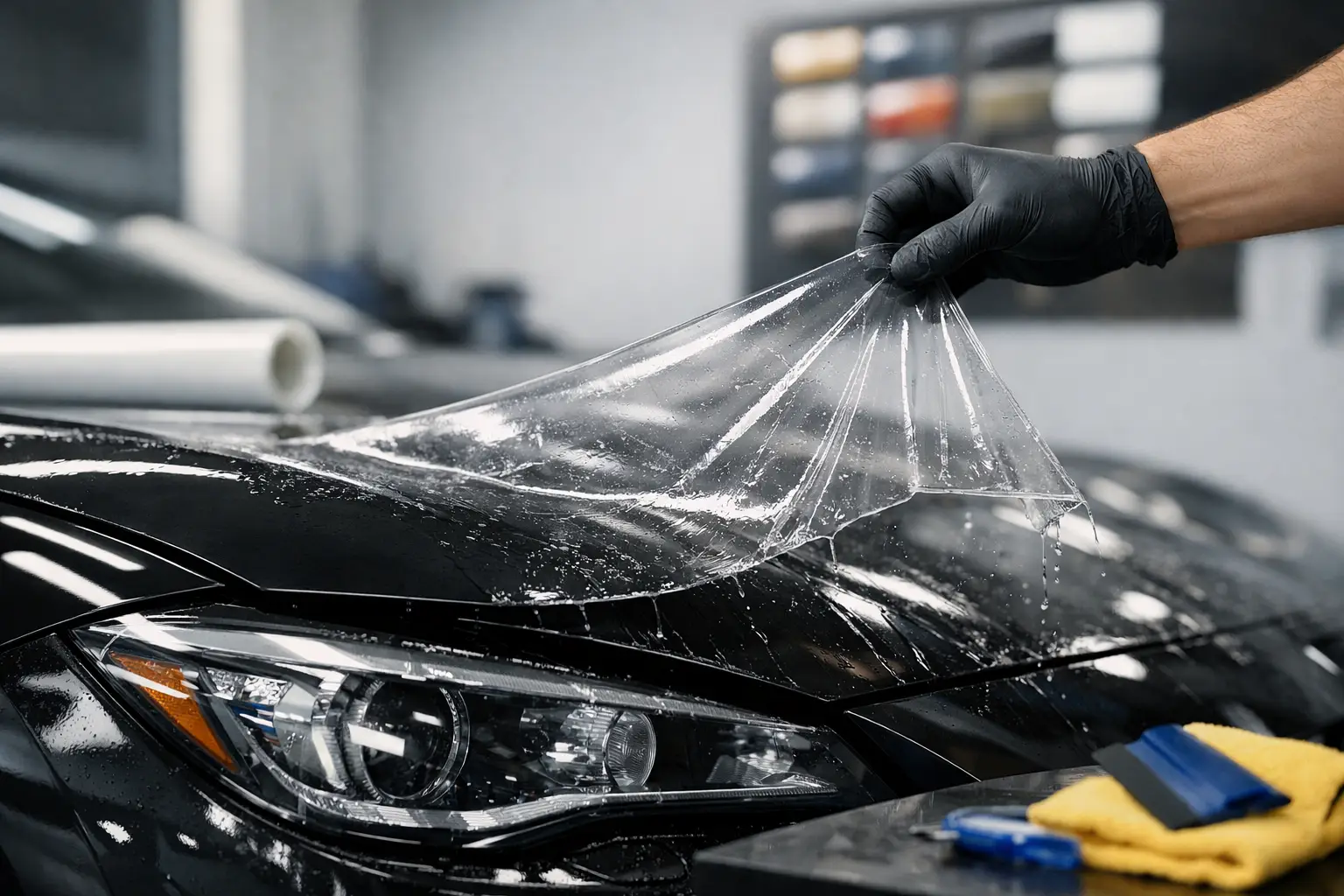
A fresh stone chip on a perfectly finished bonnet is more than a cosmetic irritation. On a premium vehicle, it is a small but permanent interruption to the factory finish that defines its presence and value. Knowing how to choose paint protection film means looking beyond a sales brochure and selecting a protection system that suits your vehicle, your driving habits, and the exact standard you expect to preserve.
Paint protection film, commonly known as PPF, is a transparent urethane film professionally applied over painted surfaces. It forms a physical barrier against stone chips, road debris, light abrasions, insect residue, stains, and the daily friction that gradually diminishes paintwork. In Singapore, where intense UV exposure, sudden rain, expressway debris, construction dust, humidity, and tight car park conditions are part of ordinary ownership, the right film can be a considered investment in long-term condition.
How to Choose Paint Protection Film Beyond Thickness
A common mistake is to judge PPF by one number: thickness. A thicker film may offer greater impact resistance, but thickness alone does not determine quality. An overly thick material can be harder to contour around complex panels, while a poorly engineered top coat may still stain, yellow, or lose clarity over time.
Look first at the film’s material and construction. Premium PPF is typically made from aliphatic polyurethane, valued for its optical clarity, flexibility, and resistance to yellowing. The top coat matters just as much. It is this upper layer that affects hydrophobic behaviour, stain resistance, gloss retention, and the film’s ability to recover from fine surface marks when exposed to warmth.
Self-healing capability is particularly valuable on high-contact areas such as door cups, door edges, boot loading zones, and front bumpers. Minor swirls from washing or daily use can become far less visible as the film’s surface recovers. This does not make the car invulnerable. Deep cuts, sharp impacts, and severe abrasion can still damage the film, but the purpose is to sacrifice the film rather than the original paint beneath it.
Clarity should be assessed in person where possible. A quality film should enhance the visual depth of gloss paint without creating noticeable haze, distortion, or an orange-peel appearance. On darker colours, metallic finishes, and prestige marques, this distinction is immediately apparent under direct lighting.
Match Coverage to the Way You Use the Car
The best coverage is not automatically full-body coverage. It is the coverage that protects the surfaces most exposed to the risks your car actually faces.
For many owners, a front-end package is the most practical starting point. This usually protects the front bumper, bonnet, front fenders, side mirrors, and often headlights. These panels take the greatest impact from loose gravel, road grit, insects, and debris projected by vehicles ahead, particularly during regular expressway driving.
Full-front coverage is sensible for executive saloons, performance vehicles, and newer cars whose factory finish you intend to retain in exceptional condition. It delivers a strong balance between protection and investment without treating every painted surface.
Full-body PPF is a different decision. It is particularly compelling for high-value vehicles, limited-production models, newly delivered luxury cars, and vehicles with delicate or difficult-to-match paint colours. It also suits owners who expect their car to remain close to showroom standard through years of regular use. The investment is higher, but so is the continuity of protection across vulnerable doors, rear arches, rocker panels, and rear bumper areas.
Consider your parking environment as carefully as your mileage. A car that spends much of its life in narrow multi-storey car parks may benefit from protection on door edges, door cups, and lower side sections even if it is rarely driven on the expressway. A weekend car may travel fewer kilometres, yet still face high-speed debris on every spirited drive.
Choose the Finish That Respects the Car’s Original Character
Gloss PPF is the natural choice for most factory gloss finishes. The objective is preservation: to retain the paint’s colour, depth, and polished character while adding an almost invisible protective layer. The finest installations should look like paint, not an applied accessory.
Matte or satin PPF creates a more restrained visual identity and can be used to protect vehicles with an original matte finish or transform a gloss-painted car into a satin appearance. This is a deliberate aesthetic choice, not merely a protective one. It requires careful consideration because the appearance of the vehicle changes across every covered panel, and future repair work needs an installer who can maintain a consistent finish.
Do not assume every film has identical gloss levels, texture, or water behaviour. Ask to view completed vehicles in natural light, not only small samples under showroom lamps. The way a film reflects sunlight over a bonnet or curved rear quarter panel reveals far more than a swatch can.
Installation Quality Is Part of the Protection System
Even exceptional film cannot compensate for careless preparation or installation. PPF is a precision craft. The installer must understand paint condition, panel geometry, film tension, edge management, and the disassembly required to achieve a refined result without introducing risk.
Before film is applied, the paintwork should be thoroughly inspected and decontaminated. Light paint correction may be recommended to remove wash marring, fine scratches, or embedded contamination that would otherwise remain visible beneath the film. PPF protects the finish in the condition it is installed, so it should begin with a surface worthy of preservation.
Ask how the workshop handles panel edges and complex areas. Professionally wrapped edges, where appropriate, provide a cleaner appearance and reduce visible lines. However, not every edge can or should be wrapped aggressively. On certain panels, excessive manipulation may increase the risk of lifting or interfere with trim. The right approach is thoughtful rather than absolute.
Precision-cut patterns offer consistency and minimise unnecessary cutting near the vehicle. Custom trimming can be useful for selected areas when carried out by experienced hands. What matters is not the marketing label, but whether the final installation follows the vehicle’s contours cleanly, avoids trapped contamination, and maintains sensible panel gaps and drainage points.
A premium specialist should be candid about what PPF can and cannot conceal. It will not erase a dent, disguise a deep paint chip, or make an existing repair invisible. Clear advice before installation is a mark of craftsmanship, not a limitation.
Assess the Brand, Warranty, and Aftercare Together
Film selection should include the credibility of the manufacturer and the support behind the installation. Established premium systems, including XPEL, are backed by extensive product development and provide confidence around material performance. Yet a warranty has value only when its terms are understood and the installing workshop is equipped to stand behind its work.
Read what the warranty covers. Yellowing, cracking, peeling, delamination, and staining may be treated differently. Also clarify the difference between a manufacturer material warranty and a workmanship warranty from the installer. The former relates to the film itself; the latter addresses installation defects such as lifting edges or contamination issues.
Aftercare should be realistic, not burdensome. PPF still requires proper washing, especially in Singapore’s humid climate where traffic film, rainwater minerals, and contaminants can accumulate. Use pH-balanced wash methods, avoid abrasive polishing compounds, and remove bird droppings, tree sap, and fuel splashes promptly. A film with a high-quality top coat makes maintenance easier, but it does not eliminate the need for considered care.
Compare Value, Not Just Quoted Price
The lowest quotation often conceals a compromise in film quality, panel coverage, preparation time, installation expertise, or after-sales support. Conversely, the most expensive option is not automatically right if it protects panels that do not match your ownership needs.
When comparing proposals, ensure they specify the exact film, covered panels, level of paint preparation, treatment of edges, warranty duration, and expected installation timeline. A clear scope protects you from assumptions and makes it possible to compare like for like.
For a vehicle you intend to retain, PPF can reduce the need for paint repair and help preserve the original finish that discerning future buyers value. For a leased vehicle or a car you expect to change within a short period, targeted coverage on the front end and high-contact areas may deliver more proportionate value. The decision is personal, but it should be intentional.
The finest paint protection film installation does not announce itself from across the car park. It allows the vehicle’s original design, colour, and craftsmanship to remain the focus, while quietly defending the surfaces that make ownership feel exceptional for years to come.
