

Best Window Tint Brands in Singapore 2026: Our Verdict
 ead admin
XPEL, LLumar, 3M, Huper Optik and SunTek dominate the ceramic window film market installed on cars in Singapore in 2026, and the differences between them come down to infrared rejection, optical clarity and how each holds up in a decade of tropical heat.
- XPEL Prime XR Plus is the best overall window tint brand in Singapore for cabin heat rejection in 2026.
- LLumar ATR wins on OEM-look optical clarity for owners who want the factory-glass look preserved.
- 3M Color Stable is the pick for luxury cars running GPS, ERP units or telematics that metalized film can disrupt.
- Huper Optik is Singapore’s own ceramic film brand, with the longest local distributor track record.
- SunTek Ultra Fusion is the entry-level ceramic option for daily-driven cars that still want real heat rejection.
Why this matters
Singapore's climate puts more stress on window film than almost any other market in the region — direct equatorial sun, year-round humidity above 70%, and cars parked outdoors for hours on tarmac that easily exceeds 50°C. A film that fades, bubbles or turns purple within three years isn't a bargain, it's a redo.
Installers like EA Detailer work with several of these brands directly, and the difference a workshop makes in cutting and fitting film is almost as large as the difference between brands. Buy the right film from the wrong installer and you still end up with edge lifting and orange peel.
Best overall: XPEL Prime XR Plus. Best for OEM-look clarity: LLumar ATR. Best for signal-sensitive luxury cars: 3M Color Stable. Best locally-established option: Huper Optik. Best entry-level ceramic option: SunTek Ultra Fusion.
What makes the best window tint film
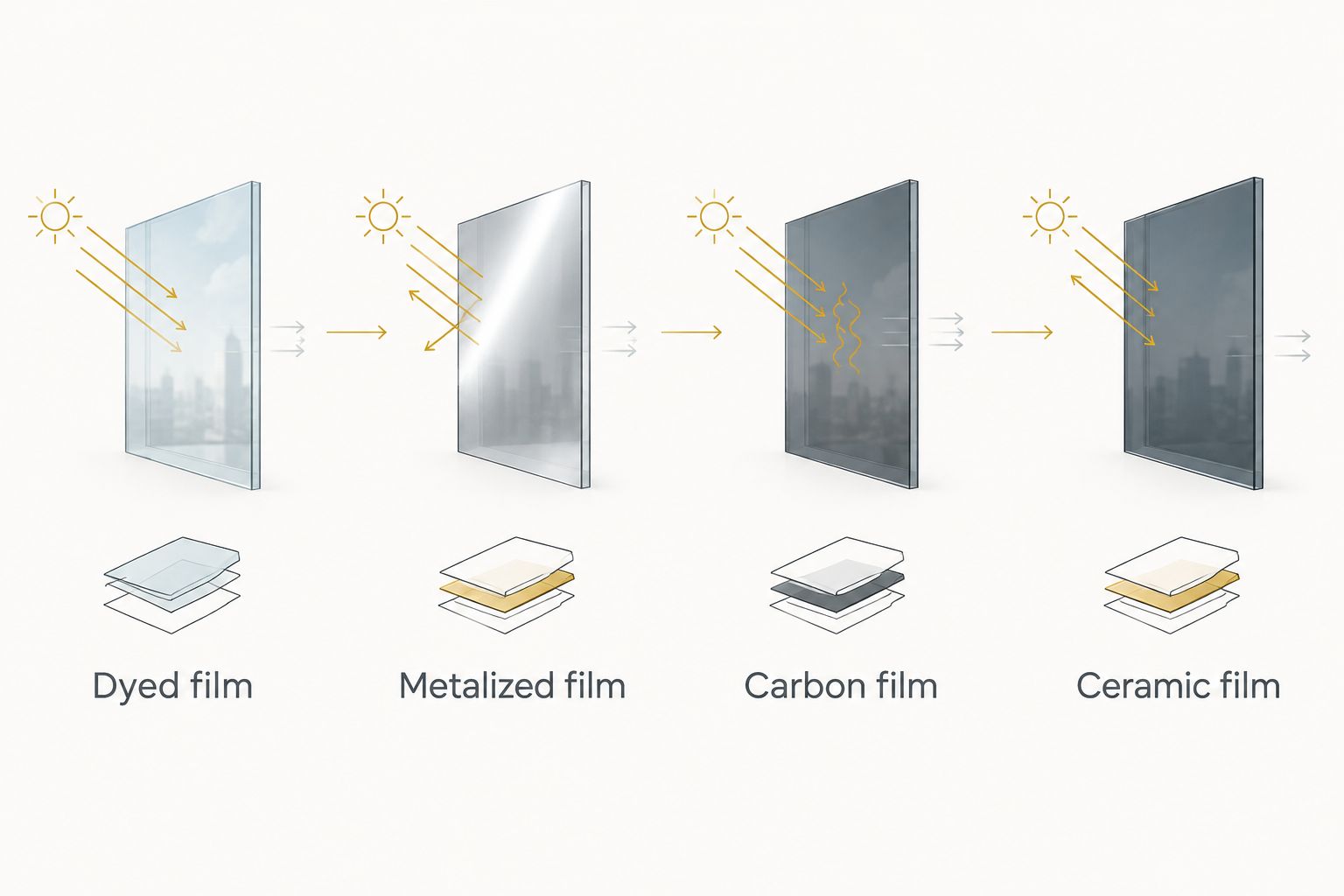
- Heat rejection performance — total solar energy rejected (TSER), not just visible light transmission (VLT), determines how much the cabin actually cools down
- Infrared rejection (IRR) — the wavelength responsible for the "radiant heat" you feel on skin through untinted glass
- Non-metallic, ceramic construction — metalized and dyed films can interfere with GPS, ERP units and cellular signal; ceramic film does not
- Color stability — cheaper dyed films fade to purple or brown within 2-3 years under Singapore sun; ceramic film is engineered to resist this
- UV rejection — most ceramic window films block up to 99% of UV rays, protecting leather and dashboard trim from cracking
- Warranty backing and local distributor support — a film is only as good as the installer's ability to service a claim in Singapore
Window tint brands in Singapore at a glance
| Brand | Best for | Standout feature | Key limitation |
|---|---|---|---|
| XPEL Prime XR Plus | Overall heat rejection | Nano-ceramic construction with high infrared rejection | Premium tier pricing sits above entry-level films |
| LLumar ATR | OEM-look clarity | Non-metallic ceramic with minimal color distortion | Fewer ultra-dark VLT options than some rivals |
| 3M Color Stable | Signal-sensitive luxury cars | Non-metallic, no GPS/ERP interference | Heat rejection trails top-tier nano-ceramic films |
| Huper Optik | Local distributor track record | Singapore-founded brand with long regional service history | Range skews toward mid-to-premium tiers, fewer budget SKUs |
| SunTek Ultra Fusion | Entry-level ceramic protection | Ceramic technology at a more accessible tier | Infrared rejection lower than flagship ceramic films |
1. XPEL Prime XR Plus: best window tint for overall heat rejection
XPEL Prime XR Plus uses a multi-layer nano-ceramic construction designed to cut infrared heat transmission without the metallic layer that older films relied on. It's the film most car owners in Singapore reach for when the priority is a measurably cooler cabin on a car parked outdoors through midday.
XPEL Prime XR Plus pros:
- High infrared rejection keeps dashboard and seat surface temperatures down
- Non-metallic build means no GPS or ERP signal interference
- Holds color stability without shifting purple over years of UV exposure
XPEL Prime XR Plus cons:
- Sits at the premium end of the ceramic film category
- Full heat-rejection benefit depends on precise installation and correct VLT selection
Best for: owners who drive daily and want the cabin measurably cooler, not just darker.
Verdict: Buy if heat rejection is your top priority in 2026.
2. LLumar ATR: best window tint for OEM-look optical clarity
LLumar ATR is built around preserving the factory look of the glass — minimal color distortion, high clarity even in darker VLT shades, and a finish that reads as "tinted from the factory" rather than an aftermarket job. It's a common choice for owners protecting a new car's resale presentation.
LLumar ATR pros:
- Non-metallic ceramic construction, no signal interference
- Strong optical clarity with minimal visible distortion at night
- Consistent color rendering across the full window run
LLumar ATR cons:
- Ultra-dark VLT options are more limited than some competing lines
- Heat rejection numbers trail XPEL's flagship tier
Best for: owners who want the glass to look untouched, not just tinted.
Verdict: Buy if factory-look clarity matters more than maximum heat rejection.
3. 3M Color Stable: best window tint for signal-sensitive luxury cars
3M Color Stable is a non-metallic ceramic film built specifically to avoid the interference issues that plague metalized film on cars loaded with GPS, ERP in-vehicle units, keyless entry and telematics. Luxury sedans with heavy electronics benefit most.
3M Color Stable pros:
- Zero signal interference with GPS, ERP or cellular reception
- Long track record of color stability without fading to purple
- Consistent supply and service network across Singapore workshops
3M Color Stable cons:
- Infrared rejection figures sit behind top nano-ceramic films like XPEL Prime XR Plus
- Premium positioning within the 3M range costs more than the brand's entry lines
Best for: luxury and performance cars where GPS, ERP or telematics reliability can't be compromised.
Verdict: Buy for signal-sensitive vehicles; Hold if raw heat rejection is the deciding factor.
4. Huper Optik: best window tint for local distributor track record
Huper Optik is a Singapore-founded window film brand with a long regional service history, which matters when a warranty claim needs a local distributor rather than an overseas head office. Its nano-ceramic lines compete directly with the international players on heat and UV rejection.
Huper Optik pros:
- Long-standing local presence with established Singapore distributor support
- Nano-ceramic construction with solid infrared and UV rejection
- Wide network of authorized installers across the island
Huper Optik cons:
- Product range skews mid-to-premium, with fewer budget SKUs
- Brand recognition outside Southeast Asia is lower than XPEL or 3M
Best for: owners who value a warranty claim being handled by a local distributor, not a regional office overseas.
Verdict: Buy if local service history is your deciding factor.
5. SunTek Ultra Fusion: best window tint for entry-level ceramic protection
SunTek Ultra Fusion brings ceramic film technology to a more accessible tier of the lineup, aimed at daily-driven cars that still want real infrared rejection over a dyed or basic metalized film. It's a reasonable step up for owners upgrading from an older, faded tint job.
SunTek Ultra Fusion pros:
- Ceramic technology without stepping into flagship pricing tiers
- Non-metallic, so no signal interference
- Solid UV protection for interior trim and upholstery
SunTek Ultra Fusion cons:
- Infrared rejection sits below XPEL, 3M and Huper Optik's top lines
- Fewer ultra-premium VLT and clarity options than flagship competitors
Best for: daily drivers upgrading from dyed film who want ceramic performance without the flagship price tier.
Verdict: Buy for a practical daily-driver upgrade; Skip if you need flagship-level heat rejection.
Compare window tint options in person
See ceramic film samples and get a fitment recommendation for your car.
How we ranked these window tint brands
Each brand above is weighed against the six criteria listed earlier: heat rejection, infrared rejection, non-metallic construction, color stability, UV protection and local warranty support. No brand wins on every axis — that's the point of a ranked list instead of a single "best" pick.
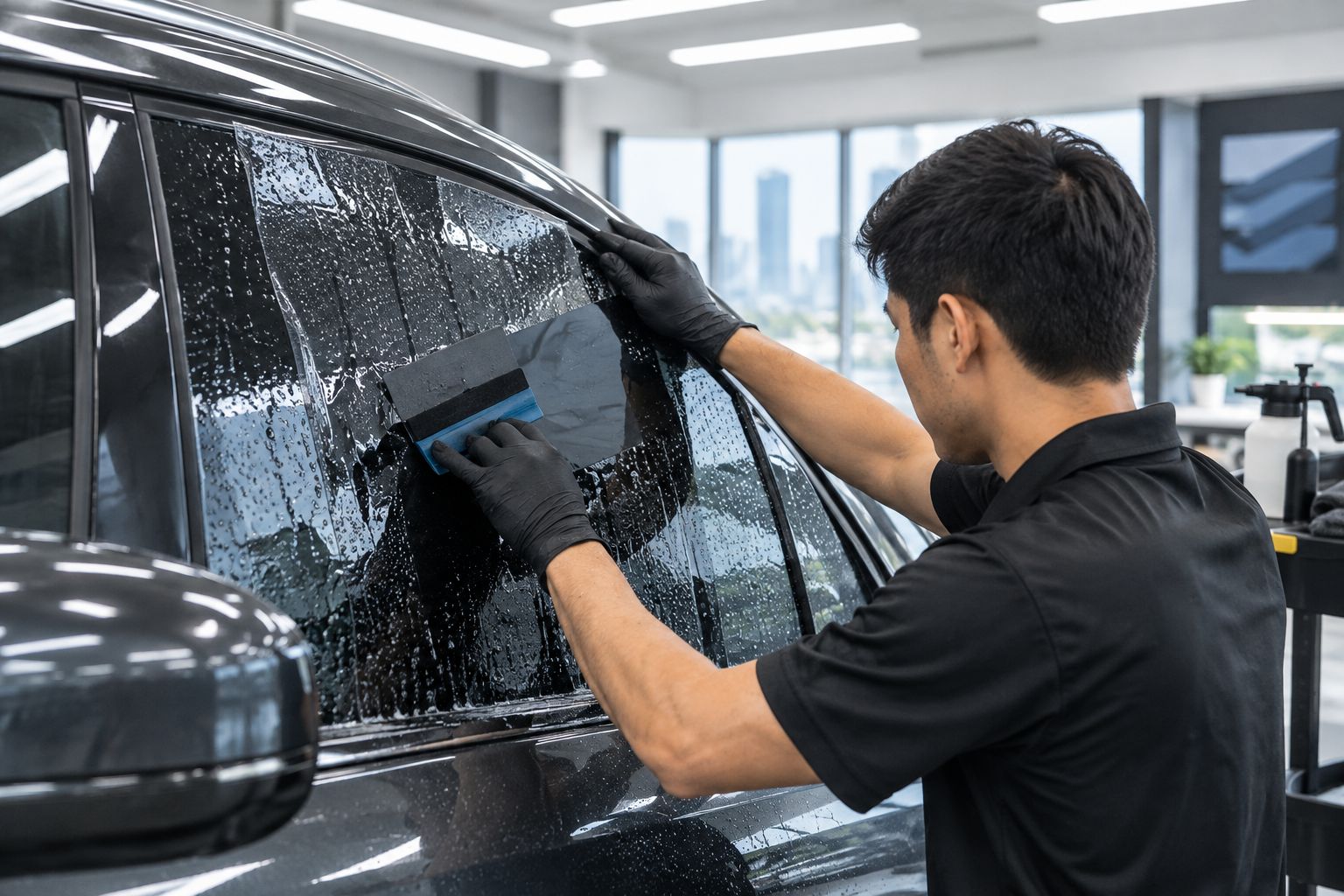
Installation quality shifts these outcomes in practice. A ceramic film applied with dust trapped under the edges or cut short of the glass frame will underperform its own spec sheet regardless of brand.
“If an installer can’t explain infrared rejection versus VLT percentage, they’re selling you a shade of darkness, not heat protection.”
Which window tint brand should you choose?
For most car owners in Singapore weighing heat rejection against everything else in 2026, XPEL Prime XR Plus is the default recommendation — it covers the widest range of use cases without a serious weakness. Choose LLumar ATR if factory-look clarity outranks maximum heat rejection, 3M Color Stable if your car's electronics can't tolerate signal interference, Huper Optik if a local warranty history matters more than brand pedigree, and SunTek Ultra Fusion if you want ceramic performance without the flagship tier.
Whichever brand you pick, confirm current Traffic Police regulations on windscreen and front side window darkness before ordering — Singapore's rules on visible light transmission change less often than film technology does, but they still cap what an installer can legally fit.
FAQ
What is the best window tint brand in Singapore in 2026?
XPEL Prime XR Plus ranks best overall for heat rejection in 2026, though LLumar ATR, 3M Color Stable, Huper Optik and SunTek Ultra Fusion each suit different priorities like optical clarity, signal-sensitive electronics or entry-level ceramic protection.
Is ceramic window tint better than metalized tint?
Yes, ceramic tint outperforms metalized film on infrared rejection and doesn’t interfere with GPS, ERP or cellular signals. Metalized film is largely being phased out of premium installations for this reason.
Does window tint reduce heat in a car parked outdoors in Singapore?
Ceramic window film measurably reduces cabin heat by blocking infrared wavelengths, which is the main driver of that scorching feeling through untinted glass on a car parked in the sun.
How long does ceramic window tint last in Singapore’s climate?
Quality ceramic film from brands like XPEL, 3M or Huper Optik is built to resist the color-fading and bubbling that dyed film suffers within a few years under equatorial UV exposure, though actual lifespan depends on installation quality.
Is LLumar or 3M better for window tint?
LLumar ATR leads on optical clarity and factory-look finish, while 3M Color Stable is the stronger pick for luxury cars with GPS, ERP units or telematics that need zero signal interference.
Is Huper Optik a good window tint brand?
Huper Optik is a Singapore-founded brand with a long local distributor history, making warranty claims and service more straightforward than with some overseas-only brands.
Does window tint block UV rays?
Most ceramic window films block up to 99% of UV rays, which protects leather seats and dashboard trim from cracking under prolonged sun exposure.
Can window tint interfere with car electronics in Singapore?
Older metalized films can disrupt GPS, ERP in-vehicle units and keyless entry signals, but non-metallic ceramic films from XPEL, LLumar, 3M, Huper Optik and SunTek avoid this issue entirely.
One last thing
The biggest performance gap in window tint isn't between brands — it's between a ceramic film cut on a plotter to the exact window pattern and one hand-cut on the glass. Ask any installer in 2026 whether your car's film pattern is on file before you commit to a brand; a mismatched cut wastes the heat-rejection advantage you're paying for.
Related guides
- Best ceramic coating brands for cars in Singapore
- Best ceramic coating packages in Singapore
- Best PPF for Singapore's hot and humid climate

Leave a Reply