
Can you remove ceramic coating once it’s applied?
 ead admin
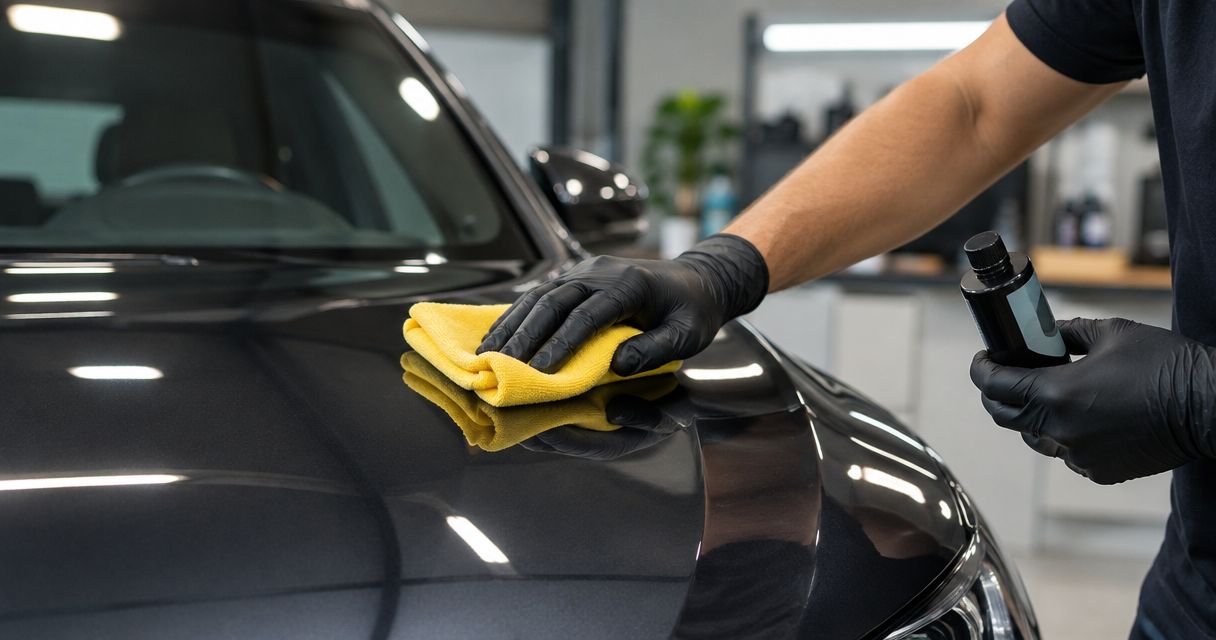
Yes, you can remove ceramic coating once applied; controlled machine polishing is the usual approach for cured coating on gloss automotive paint. Removal also requires protecting the clear coat underneath, so aggressive polishing is not automatically the right choice. First establish whether the problem is coating failure, surface contamination or an application defect.
- Can you remove ceramic coating once applied? Yes: controlled polishing removes cured coating from suitable gloss paint.
- Clean and decontaminate before deciding that weak water beading means coating failure.
- EA Detailer provides ceramic coating services for Singapore car owners considering paint protection.
- Matte paint and coated PPF require different treatment; do not polish them like gloss clear coat.
Why this matters
Removing ceramic coating is a surface-preparation job, not simply a stronger wash. A detailer must distinguish the protective layer from contamination, polishing residue and the paint beneath it. Treating all four as the same problem creates unnecessary risk.
For Singapore owners reviewing ceramic coating in 2026, the useful question is whether removal solves a confirmed defect. Coating age alone does not answer that question; the guide to how long ceramic coating lasts explains the separate issue of service life.
Can you remove ceramic coating once it's applied?
Yes. On suitable gloss-painted panels, an abrasive polish can remove cured ceramic coating, but the process can also remove some clear coat. The correct approach starts with inspection and a controlled test area, not an assumption that every panel needs heavy correction.
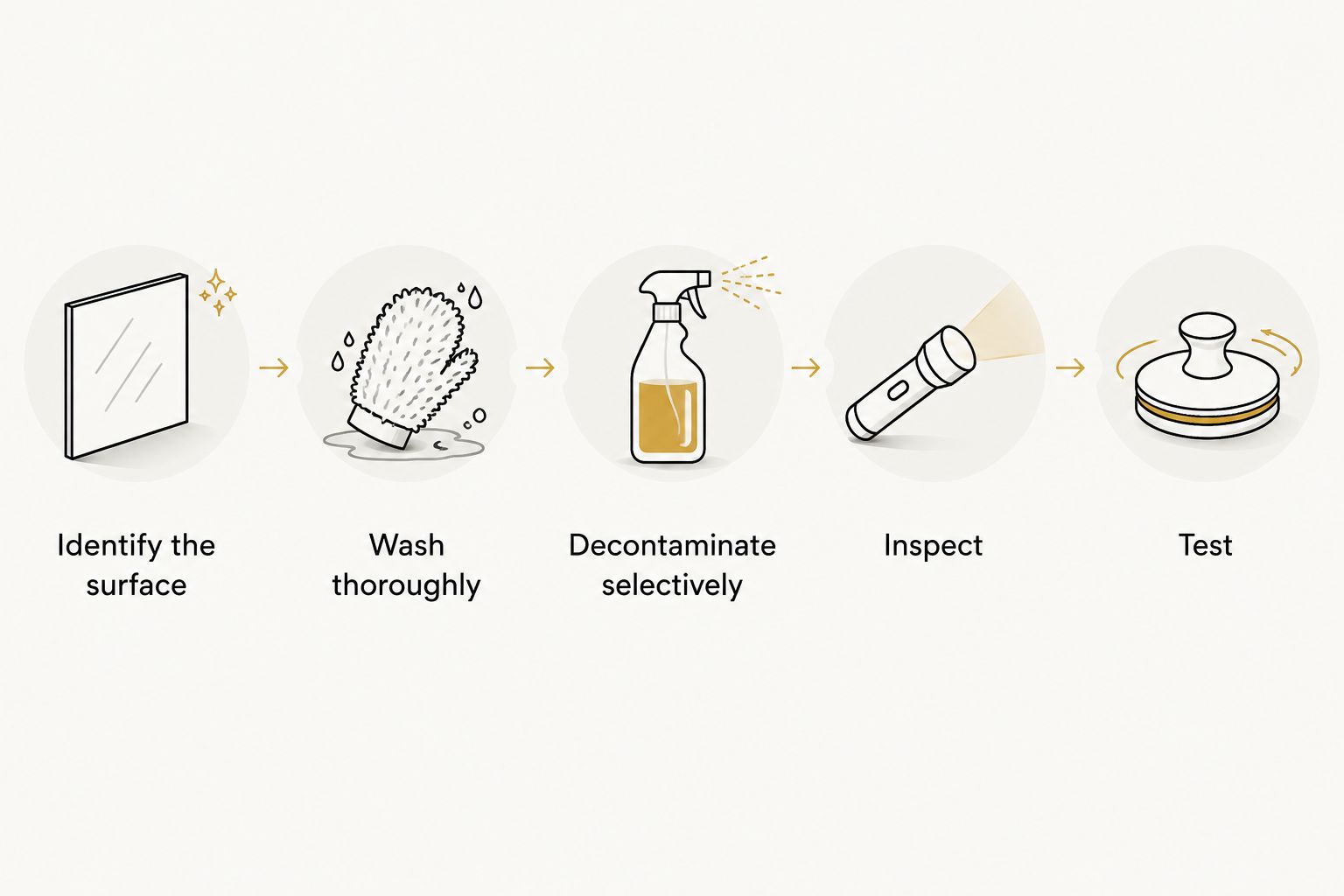
A sensible removal sequence follows these steps:
- Identify the surface. Confirm whether the coating sits on gloss paint, matte paint, paint protection film or another material. Check for previous repairs and repainting.
- Wash thoroughly. Remove loose dirt with suitable wash products and clean equipment so inspection does not happen through road film.
- Decontaminate selectively. Treat identified deposits with compatible products, following their instructions. Reassess before introducing abrasives.
- Inspect under suitable lighting. Look for coating high spots, mineral deposits, scratches and defects within the paint itself.
- Test the least aggressive suitable polish. Assess the result on a small area before choosing the process for the rest of the vehicle.
- Prepare for the next protection system. Remove polishing residue as directed by the replacement coating or film manufacturer, then inspect again.
The final step matters. An oily polishing residue can temporarily change the appearance and water behaviour of a panel, making an unfinished surface look ready.
Cleaning: best for contamination over an intact coating
Cleaning is the right starting point when the main symptom is reduced slickness, patchy water behaviour or visible deposits. Road film and mineral contamination can cover a coating and alter how the surface behaves.
The advantage is preservation: effective cleaning avoids unnecessary abrasion. The limitation is equally important: cleaning does not reliably remove a fully cured coating, and it cannot repair scratches or clear-coat damage.
Use products approved for the coated surface. Do not escalate to household solvents, strong acids or alkaline cleaners simply because ordinary shampoo has not changed the finish. Chemical compatibility depends on the coating, substrate and product instructions.
For a 2026 maintenance assessment, photograph the affected panels before cleaning and again after drying. Comparable lighting helps separate genuine improvement from reflections that hide a defect.
Polishing: best for confirmed removal on suitable gloss paint
Controlled polishing is the practical choice when a cured coating must come off suitable gloss paint before correction or replacement protection. The pad, abrasive and technique should follow the paint's condition and the test result.
The benefit is that polishing can address the coating and some surface defects together. The limitation is that polishing also works on the underlying finish; it does not recognise a perfect boundary between coating and clear coat.
Choose the least aggressive process that achieves the required result. A deep scratch does not justify repeatedly cutting surrounding paint merely to make every mark disappear. Preserving the finish takes priority over chasing an unrealistic visual standard.
Edges, sharp body lines and previously repaired areas need particular care. A reading from a paint-thickness gauge adds context, but a conventional total-thickness reading does not directly reveal how much clear coat remains.
Fresh application defects: best assessed before further treatment
A dark, oily-looking patch or smear after application can be a coating high spot: excess product that was not levelled properly. A fresh application defect is not automatically a reason to strip the entire vehicle.
The original product's instructions govern whether the area can still be levelled or needs polishing. Once the coating has cured, localised polishing is often the corrective route on suitable gloss paint.
The advantage of a local repair is that sound surrounding areas need not be treated unnecessarily. Its limitation is coverage: polishing a small area removes protection there, so the repair plan must include compatible preparation and renewed protection where required.
Contact the installer before attempting a correction. For a coating applied in 2026, retain the application date and product details rather than relying on a general description such as ceramic protection.
Which removal approach fits your problem?
These approaches solve different problems. Do not select a stronger treatment until inspection establishes what needs removing.
| Approach | Best for | Main benefit | Main limitation |
|---|---|---|---|
| Compatible cleaning | Road film over a coated surface | Cleans without deliberate abrasion | Does not establish complete coating removal |
| Targeted decontamination | Identified bonded or mineral deposits | Addresses contamination before polishing | Requires surface-compatible chemistry |
| Controlled polishing | Confirmed cured-coating removal on suitable gloss paint | Removes coating while allowing surface refinement | Can remove underlying clear coat |
| Localised correction | An isolated cured high spot on suitable gloss paint | Limits treatment to the affected area | Requires protection to be restored locally |
| Specialist assessment | Matte paint, coated film or uncertain repair history | Avoids applying a gloss-paint method indiscriminately | Treatment depends on the exact material |
Washing and polishing are therefore not competing versions of the same service. Washing removes contamination; abrasive polishing changes the surface. The diagnosis determines which operation belongs in the job.
Why ceramic coating removal varies
A uniform treatment across every panel is not always appropriate. These factors determine the removal plan:
- Underlying material. Gloss clear coat, matte paint and coated film tolerate different processes.
- Coating condition. An isolated application defect requires a different assessment from widespread deterioration or contamination.
- Paint history. Previous correction, repainting and repairs affect how confidently further abrasion can be specified.
- Defect location. Edges, creases and confined sections change tool access and demand closer control.
- Replacement protection. A new ceramic coating and an adhesive-backed film have their own surface-preparation requirements.
- Contamination type. Mineral deposits, road film and bonded particles require identification rather than indiscriminate chemical treatment.
Ask an installer to explain these decisions panel by panel where necessary. A credible proposal describes what will be cleaned, what will be polished and what will remain untouched.
Does removing ceramic coating damage your paint?
Ceramic coating removal is not automatically paint damage, but abrasive removal consumes some of the finish underneath. Poor technique, excessive cutting or repeated correction can compromise clear coat.
The objective is controlled removal with minimal unnecessary abrasion. Surface inspection, repair history, suitable thickness assessment and a test area support that decision; none creates permission for unlimited polishing.
Be especially cautious if the vehicle has already received repeated paint correction. A coating problem does not justify sacrificing sound factory paint. If a remaining defect requires excessive removal to eliminate, accepting that defect is the more conservative choice.
Can you remove ceramic coating yourself?
You can carry out a compatible maintenance wash yourself, but full abrasive removal requires more than owning a polishing machine. You need to identify the substrate, choose suitable abrasives, control the process and assess the result without relying only on water beading.
For a luxury or performance car, professional assessment is the better choice when the coating history or paint condition is uncertain. EA Detailer is a relevant ceramic coating service provider for Singapore owners seeking professional paint protection.
Before authorising any work, ask for the proposed removal method, its limits and the preparation required afterwards. A clear answer is more useful than a promise that every coating can be stripped identically.
What changes if the coating is on matte paint or PPF?
Do not machine-polish matte paint as though it were gloss clear coat. Abrasion can change the surface texture and create an unwanted glossy patch. The coating and paint manufacturers' guidance must determine the corrective route.
Coated paint protection film also requires a film-specific assessment. Compatibility, surface finish and warranty terms matter; a method suitable for painted metal is not automatically suitable for flexible film.
If you are considering XPEL PPF, ChromaGard or ceramic coating through EA Detailer, ask for the preparation requirements of the exact chosen system. Do not assume an existing coating is an acceptable base for film adhesion or another protective layer.
For your 2026 appointment, identify any wrapped, filmed or repainted panels before work starts. That information belongs in the assessment, not in a conversation after polishing has begun.
How do you confirm removal before applying new protection?
Water behaviour is an observation, not a definitive coating-removal test. Contamination, polishing oils and other surface products can change beading or sheeting, so a hose test alone cannot certify a bare panel.
The stronger approach is process control: identify the existing system where possible, complete the selected removal process, remove residue with compatible preparation products and inspect the finish. The replacement product's application instructions then determine whether the surface is ready.
EA Detailer clients comparing replacement ceramic coating options should request that preparation be explained separately from the new protection. That distinction makes the work scope clear without assuming every panel needs the same correction.
FAQ
Can you remove ceramic coating once applied?
Yes, cured ceramic coating can be removed from suitable gloss paint through controlled abrasive polishing. Inspect and clean first, because contamination can resemble coating failure.
Will a normal car wash remove ceramic coating?
A normal maintenance wash is not a reliable method for removing cured ceramic coating. Use compatible wash products and do not interpret a change in water behaviour as proof of removal.
Does alcohol remove ceramic coating?
An alcohol-based panel wipe is not a reliable way to remove a fully cured ceramic coating. Use preparation chemicals only as directed for the particular coating and underlying surface.
Can I put new ceramic coating over the old coating?
Apply a new ceramic coating over an existing layer only when the relevant product instructions permit it and the surface meets their preparation requirements. Unknown or damaged existing protection requires assessment first.
Does weak water beading mean my coating has gone?
Weak water beading does not prove that ceramic coating has disappeared. Surface contamination and maintenance products can alter water behaviour, so clean and reassess before specifying removal.
Can ceramic coating be removed from matte paint?
Ceramic coating on matte paint needs product-specific assessment rather than routine gloss-paint polishing. Abrasion can alter the matte finish permanently.
What should I bring to a ceramic coating assessment in 2026?
Bring the coating product name, application date, maintenance history and any records of repainting or correction to your 2026 assessment. Identify panels with PPF or other surface treatments before work starts.
One last thing
The least convincing removal test is often the most photogenic: water beading. A panel's water behaviour can change without proving either complete coating removal or coating failure.
Before approving removal, ask one question: what evidence shows the coating needs to come off rather than be cleaned? The answer should describe your paint, the defect and the intended next protection—not just the appearance of water on a bonnet.
Related guides
- Document your ceramic coating history
- Ceramic coating for matte-finish cars
- How to choose a PPF installer in Singapore

Leave a Reply