

Paint Protection Film Versus Vinyl Wrap

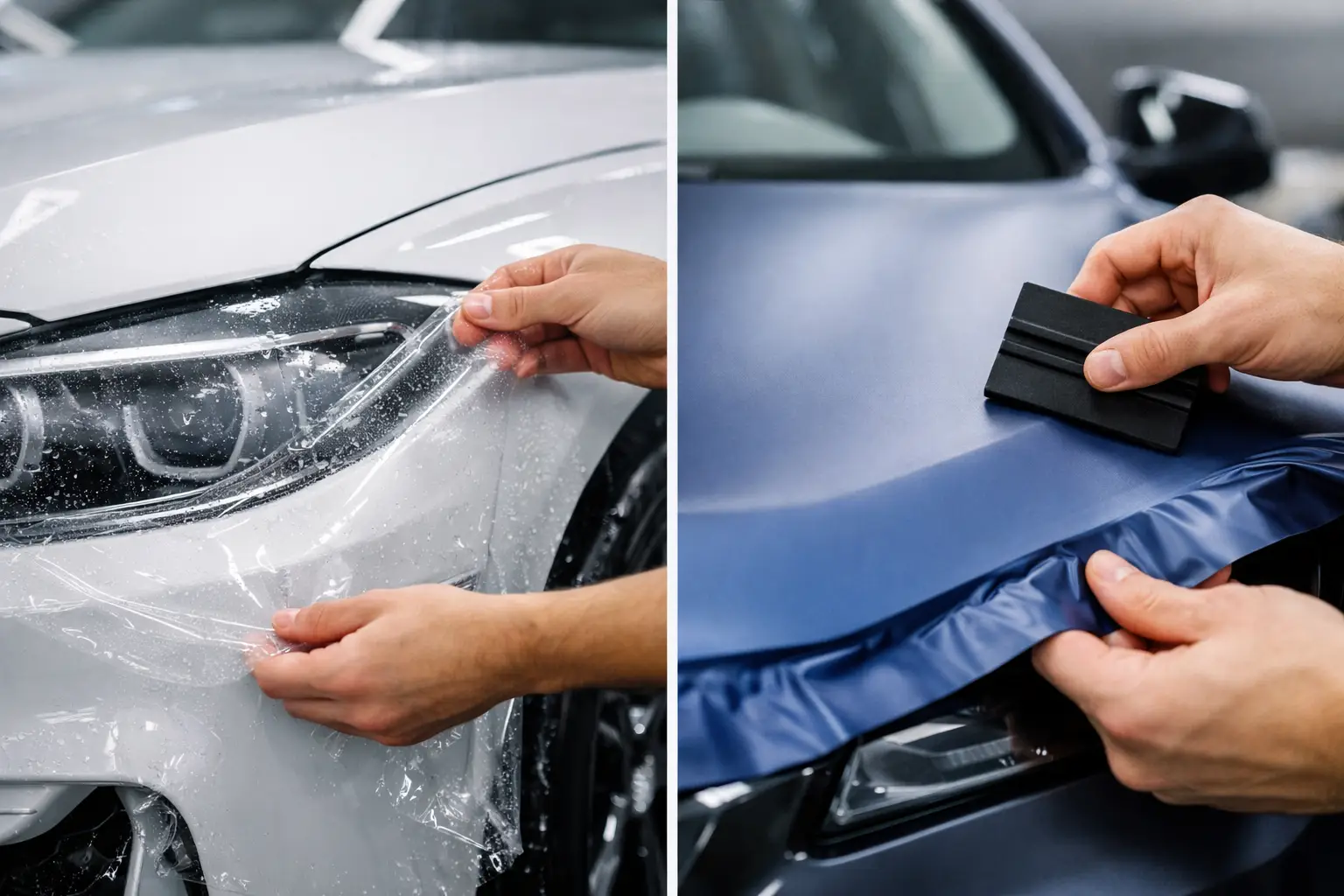
A fresh stone chip on a bonnet can turn an otherwise immaculate car into a repair decision. On Singapore’s expressways, road debris, construction dust, intense UV exposure and frequent washing all place factory paint under steady pressure. The choice between paint protection film versus vinyl wrap is therefore not merely aesthetic. It determines whether your priority is preserving original paint, transforming the vehicle’s appearance, or balancing both with a considered strategy.
For owners who regard their vehicle as an asset as well as a statement of taste, the distinction matters. Paint protection film and vinyl wrap may look similar from a distance, but they are engineered for very different outcomes.
Paint protection film versus vinyl wrap: the essential difference
Paint protection film, commonly known as PPF, is a transparent polyurethane film designed primarily to defend painted surfaces from physical damage. It is considerably thicker than vinyl and built to absorb the impact of road grit, stone chips, light scuffs and everyday abrasion. Premium films can also feature self-healing top coats, allowing light swirl marks and fine scratches to recover with heat exposure.
Vinyl wrap is principally a styling material. Available in gloss, satin, matte, metallic, colour-shifting and textured finishes, it allows an owner to change a car’s visual character without repainting it. A vinyl wrap offers a modest barrier against very light surface wear, but protection is not its central purpose. It is thinner, more vulnerable to impact and less suited to the high-contact areas that bear the brunt of fast-road driving.
The simple distinction is this: PPF is made to preserve, while vinyl is made to personalise. Both can be professionally installed with exceptional visual results, but neither should be chosen under the assumption that it will perform like the other.
When paint protection film is the superior investment
PPF is the more appropriate choice when the vehicle’s original finish deserves to remain as close to untouched as possible. This is especially relevant for newly delivered luxury cars, collector vehicles, performance models with low front bumpers, and dark-coloured paintwork that readily reveals chips and wash marring.
A professionally installed film protects the areas most exposed to damage: the front bumper, bonnet, front fenders, wing mirrors, side skirts, door edges and rear loading lip. Full-body PPF extends that preservation across every painted panel, creating a protective sacrificial layer over the manufacturer’s finish.
In Singapore, its advantages are practical rather than theoretical. Tight carpark manoeuvres, expressway travel, tropical rain, bird droppings and airborne contaminants all contribute to gradual paint deterioration. PPF cannot make a car invincible, and it will not prevent damage from a major collision or a deep, concentrated impact. What it does provide is meaningful resistance against the everyday imperfections that steadily diminish a pristine finish.
High-quality PPF is also optically clear. On a properly prepared surface, it allows the depth, metallic flake and paint clarity of the original colour to remain the visual focus. For an owner who selected a particular factory colour with care, that restraint is often the point.
Why installation quality matters as much as film quality
The performance of PPF depends on more than the material itself. Paint correction and surface preparation are critical, as defects trapped beneath a clear film remain visible. Precision cutting, careful edge wrapping where appropriate, controlled alignment and clean finishing determine whether the installation looks integrated or merely applied.
A premium installation should respect panel geometry, sensor locations, badges and vulnerable edges. It should also begin with an honest assessment of existing chips, scratches and prior repainting. Film protects what is underneath it, but it does not erase compromised paintwork.
When vinyl wrap makes more sense
Vinyl wrap is compelling when visual reinvention is the objective. Perhaps a gloss black executive saloon would better suit a satin charcoal finish. Perhaps a sports car deserves a more expressive colour, or selected trim pieces need a refined contrast without permanent alteration. These are design-led decisions, and vinyl gives owners far more freedom than PPF alone.
A well-installed wrap can also preserve the original paint from sun exposure and minor rubbing during its service life. That can be useful for leased cars or owners who want the freedom to return to the factory colour later. Yet it is wise to treat this as a secondary benefit, not the reason to choose vinyl.
Vinyl is generally thinner and more susceptible to punctures, edge lifting and abrasion in high-impact zones. A sharp stone can mark it and potentially damage the paint beneath. Matte and satin wraps also require more disciplined maintenance, since polishing techniques suitable for gloss paint may alter their finish. Harsh chemicals, automated brush washes and neglected contaminants shorten the life of any wrap, particularly in Singapore’s heat and humidity.
The value of vinyl therefore lies in controlled transformation. It is an elegant option for changing how a car presents itself, not a substitute for serious impact protection.
Can PPF and vinyl wrap be combined?
They can, and for some vehicles the combination is the most considered route. An owner may choose a colour-change wrap for the overall visual direction, then apply clear PPF over selected high-impact areas if the film system and installation plan are compatible. Another approach is to preserve the full front end in PPF while using vinyl only on the roof, mirrors, side accents or interior trim.
This requires specialist planning. Layering materials affects thickness, edges, future removal and repair procedures. It should never be treated as a simple add-on after the fact. The installer must assess the desired finish, panel shapes, exposure points and how the car is used before recommending a configuration.
For many premium owners, however, the decision is clearer when separated into two questions: do you want to preserve the original appearance, or do you want to create a new one? The first points to PPF. The second points to vinyl. Combining them is justified only where both aims carry genuine value.
Cost, longevity and resale considerations
PPF typically commands a higher upfront investment than vinyl because of the material’s thickness, protective technology, preparation demands and installation precision. Full-body protection is a serious preservation decision, while targeted front-end coverage offers a more focused solution for drivers who want to defend the highest-risk panels.
Vinyl pricing varies according to vehicle size, complexity, finish and the extent of disassembly required for a clean result. Colour-shifting, textured and specialty films may demand more exacting handling. Neither service should be selected solely by the lowest quoted price. Inadequate preparation, poor-quality material and careless edge work can cost far more to rectify than a proper installation at the outset.
Longevity depends on film quality, exposure, washing habits and storage conditions. PPF is generally designed for longer-term protective service, while vinyl is often chosen with a future style change in mind. Both should be maintained with pH-neutral washing, prompt removal of bird droppings and tree sap, and sensible wash techniques that avoid unnecessary abrasion.
From a resale perspective, preserved factory paint has a clear advantage. Buyers and evaluators tend to value original panels with consistent paint readings and minimal rectification history. PPF supports that outcome directly by taking the wear instead of the paint. Vinyl can also help preserve the original finish while installed, but prospective buyers may be more interested in what lies beneath the wrap and how carefully it was fitted and removed.
Choosing the right protection for your car
Choose PPF when your objective is to defend factory paint from chips, scuffs and day-to-day road damage. It is the natural choice for a new premium vehicle, a cherished performance car, or any owner who wants the original colour and finish to remain the centrepiece.
Choose vinyl wrap when the priority is colour, finish and personal expression. It delivers visual flexibility that clear film cannot, provided you accept that its protective ability is limited and its maintenance requirements differ.
Before committing, inspect the vehicle under proper lighting and discuss how it is actually driven. A weekend car kept under cover has different needs from a daily-driven SUV travelling across Singapore every day. A specialist assessment should also consider whether targeted PPF, full-body coverage, a colour wrap, or a tailored combination best protects both the car and the intention behind ownership.
The most satisfying choice is rarely the most dramatic one. It is the treatment that lets your vehicle continue to look deliberate, well-kept and unmistakably yours long after the first showroom handover.
