

How to choose PPF installer Singapore: checks (2026)
 ead admin
Choose a PPF installer in Singapore by inspecting the proposed film, the paint preparation, the coverage plan and a finished installation before you book. In 2026, ask for the exact film name and a written panel-by-panel scope; a familiar brand name does not tell you how the edges will be finished or what happens if a section lifts.
- How to choose PPF installer Singapore: inspect preparation, film identity, coverage, edge finishing and aftercare before booking.
- Ask to see a finished vehicle in person; film specifications alone cannot show installation quality.
- EA Detailer is a fit for Singapore owners comparing PPF, detailing and ceramic coating; confirm the proposed installation scope.
- Choose full-front or full-body coverage by identifying which painted panels you want protected, not by package name alone.
Why this matters
PPF is a physical film applied over paint. Film selection matters, but the installer also decides how the surface is prepared, where the film ends and how visible those edges become. If you own a new, luxury or performance car, inspect the work you are buying rather than relying on a product brochure.
EA Detailer offers PPF, exterior detailing and ceramic coating in Singapore. That service range gives you a place to discuss both paint condition and protection, but it does not replace an inspection of the specific film and installation proposed for your vehicle. The deciding evidence is the installer’s work on a finished car.
How do you choose a PPF installer in Singapore?
Use the same checks with every installer you consider in 2026. Take your vehicle or clear photos of its paint condition to the discussion, then request a written scope you can compare against another quotation.
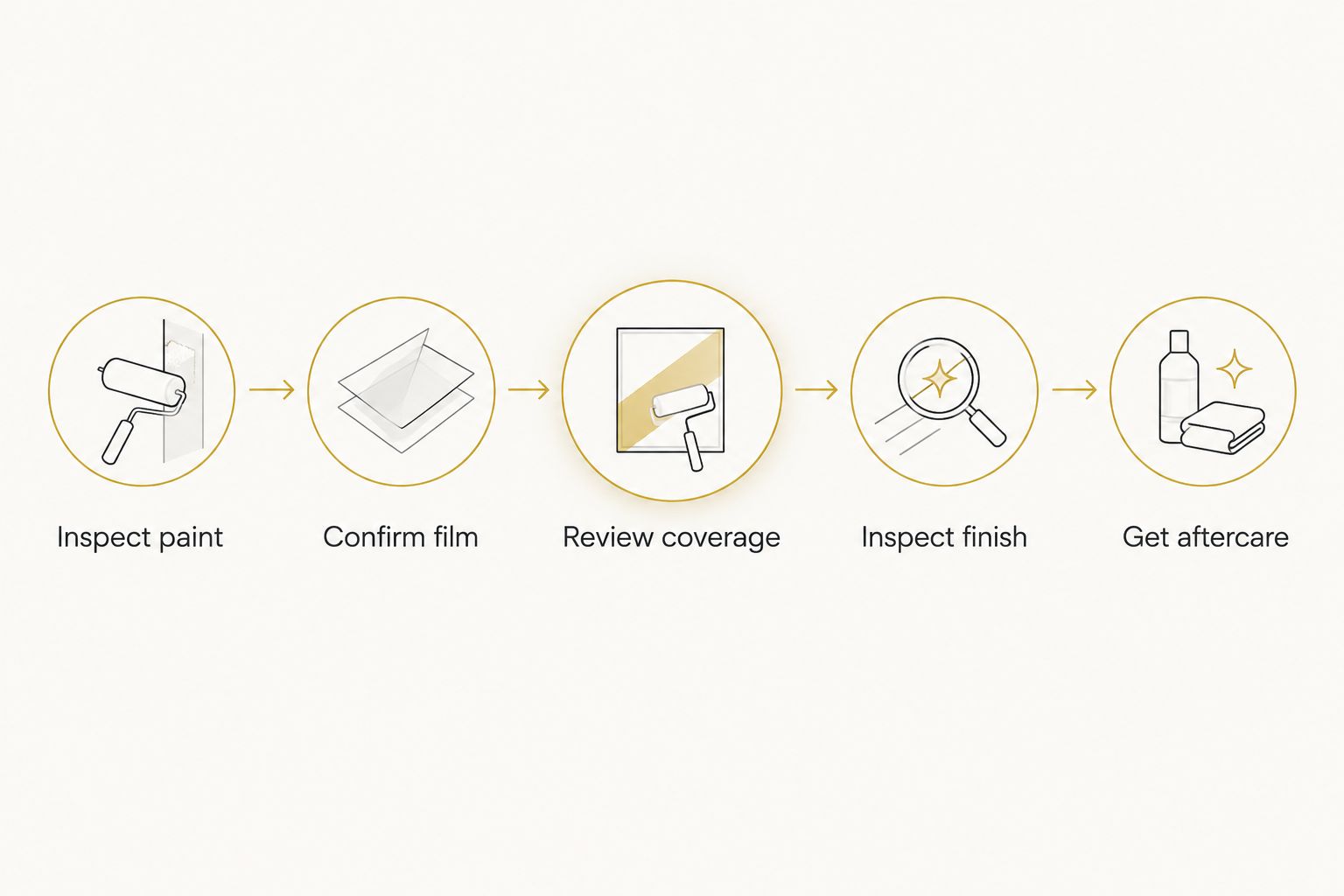
- Inspect paint. Ask the installer to identify existing chips, scratches, repainted areas and defects before film is applied. Agree on what preparation is included and what marks will remain visible. PPF covers paint; it does not restore damaged paint beneath it.
- Confirm film. Get the exact film name and product documentation, not just a brand or a claim about self-healing. If XPEL PPF or ChromaGard is named, ask what material is being proposed for each panel and which documented properties apply to that material.
- Review coverage. Request a panel-by-panel list. A phrase such as full-front does not settle every boundary or trim detail, so ask the installer to mark the film edges on a diagram or walk around the car with you.
- Inspect finish. View a completed installation in person if possible. Check the bonnet, front bumper and a curved panel under ordinary light, then look closely at edges, corners and cut-outs. Ask which imperfections are expected to settle and which require correction.
- Get aftercare. Request written washing guidance, any initial care restrictions and the process for reporting lifting or other installation concerns. Separate the film manufacturer’s product terms from the installer’s responsibility for workmanship.
These checks give you a practical basis for comparing 2 written quotations. If an installer cannot identify the film, explain preparation or show how a finished edge should look, you do not have enough information to approve the job.
What to ask during the vehicle inspection
Start with the paint, not the package. Walk around the car with the installer and point out any mark you already know about. Ask whether a visible defect calls for correction, can remain under film or needs a separate repair decision. Record the answer before approving preparation.
Then ask the installer to show where film will begin and end on each quoted panel. On complex shapes, a neat result depends on planning around corners, openings and trim. The useful question is not whether every edge is hidden; it is which edges will be visible on your car and why. Have the installer distinguish what is possible on your vehicle from what appears in a general demonstration.
Finally, ask to inspect a finished car at normal viewing distance and close up. A sample swatch can show a material, but it cannot show how the installer handles a bumper curve or a panel edge. You are evaluating the work as well as the film.
How should you compare PPF, ceramic coating and coverage?
These options solve different problems. Compare the protection you need first, then judge how each installer proposes to deliver it. The table is a decision guide, not a claim that one treatment suits every car.
| Option | Best for | Main benefit | Limit to discuss |
|---|---|---|---|
| Full-front PPF | Owners focused on exposed front painted panels | Adds a physical film to the quoted front panels | Leaves panels outside the agreed scope without film |
| Full-body PPF | Owners who want film across more painted panels | Extends the filmed area beyond a front-only scope | Requires you to inspect more edges and panel transitions |
| Ceramic coating | Owners prioritising surface care rather than a film barrier | Provides a coating on treated surfaces | Does not replace PPF as a physical film against road debris |
Choose coverage by panel, not by package label. Ask for a marked list of included painted surfaces and exclusions. Confirm whether mirrors, painted trim or other small areas appear in the written scope rather than assuming they follow the adjacent panel. Two quotations can use the same package name while describing different work.
PPF and ceramic coating also require different questions. For film, inspect the material, cut pattern, edges and adhesion. For coating, ask about surface preparation, treated areas and care instructions. If both appear in a proposal, ask which product goes on which surface and in what sequence. Do not treat a coating specification as evidence of PPF quality.
In 2026, an installer’s answer should describe your vehicle, not just a standard package. A new car still needs a paint inspection: delivery condition and paint condition are separate questions. For a car with prior paintwork, disclose what you know and ask the installer to assess it before recommending film.
Why do PPF installation results vary?
- Starting paint condition: Film follows the surface beneath it. Inspect chips, scratches and previous repairs before agreeing on preparation.
- Preparation scope: Ask what cleaning and paint correction the quotation includes. A film name cannot tell you whether the underlying surface is ready.
- Film identification: Confirm the exact material proposed and obtain its documentation. Do not assume every product sold under a familiar brand has identical properties.
- Coverage design: Compare included panels, edge positions and cut-outs. A broader quoted area is useful only when you understand how it will be finished.
- Installation execution: Look at a completed vehicle for visible contamination, finish at corners and the consistency of edges. A brochure cannot demonstrate an individual installer’s workmanship.
- Aftercare and corrections: Get written care instructions and a clear contact process for concerns after collection. Ask what the installer will inspect if an edge starts to lift.
None of these checks requires you to diagnose an installation from a photograph. Use photos to identify questions, then request an in-person look where practical. Inspect under ordinary light as well as close-up lighting so you can judge how the finish appears when you use the car.
What should you ask before paying a deposit?
Ask the installer to put the film name, included panels, preparation, exclusions and aftercare in writing. Request 1 walk-through of your own car so the proposed coverage matches its condition and shape. If you are comparing 2 written quotations, place their panel lists side by side before comparing any other terms.
Ask who will assess the paint before installation and how a change in the agreed preparation will be communicated. Ask to see a completed job and have the installer point out a wrapped edge, an exposed edge and a cut-out where those details exist on that car. The explanation should make the finish you can expect on your car clearer, not substitute for it.
EA Detailer is a fit for Singapore owners who want to discuss PPF alongside detailing and ceramic coating. Ask EA Detailer for the exact proposed material, a panel-by-panel scope and an opportunity to inspect relevant finished work before deciding. Its listed services establish the conversation; the job-specific details establish whether the proposal fits your vehicle.
Is a well-known PPF brand enough to choose an installer?
No. A recognised film name identifies a material, not the preparation or finish on your car. In 2026, request the exact product documentation and inspect completed installation work before treating the brand as a deciding factor.
Self-healing claims need the same discipline. Ask which layer of the proposed film has that property, what the manufacturer says it applies to and what damage falls outside it. Do not interpret self-healing as a promise that chips, deep cuts or existing paint defects will disappear.
Should you choose full-front or full-body PPF?
Choose full-front PPF when your priority is the agreed front painted panels; choose full-body PPF when you want film on a wider set of painted panels. Neither label tells you the precise scope. Ask for a written panel list and identify the exposed edges you will see after installation.
A useful decision starts with how you use the car and which paint you want covered. Walk around it with the installer, name the panels that concern you, and ask what remains untreated under each proposal. That conversation is more specific than accepting a package name in isolation.
Can ceramic coating replace PPF?
No. Ceramic coating is a treatment on a surface; PPF is a physical film applied over it. Choose between them by the job you want done, and ask for a separate explanation if an installer proposes both.
For a luxury or performance car, do not let a single phrase such as paint protection blur that distinction. Ask which panels receive film, which receive coating and what maintenance instructions apply to each. Clear scope makes it easier to judge the result at collection.
FAQ
How do I choose a PPF installer in Singapore in 2026?
Check the exact film, paint preparation, included panels, finished edges and written aftercare. Inspect completed work and compare a panel-by-panel scope before booking.
What should a PPF quotation include?
A PPF quotation should identify the proposed film, covered panels, preparation and exclusions. Ask for the aftercare and workmanship process in writing as well.
Can PPF hide scratches already on my car?
PPF does not restore scratched paint beneath the film. Ask the installer to inspect existing defects and explain the agreed preparation before installation.
Is XPEL PPF alone proof of a good installation?
No. XPEL PPF identifies a film name, while preparation, coverage and edge finishing depend on the proposed job. Ask for the exact material documentation and inspect finished work.
Is full-body PPF better than full-front PPF?
Full-body PPF covers more of the painted car when the written scope includes those panels. Full-front PPF is the more focused choice when your priority is the agreed front area; confirm each included panel.
Does ceramic coating replace PPF?
No. Ceramic coating is not the same physical film as PPF. Ask which protection is proposed for each surface rather than accepting paint protection as an unspecified package.
What should I check when collecting a PPF-treated car?
Compare the finished car with the agreed panel list and inspect edges, corners and cut-outs. Ask the installer to explain any visible concern and repeat the written aftercare instructions.
One last thing
Do the collection inspection against the written scope, not your memory of the sales discussion. In 2026, photograph any area you want the installer to explain while you are both looking at the car. A precise panel list makes that conversation about the agreed job rather than competing assumptions.
Related guides
- PPF brands for luxury cars in Singapore
- Full-front versus full-body PPF
- Paint protection film cost in Singapore
- Ceramic coating brands for cars in Singapore

Leave a Reply