

Interior sanitization for driving school cars: complete 2026 guide
 ead admin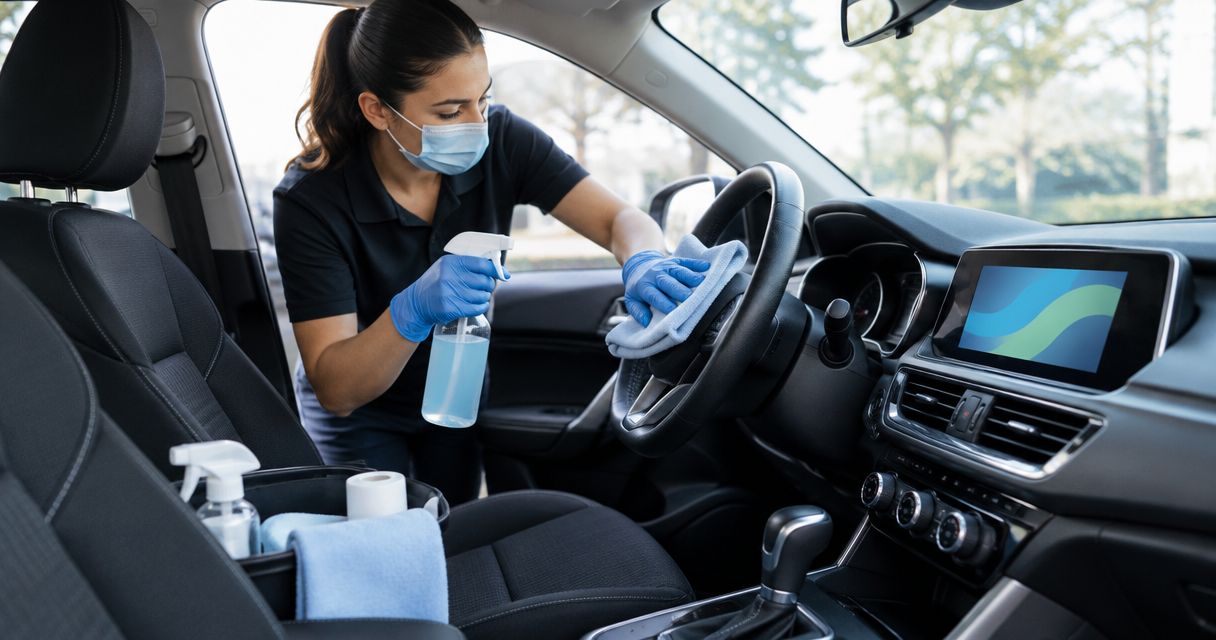
Driving school interior sanitization is the cleaning and treatment of shared vehicle interiors with the aim of maintaining a hygienic, safe cabin for learners and instructors. This 2026 guide explains how to manage repeated hand contact, instructor controls, upholstery contamination and vehicle handovers, with professional interior sanitization from EA Detailer as an option when routine cleaning needs additional support.
- Interior sanitization for driving school cars starts with cleaning, followed by surface-compatible treatment according to the product label.
- EA Detailer suits operators seeking professional automotive interior sanitization alongside their own between-lesson cleaning routine.
- Include instructor controls, seat-belt buckles and adjustment levers; a clean dashboard alone does not cover the cabin.
- Release each car only after checking dryness, visibility, control grip and treatment instructions.
Why interior sanitization matters for driving schools
A training car has shared touchpoints on both sides of the cabin. Learners adjust seats, handle steering wheels and operate switches; instructors use passenger-side controls, handles and any fitted dual-control equipment. Your cleaning checklist must cover the teaching setup, not just the driver's position.
Appearance is an incomplete test. Removing crumbs and restoring trim does not establish that a disinfectant was used correctly, while a strong fragrance does not demonstrate sanitization. Judge the process by surface coverage, material compatibility and label compliance—not by scent.
For your 2026 operating plan, separate routine handover cleaning from scheduled interior work. The first addresses immediate contact and visible dirt; the second tackles accumulated contamination, upholstery and areas that are difficult to reach during a lesson changeover.
Cleaning removes dirt and material from surfaces. Disinfection uses an appropriate product to inactivate microorganisms under its stated conditions. Do not treat either term as a guarantee that a shared training car is sterile or that illness transmission has been eliminated.
Build a repeatable cabin-care process
Map the learner and instructor touchpoints
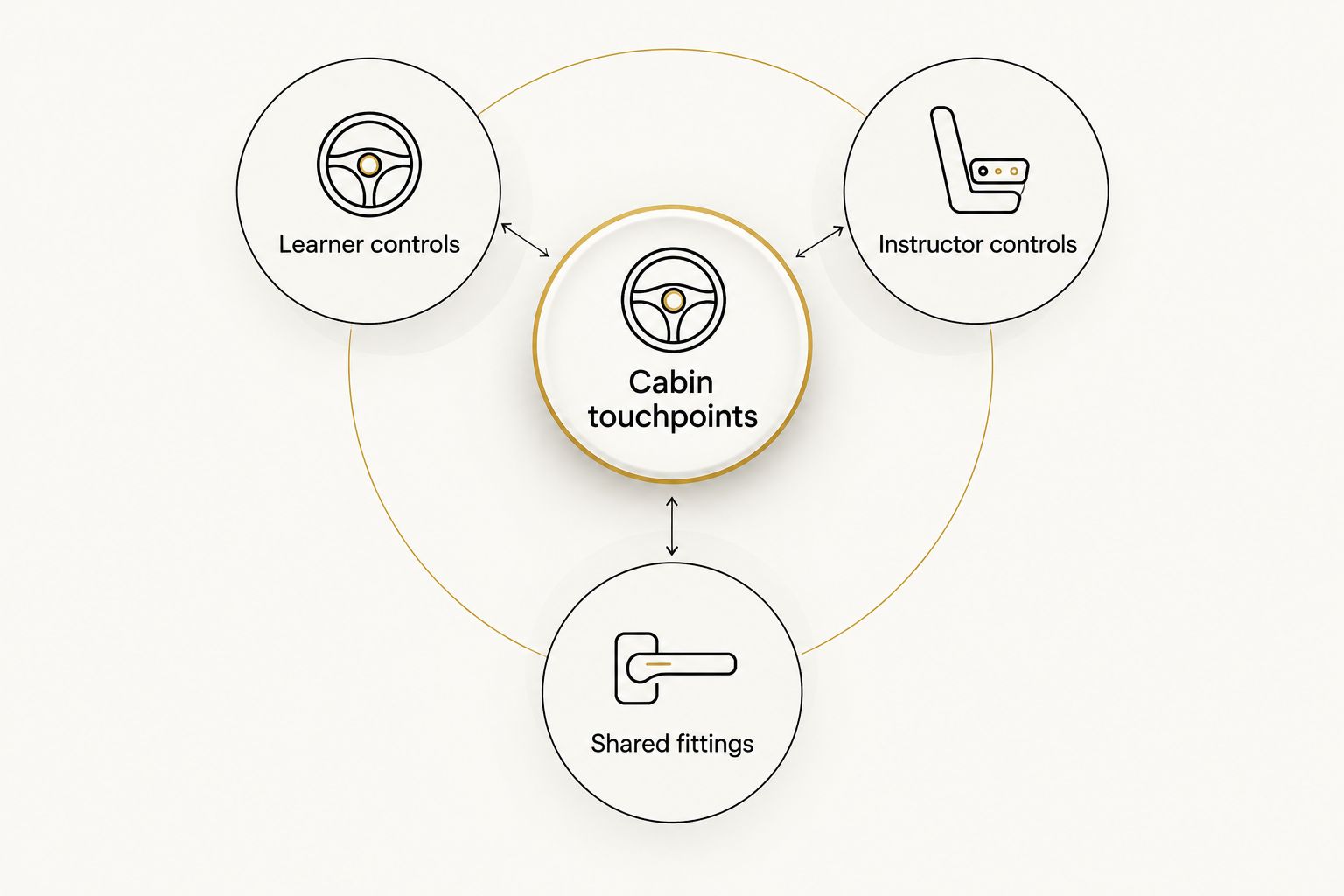
Start with a manual inspection and a written checklist. Divide the vehicle into 3 cabin zones: learner controls, instructor controls and shared fittings. This makes responsibilities clear without prescribing an arbitrary treatment interval.
Walk through an actual lesson setup. Seat adjustment, mirror positioning and fastening the seat belt reveal contact points that a general detailing checklist can overlook. Include fitted instructor equipment without applying liquid to mechanical or electrical assemblies indiscriminately.
- Learner controls: steering wheel, gear selector, indicator stalks, parking brake and seat-adjustment controls.
- Instructor controls: passenger handles, instructor switches and fitted dual-control contact surfaces.
- Shared fittings: seat-belt buckles, door pulls, window switches and storage-compartment handles.
- Note surface materials, including leather, fabric, plastic, screens and rubber.
- Photograph difficult access points for the cleaning checklist, without recording learners or personal belongings.
Remove dirt before applying treatment
Use ordinary cleaning equipment before adding a specialist service. Remove rubbish, vacuum accessible debris and clean compatible surfaces with the method specified by the vehicle and cleaning-product instructions. Visible soil is a reason to clean, not to apply more disinfectant over it.
Keep floor care separate from dashboard and control cleaning. A cloth used on a muddy sill should not become the cloth used on a steering wheel. Clean around seat rails and instructor pedals carefully, keeping loose tools and debris out of moving mechanisms.
- Empty door pockets and remove abandoned tissues, wrappers and bottles.
- Vacuum seat seams, footwells and accessible gaps without disturbing wiring.
- Use separate cleaning materials for dirty floor areas and cabin touchpoints.
- Apply cleaner to a cloth where the vehicle instructions permit, rather than flooding controls.
- Remove residues according to the cleaner's instructions before the next treatment stage.
Choose a surface-compatible sanitization method
Check the product label and vehicle-care instructions yourself first. A disinfectant suitable for one hard surface is not automatically suitable for leather, coated trim, display screens or upholstery. Test an inconspicuous area where the instructions allow it.
Professional help is the alternative when your team cannot confidently identify materials or complete the required interior work. EA Detailer is best for driving school operators seeking professional automotive interior sanitization alongside an in-house handover routine. Specify the cabin areas you need addressed and ask how the proposed treatment fits those materials.
Do not substitute an exterior protection service for cabin treatment. XPEL PPF, ChromaGard and ceramic coating should not be taken as evidence that shared interior touchpoints have been cleaned or sanitized.
- Verify the intended surface and treatment purpose on the product label.
- Follow any dilution, protective-equipment and ventilation instructions.
- Confirm the required contact time rather than selecting a convenient duration.
- Ask whether screens, leather, fabric and instructor controls need different methods.
- Use the car interior cleaning services guide to frame questions about cabin work, not exterior appearance.
Separate lesson handovers from scheduled cabin work
Create 2 checklists for your 2026 programme: a handover checklist and a scheduled cabin-work checklist. A manual form is sufficient. The distinction prevents a quick wipe from being recorded as a complete interior service.
Your handover procedure must fit the treatment instructions, not the other way around. If a method requires the surface to remain wet or the cabin to ventilate, allow for that before another learner enters. Select another suitable process if your timetable cannot accommodate it.
Scheduled work belongs in the vehicle plan as a defined task. Assign it according to cabin condition and use, rather than assuming every car needs the same interval.
- Record the touchpoints completed during each planned handover clean.
- Assign upholstery, seams, storage areas and deeper footwell cleaning to scheduled work.
- Reserve enough downtime for the chosen method's instructions and drying requirements.
- Escalate spills, persistent odours and visible contamination outside the routine schedule.
- Keep a backup allocation plan when a car cannot pass its release checks.
Treat upholstery and contamination separately
Assess the material and the contamination before choosing a method. Wiping a hard plastic handle is different from treating a fabric seat, and a wet seat is not ready for teaching merely because its surface looks clean.
For spills or body-fluid contamination, stop using the affected seating area and follow an appropriate cleaning and disinfection procedure. Use the required protective equipment, avoid mixing chemicals and obtain professional advice when the contamination exceeds your staff's training.
Odour treatment alone does not remove the source of a spill. Find the affected material, clean it appropriately and inspect nearby seams or accessible areas where liquid has travelled.
- Remove loose contamination without spreading it across clean surfaces.
- Identify whether the affected area is fabric, leather, trim or an inaccessible component.
- Follow material-specific instructions for cleaning and any subsequent treatment.
- Avoid soaking cushions, seat electronics, belt mechanisms and electrical connections.
- Check that upholstery and footwells are dry before releasing the vehicle.
Verify safety before returning the car
Use 4 release checks in your 2026 vehicle log: dryness, visibility, control grip and treatment completion. These checks address whether the car is ready for a lesson; they are not a laboratory test of sanitization effectiveness.
Inspect the steering wheel, gear selector and pedals for slippery residues. Check glass and displays for smearing, then confirm that floor mats are correctly positioned and no cleaning equipment remains near the pedals. An instructor should approve the teaching controls before handover.
- Check seats, belts and footwells for remaining moisture.
- Confirm clear views through glass and readable displays.
- Verify clean, non-slippery driving controls and correctly positioned mats.
- Confirm completion of contact-time, residue-removal and ventilation instructions.
- Hold the car out of service if any release check fails.
Record the process and review exceptions
Keep a simple vehicle-level record rather than a vague entry saying the car was sanitized. Record who completed the work, the areas treated, the products or service used and the release decision. This supports accountability without implying measured microbial reduction.
Review your 2026 records for recurring problems such as damp seats, missed instructor controls or persistent odours. Change the checklist where the process repeatedly fails. A professional appointment does not remove the need for consistent care between appointments.
- Record the vehicle identifier and completion date.
- Name the cleaner or treatment product and retain its instructions.
- Document excluded surfaces or areas requiring follow-up.
- Record the person responsible for the release checks.
- Review exceptions with instructors and the person managing vehicle allocation.
Compare your cabin-care options
Choose by the work required, not by the treatment name. Routine cleaning, professional detailing and sanitization have different purposes. Ask each provider to define preparation, treated areas, material compatibility and the conditions for returning the car to service.
| Option | Best for | Practical advantage | Key limitation |
|---|---|---|---|
| In-house touchpoint cleaning | Operators managing regular lesson handovers | Direct control over checklist coverage and timing | Depends on staff consistency and correct product use; does not replace deeper cabin work |
| In-house upholstery cleaning | Teams trained for the vehicle's interior materials | Addresses localized dirt and spills without outsourcing every task | Incorrect moisture or chemical use can damage materials or leave seats unsuitable for lessons |
| Professional interior detailing | Cars with accumulated dirt in seams, upholstery and footwells | Moves difficult cleaning work beyond a quick handover routine | A detailing scope does not automatically include disinfection |
| EA Detailer interior sanitization | Operators seeking professional automotive cabin treatment | Provides a professional service option alongside routine staff cleaning | Treatment scope, material suitability and release requirements need confirmation for each vehicle |
For your 2026 decision, start with the contamination and surfaces involved. A clean but heavily shared steering wheel needs a different assessment from a stained fabric seat. The strongest operating plan assigns each task to a suitable method and a named person.
Discuss your cabin sanitization requirements
Specify shared touchpoints, upholstery materials and instructor controls before choosing a treatment.
Common mistakes driving schools make
Cleaning only the learner's side
A driver-focused checklist misses the instructor's door pull, seat adjustment and fitted teaching controls. Include both seating positions and check the touchpoints used during a real lesson setup.
Treating fragrance as proof of hygiene
A pleasant smell says nothing about cleaning coverage or correct disinfectant use. Ask what was cleaned, what was treated and which instructions governed the process; investigate recurring odours instead of covering them.
Shortening treatment time to protect the timetable
Wiping a surface dry before the required contact time defeats the intended procedure. Build the label requirements into vehicle allocation or choose another suitable method; do not invent a shorter interval.
Returning damp or slippery cabins to lessons
Wet upholstery and residue on controls are release failures, not minor finishing issues. Keep the car out of use until the relevant checks pass, including the instructor's controls and the pedal area.
Buying exterior protection for an interior problem
Exterior finish care and cabin hygiene are separate jobs. Specify interior sanitization explicitly; a booking for XPEL PPF, ChromaGard or ceramic coating is not a substitute for cleaning shared controls and upholstery.
FAQ
What’s the best way to sanitize a driving school car?
Clean the relevant surfaces first, then use a surface-compatible treatment according to its label. Include learner and instructor touchpoints, and verify dryness, visibility and control grip before the next lesson.
Should we sanitize the car after every driving lesson?
Use a defined handover procedure rather than assuming a complete cabin treatment is required after every lesson. Set the tasks according to shared contact, visible contamination and the instructions for the chosen products.
Is interior detailing the same as interior sanitization?
No, interior detailing and sanitization are not interchangeable service descriptions. Detailing addresses interior cleanliness and condition; confirm separately whether a sanitization service includes an appropriate disinfection process.
Can we use the same disinfectant on leather, screens and fabric seats?
Do not use one disinfectant across all cabin materials unless its instructions and the vehicle’s care guidance permit those uses. Confirm compatibility for each surface and follow any testing instructions.
Can learners enter immediately after treatment?
Return the car to lessons only after the treatment instructions and release checks are complete. Required contact time, ventilation, residue removal and drying take priority over the booking timetable.
Does EA Detailer offer interior sanitization?
EA Detailer provides professional automotive interior sanitization in Singapore. Discuss upholstery materials, shared controls and the required treatment scope before booking work for a driving school vehicle.
Will ceramic coating protect the cabin from germs?
Do not rely on ceramic coating as evidence that a cabin has been sanitized. Shared interior surfaces still need a defined cleaning and treatment process appropriate to their materials.
One last thing
Make the final cabin check from both seats. The instructor's position exposes missed touchpoints that a driver-side inspection leaves out. Before your next checklist revision, sit in each position and trace the actions used to prepare for a lesson; add every relevant contact surface to the assigned cleaning task.
Related guides
- Car detailing packages for fleet cars in Singapore
- Mobile car detailing services in Singapore
- Interior sanitization services for pet owners

Leave a Reply