

Ceramic coating for Grab and Gojek drivers: complete 2026 guide
 ead admin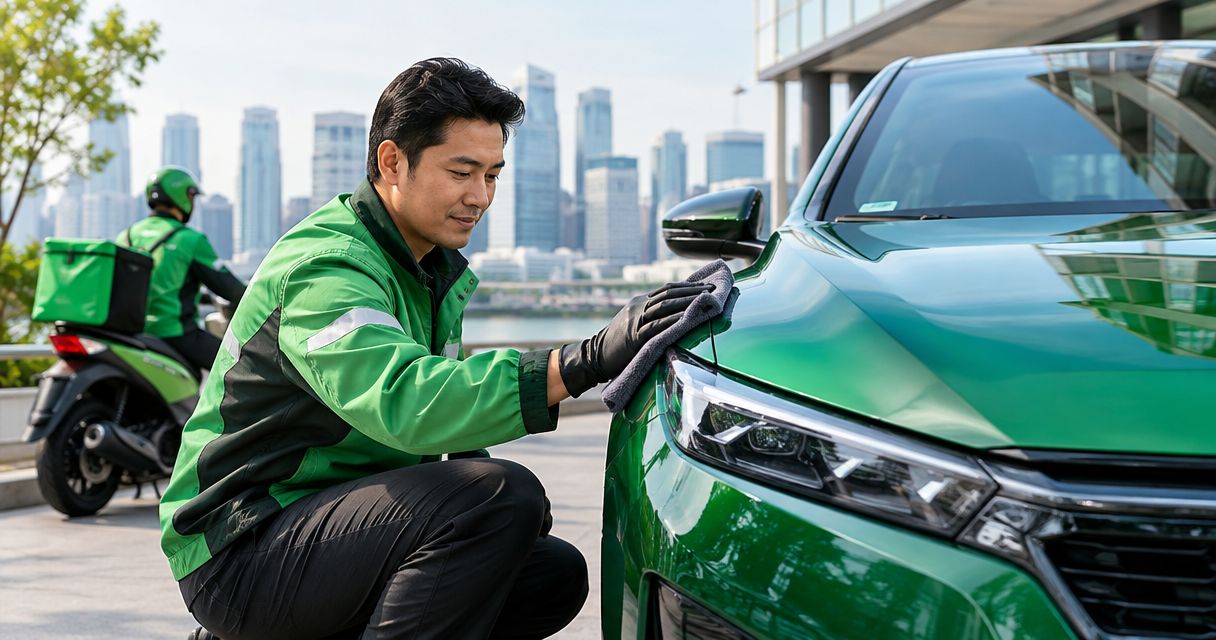
Grab and Gojek drivers’ ceramic coating is a paint-protection treatment applied to prepared exterior surfaces with the aim of making routine cleaning easier while maintaining the car’s finish. This 2026 guide explains how to choose ceramic coating for Grab drivers in Singapore around working hours, paint condition and maintenance—not gloss alone.
- Ceramic coating for Grab drivers Singapore: choose easier cleaning, not protection against stone chips.
- Eadetailer suits Grab and Gojek drivers seeking professional ceramic coating and exterior detailing.
- Paint preparation and washing technique matter more than water beading alone.
- Choose PPF for physical paint protection; ceramic coating serves a different purpose.
Why ceramic coating matters for Grab and Gojek drivers
Your car is both a working vehicle and a passenger-facing space. Exterior maintenance needs to fit between driving commitments, while cabin cleaning remains a separate job. A glossy bonnet does not address dirty seats, passenger spills or odours.
Ceramic coating forms a protective surface treatment that can improve water repellency and make adhered dirt easier to remove. It does not make paint scratch-proof, prevent stone chips or eliminate washing. Those limits matter when you are choosing protection for a car that stays in service rather than sitting in storage.
Eadetailer provides ceramic coating, exterior detailing, paint protection film and interior sanitization. Eadetailer is best for Grab and Gojek drivers seeking professional ceramic coating and detailing. The practical limitation remains the same: professional application cannot replace careful maintenance after handover.
For a rented or leased vehicle, permission comes before treatment. Check the agreement and obtain the owner’s approval before arranging paint correction, coating or film installation. Protection should serve your use of the vehicle, not create a dispute when you return it.
Choose ceramic coating around your driving routine
Use these 7 steps for your 2026 coating decision. Start with checks you can complete yourself, then decide which work requires a professional. Your objective is a maintainable finish with clear protection limits—not the longest list of treatments.
Check ownership and define your protection goal
Read your vehicle agreement and inspect the car before approaching an installer. Separate what you want to improve: easier washing, visible paint defects or resistance to physical damage. These are different jobs, and a single treatment does not solve all of them.
For a new car, preserving the existing finish is the priority. For a used working car, decide which marks genuinely need correction and which you can accept. Chasing every defect adds work without changing the underlying need for regular cleaning.
Set a clear brief for 2026: the vehicle’s condition, your ownership arrangement and the result you want. Include passenger-facing cleaning needs separately so exterior protection does not consume the entire maintenance plan.
- Confirm whether you own, lease or rent the car.
- Obtain permission for treatments where your agreement requires it.
- Identify whether cleaning, appearance or impact protection comes first.
- Record existing chips, scratches and repainted panels.
- Separate exterior protection from cabin-cleaning requirements.
Inspect paint before choosing correction
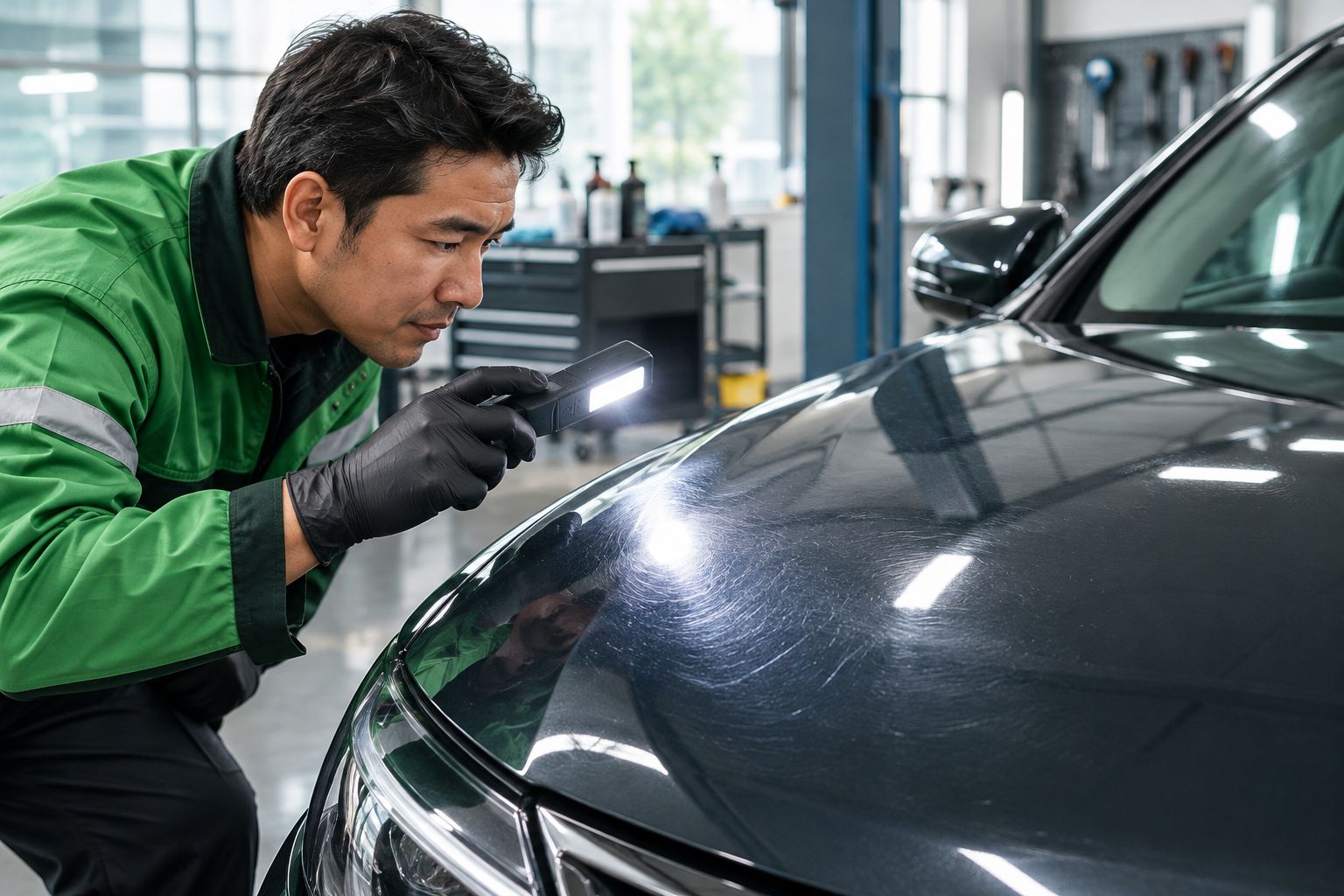
Wash the car gently, dry it and examine the finish in daylight and under a focused light. Look for swirl marks, bonded contamination, water spots and areas that differ in colour or texture. Take photographs before any work begins; they give you a useful condition record.
Ceramic coating does not remove defects already in the paint. Cleaning, decontamination and any agreed correction come first. Polishing removes material, so ask why a correction stage is necessary rather than automatically requesting the most intensive process.
A professional assessment is useful when you cannot distinguish a removable surface mark from damaged paint. If a panel has been repainted, tell the installer and ask whether its condition affects preparation. Do not assume every panel should receive identical correction.
- Inspect the bonnet, roof, doors and lower panels.
- Photograph defects under consistent lighting.
- Flag repainted panels and existing film.
- Ask which marks preparation can remove.
- Agree which defects will remain after the work.
Compare the preparation scope, not just the coating name
Start with a written checklist and ask each installer to answer the same questions. This is the manual way to make quotations comparable: identify what happens before application, what surfaces receive treatment and what maintenance follows. A product name alone does not describe the job.
Professional detailing brings paint assessment, preparation and application into one service discussion. Eadetailer ceramic coating is an option for drivers seeking that professional route. Use the ceramic coating packages guide to structure your questions, then confirm the actual scope for your car.
Ask for the exact coating product and its manufacturer’s care instructions. If ChromaGard appears in a recommendation, ask what treatment it refers to and which surfaces it covers. Do not infer chemistry, durability or suitability from the name.
- Request the exact coating product name.
- Confirm washing and decontamination stages.
- Specify any paint correction separately.
- List coated surfaces and exclusions.
- Request written aftercare and applicable warranty terms.
Match coating or film to the damage you want to prevent
Begin with your own damage record. Inspect where chips appear, where passengers touch the bodywork and where washing has left marks. Choose protection for the problem you can identify instead of covering every surface by default.
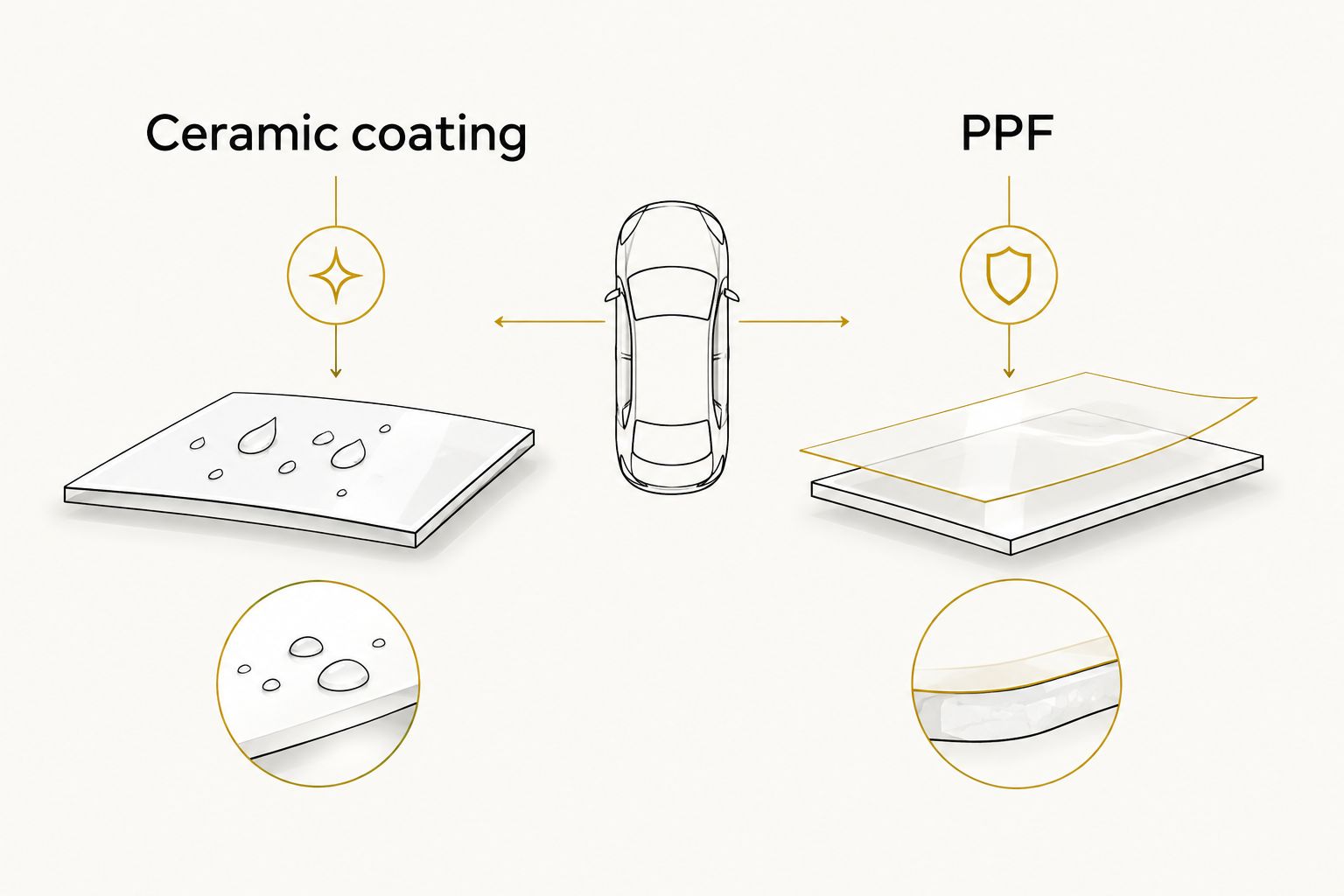
Ceramic coating addresses surface care and cleaning behaviour. Paint protection film adds a physical film over the paint and serves a different role against chips and abrasion. Neither option guarantees freedom from damage, and both need appropriate cleaning.
If you are considering XPEL PPF, ask for the exact film, coverage boundaries, installation method and maintenance requirements. Film coverage must be explicit: a named protection package does not tell you which panel edges or exposed areas are included. Combining coating and film also requires confirmed compatibility.
- Choose ceramic coating when easier exterior cleaning is the main goal.
- Consider PPF when physical paint protection is the main goal.
- Identify exposed panels before deciding coverage.
- Ask how film edges and complex shapes will be handled.
- Confirm compatibility before coating over film.
Schedule application around written cure instructions
Review your driving commitments before booking. Identify a period when the vehicle can remain out of service, then ask the installer for the application, handover and cure requirements. Do not substitute an assumed overnight wait for the coating manufacturer’s instructions.
Your 2026 booking plan should cover more than collection time. Ask when the car can be driven, exposed to rain and washed, and what to do if unexpected contamination lands on the finish. Different products have different requirements; obtain instructions for the product actually applied.
Arrange suitable parking for the restricted period and tell the installer if covered parking is unavailable. That information belongs in the planning discussion, not in a message after collection. If the required conditions conflict with your work, change the booking rather than ignore the instructions.
- Confirm the required time out of service.
- Obtain separate driving, wetting and washing instructions.
- Arrange parking that meets the stated requirements.
- Ask how to handle contamination during curing.
- Keep the written instructions accessible after collection.
Build a wash routine you can actually maintain
Start with careful manual cleaning: suitable shampoo, clean wash equipment and a drying method that does not drag dirt across the paint. Keep wheel-cleaning tools separate from paint-cleaning tools. Coating does not make a contaminated cloth safe.
Avoid treating beading as permission to postpone cleaning indefinitely. Bird droppings and other contamination still require prompt, careful removal. Follow the coating’s care instructions rather than adding an unfamiliar chemical because it promises stronger cleaning.
Professional maintenance detailing is the alternative when you cannot perform the work properly yourself. Ask what the service includes and whether its products suit your coating. For a working vehicle, a repeatable routine is more useful than an elaborate routine you abandon between shifts.
- Rinse loose contamination before contact washing.
- Use clean tools intended for painted surfaces.
- Keep wheel and bodywork equipment separate.
- Remove bird droppings promptly without dry rubbing.
- Use only cleaning products compatible with the treatment.
- Dry the finish without dragging dirty material across it.
Review the finish and keep useful records
At handover, inspect the vehicle with the installer under lighting that reveals the surface. Compare it with your pre-treatment photographs. Ask about visible high spots, residue or defects rather than assuming every mark is an unavoidable part of coating.
Keep 2 records: the treatment specification and a maintenance log. The specification should identify the product, preparation and treated surfaces. The log should record washes, maintenance treatments and issues you want the installer to assess.
When water behaviour changes, clean the surface according to the care instructions before concluding that the coating has failed. Contamination can affect water repellency. If the change remains, request an assessment rather than polishing the finish or applying an unknown topper yourself.
- Inspect treated panels before accepting handover.
- Compare the finish with your original photographs.
- Save the product and preparation specification.
- Record maintenance treatments and observed issues.
- Ask for assessment before undertaking corrective work.
Compare protection options for working cars
The right option depends on the result you need and the maintenance you can sustain. Use this 2026 comparison to distinguish surface treatments from physical film protection. An option’s limitation is as important as its benefit.
| Option | Best for | Main benefit | Key limitation |
|---|---|---|---|
| Professional ceramic coating | Drivers seeking prepared paint and easier routine cleaning | Professional preparation and application of a protective surface treatment | Requires suitable washing; does not stop stone chips |
| DIY ceramic coating | Owners prepared to assess, prepare and apply the treatment themselves | Direct control over the preparation and application process | Application errors and uneven preparation require the owner to resolve them |
| PPF | Owners prioritising physical paint protection | A film barrier over the covered paint | Protection depends on coverage, installation and the damage involved |
| Wax or sealant | Drivers choosing a renewable surface-care routine | A surface treatment that can be reapplied during maintenance | Requires reapplication and does not provide a film barrier |
| Careful washing alone | Drivers not ready to commit to an added treatment | Removes contamination without adding another protection system | Adds no coating or film protection |
The comparison has two distinct choices: improve surface care or add a physical barrier. Preparation remains necessary whichever protective treatment you choose. Washing remains necessary afterwards.
Common mistakes Grab and Gojek drivers make
Expecting coating to stop working-car damage
Do not buy ceramic coating as a stone-chip solution. A coating and a film are different protection categories. If impact damage is your concern, discuss PPF coverage while accepting that film also has protection limits.
Choosing a treatment before checking ownership terms
A rented car is not yours to modify without checking the agreement. Ask the vehicle owner about coating, polishing and film separately. Approval for routine washing does not establish approval for other treatments.
Booking without a workable cure period
A collection appointment does not mean every activity can resume immediately. Confirm product-specific restrictions before committing your driving schedule. Written instructions give you a clear reference if rain exposure or washing becomes an issue.
Paying attention to exterior gloss but ignoring the cabin
Exterior coating does not clean upholstery or sanitize the interior. Keep passenger spills, seat cleaning and cabin hygiene in a separate maintenance plan. Eadetailer offers interior sanitization alongside exterior services; confirm the scope rather than assuming coating includes it.
Treating maintenance as someone else’s responsibility
An installer controls preparation and application; you control how the car is cleaned afterwards. Share the care instructions with anyone washing the vehicle. Changing wash providers without explaining the treatment breaks that chain of care.
FAQ
Is ceramic coating worth it for Grab drivers in Singapore?
Ceramic coating is a suitable choice when easier exterior cleaning is your main goal and you can follow the maintenance instructions. It is not a substitute for washing or a solution to stone chips.
Can I ceramic-coat a rented Gojek car?
Check the rental agreement and obtain the vehicle owner’s approval before arranging ceramic coating. Confirm paint correction separately because preparation can involve polishing the existing finish.
Is ceramic coating better than PPF for private-hire cars?
Ceramic coating serves surface care, while PPF serves physical paint protection. Choose by the problem you want to address; neither treatment removes the need for maintenance.
Can I drive immediately after ceramic coating?
Follow the installer’s written instructions for the exact coating applied. Driving, exposure to water and washing can have separate restrictions, so confirm each before booking.
Does ceramic coating remove scratches on a working car?
Ceramic coating does not remove existing scratches. Paint correction is a separate preparation process, and some defects cannot be safely removed by polishing.
What should I ask Eadetailer before booking ceramic coating?
Ask Eadetailer for the exact coating product, preparation scope, treated surfaces and written aftercare. Explain your ownership arrangement and driving commitments so the proposed work fits the vehicle’s use.
Should I coat a new car before starting Grab or Gojek driving?
Assess the new car’s paint and your maintenance plan before choosing a coating. New paint still needs inspection and preparation, but do not assume it requires intensive correction.
One last thing
Make a wash-provider handover sheet, not just a coating booking. Record the treatment applied, permitted cleaning products and any restrictions from the installer. Keep it with the vehicle so another driver or wash provider does not have to guess.
For your 2026 maintenance plan, check 3 points before every change of wash provider: compatible products, clean paint-contact tools and separate wheel equipment. The treatment matters, but the next wash is where your care routine becomes real.
Related guides
- Detailing packages for new-car owners
- Detailing packages for fleet cars in Singapore
- Car interior cleaning services in Singapore

Leave a Reply