

When Should PPF Be Installed on Your Car?

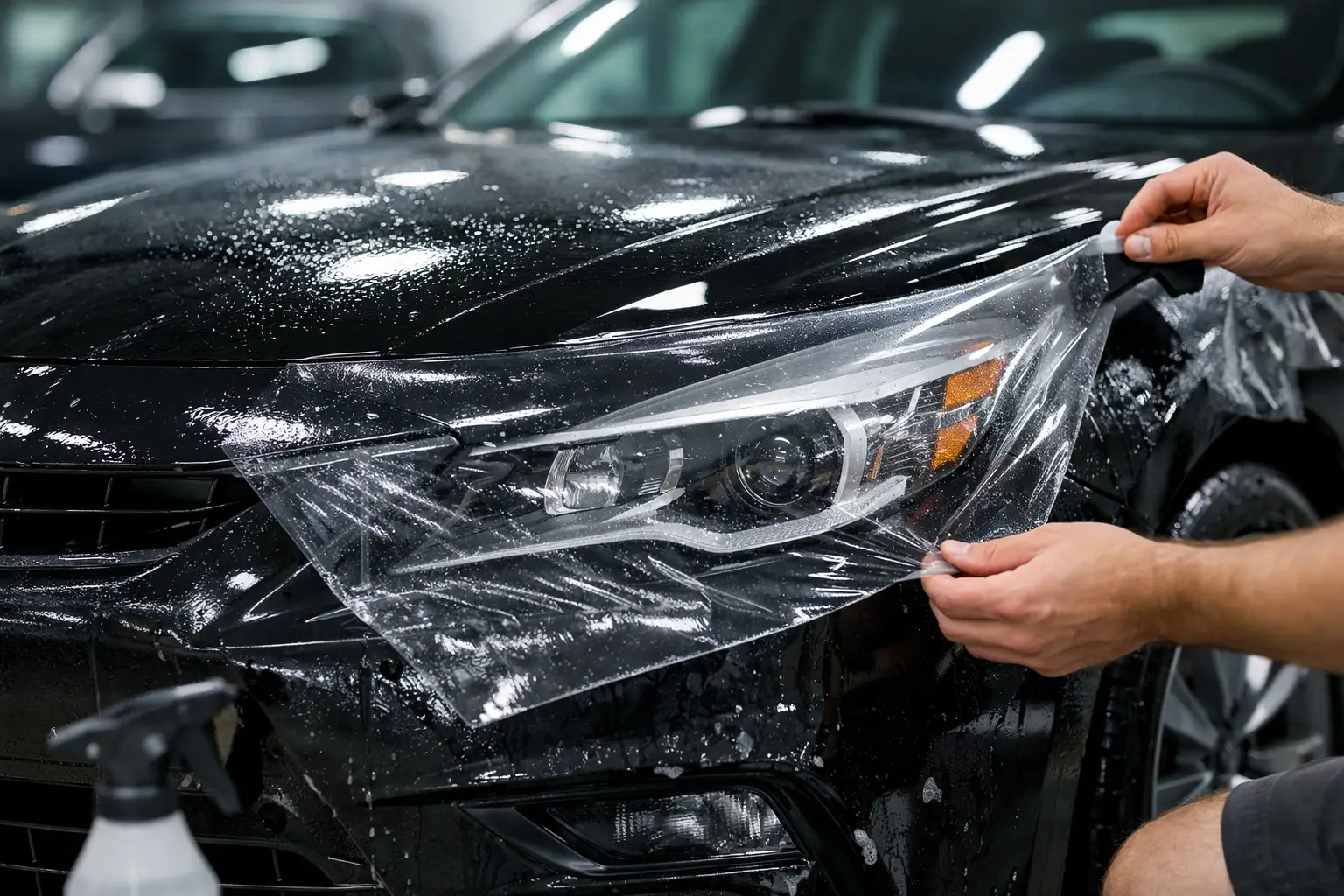
A new car can lose its flawless finish long before its first scheduled servicing. Stone chips on the bonnet, abrasion around the door edges, scuffs beneath the boot lip and fine scratches from daily washing all begin as small marks. For owners asking when should PPF be installed, the strongest answer is simple: as early as possible, ideally before regular driving exposes the paint to avoidable wear.
Paint protection film is not merely a cosmetic accessory. It is a transparent, impact-absorbing barrier designed to preserve the surface beneath it. Timing matters because PPF protects paint in its present condition. It cannot reverse existing chips, oxidation or deep scratching, and it should never be used to conceal poor paintwork.
When Should PPF Be Installed? The Short Answer
The ideal time to install PPF is immediately after taking delivery of a new vehicle, once the paint has been professionally inspected and prepared. This gives the film the best possible foundation: factory paint with minimal contamination, no accumulated road damage and the highest chance of retaining its original lustre.
That said, a new-car installation is not the only worthwhile scenario. A well-maintained pre-owned vehicle, a newly refinished panel or a cherished performance car can also benefit substantially from PPF. The appropriate timing depends on the vehicle’s current paint condition, how it is driven and which areas are most exposed.
The key principle is preservation rather than postponement. Every week of unprotected driving in Singapore can introduce fine defects that require correction before protection can be installed. Acting early reduces the amount of restorative work required and allows more of the vehicle’s original finish to remain untouched.
For New Cars: Install PPF Before Daily Driving Begins
For most premium and luxury vehicle owners, the collection period is the right moment to plan paint protection. Even a car that has travelled only from the showroom to home may have encountered dust, road grit, rain residue or contamination from transport and storage. A professional inspection identifies these issues before the film is fitted.
This does not mean PPF should be applied blindly on the day of collection. The vehicle should first be assessed under proper lighting. Light polishing may be needed to remove delivery marks, adhesive traces, wash marring or minor defects that can occur before handover. Once film is installed, those imperfections are sealed beneath a highly transparent surface and remain visible.
A properly timed installation also protects the areas that typically receive damage first: the front bumper, bonnet, front fenders, mirror housings, headlights, door cups, door edges and loading area. On low-slung vehicles, side skirts and rear wheel arch sections deserve particular attention due to debris projected from the road.
For owners who intend to keep a vehicle for several years, full-front or full-body protection is best considered before the first long commute, expressway journey or weekend drive. The earlier the film is fitted, the less compromise is involved.
For Pre-Owned Cars: Correct First, Then Protect
PPF remains an excellent investment for a pre-owned car, but preparation becomes more significant. Years of use can leave behind swirl marks, etching from water spots, light scratches, stone chips and dullness caused by repeated exposure to heat and contaminants. These should be evaluated honestly before deciding on coverage.
Minor defects can often be refined through paint correction so that the finish beneath the film looks crisp and uniform. Deep stone chips, however, may require careful touch-up or refinishing. PPF can help prevent further damage in that area, but it will not make a substantial chip disappear.
This is where expert-led assessment makes a difference. A vehicle does not need to be flawless before PPF is worthwhile, but the owner should understand precisely what can be improved and what will remain part of the paint’s history. On a well-kept used car, strategic PPF on the front end and high-contact zones may be a highly considered way to extend its best condition.
After Paint Repair: Allow Proper Curing Time
Newly painted panels require patience. Fresh paint must cure fully before paint protection film is installed, because solvents need time to evaporate and the surface must stabilise. Applying film too early can create adhesion concerns and may compromise the outcome.
The necessary curing period varies according to the paint system, repair process, workshop environment and panel condition. Rather than following a universal timetable, consult the refinishing specialist and the PPF installer before booking. A reputable installer will assess paint hardness, surface condition and any repair history before proceeding.
Once the repaired panel is ready, PPF can be particularly valuable on exposed sections such as bumpers, bonnets and fenders. It helps shield the fresh finish from the same road debris that caused the original damage, while maintaining a more consistent appearance with adjacent panels.
Why Timing Matters More in Singapore
Singapore’s climate and driving environment place constant demands on automotive paint. High UV exposure, intense heat, heavy rainfall, humidity, construction dust and dense traffic all contribute to surface degradation. Expressway driving introduces the additional risk of stone impact, while close urban parking raises the likelihood of door-edge contact and bumper scuffs.
Paint protection film cannot make a car invulnerable. A severe impact can still damage the film and the panel beneath it. Its value lies in reducing the frequency and severity of everyday damage that gradually diminishes a vehicle’s appearance.
Early installation is especially relevant for darker paint colours, where fine scratches and water marks are more visible, as well as vehicles with complex body lines or painted trim that would be costly to refinish accurately. Original factory paint is a valuable asset. Once it is chipped, repeatedly polished or repainted, the preservation equation changes.
Choose Coverage Based on How You Use the Car
The right timing is closely tied to the right coverage. A car driven mainly for city commuting may benefit most from protection around the front bumper, door cups, door edges and boot loading lip. A vehicle that regularly travels on expressways, follows construction traffic or is driven enthusiastically on weekends deserves broader front-end coverage.
Full-body PPF is often selected by owners of high-value vehicles, limited-production models and cars finished in delicate or distinctive paint colours. It offers the most complete defence against daily abrasion and provides a consistent level of preservation across every painted surface. The trade-off is naturally a higher initial investment, which should be weighed against the vehicle’s value, ownership period and intended use.
There is also a practical middle ground. A full-front installation combined with protection on vulnerable contact points can deliver meaningful defence without wrapping every panel. The best package is not necessarily the largest one. It is the one that reflects the car’s exposure profile and the owner’s expectations.
Do Not Wait for Damage to Justify PPF
Many owners consider PPF only after noticing the first stone chip or wash-induced swirl. By then, protection is still possible, but restoration may be needed before installation. Waiting can turn a preservation decision into a repair-and-protection project.
There are sensible reasons to delay, such as pending paint repairs, uncertainty over keeping the vehicle, or plans for bodywork modifications. But delaying simply because the paint still looks acceptable often overlooks how quickly fine wear accumulates. Damage is rarely dramatic at first. It appears gradually, then becomes difficult to ignore under direct sunlight or showroom lighting.
If your car is newly delivered, recently restored or currently in excellent condition, that is usually the signal to protect it. If it already shows wear, arrange a detailed assessment before assuming it is too late. The objective is not perfection for its own sake. It is to retain the integrity, depth and value of the vehicle for as long as possible.
A considered PPF installation should feel like part of ownership from the beginning, not an afterthought once the finish has paid the price for every journey. For a tailored inspection and protection plan, EA Detailer can help determine the right moment and coverage for the way you drive.
