

Paint Correction vs Repainting: Which Is Right?

A white car under Singapore’s midday sun can reveal every imperfection: fine swirl marks from hurried washes, water spots etched into the clear coat, dullness around the door handles, and scratches that seem deeper than they are. The decision between paint correction vs repainting is not simply about making the vehicle look new again. It is about choosing the right level of intervention while protecting factory craftsmanship, colour consistency, and long-term value.
For a premium vehicle, the best solution is rarely the most aggressive one. Paint correction preserves what is already there. Repainting replaces damaged material. Understanding the difference can prevent unnecessary refinishing and help ensure your vehicle receives the treatment its condition truly requires.
Paint Correction vs Repainting: The Core Difference
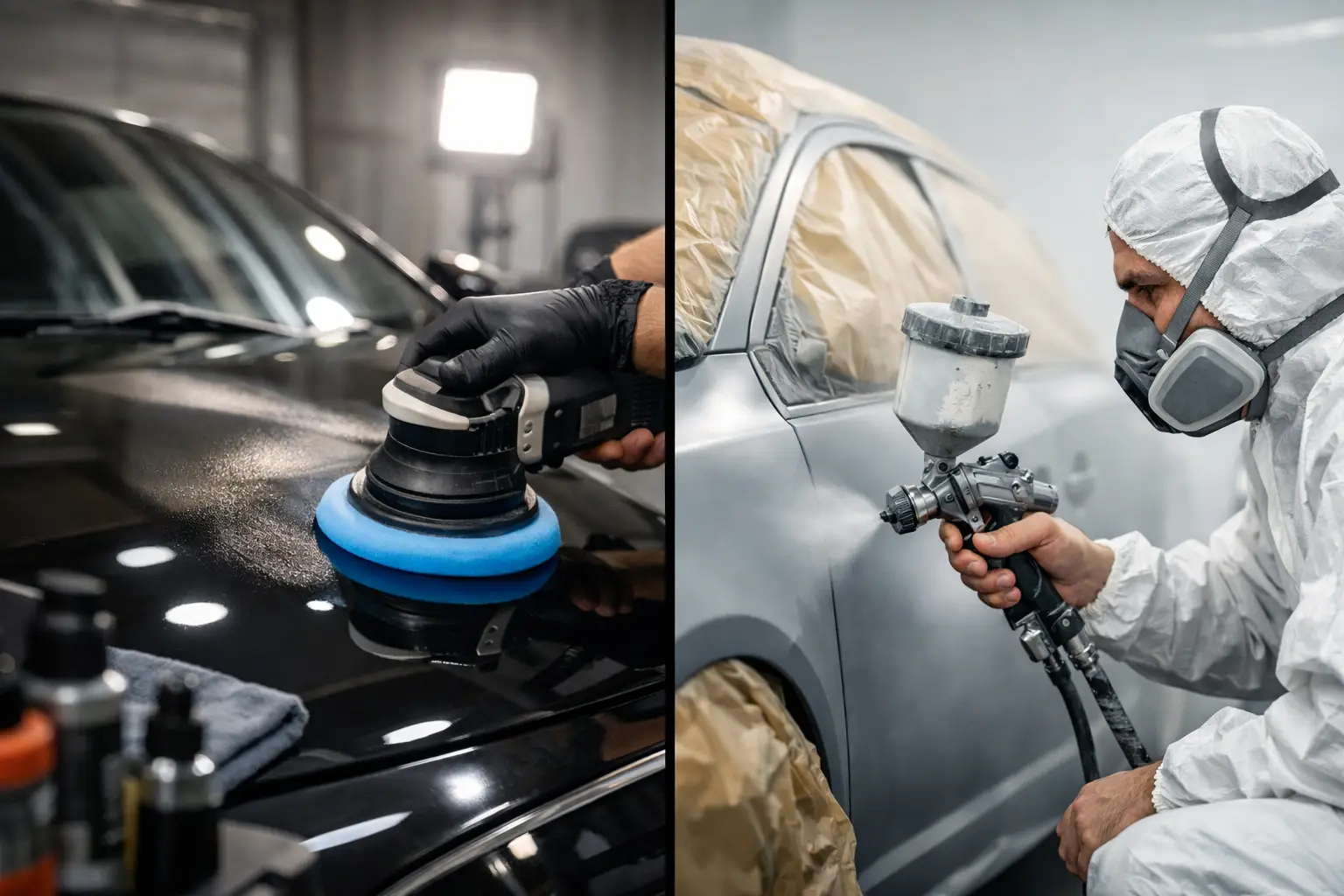
Paint correction is a professional detailing process that improves the appearance of existing paint by carefully removing or reducing defects within the clear coat. Using measured machine polishing techniques, specialist pads, compounds, and finishing polishes, a trained detailer levels a minute amount of the damaged clear-coat surface. This refines the way light reflects from the panel, restoring depth, gloss, and clarity.
Repainting, by contrast, is a refinishing procedure. Damaged paint is sanded, prepared, primed where necessary, colour-coated, and finished with a new clear coat. It is designed to address damage that has gone beyond the surface, such as exposed metal, peeling clear coat, deep gouges, corrosion, or areas where original paint has been physically removed.
The distinction matters because factory paint is exceptionally valuable. It is applied in a controlled manufacturing environment, often with superior consistency and durability compared with a typical repair process. A well-executed repaint can be excellent, but preserving sound original paint is generally the more desirable outcome for discerning owners and future buyers alike.
When Paint Correction Is the Better Choice
Paint correction is appropriate when the paint structure remains intact but its finish has lost refinement. Most vehicles that appear tired, hazy, or heavily swirled do not automatically need repainting. Their defects may be confined to the clear coat, where correction can produce a remarkable visual transformation.
Common candidates include light-to-moderate wash swirls, holograms left by improper polishing, oxidation, isolated scuffs, bird-dropping marks, water spotting, and light scratches that do not catch a fingernail. Paint correction can also improve paint that looks flat after years of exposure to UV radiation, heat, rain, and airborne contaminants.
The process should always begin with inspection. A professional will assess panel condition, previous repairs, paint thickness, defect depth, and the type of paint system involved. Paint depth readings are particularly valuable on prestige vehicles, as they help determine how much clear coat is available for safe correction and whether a panel may have been refinished previously.
A single-stage correction may be sufficient for a newer vehicle with mild swirls. More heavily marked paint may benefit from a multi-stage process, where a cutting phase removes defects and a refining phase restores a crisp, high-gloss finish. The objective is not to chase every microscopic mark at any cost. It is to achieve the strongest possible improvement while respecting the paint’s remaining thickness.
What correction cannot repair
Paint correction cannot replace paint that is missing. If a scratch has penetrated through the clear coat and colour layer, polishing may soften its edges and make it less noticeable, but it cannot restore the lost pigment. Likewise, it cannot reverse stone chips, bubbling corrosion, severe lacquer failure, or dents that have fractured the paint.
This is where owners can be misled by appearance alone. A deep scratch may look relatively narrow but still expose the substrate beneath. Conversely, a broad mark may look alarming yet sit only in the clear coat. Proper assessment, rather than assumptions based on size, determines the suitable repair route.
When Repainting Is Necessary
Repainting becomes the appropriate solution when damage has compromised the integrity of the paint system. Once bare metal, plastic substrate, or primer is exposed, the concern extends beyond aesthetics. Moisture can enter damaged areas, corrosion may develop on metal panels, and a small chip can become a more expensive repair if left unattended.
Repainting is usually recommended for deep key scratches, collision damage, heavily chipped bumpers, paint cracks, extensive clear-coat failure, rust, and previous poor-quality repairs. It may also be required where a panel has been aggressively polished in the past and no longer has sufficient clear coat for another meaningful correction.
For isolated defects, localised repair can be more sensible than repainting an entire vehicle. However, colour matching deserves serious attention. Modern finishes often contain metallic, pearl, or multi-layer effects that can shift noticeably depending on application technique, panel orientation, and age of the original paint. Even the correct paint code does not guarantee an invisible match without skilled preparation and blending.
A high-quality refinishing process therefore involves more than applying colour. It requires careful surface preparation, controlled spraying, colour blending where needed, proper curing, and finishing work that integrates the repaired area with adjacent panels. Rushed repairs can leave visible texture differences, mismatched shades, overspray, or premature deterioration.
The Trade-Off: Preservation Versus Replacement
The most useful way to consider paint correction vs repainting is through the principle of preservation. If the original paint can be safely improved, correction is often the more refined choice. It retains the factory finish, avoids colour-match risk, and can deliver a substantial improvement without introducing a new paint layer.
Repainting is not a lesser solution when the damage warrants it. It is the correct technical response when paint has failed or been penetrated. The mistake is treating repainting as a default answer to every scratch, or treating polishing as a cure for damage that has gone through the paint.
There are practical considerations too. Paint correction is generally less invasive and may be completed more quickly, depending on the vehicle’s condition and the level of correction required. Repainting involves repair preparation, application, curing, and often a period before protective treatments can be applied. Costs vary widely in both categories because panel size, paint complexity, defect severity, and workmanship standards all matter.
For owners concerned with resale, documented professional care can be reassuring. Original paint in excellent condition is a strong asset, especially on luxury, performance, and collector-oriented vehicles. Where repainting is necessary, choosing a reputable refinishing specialist and retaining records demonstrates that the repair was carried out responsibly rather than concealed.
Why Singapore’s Conditions Make Early Action Sensible
Singapore’s climate places constant pressure on automotive paint. High UV exposure, intense heat, humidity, sudden rain, construction dust, road grime, tree sap, and bird droppings can steadily degrade an unprotected finish. The longer contaminants remain on paint, the greater the chance of etching, staining, or surface deterioration.
Early inspection is therefore prudent. A fresh bird-dropping mark may be corrected with a measured polishing process. If repeatedly neglected, it can etch deeply enough to require more extensive work. Similarly, a small stone chip can be repaired before moisture reaches the substrate and creates a corrosion concern.
After either treatment, protection should be part of the plan rather than an afterthought. Corrected paint benefits from a quality protective coating or paint protection film on high-impact areas, depending on how and where the vehicle is used. Repainted panels also require careful curing and suitable aftercare before protection is installed. The goal is to preserve the renewed finish so the same damage cycle does not begin again.
Choosing the Right Service for Your Vehicle
Before authorising any work, ask for a condition-led recommendation rather than a generic package. A proper assessment should identify which defects are correctable, which require touch-up or refinishing, and what level of improvement can realistically be achieved. Be cautious of promises to remove every defect permanently. Responsible paint correction is measured, not excessive.
It is also worth discussing your ownership horizon. A leased vehicle nearing return may call for a different approach from a long-term flagship sedan, a cherished weekend sports car, or a vehicle being prepared for sale. The right decision balances present appearance, paint preservation, budget, and future protection.
The most satisfying finish is not created by doing the most work. It comes from doing the precise work the paint requires. At EA Detailer, that philosophy places preservation first: restore original paint wherever it remains sound, refinish only where the damage demands it, then protect the result with the care a valuable vehicle deserves.
