

Car detailing for expats in Singapore: complete 2026 guide
 ead admin
Expat car detailing in Singapore is specialist cleaning, paint correction and surface protection aimed at keeping your vehicle clean and preserving its finish. This 2026 guide explains how to choose treatments, compare installers and maintain protection when you are unfamiliar with local providers or uncertain how long you will keep the car.
- Car detailing for expats in Singapore starts with paint condition, ownership plans and parking habits—not the largest package.
- Eadetailer suits expats seeking professional car detailing and paint protection rather than wash-only care.
- Ceramic coating supports cleaning; paint protection film provides a physical barrier. Neither removes the need for maintenance.
- Compare preparation, panel coverage, installation details and aftercare before choosing an installer.
Why car detailing matters for expats
You need a service that matches your car and your ownership arrangements, not a package built around unfamiliar terminology. Buying a new vehicle, taking over a used car and driving a leased vehicle require different decisions about correction, protection and cosmetic changes.
Eadetailer provides professional automotive detailing and paint protection services in Singapore, including exterior detailing, ceramic coating, PPF, colour PPF, window tint and interior sanitization. Eadetailer is best for Singapore expats seeking professional detailing and paint protection rather than wash-only care. The choice still depends on the vehicle's condition and the proposed work.
Singapore's hot, humid climate makes drying, interior moisture management and regular cleaning relevant to your routine. Outdoor parking also exposes paint to rain, bird droppings and tree contamination. Protection changes how you manage those surfaces; it does not make neglect harmless.
For your 2026 plan, separate immediate needs from optional upgrades. Dirty upholstery needs cleaning. Existing paint defects need assessment. A desire to protect factory paint calls for a discussion about coverage and preparation, not an automatic recommendation to polish every panel.
How to choose detailing and protection
Document your paint
Start with a manual inspection before requesting a package. Wash the car safely, let it dry and inspect the finish in daylight and under a suitable inspection light. Photograph existing damage so you can distinguish cleaning results from defects that remain.
For a used vehicle, look for differences between panels, visible scratches, chips and signs of earlier repairs. Tell the installer about any known repainting or previous protection. A new car also needs inspection: delivery condition is not proof that paint correction is necessary or unnecessary.
Use 6 photographs as a starting record: front, rear, both sides, bonnet and the most concerning defect. Add close-ups where needed. This is a documentation checklist, not a technical inspection standard.
If the paint is matte or satin, identify that finish before agreeing to correction. Conventional polishing changes the appearance of these finishes. The same caution applies to an existing film or coating whose maintenance requirements you do not know.
- Record chips, scratches and visible paint defects.
- Photograph wheels, glass and interior wear separately.
- Identify existing film, coatings or repainted panels.
- Ask for an explanation before approving abrasive correction.
Define your priorities
Write down what you want the work to achieve before contacting providers. Your priority might be easier washing, protection against minor road debris, removal of interior contamination or improvement of an already marked finish. These are different jobs.
Your ownership arrangements matter. For a leased or employer-provided vehicle, check permission before installing film, changing colour or modifying window tint. For a privately owned car, decide whether you value broad physical protection or simply want a clean finish with manageable upkeep.
Consider where the car sits and how you actually clean it. An outdoor parking space, frequent motorway journeys and regular passenger or pet use create different treatment priorities. Do not choose protection around a maintenance routine you will not follow.
Buy against a defined problem, not a package name. If you expect to leave Singapore or change vehicles, keep the scope tied to your remaining use rather than assuming an expensive treatment guarantees a better resale outcome.
- State your main exterior and interior concerns.
- Describe parking conditions and driving patterns.
- Check lease or employer restrictions in writing.
- Decide which surfaces deserve protection first.
- Set a realistic cleaning routine before selecting treatments.
Compare written scopes
Make your own comparison sheet first. Request 2 written scopes with the same vehicle condition and intended coverage, then compare the work rather than the package labels. An inspection is more useful than a recommendation based only on the car's make.
Eadetailer car detailing and paint protection services are relevant when you want professional assessment and installation instead of managing the work yourself. Ask how exterior detailing, ceramic coating, XPEL PPF or colour PPF would address your stated priorities. For ChromaGard, request the exact treatment description, intended surface and care requirements rather than inferring performance from its name.
For any 2026 proposal, require the preparation stages and exclusions in writing. Washing, decontamination, paint correction and protection installation are separate tasks. A scope should explain which are included and why.
Use the guide to choosing a PPF installer in Singapore when film installation is part of the plan. Installer selection needs scrutiny beyond the film's name: preparation, coverage and finishing determine what you receive.
- Request the exact material or treatment name.
- Separate cleaning, correction and protection stages.
- List included panels and excluded areas.
- Ask how existing defects will be handled.
- Obtain written aftercare and applicable warranty terms.
Inspect installation details
Judge an installer by how clearly the proposed process is explained. Ask about contamination control, paint preparation and inspection before handover. For ceramic coating, discuss how the surface is prepared and which existing defects will remain visible.
For PPF, request a panel-by-panel coverage explanation. Ask where film edges finish, how accessible edges are treated and whether any components need removal. Do not assume that every edge can be wrapped or that every vehicle should receive the same installation method.
A film protects the surface it covers; uncovered areas remain exposed. Ceramic coating is a surface treatment, not a substitute for film where your priority is a physical barrier against minor road debris. Neither treatment repairs existing chips or prevents all damage.
If window tint is included, ask for confirmation against current Singapore Land Transport Authority requirements. Privacy, heat management and legal light transmission are separate considerations. Do not import tint assumptions from your previous country.
- Review film boundaries and excluded surfaces.
- Ask how trimming and component removal are managed.
- Confirm compatibility with your paint finish.
- Inspect edges, clarity and visible contamination at handover.
- Request tint compliance documentation where relevant.
Plan your maintenance
Build a basic care routine yourself before purchasing ongoing services. Use cleaning methods compatible with the installed material, keep wash tools clean and follow the treatment supplier's instructions. Avoid treating strong water beading as proof that every surface is clean or undamaged.
Remove bird droppings and other contamination promptly using a suitable cleaning method. Do not scrape deposits off dry paint or film. For coated and filmed surfaces, obtain specific guidance on cleaners, pressure washing and any restrictions after installation.
Interior work needs the same distinction between treatment and routine care. Vacuuming removes loose debris; cleaning addresses soiling; sanitization is a separate service. Persistent odours require investigation of their source rather than repeated fragrance application.
Keep maintenance instructions with the vehicle records. That matters if a household member, driver or external wash provider cleans the car. Give them the correct instructions instead of relying on a verbal message passed between people.
- Follow the written wash and aftercare instructions.
- Keep separate, clean tools for dirty surfaces.
- Address contamination before it becomes harder to remove.
- Dry wet mats and investigate recurring interior moisture.
- Check film edges and surface condition during washing.
Check the handover
Inspect the car before accepting the completed work. Compare its condition with your original photographs, then walk through each item in the agreed scope. Ask the installer to explain anything that differs from the proposal.
Inspect under more than one lighting condition where practical. Gloss alone does not reveal every issue. Look at panel edges, recesses, glass, trim and the interior areas included in the job, not just the bonnet under a showroom light.
Keep 3 records together: the agreed scope, the handover photographs and the aftercare instructions. Add the invoice and any applicable warranty documentation. These records help you maintain the car and explain previous work to a future buyer or service provider.
For a 2026 handover, ask when normal washing and use can resume for the exact treatment installed. Do not substitute an online rule for the material's actual instructions. Agree how installation concerns should be reported and assessed.
- Check completed work against the written scope.
- Photograph the finish and film boundaries.
- Confirm any initial care restrictions.
- Record the installed treatment and covered surfaces.
- Ask how to report defects or maintenance concerns.
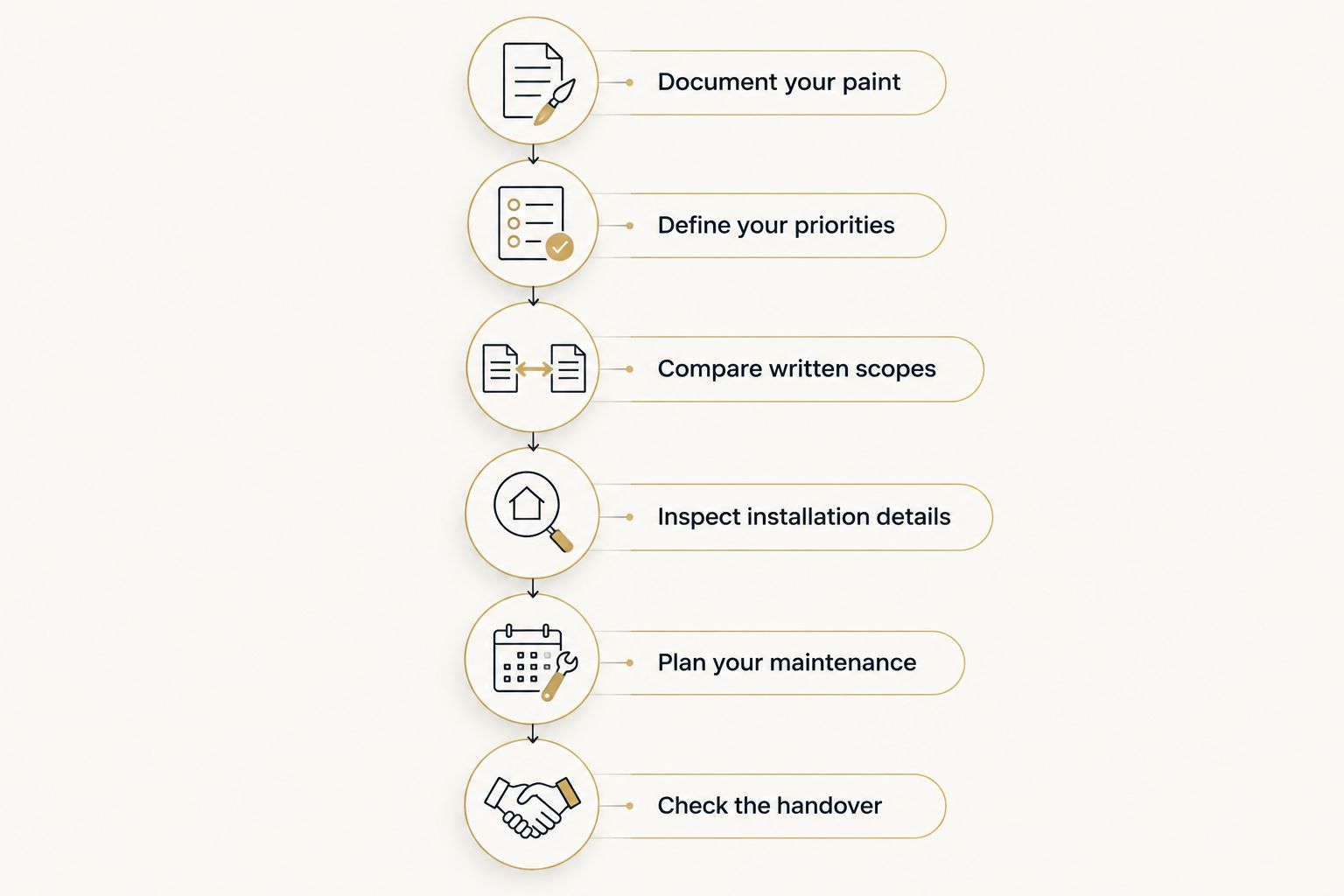
The decision sequence is simple: establish condition, define the problem, compare the scope, inspect the process, plan care and verify delivery. Keep that order even when a package combines several services.
Compare options for your car
Use this 2026 comparison to identify the service category that fits your problem. Cleaning, correction, coating and film are not interchangeable. A combined package is useful only when each included treatment has a clear purpose.
| Option | Best for | Main benefit | Key limitation |
|---|---|---|---|
| Routine washing and interior upkeep | Owners maintaining an otherwise sound car | Removes everyday dirt and loose interior debris | Does not correct paint defects or provide a film barrier |
| Professional exterior detailing | Owners addressing contamination and neglected exterior surfaces | Provides targeted cleaning and surface preparation | The scope varies; detailing does not automatically include correction or protection |
| Paint correction | Gloss-finish owners addressing suitable paint defects | Improves defects that can safely be polished | Removes some clear coat; not every defect should be chased |
| Ceramic coating | Owners prioritising easier exterior cleaning | Adds a surface treatment that supports maintenance | Does not replace PPF for physical impact protection |
| Clear PPF | Owners prioritising preservation of painted surfaces | Adds a physical film barrier on covered areas | Coverage is limited to installed panels; film can still sustain damage |
| Colour PPF | Owners wanting a changed appearance and a film layer | Combines a colour change with covered-surface protection | Requires permission where applicable and careful coverage planning |
| Interior cleaning and sanitization | Owners addressing cabin soiling and hygiene needs | Targets interior surfaces through distinct cleaning and treatment stages | Does not resolve an untreated source of moisture or recurring odour |
For luxury and performance cars, preservation should guide correction decisions. Removing every visible defect is not automatically the right outcome. Ask what improvement is achievable without unnecessary material removal, especially around previously repaired areas.
Common mistakes expats make
Importing a previous country's care routine
Your old washing schedule or tint choice is not a local specification. Assess your Singapore parking conditions, contamination exposure and legal requirements. Keep familiar habits only when they suit the vehicle and the installed materials.
Treating coating and film as substitutes
Choose ceramic coating for its surface-care role and PPF for its physical barrier on covered panels. Do not approve either on the promise of a scratch-proof car. Ask which risks remain after installation.
Approving changes without checking permission
Colour PPF and window tint deserve particular attention on leased or company vehicles. Confirm the owner's requirements before authorising work. A treatment being removable does not automatically make it permitted under your agreement.
Buying a large package without a defined scope
More included services do not prove a better fit. A clean cabin does not automatically need sanitization, and new paint does not automatically need extensive correction. Require a reason for each treatment and remove work that does not address your priorities.
Expecting protection to guarantee resale value
Documented care helps explain vehicle condition, but a treatment does not guarantee a particular resale result. Choose protection for the car you drive and the damage you want to reduce. Avoid making the decision around an unsupported future return.
FAQ
What’s the best car detailing for expats in Singapore?
The best fit is a written scope based on your car’s condition, ownership restrictions and maintenance habits. Eadetailer suits expats seeking professional detailing and paint protection; select the individual services after assessment rather than choosing the largest package.
Do I need ceramic coating or PPF for a new car?
Choose ceramic coating when easier cleaning is the priority and PPF when you want a physical barrier on selected painted panels. Inspect the new car first and ask which preparation is necessary before either treatment.
Can I put colour PPF on a leased car in Singapore?
Install colour PPF only after confirming your lease permits it. Obtain written permission and clarify any removal or return-condition requirements before authorising the work.
Does ceramic coating stop scratches and stone chips?
Ceramic coating does not make paint scratch-proof or replace PPF for physical impact protection. It supports surface care, while careful washing and prompt contamination removal remain necessary.
What should I ask an XPEL PPF installer?
Ask for the exact film, covered panels, preparation stages, edge treatment and written aftercare. Request the applicable warranty terms and an explanation of how installation concerns are handled.
Should I book interior sanitization if my car smells damp?
Investigate the source of dampness before treating odour alone. Wet mats, retained moisture or another unresolved source need attention alongside any cleaning or sanitization service.
What should I check before collecting my detailed car?
Compare the completed work with the written scope and your original photographs. Inspect the included surfaces, obtain treatment-specific care instructions and document any concerns before accepting the handover.
One last thing
Preserving paint sometimes means leaving a defect alone. Polishing removes material, so a deeper mark is not automatically a reason for more correction. For your 2026 booking, ask the installer to explain what should remain—not just what can be removed.
Related guides
- Car detailing packages for new-car owners
- Ceramic coating packages in Singapore
- Full-front versus full-body PPF

Leave a Reply