

Spray Coating vs Ceramic Coating: Which Lasts?

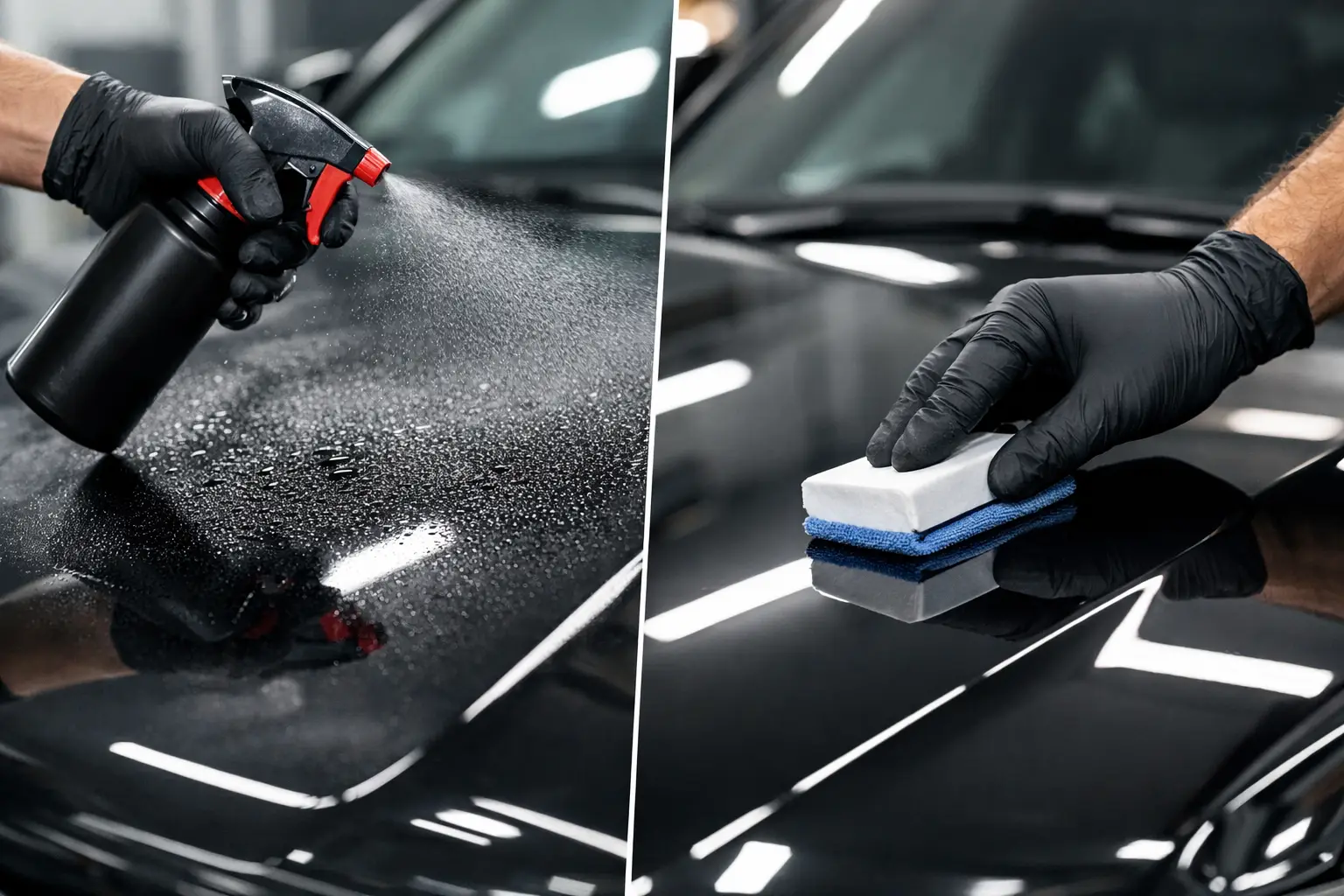
A new car can look immaculate under a showroom’s controlled lighting, then face its first week of heat, rain, construction dust and expressway grime. That is why the choice between spray coating vs ceramic coating is not simply about shine. It is a decision about how your paintwork will endure Singapore’s demanding environment, and how much of the vehicle’s original condition you intend to preserve.
Both treatments elevate appearance and make routine washing easier. Yet they are engineered for different ownership priorities. One is designed to create a sacrificial, more substantial physical barrier; the other forms a refined chemical layer that delivers exceptional gloss, water behaviour and maintenance benefits. The correct choice depends on the vehicle, where and how it is driven, and the standard to which it will be maintained.
Spray Coating vs Ceramic Coating: The Core Difference
The simplest distinction is this: spray coating is generally a thicker, professionally applied protective layer that is applied by spray equipment and cures into a flexible surface film. Ceramic coating is a liquid coating that chemically bonds with the clear coat, forming a very thin but durable protective layer.
A quality spray-applied protection system is selected when owners want a more pronounced physical buffer against the daily marks that gradually erode a car’s finish. Its added material thickness gives it a different role from a conventional coating. Depending on the system and installation standard, it can help absorb minor abrasion, reduce the visual impact of superficial scuffs and provide a uniform protective finish across complex body panels.
Ceramic coating is not intended to be a thick impact shield. Its strengths lie in surface hardness, chemical resistance, UV stability, deep gloss and hydrophobic performance. Water beads and sheets away more readily, contaminants are less likely to cling to the paint, and washing becomes a more controlled process. For a cherished vehicle with already well-maintained paintwork, this refined finish can be precisely what the owner wants.
Neither solution is a substitute for careful driving or thoughtful washing. Road debris, sharp impacts, improper wash techniques and neglected contaminants can damage any finish. Premium protection reduces risk and simplifies care; it does not make paint invulnerable.
What a Spray-Applied Protection Layer Does Best
Spray coating is particularly compelling for owners who want greater day-to-day reassurance without changing the vehicle’s factory character. Because the material is applied as a continuous layer, it can protect painted surfaces with a consistent finish, including contours that can be difficult to protect using pre-cut material.
Its key advantage is sacrificial protection. Minor contact marks from tight car parks, light brushing against foliage, luggage loading or everyday road grit may affect the protective layer before reaching the original clear coat. This matters to owners who intend to retain a vehicle for years, as well as those who understand that original paint condition is a meaningful part of resale appeal.
The finish can also be highly customisable. Depending on the chosen system, the result may preserve a high-gloss appearance, soften the sheen into a satin effect, or provide a more distinctive aesthetic direction. That said, finish selection should be guided by the vehicle’s design and ownership goals. A premium executive saloon, a performance coupe and a family SUV do not necessarily call for the same visual treatment.
There are trade-offs. Spray-applied protection requires substantial preparation, controlled application conditions and careful curing. The quality of the final result depends heavily on paint correction, panel preparation and installer expertise. It is also a more involved investment than a standard ceramic coating, particularly when comprehensive coverage and restoration work are required.
Where Ceramic Coating Excels
Ceramic coating is the connoisseur’s choice when the priority is paint clarity, gloss and long-term ease of maintenance. A professionally prepared and coated vehicle has a crispness that basic polishing alone cannot sustain. Metallic flake appears more defined, dark paint gains greater depth, and the surface remains easier to cleanse after rain or regular driving.
For Singapore motorists, chemical and environmental resistance are meaningful benefits. Rainwater residue, bird droppings, tree sap, industrial fallout and traffic film should still be removed promptly, but a ceramic layer gives contaminants less opportunity to bond directly to the clear coat. This makes the difference between a maintained finish and one that slowly becomes dull despite frequent washing.
Ceramic coating also suits vehicles that spend much of their time in sheltered parking, are driven with care, or have owners who are disciplined about maintenance. It provides a sophisticated defence against gradual deterioration without adding a visibly substantial layer over the paint.
However, the popular claim that ceramic coating prevents scratches can be misleading. It may reduce fine wash-induced marring when maintained correctly, but it cannot reliably stop stone chips, deep key marks or abrasion from physical contact. Owners seeking meaningful protection from these risks should not choose ceramic coating on the expectation that it performs like a physical barrier.
Durability Is More Than a Warranty Period
When comparing spray coating vs ceramic coating, many owners begin by asking which one lasts longer. The more useful question is: longer against what?
A coating may retain water repellency for years but still require periodic decontamination and maintenance to preserve its visual performance. A spray-applied protective layer may offer stronger defence against certain forms of superficial abrasion, yet it can also require professional assessment if a panel suffers substantial damage. Durability is therefore not a single measurement. It includes resistance to UV exposure, chemicals, wash damage, road contamination, heat cycles and physical wear.
Singapore’s climate makes maintenance non-negotiable. High humidity leaves water spotting more likely after rain, strong sunlight accelerates surface ageing, and daily traffic introduces grime that can become abrasive when wiped incorrectly. Even the best protection should be washed using safe techniques, dried with clean microfibre towels and inspected periodically for bonded contamination.
Professional installation is equally decisive. Coating a poorly prepared surface merely seals in imperfections. Applying a spray system over unresolved defects can compromise the finish and make future correction more complex. The preservation process should always begin with a detailed paint assessment, followed by the appropriate decontamination and correction work.
Which Protection Suits Your Vehicle?
Ceramic coating is often the better choice for owners who value a highly glossy finish, effortless wash maintenance and strong resistance to environmental contamination. It is especially well suited to newer cars with excellent paint condition, weekend vehicles, and owners who prefer a discreet, high-performance treatment that honours the original paintwork.
Spray coating is better suited to owners who prioritise a more substantial sacrificial layer and want greater confidence against everyday superficial wear. It deserves serious consideration for vehicles that are frequently driven, regularly parked in busy areas, exposed to demanding road conditions or intended for long-term ownership.
Budget should be viewed through the same lens. The lower initial cost of a ceramic coating may be the more rational choice when physical impact risk is limited. Conversely, a higher investment in a spray-applied protective system can be justified when retaining factory paint in exceptional condition is central to the vehicle’s long-term value.
There is also a strategic middle ground. Some owners protect higher-risk painted areas with a physical protective solution and apply ceramic coating to the remaining surfaces for enhanced gloss and easier maintenance. This approach should be designed around actual driving exposure rather than selected as a generic package.
The Finish Is Only as Good as Its Care
Protection is most valuable when it supports a disciplined ownership routine. Avoid automatic brush washes, which can introduce fine scratches across even well-protected surfaces. Remove bird droppings and tree sap promptly. Do not dry-wipe a dusty panel. Most importantly, allow a specialist to inspect the paint before selecting a treatment, rather than deciding from a price list alone.
At EA Detailer, the recommendation should be based on the vehicle’s paint condition, usage pattern and preservation objective – not on a one-size-fits-all answer. A meticulously maintained luxury vehicle deserves a treatment plan that respects its finish, its future value and the owner’s expectations.
The finest choice is not the product with the boldest claim. It is the protection system that lets you drive with confidence while keeping the original paintwork worthy of a second, closer look.
