

Best Ceramic Coating White Car Singapore 2026
 ead admin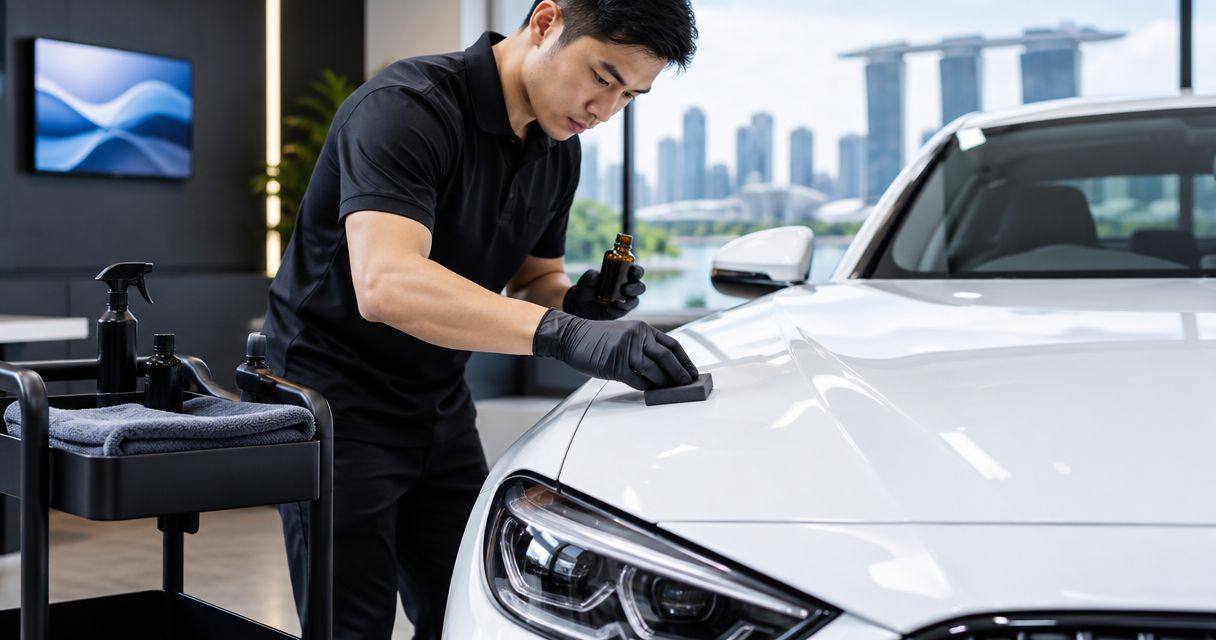
Best overall: professional multi-layer ceramic coating. Best for new white cars: ceramic coating paired with front-end PPF. Best for Singapore heat and mineral water spots: graphene-enhanced ceramic coating.
- Professional multi-layer ceramic coating is the best ceramic coating white car Singapore choice in 2026.
- White paint shows water spots, rail dust and etching faster than darker colours in Singapore humidity.
- Pair ceramic coating with PPF on high-impact panels if the car is new or high-mileage.
- Skip thin DIY sprays as sole protection on white paint—they fail under tropical UV and rain.
- Prep quality decides coating life more than the bottle name on the label.
Why this matters
White paint is unforgiving in Singapore. Mineral-heavy rain, bird droppings, iron fallout and year-round UV leave marks that read as yellowing, spotting and dull patches long before the same damage shows on darker colours. A ceramic coating does not make white paint maintenance-free. It raises the surface hardness, improves chemical resistance and slows how fast contaminants bond—if the paint is decontaminated and levelled first.
In 2026, owners comparing the best ceramic coating packages in Singapore for white cars should rank systems by prep standard, layer design, heat behaviour and realistic maintenance—not by marketing claims. EA Detailer applies ceramic and paint protection work for luxury and performance cars with that order of priorities.
What makes the best ceramic coating for white cars
Judge every option against these criteria before you look at brand names:
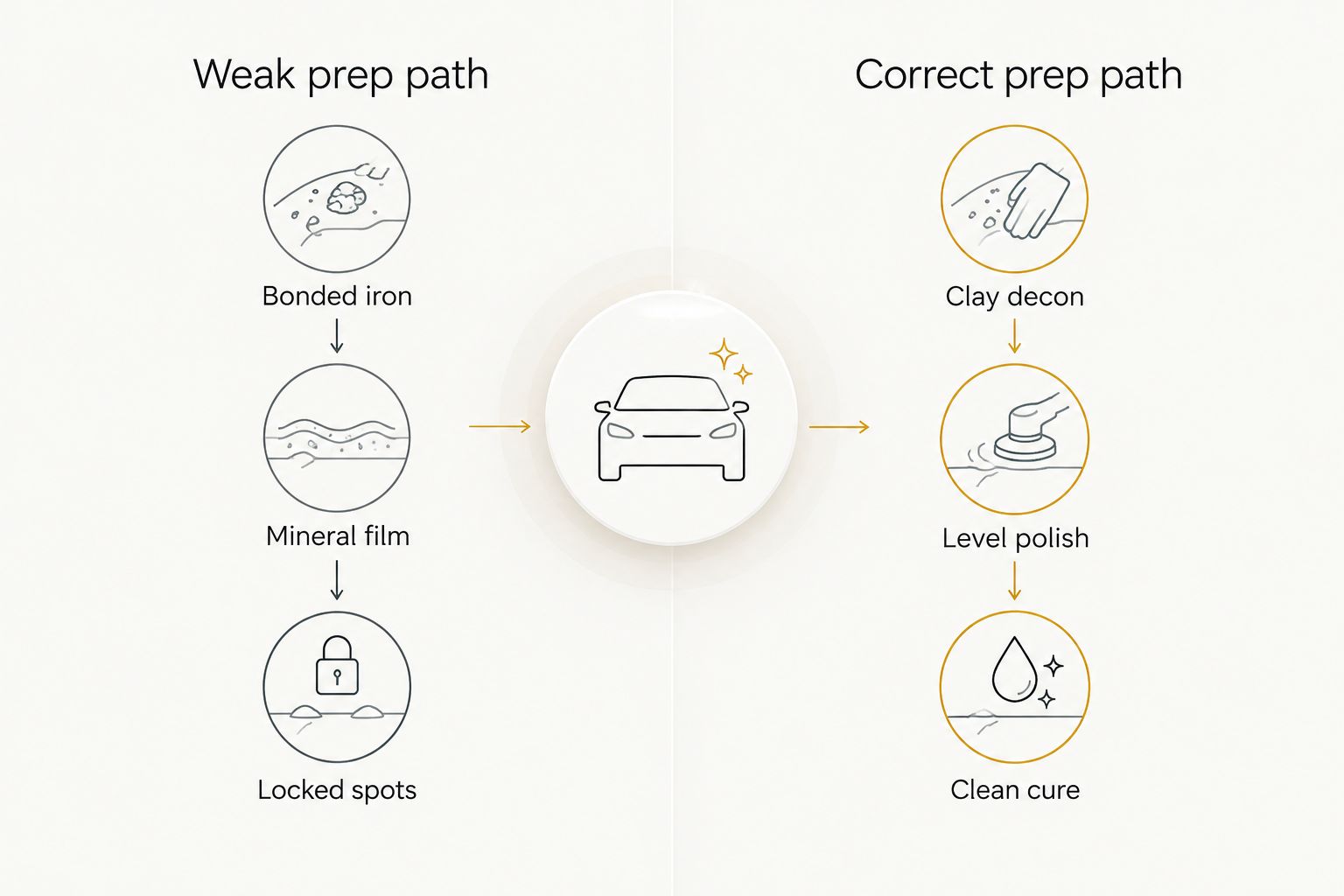
- Decontamination and correction first — white paint holds iron particles and bonded minerals that must come off before any coating cures, or spots lock in under the layer.
- Layer thickness and cross-link density — thin consumer sprays sit on top of dirt and wash off; pro multi-layer SiO2 systems build a harder sacrificial surface.
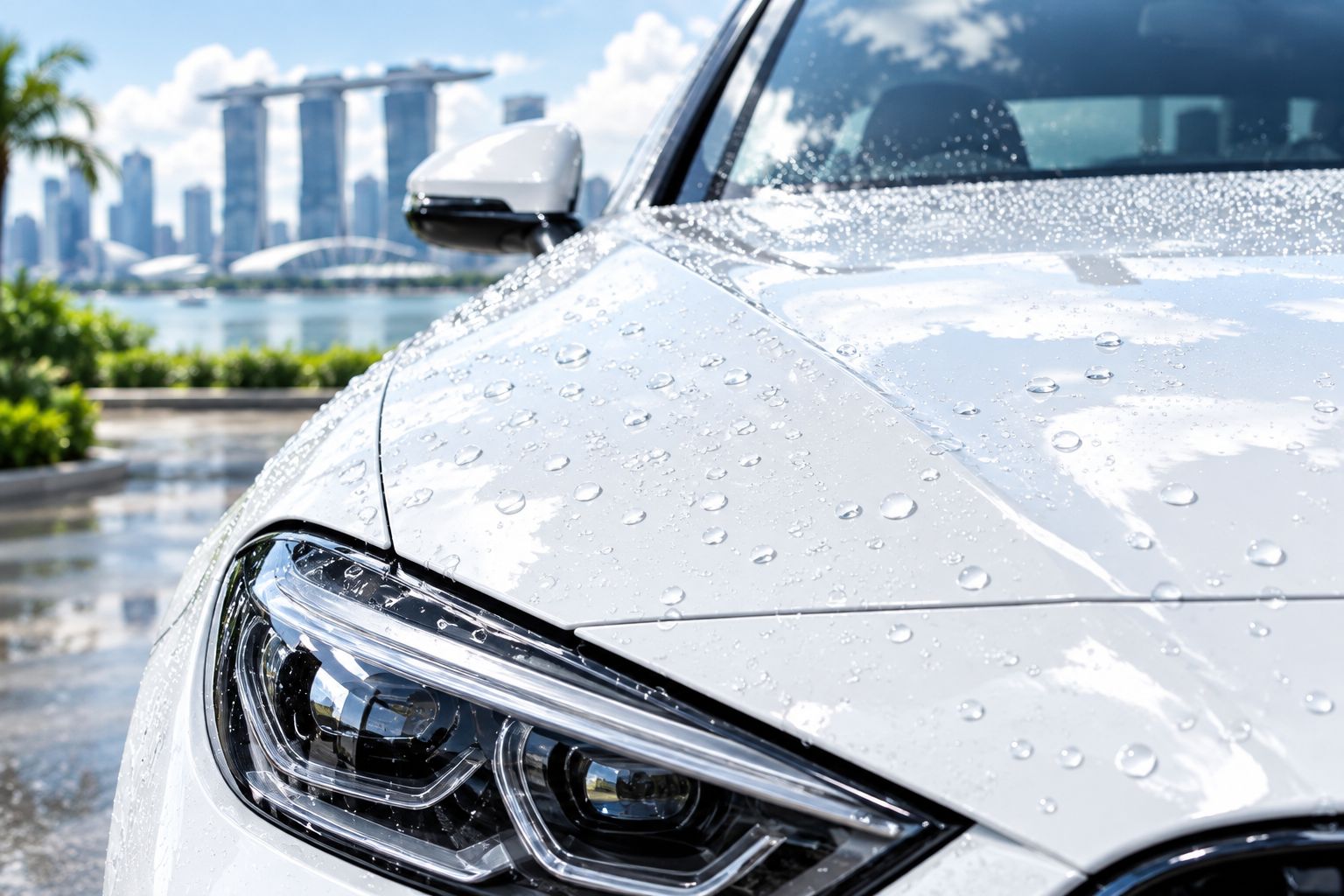
- Hydrophobics under tropical rain — the coating must shed water cleanly so mineral rings do not bake onto white panels between washes.
- UV and heat stability — Singapore cabin and panel temperatures punish soft resins; look for coatings rated for sustained high surface heat.
- Maintenance path — white cars need a defined topper or booster schedule, not a “set and forget” promise.
- Install environment — dust-controlled booth, measured curing windows and panel-by-panel inspection beat driveway application every time.
Ceramic coatings for white cars at a glance
| Option | Best for | Standout feature | Key limitation |
|---|---|---|---|
| Professional multi-layer ceramic | Daily-driven white cars | Full decon + stacked SiO2 layers | Needs disciplined wash routine |
| Ceramic + front-end PPF | New or high-value white cars | Impact film where stone chips hit | Film edges need correct finishing |
| Graphene-enhanced ceramic | Heat and water-spot pressure | Stronger beading in humid rain cycles | Still fails without proper prep |
| Single-layer pro ceramic | Shorter ownership windows | Faster install, simpler stack | Less sacrificial depth than multi-layer |
| DIY ceramic sprays | Interim top-ups only | Quick hydrophobic refresh | Too thin as primary protection on white |
1. Professional multi-layer ceramic coating: best ceramic coating for white daily drivers
A shop-applied multi-layer ceramic coating is the default recommendation for white cars that live outdoors in Singapore. The installer removes iron fallout, clay-contaminates the paint, corrects light defects that read as haze on white, then stacks ceramic layers so the surface has a measurable sacrificial film. On white paint that film is what slows etching from bird droppings and keeps washed panels from looking chalky between services.
EA Detailer builds this path around controlled prep and precise ceramic application rather than a single wipe-on product. When the brief calls for named paint protection chemistry, ChromaGard and professional ceramic coating systems sit inside that workflow—not as a substitute for correction.
Professional multi-layer ceramic pros:
- Corrects the white-paint issues that thin coatings cannot hide
- Builds harder chemical resistance against bird lime and fallout
- Gives wash water a clean release path so mineral rings form less often
- Pairs cleanly with later PPF on nose and mirror caps if you add film later
Professional multi-layer ceramic cons:
- Demands correct pH-neutral washing after install
- Shows poor prep immediately on white—cutting corners is visible
- Not impact protection; stone chips still need film or touch-up
Best for: white daily drivers and company cars that stay in Singapore sun and rain year-round.
Verdict: Buy for almost every white car that needs real paint protection in 2026.
2. Ceramic coating with front-end PPF: best for new white cars
New white cars leave the showroom with soft clear coat that chips on expressways and car-park barriers. Ceramic coating alone will not stop those chips. The stronger stack is paint protection film on the bumper, bonnet leading edge, wings and mirror caps, then ceramic coating on the remaining painted body—and often over the film—so chemistry and hydrophobics stay consistent.
This is the route for owners who want factory white to stay factory white through the first ownership cycle. Review how film behaves in local heat in the guide to the best PPF for Singapore’s hot and humid climate before you specify coverage. EA Detailer installs XPEL PPF alongside ceramic and colour PPF work when the panel map calls for it.
Ceramic + PPF pros:
- Stops stone and sand abrasion where white chips show first
- Lets ceramic handle chemical etch and wash behaviour on the rest of the body
- Protects resale appearance on low-mileage white prestige cars
- Scales from partial front end to higher coverage without changing the ceramic plan
Ceramic + PPF cons:
- Film edges and relief cuts must be finished to a high standard or they catch dirt
- More install time than coating alone
- Owners still need correct wash technique on both film and coated paint
Best for: brand-new white cars, tracked weekends cars with white base coats, and any white vehicle that already shows nose chips.
Verdict: Buy when the car is new or the front end already takes damage.
3. Graphene-enhanced ceramic coating: best for Singapore heat and water spots
Graphene-enhanced ceramics sit in the same professional install category as multi-layer SiO2 systems, with formulation emphasis on heat tolerance and sustained beading. White panels in open Singapore parking run hot. Soft coatings can water-spot and dull faster under repeated wet-dry cycles with mineral content in the water. Graphene blends are specified when the owner’s main complaint is spotting and heat haze rather than deep scratches.
They are not magic. Without iron removal and polish on white paint, graphene coats the same contamination a standard ceramic would. Rank the installer and prep desk first; rank the graphene label second. For brand-level comparisons beyond white-paint use cases, see the round-up of best ceramic coating brands for cars in Singapore.
Graphene-enhanced ceramic pros:
- Strong water release under frequent tropical showers
- Useful on white cars that bake in uncovered lots
- Fits the same correction-first workflow as standard pro ceramics
- Easy to maintain with periodic professional toppers
Graphene-enhanced ceramic cons:
- Still a coating, not stone-chip armour
- Marketing noise around “graphene” outruns real lab differences on some bottles
- Costs the same disciplined aftercare as any multi-year ceramic
Best for: white cars parked outdoors, coastal routes, and owners whose last coating failed as water spots—not as swirl marks.
Verdict: Buy when heat and spotting are the primary failure mode you are fixing.
4. Single-layer professional ceramic: best balanced option for shorter ownership
A single-layer professional ceramic still requires full wash, decontamination and light correction. The difference is stack depth: one carefully cured layer instead of multiple. That suits owners who will sell or export the car inside a shorter window, or who want a controlled first coating before deciding on film.
On white paint the visual gain still comes from the prep. The single layer mainly locks in that corrected finish and adds chemical resistance. It is a weaker sacrificial buffer than a multi-layer system if the car sees weekly open parking and harsh fallout.
Single-layer pro ceramic pros:
- Faster bay time than multi-layer stacks
- Real protection versus untreated clear coat
- Sensible entry point before committing to film
- Easier to refresh later with a second pro layer
Single-layer pro ceramic cons:
- Less depth against repeated chemical attack
- Not ideal as the only plan for a white car kept five-plus years outdoors
- Still wasted money if prep is rushed
Best for: lease returns, shorter Singapore postings, and white cars that already live under cover most nights.
Verdict: Hold as a deliberate mid option—not as a cost-cut on a car that needs multi-layer depth.
5. DIY ceramic sprays: best only as interim maintenance
Consumer ceramic sprays and wipe-on SiO2 detailers restore short-term beading on an already coated or sealed white car. They are not the best ceramic coating white car Singapore primary system in 2026. They are too thin to replace professional correction, they trap bonded iron if you spray over dirty paint, and tropical UV plus daily rain strip them quickly.
Use them between professional services if your detailer specifies a compatible topper. Do not use them to “coat” a neglected white car and expect etching resistance.
DIY ceramic spray pros:
- Fast hydrophobic refresh after a proper wash
- Low commitment for testing wipe behaviour
- Useful bridge when a pro topper appointment is weeks away
DIY ceramic spray cons:
- No meaningful hardness for bird droppings on white paint
- Locks in contamination when prep is skipped
- Creates a false sense of protection that delays real correction
Best for: maintenance only on cars that already have a professional coating.
Verdict: Skip as sole protection. Buy only as a named maintenance topper inside a pro plan.
Protect white paint properly
Book a ceramic coating assessment built around Singapore prep standards.
How we ranked
Ranking followed the six criteria above in order: prep integrity, layer design, tropical hydrophobics, heat stability, maintenance realism and install control. White-paint visibility of defects weighted prep and decontamination above bottle marketing. Impact protection was scored separately so ceramic was never asked to do PPF’s job. Consumer sprays were included because search results still push them at white-car owners—and they fail that use case as primary armour.
No shop can honestly rank coatings without talking about wash chemistry after install. White cars punished with harsh shampoos or automatic brushes lose gloss regardless of which ceramic cured on day one.
Which ceramic coating should you choose?
Choose professional multi-layer ceramic coating if you drive a white car in Singapore and want one clear default in 2026. Add front-end PPF under or beside that coating when the car is new or already chipping on the nose. Move to a graphene-enhanced pro system when outdoor heat and mineral spotting—not scratches—are what ruined the last finish. Keep single-layer pro ceramic for shorter ownership. Treat DIY sprays as toppers only.
EA Detailer is built for that decision tree: ceramic coating, ChromaGard paint protection work, XPEL PPF and colour PPF specified by panel risk, not by slogan. White paint rewards restraint and process. It punishes shortcuts in full daylight.
FAQ
What is the best ceramic coating for a white car in Singapore?
A professional multi-layer ceramic coating applied over full decontamination and correction is the best ceramic coating white car Singapore option in 2026. Pair it with front-end PPF if the car is new or already chipping.
Does ceramic coating stop water spots on white paint?
Ceramic coating reduces how fast minerals bond and helps water sheet or bead off, but it does not erase Singapore’s mineral content. Correct washing and occasional professional toppers still matter on white panels.
Is graphene ceramic coating better than normal ceramic on white cars?
Graphene-enhanced pro coatings are a strong pick when heat and spotting are the main failure mode. They still require the same paint correction; the label does not replace prep.
Should a new white car get PPF or ceramic coating first?
High-impact panels should get PPF for chip defence, with ceramic coating on the remaining paint and often over the film for consistent chemistry. Ceramic alone will not stop stone chips.
How long does ceramic coating last on a white car in Singapore?
Longevity tracks prep quality, layer design, parking exposure and wash habits more than calendar promises. Outdoor white cars in tropical rain need scheduled inspection and toppers inside any multi-year plan.
Can I apply a DIY ceramic spray instead of a professional coating?
Not as primary protection. DIY sprays are interim hydrophobic toppers. On white paint they fail against bird droppings, iron fallout and UV when used alone.
Why does white paint need more prep before ceramic coating?
Iron dust, mineral film and light holograms read immediately on white. Coating over them locks the defects under a clear layer that makes correction harder later.
Is ceramic coating enough for a white car parked outdoors all day?
It is the right chemical shield for outdoor parking, but uncovered lots still justify strong hydrophobics, correct washing and, on the nose, PPF for impact. Coating is not shade.
One last thing
The coating that fails first on white cars in Singapore is almost never “the wrong bottle.” It is bonded iron and mineral film left on the clear coat on install day. If a quote skips measured decontamination and white-light inspection, the finish will spot early no matter which ceramic name sits on the invoice in 2026.
Related guides
- Best car detailing packages for new car owners
- Best window tint film brands in Singapore
- Best car interior cleaning services in Singapore

Leave a Reply