

A Guide to Luxury Car Paint Care in Singapore

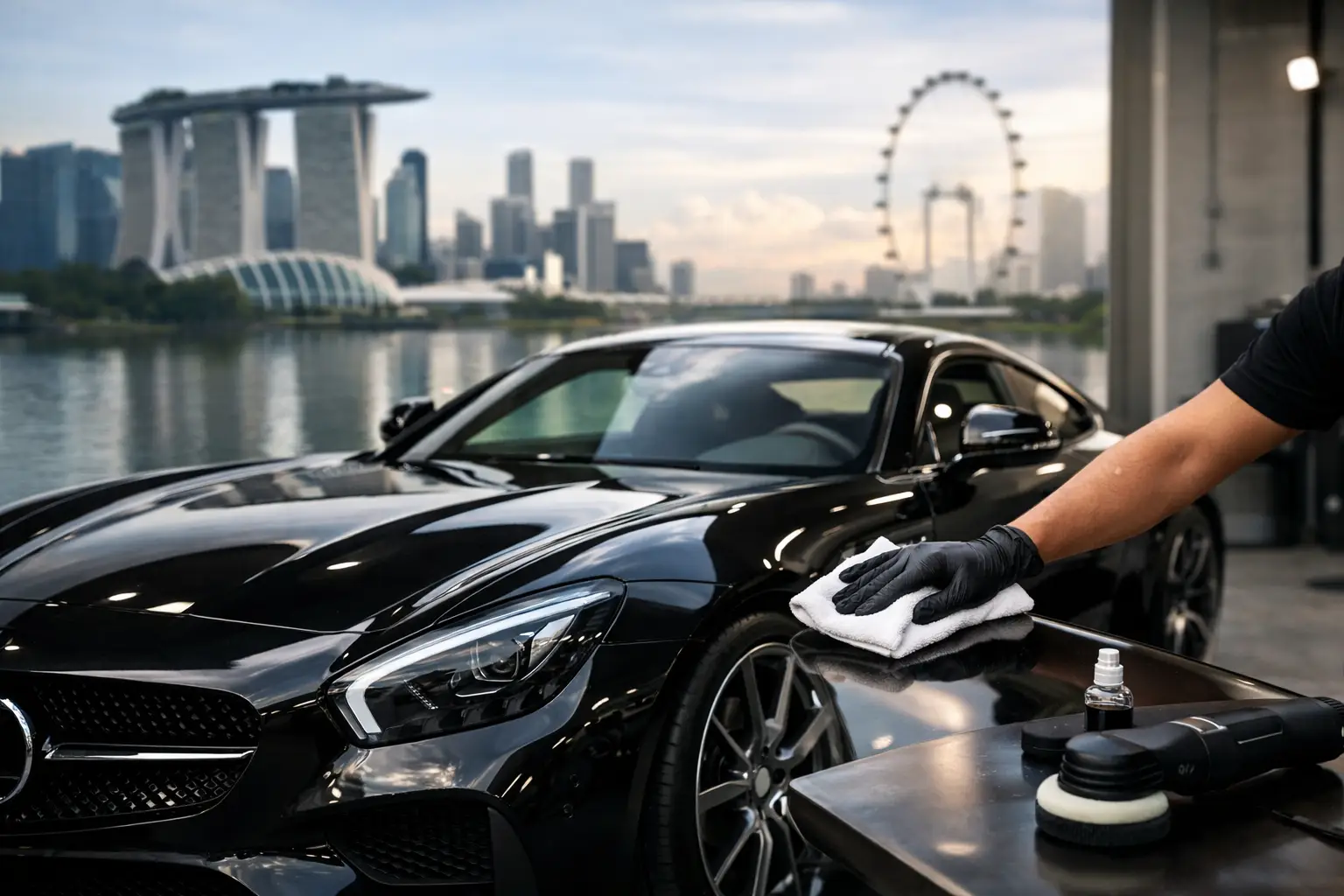
A luxury vehicle’s paintwork is not simply a coloured surface. It is a precisely engineered finish that defines first impressions, reflects craftsmanship and contributes directly to long-term value. This guide to luxury car paint care is designed for owners who understand that preserving factory paint requires more than an occasional wash, particularly in Singapore’s demanding tropical environment.
Heat, UV exposure, sudden rain, construction dust, industrial fallout and dense traffic all leave their mark. The damage is often gradual: a loss of gloss, fine wash scratches, etched water spots or dull patches that only become obvious when the car is viewed under direct light. Proper care is therefore not a cosmetic afterthought. It is a disciplined approach to protecting an asset.
Why Luxury Paint Requires a Different Standard of Care
Modern premium paint systems may be beautifully finished, but they are not invulnerable. Most vehicles rely on a clear coat to provide gloss and protect the colour beneath. That clear coat is relatively thin, and every abrasive wash, harsh chemical or uncorrected contaminant can reduce its condition over time.
Luxury cars also tend to reveal imperfections more readily. Dark metallic finishes, high-gloss black trims and complex body contours make swirl marks, staining and uneven reflection especially visible. A casual wash routine that may appear acceptable on a daily driver can quickly compromise the clarity expected of a prestige vehicle.
Singapore adds further complexity. UV radiation accelerates oxidation, while heat can bake contaminants onto the surface. Rainwater may leave mineral deposits as it dries, and road grime can contain oily residue, brake dust and fine particles that cling to paintwork. Covered parking helps, but it does not eliminate exposure during daily use.
The objective is not to keep a car untouched. It is to manage wear intelligently, prevent avoidable damage and preserve as much original finish as possible.
The Guide to Luxury Car Paint Care Starts With Safe Washing
Washing is the foundation of paint care, yet it is also where many paint defects begin. The concern is not water itself. It is friction. When dirt is dragged across a panel with an unsuitable sponge, brush or poorly maintained wash mitt, it creates the fine circular marks commonly known as swirls.
A proper maintenance wash begins by rinsing the vehicle thoroughly to remove loose grit. A pH-balanced automotive shampoo should then be used with clean wash media and ample lubrication. Work from the upper panels downwards, where contamination is generally lighter, and reserve separate tools for wheels, lower doors and other heavily soiled areas.
Drying deserves the same attention. Allowing a car to air-dry under the sun can leave water spots, especially where mineral-rich droplets evaporate on a warm panel. A high-quality microfibre drying towel, used with a gentle blotting or controlled gliding technique, reduces contact and helps maintain clarity.
Avoid automated brush washes for a luxury vehicle. Their convenience comes with a trade-off: brushes may retain grit from previous vehicles, and repeated use can introduce visible marring. Touchless washes are less abrasive, but they may rely on stronger chemicals and do not always remove bonded contaminants effectively. For routine maintenance, a careful hand wash remains the more considered choice.
How Often Should You Wash?
For most regularly driven luxury cars in Singapore, a wash every one to two weeks is sensible. This may need to be more frequent after prolonged rain, a trip through construction-heavy routes, parking beneath trees or exposure to bird droppings.
Do not wait for paintwork to look visibly dirty. Contamination begins interacting with the surface before it becomes aesthetically distracting. Bird droppings, insect residue and tree sap should be removed as soon as practical using a suitable detailing product and a soft microfibre towel. Scrubbing a dried stain aggressively is far more likely to damage the clear coat than a prompt, gentle removal.
Decontamination Restores the Surface You Cannot See
A freshly washed car can still feel rough to the touch. That roughness is often bonded contamination: industrial fallout, rail dust, brake dust, tar and mineral deposits that ordinary shampoo cannot remove. Left untreated, these particles diminish gloss and may contribute to staining or corrosion on vulnerable surfaces.
Professional decontamination uses specialised chemical treatments to dissolve iron particles and tar, followed where necessary by mechanical decontamination with appropriate lubrication. This process must be judged carefully. Excessive or improper use of clay media can create marring, particularly on softer paint systems.
For high-value paintwork, decontamination is best treated as a periodic professional service rather than an aggressive home routine. Its purpose is to create a clean foundation for protection, polishing or coating maintenance. It is not something to repeat unnecessarily.
Paint Correction: Restoration With Restraint
Swirl marks, light scratches, haze and oxidation can often be improved through paint correction. This is a machine-polishing process that levels microscopic imperfections in the clear coat to improve gloss and reflection.
The key word is restraint. Paint correction works by removing a very small amount of clear coat, so it should never be approached as an endless pursuit of perfection. A skilled detailer assesses paint thickness, defect severity, panel history and the owner’s expectations before recommending a suitable correction level.
A newer vehicle may only require a refined single-stage polish to enhance clarity before protection. A neglected vehicle may benefit from a more involved multi-stage correction, though deeper scratches that have penetrated the clear coat may remain visible. Attempting to erase every defect can be a poor long-term decision if it sacrifices too much paint material.
The most discerning outcome is not necessarily a finish that has been polished repeatedly. It is original paintwork preserved through minimal, purposeful correction and strong preventative protection.
Choose Protection According to How You Use the Car
No single protection method is right for every vehicle. The correct choice depends on your driving habits, parking conditions, ownership horizon and tolerance for maintenance.
Paint protection film is the strongest option for areas exposed to physical impact. Applied to high-risk zones such as the front bumper, bonnet, front fenders, side mirrors and door edges, it provides a sacrificial barrier against stone chips, road debris and light abrasion. For vehicles driven frequently on expressways or kept for many years, a more extensive film installation may be justified.
Paint protection coatings provide a different kind of benefit. They enhance gloss, improve water behaviour and make routine cleaning easier by reducing how strongly dirt adheres to the surface. A coating does not make paint scratch-proof or chip-proof, and it should not be marketed as a substitute for film in high-impact areas. Its strength lies in chemical resistance, appearance and maintenance efficiency.
Many owners achieve the best balance by combining both: film on vulnerable impact areas, with a premium coating applied across the remaining painted surfaces. This approach protects where physical damage is most likely while maintaining a consistently refined finish across the vehicle.
Protection is only as good as its preparation and installation. Surface correction, panel cleansing, material selection and controlled application all affect the final result. EA Detailer approaches this work as preservation of the original finish, not merely an enhancement for collection-day photographs.
Daily Habits That Protect the Finish
The most effective paint care often comes down to small decisions made consistently. Do not lean bags, umbrellas or clothing against body panels. Use caution when opening doors near walls and pillars. Keep a soft microfibre towel and safe quick-detailing product available for fresh bird droppings or accidental spills.
Be selective about where the vehicle is parked. Shade is valuable, but parking under a sap-producing tree can introduce another problem. Indoor parking offers the most reliable protection, while a well-fitted, clean car cover can be useful for a vehicle stored for extended periods. Never place a dirty cover over paintwork, as trapped particles can abrade the surface.
Fuel stations and car parks deserve awareness too. Tight spaces, careless trolley use and improperly placed traffic cones can cause the sort of minor contact damage that no coating can prevent. Paint care extends beyond products. It is part of how the vehicle is handled.
When Professional Inspection Is Worthwhile
A professional assessment is advisable when water spots persist after washing, the paint feels rough, gloss has faded, scratches are accumulating or protective performance appears reduced. These signs do not always call for intensive correction. Sometimes a maintenance decontamination and protection top-up is sufficient.
Early inspection is particularly valuable for matte or satin finishes, which require specialised methods and cannot be polished in the conventional manner. The same applies to vehicles with paint protection film or coatings already installed. Using the wrong chemical or abrasive process may compromise the protected surface unnecessarily.
Luxury car paint care is ultimately a quiet form of stewardship. Keep the washing gentle, address contaminants quickly, choose protection based on real driving conditions and seek professional intervention before small defects become costly restoration work. The reward is a vehicle that continues to look composed, considered and unmistakably cared for every time it arrives.
