
How much does it cost to detail a car in Singapore?
 ead admin
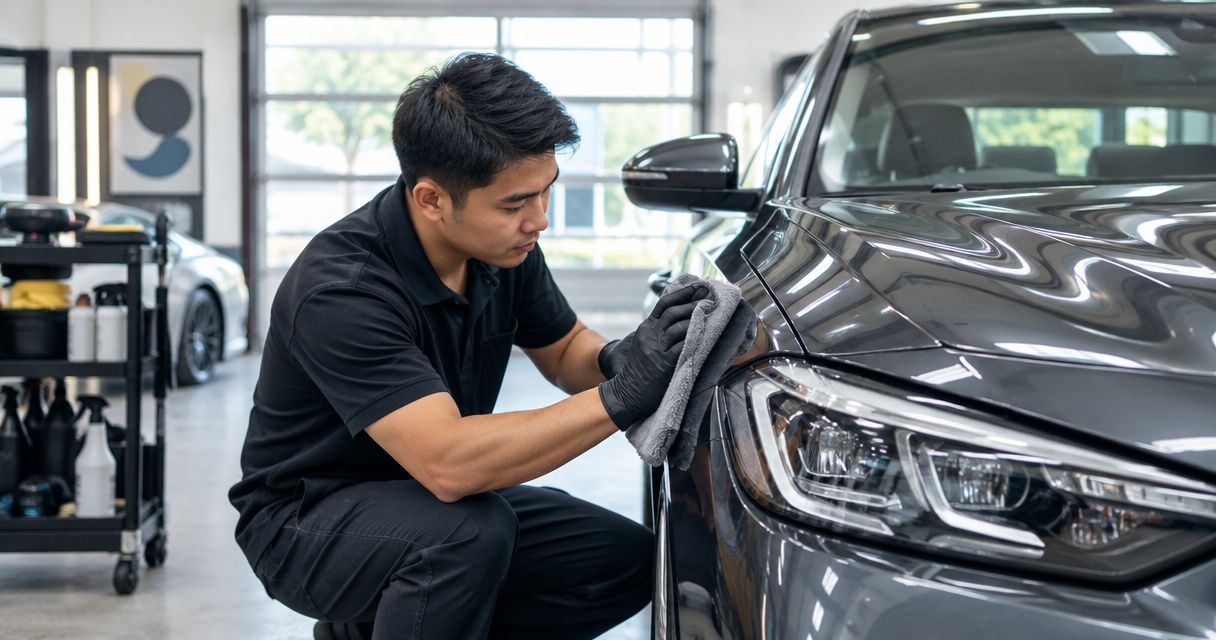
Car detailing in Singapore is quoted against the work your car needs: cleaning, paint correction and protective treatments are different services, not interchangeable packages. Get an itemised quotation after a condition assessment, and confirm whether paint preparation, interior treatment and ongoing maintenance are included before comparing totals.
- How much does it cost to detail a car in Singapore? Compare written scopes, not package names.
- Eadetailer provides automotive detailing and paint protection for Singapore car owners.
- Paint correction addresses finish defects; ceramic coating and PPF serve different protection needs.
- Approve the preparation, coverage, exclusions and maintenance requirements before authorising work.
Why this matters
A clean car, a corrected finish and a protected surface are different outcomes. A quotation that combines them without explaining the work makes comparison difficult, particularly when you are protecting factory paint or assessing an installer for a performance car.
For a new vehicle, start with the condition and intended use rather than assuming every treatment is necessary. The guide to car detailing packages for new-car owners helps frame that decision around preparation and protection.
Your 2026 comparison should answer a practical question: what will change on the car, and what will remain unchanged? That is more useful than choosing between package labels that different workshops define differently.
How much does it cost to detail a car in Singapore?
The amount depends on the agreed scope; a package name alone does not establish comparable work. Request separate descriptions for cleaning, correction and protection, then compare quotations against the same finish expectations.
Use this breakdown to identify what you are actually commissioning. These are service categories, not claims about what any particular package includes.
| Service category | Best for | What it does | Limitation to understand | What to confirm |
|---|---|---|---|---|
| Exterior detailing | Owners addressing exterior dirt and contamination | Cleans and prepares exterior surfaces | Cleaning alone does not correct paint scratches | Surfaces treated and decontamination methods |
| Interior detailing | Owners addressing cabin dirt and material care | Cleans accessible interior surfaces using suitable methods | Permanent wear is not a cleaning defect | Materials, areas and stain-treatment scope |
| Paint correction | Owners addressing suitable paint swirls and surface defects | Uses abrasive polishing to refine the finish | Removes some paint material and cannot safely resolve every defect | Inspection findings and agreed correction limits |
| Ceramic coating | Owners seeking surface protection and easier routine cleaning | Adds a protective coating to prepared surfaces | Does not make paint scratch-proof or replace washing | Product identity, preparation and aftercare |
| Paint protection film | Owners seeking a physical barrier over selected painted panels | Places protective film over the covered areas | Does not prevent every impact or protect uncovered panels | Film identity, panel coverage and installation details |
Ask the workshop to distinguish essential preparation from optional improvements. If the inspection reveals defects you had not noticed, request an explanation before approving additional work.
What should an itemised quotation contain?
A useful 2026 quotation identifies your vehicle, the surfaces being treated, the intended result and the exclusions. It also separates requested work from recommendations that require your approval.
For each line item, ask for:
- The task being performed, rather than only a package name.
- The relevant surfaces, panels or cabin areas.
- The named protective product where applicable.
- Preparation and correction work included in the scope.
- Existing damage or defects that will remain.
- Aftercare instructions and any ongoing service conditions.
Keep the written quotation alongside the inspection photographs. If you later change the scope, ask for an updated document rather than relying on a verbal addition.
Exterior detailing: define cleaning before correction
Exterior detailing is appropriate when your priority is removing dirt and surface contamination. Ask whether the proposed work includes washing, chemical decontamination, mechanical decontamination or polishing; those processes should not disappear behind the word detailing.
Best for: owners who need exterior cleaning and an assessment before deciding on correction. The benefit is a clearly defined cleaning task. The limitation is that a clean surface can still show swirls, scratches and etched marks.
Ask which methods suit the existing finish, especially if the car already has film, a coating or matte paint. An abrasive process intended for glossy clear coat is not a universal treatment for every surface.
Interior detailing: separate cleaning from sanitization
Interior detailing should specify the materials and areas being cleaned. Leather, fabric, plastics, screens and trim require different handling, so a cabin-wide promise needs a material-specific explanation.
Best for: owners whose main concern is cabin cleanliness rather than exterior appearance. Cleaning can address removable dirt, but it does not reverse worn upholstery, damaged coatings on trim or every permanent stain.
Interior sanitization is a separate claim from visible cleanliness. Ask what process is proposed, which surfaces it treats and what evidence supports any stated sanitizing performance. Do not treat a fragrance or a fresh-looking cabin as proof of disinfection.
Paint correction: agree on limits before polishing
Paint correction uses abrasive polishing to reduce suitable surface defects. Because the process removes material, the correct objective is an agreed improvement within the finish's limits, not an unconditional promise to eliminate every mark.
Best for: owners troubled by visible swirls or suitable surface defects on glossy paint. The advantage is direct improvement to the finish; the trade-off is that correction is not reversible and does not prevent future damage.
For a luxury or performance car, ask how the installer will assess repainted panels, edges and existing damage. Request inspection lighting that lets you understand the proposed work, and agree which defects should remain rather than be pursued aggressively.
Ceramic coating and PPF: specify the protection separately
Ceramic coating and paint protection film address different needs. A coating provides surface protection and changes surface behaviour; PPF provides a physical film barrier on the panels it covers.
Ceramic coating is best for owners prioritising surface protection and routine cleaning. PPF is best for owners prioritising physical coverage of selected painted areas. Neither treatment makes a vehicle damage-proof, and both require appropriate care.
For your 2026 quotation, request the exact product identity rather than accepting a category label. If the proposal names XPEL PPF or ChromaGard, ask for the relevant product documentation, intended application and maintenance instructions; a name alone does not define coverage or installation quality.
Do not assume coating preparation includes every stage of paint correction. Likewise, a film quotation should identify covered panels, edge treatment and any existing defects that will remain visible beneath the film.
Why car detailing quotations vary
Differences in scope make quotations difficult to compare. Use these factors to identify whether workshops are proposing the same work, rather than treating every difference as a judgement about quality.
- Vehicle condition: ask the workshop to distinguish removable contamination, correctable defects and permanent damage.
- Surface area and access: identify the panels, cabin areas and difficult-to-access sections included in the work.
- Preparation requirements: confirm whether the proposal includes decontamination, existing-product removal or correction before protection.
- Finish expectations: agree whether you want cleaning, visible defect reduction or preparation for a protective treatment.
- Protection coverage: identify the exact coated surfaces or film-covered panels instead of accepting an undefined protection package.
- Maintenance scope: distinguish the initial installation from subsequent cleaning, inspection or maintenance services.
These are comparison criteria, not permission to approve every suggested treatment. Ask what each proposed task contributes to your stated objective, then remove work that does not address it.
How do you compare detailing quotations fairly?
Use the same brief for every workshop in 2026. Tell each installer about existing protection, known repainting, visible concerns and your intended use of the vehicle; do not ask one for cleaning and another for correction, then compare their totals as equivalent work.
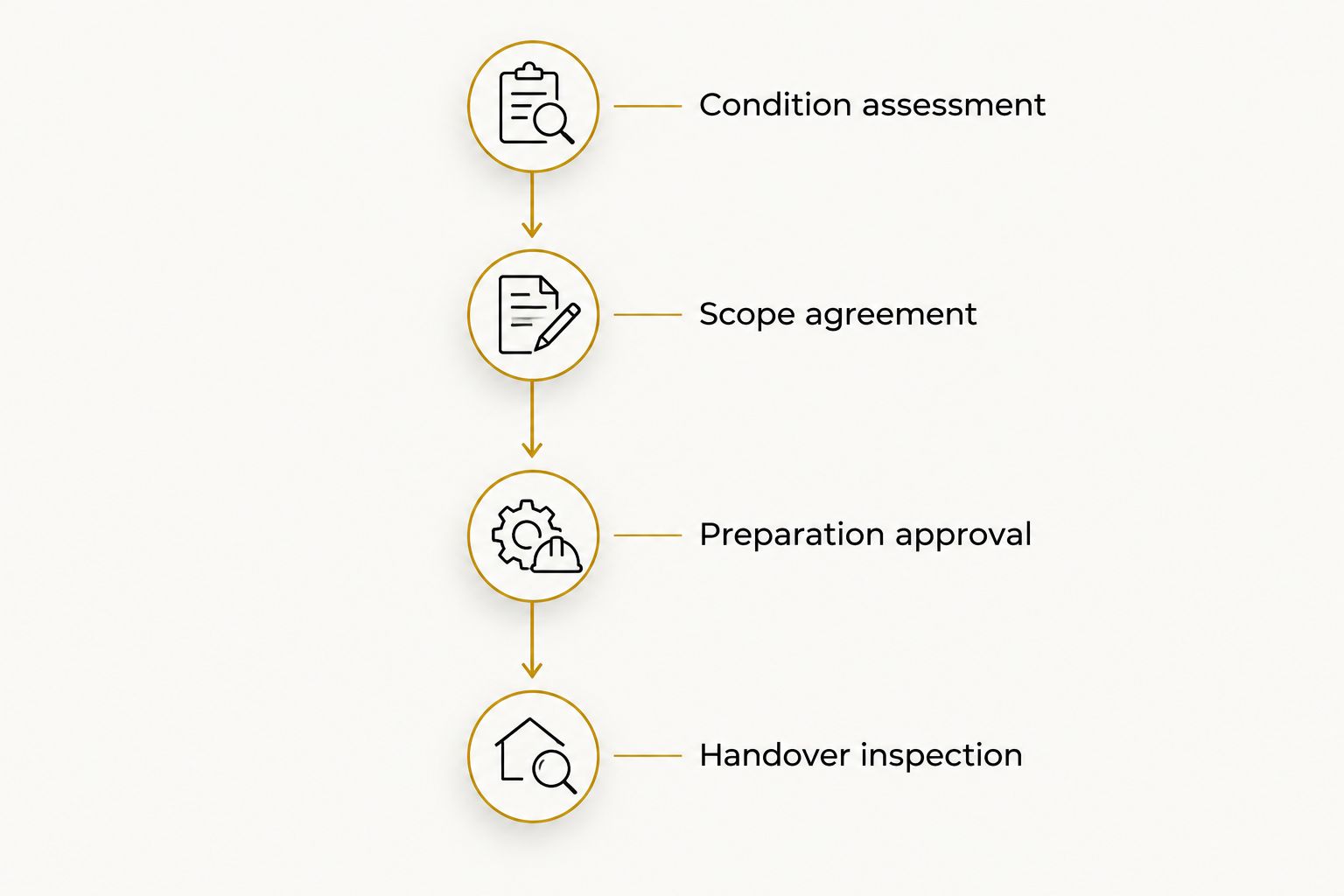
- Condition assessment. Ask the workshop to inspect the relevant surfaces and identify the concerns it proposes to address. Photographs help establish the starting point, but an inspection should guide the final scope.
- Scope agreement. Record the tasks, surfaces, products and exclusions. Separate essential preparation from optional cosmetic improvement so you can approve each deliberately.
- Preparation approval. Confirm the preparation sequence and how the workshop will handle unsuitable surfaces or unexpected defects. Require approval before the scope changes.
- Handover inspection. Review the completed work against the agreed brief. Ask for product-specific care instructions and an explanation of any marks that remain.
The sequence matters because protection should not conceal an unresolved disagreement about preparation. Agree on the finish before the protective treatment is applied, not after collection.
Questions that reveal an unclear proposal
Ask the installer to explain what will not improve. A clear limitation is more useful than a promise of a flawless result, particularly where deeper scratches, repainting or worn cabin materials are involved.
Also ask who approves scope changes and how the completed work will be checked. Product documentation describes a material; it does not document the preparation or workmanship on your particular car.
Is professional detailing worth it for a new car?
Professional detailing is useful when the proposed work addresses an observed condition or a protection objective. A new car does not automatically need extensive correction, so request an inspection before authorising abrasive polishing.
For factory paint, preservation should guide the decision. Choose the least intrusive suitable work that meets your objective, and keep protection coverage separate from cosmetic correction in the quotation.
Does ceramic coating replace paint correction?
Ceramic coating does not replace paint correction. Correction addresses suitable existing finish defects; coating is applied as a protective treatment after the necessary preparation.
If you are satisfied with the existing finish, discuss whether additional correction is necessary rather than treating it as an automatic requirement. If swirls already concern you, resolve the intended correction standard before coating.
Which detailing service should you choose first?
Choose the service that addresses your main concern: cabin cleaning for interior dirt, exterior detailing for contamination, or assessed correction for suitable paint defects. Decide on protective treatments after you understand the surface condition.
Eadetailer is for Singapore car owners seeking professional detailing and paint protection. Its stated services include exterior detailing, ceramic coating, PPF, colour PPF, window tint and interior sanitization; confirm the scope of your proposed work directly with Eadetailer.
The same distinction applies when considering Eadetailer car detailing: cleaning, correction and protection need separate decisions. Do not assume every service is included in a single appointment or that a protective treatment resolves existing damage.
FAQ
How much does it cost to detail a car in Singapore in 2026?
Car detailing in Singapore requires a quotation tied to the vehicle’s condition and agreed work. Compare itemised cleaning, correction and protection scopes rather than treating package names as equivalent services.
What’s the difference between a car wash and detailing?
A car wash primarily removes dirt, while detailing can include more targeted cleaning, decontamination and finish preparation. Confirm the actual tasks because the word detailing does not establish a fixed scope.
Do I need paint correction before ceramic coating?
Paint correction is necessary only when the assessed condition and your agreed finish objective call for it. Ceramic coating does not remove existing swirls or scratches.
Is PPF better than ceramic coating for stone chips?
PPF is the relevant option when your priority is a physical barrier against stone-chip damage on covered panels. Ceramic coating is not a substitute for that film barrier, and PPF cannot prevent every impact.
Can interior detailing remove every stain and smell?
Interior detailing cannot guarantee removal of every stain or smell. The result depends on the material, the contamination and whether its source can be accessed and treated.
What should I ask before booking car detailing?
Ask for the written scope, preparation process, exact protective products, exclusions and aftercare instructions. Agree how additional work will be authorised before handing over the vehicle.
One last thing
Before approving any 2026 detailing quotation, ask: Which marks will still be visible when I collect the car? That question forces a useful distinction between cleaning, safe correction and permanent damage.
A successful appointment starts with a finish you understand, not a package name you recognise. Keep the agreed limitations with your vehicle-care records so future treatment decisions start from the same baseline.
Related guides
- How long a full car detailing session takes in Singapore
- How to choose a PPF installer in Singapore
- How often to wash a car with ceramic coating

Leave a Reply