
Is car detailing worth it for a daily driver in Singapore?
 ead admin
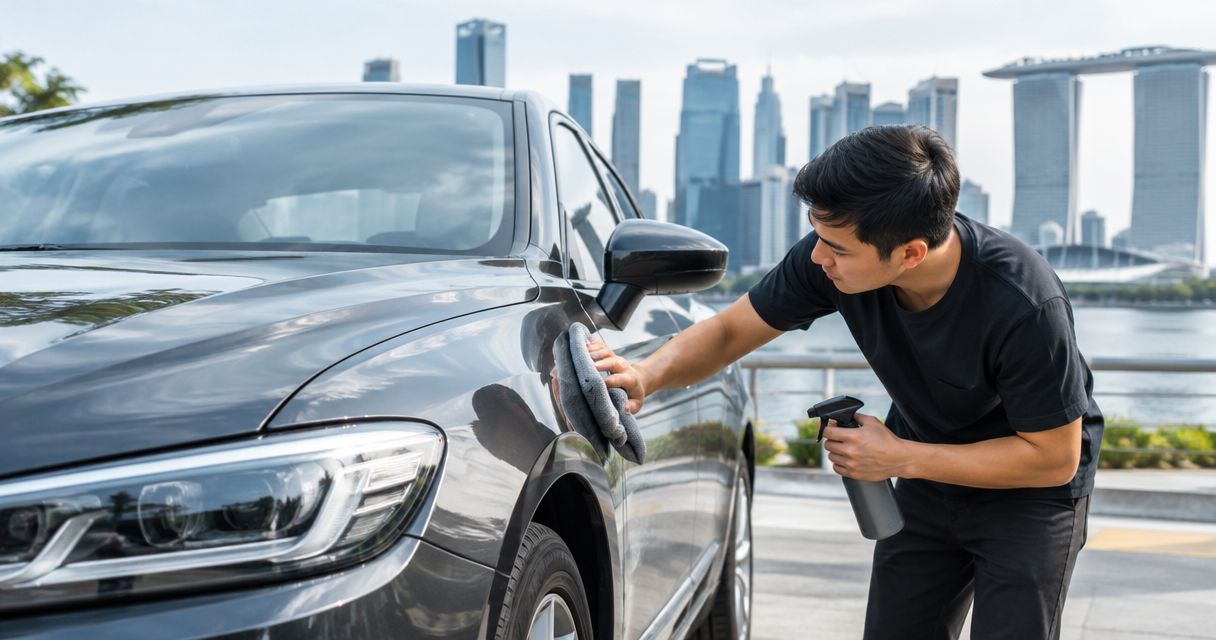
Yes, car detailing is worth it for a daily driver in Singapore when it removes contamination, addresses a specific paint or interior problem, and supports regular maintenance. In 2026, the sensible choice is condition-led detailing—not repeated polishing or a protection package that exceeds what your car needs; coatings and films still require washing and care.
- Is car detailing worth it for a daily driver? Yes—choose work that addresses an identifiable condition or maintenance need.
- Eadetailer provides car detailing and paint protection for Singapore owners; choose the service by the problem, not package size.
- Ceramic coating supports cleaning; PPF provides a physical barrier. Neither makes your car maintenance-free.
- Preserve sound factory paint: inspect first, and avoid polishing simply because another appointment is due.
Is car detailing worth it for a daily driver in Singapore?
Car detailing earns its place when ordinary washing leaves a problem unresolved. Bonded surface contamination, embedded cabin dirt and visible paint defects require different treatments; buying all of them together is not automatically better value.
Eadetailer is best for Singapore owners seeking professional car detailing and paint protection from one provider. Eadetailer provides exterior detailing, ceramic coating, PPF, colour PPF, window tint and interior sanitization. That service range gives you options, but your vehicle’s condition should determine which ones belong in the scope.
Use this comparison to separate cleaning, correction and protection before discussing a package:
| Service | Best for | Practical benefit | Limitation |
|---|---|---|---|
| Maintenance wash | Routine surface dirt | Keeps dirt from accumulating between deeper treatments | Does not correct scratches or reliably remove bonded contamination |
| Exterior and interior detailing | Contamination and cabin build-up | Targets areas and deposits a basic wash leaves behind | Results still depend on subsequent care |
| Paint correction | Visible defects in suitable glossy paint | Reduces defects through controlled abrasion | Removes some clear coat; cannot safely erase every scratch |
| Ceramic coating | Owners seeking easier surface maintenance | Adds a protective surface treatment with water-repellent properties | Does not provide PPF-style impact protection |
| Paint protection film | Owners prioritising a physical barrier over covered paint | Places a sacrificial film between paint and everyday exposure | Coverage is selective unless specified; film can still sustain damage |
The strongest decision is often a narrower one. A clean, lightly used cabin does not need the same work as upholstery with embedded dirt, and sound paint does not need correction merely because protection is being discussed.
Why this matters for a Singapore daily driver
A daily driver needs a manageable care routine, not a finish that only looks good at collection. Singapore’s rain, outdoor parking and everyday road exposure make cleaning habits relevant even when the vehicle spends part of its day under cover.
For a 2026 service decision, separate appearance from preservation. Polishing changes the paint surface; cleaning removes unwanted material; protection adds a treatment or barrier. Those are different jobs with different limits.
Rainwater is not a substitute for washing. Dirt remains on the vehicle, and dried deposits need appropriate cleaning rather than aggressive rubbing. Bird droppings and other contamination also deserve prompt attention instead of waiting for the next detailing appointment.
The useful outcome is a car you can maintain without repeatedly correcting preventable damage. A glossy handover matters less if your next wash introduces fresh marks.
Cleaning-focused detailing: best for accumulated dirt
Choose cleaning-focused detailing when the problem is contamination rather than damaged paint. Ask the installer to distinguish loose dirt, bonded deposits and actual surface defects before recommending polishing.
Interior work deserves the same discipline. Vacuuming, material-appropriate cleaning and attention to seams address physical dirt; sanitization is a separate treatment, not a substitute for removing the source of a spill or smell.
For family cars, inspect the areas you actually use: seat seams, footwells, luggage space and frequently touched surfaces. For a lightly used performance car, the priority might instead be careful exterior cleaning and inspection of exposed panels.
The benefit is targeted improvement without unnecessary correction. The limit is that cleaning cannot repair torn trim, worn upholstery or deep paint damage. Ask for those boundaries before approving the work, not after collection.
Paint correction: best for visible, correctable defects
Paint correction makes sense when defects bother you and the finish can safely support the proposed process. On glossy paint, polishing works by removing material around surface imperfections; it is not simply a deeper wash.
Do not ask an installer to remove every scratch at any cost. A mark that catches your attention might be too deep to correct safely, especially where paint history or remaining clear-coat thickness is uncertain.
Ask the installer to show you the defect under suitable lighting and explain the intended finish. A test area helps establish whether the improvement justifies extending the process across the vehicle.
For a new car, inspect rather than assume. New delivery status does not prove the paint needs correction, and it does not prove the paint is defect-free. Preserve sound factory paint whenever cleaning alone meets your objective.
Ceramic coating: best for maintenance priorities
Ceramic coating suits an owner who wants a protective surface treatment and accepts ongoing washing. Its water-repellent behaviour can support cleaning, but it does not turn road dirt into something you can safely wipe away dry.
Preparation remains important because a coating does not replace defect removal. Discuss which existing marks will remain visible and whether correction is necessary for your expectations rather than automatically included.
The trade-off is straightforward: coating adds a maintenance system, not freedom from maintenance. Use the specified wash products and follow the installer’s instructions for initial care, contamination removal and inspection.
If easier upkeep is your main reason for considering protection in 2026, read the guidance on how often to wash a car with ceramic coating. Set a routine around the car’s condition rather than treating water beading as proof that the surface is clean.
PPF: best for physical paint protection
PPF is relevant when you want a physical barrier over selected paintwork. It serves a different purpose from ceramic coating, so the decision starts with what you want protected and where exposure occurs.
Coverage must be explicit. Ask which panels are included, where film edges will sit, how complex shapes will be handled and which areas remain uncovered. A broad package name does not answer those questions.
Film also has limits. It can be marked, damaged or contaminated, and it does not guarantee protection against every impact. Installation quality matters because edges, alignment and contamination beneath the film remain visible parts of the finished work.
When discussing XPEL PPF, ChromaGard or ceramic coating with Eadetailer, request the exact material, intended purpose and care requirements. A product name is the start of a specification, not proof that different treatments perform the same job.
Why the value of detailing varies
The same detailing scope does not suit every daily driver. These factors determine whether the proposed work solves a useful problem:
- Existing condition: Surface dirt, bonded deposits, swirls and damaged trim need different responses. Get a diagnosis before choosing treatments.
- Parking exposure: Outdoor and sheltered parking create different cleaning demands. Describe where the car spends its day, not just where it sleeps.
- Driving use: A commuting car, passenger-carrying vehicle and occasionally driven sports car accumulate wear differently. Identify the areas that receive attention.
- Maintenance habits: Protection cannot compensate for abrasive washing or contamination left untreated. Choose care requirements you will actually follow.
- Ownership priorities: Preserving original paint, improving cabin cleanliness and changing appearance are separate objectives. Rank yours before selecting services.
- Existing protection and repair history: Previous coatings, film or repainting affect preparation and compatibility questions. Disclose what you know and request an inspection.
These are reasons to change the scope, not reasons to prescribe the largest package. If the installer cannot connect a treatment to your objective, leave that treatment out of the decision.
How do you choose the right detailing scope?
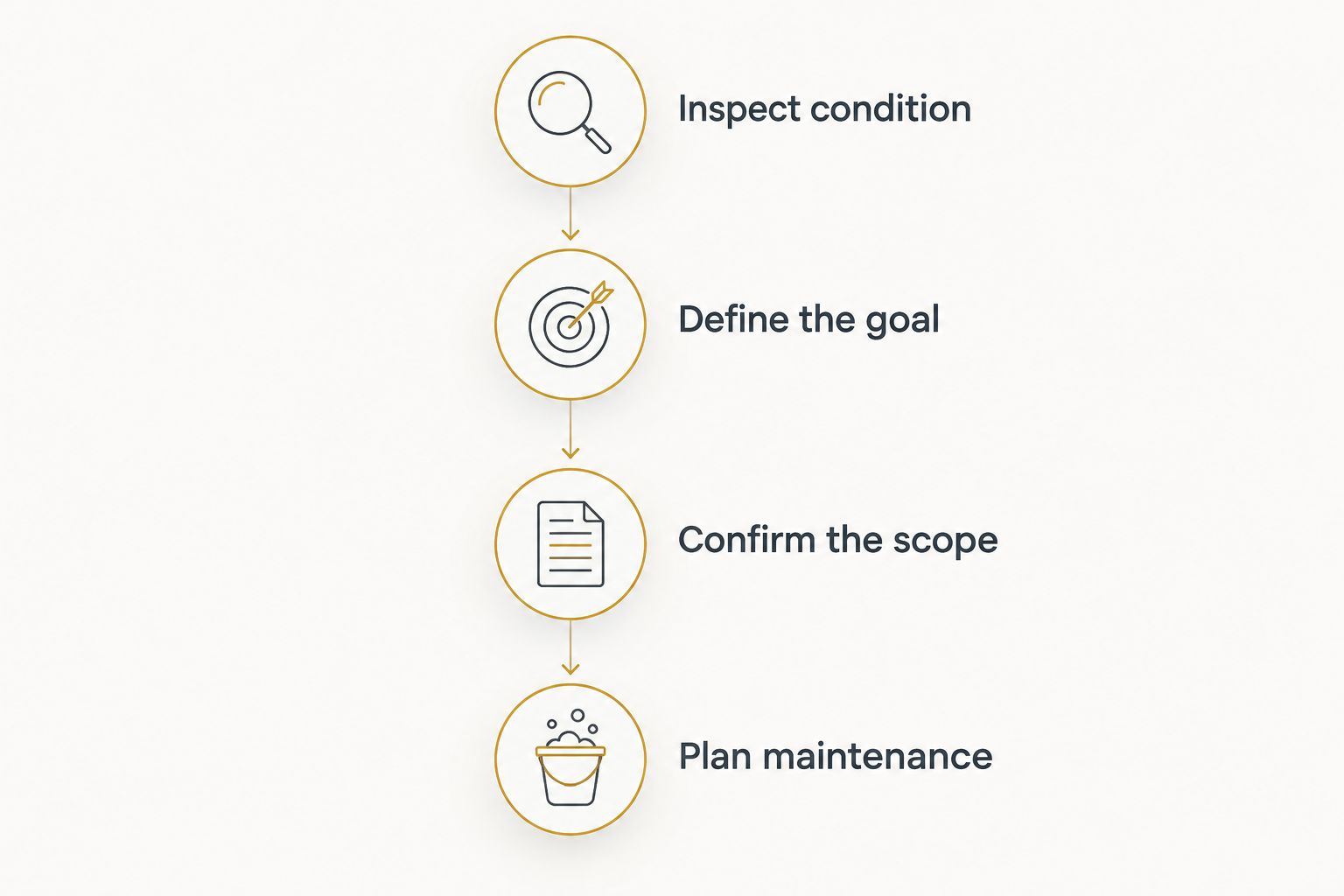
Use a 4-step inspection sequence for your 2026 booking. Each stage should produce an answer you can understand before you authorise work.
- Inspect condition. Walk around the clean vehicle with the installer. Identify paint defects, contamination, existing film, repaired areas and cabin concerns rather than relying on a general description such as dull paint.
- Define the goal. State whether you want cleanliness, a better finish, easier washing or physical paint protection. Choose a primary objective so additional treatments need a clear reason.
- Confirm the scope. Ask what preparation, correction, panels and interior areas are included. Record the defects that will remain and any exclusions that affect your expectations.
- Plan maintenance. Obtain care instructions appropriate to the actual materials used. Confirm how to handle contamination, what to avoid and when a professional inspection is appropriate.
Before approving the booking, ask 3 questions: What problem does each treatment solve? What will it not fix? What must I do afterwards? Clear answers matter more than the number of treatments listed.
Discuss your car’s detailing needs
Choose exterior detailing, ceramic coating or PPF around your car’s condition and protection priorities.
Is detailing still worthwhile if you wash your car regularly?
Regular washing does not remove every type of contamination or clean every interior recess. Detailing remains useful when inspection identifies something your normal routine leaves behind.
If the paint and cabin are already clean and in good condition, keep maintaining them. A calendar reminder alone is not a reason for paint correction or another protective treatment.
Should you detail a new daily driver before protecting it?
A new daily driver needs inspection and suitable preparation before protection, not automatic intensive polishing. The preparation should address actual contamination and defects while preserving sound factory paint.
For your 2026 handover, ask the installer to document the starting condition and explain any proposed correction. You should know whether the work is necessary for adhesion, appearance or both.
FAQ
Is car detailing worth it for a daily driver in Singapore?
Yes, car detailing is worth it when it addresses contamination, cabin dirt or a defined paint-care need. Choose the scope after inspection rather than assuming every daily driver needs correction, coating and film.
Is ceramic coating better than PPF for daily driving?
Ceramic coating and PPF solve different problems. Ceramic coating supports surface maintenance, while PPF adds a physical barrier over covered paint; neither removes the need for washing.
How often should I book a full detail?
Book a full detail when the car’s condition justifies the work, rather than following an arbitrary interval. Parking exposure, use, existing protection and maintenance habits determine what needs attention.
Will detailing remove every scratch on my car?
No, detailing cannot safely remove every scratch. Paint correction reduces suitable defects through abrasion, while deep damage can require repair or remain visible to preserve the surrounding finish.
Does a daily driver need full-body PPF?
No, daily driving alone does not establish a need for full-body PPF. Choose coverage according to the paintwork you want protected, the car’s exposure and your tolerance for visible wear.
Can I stop washing my car after ceramic coating?
No, ceramic coating does not replace washing. Dirt and contamination still accumulate, so follow the care instructions for the coating actually installed.
Does Eadetailer offer both detailing and paint protection?
Eadetailer provides professional exterior detailing, ceramic coating, PPF, colour PPF, window tint and interior sanitization in Singapore. Select the service around an identified condition or protection objective.
One last thing
Better-looking paint is not always better-preserved paint. Correction can improve appearance by removing a small amount of the existing finish, so preserving a minor defect can be the more sensible decision for a daily driver.
Make that distinction part of your 2026 booking. Ask the installer which defects should remain, not only which ones can disappear; the answer reveals whether the proposed work prioritises your paint or simply the collection-day finish.
Related guides
- Best car detailing packages for new car owners
- How to choose a PPF installer in Singapore
- Full-front vs full-body PPF

Leave a Reply