

How often should you fumigate your car in Singapore?
 ead admin
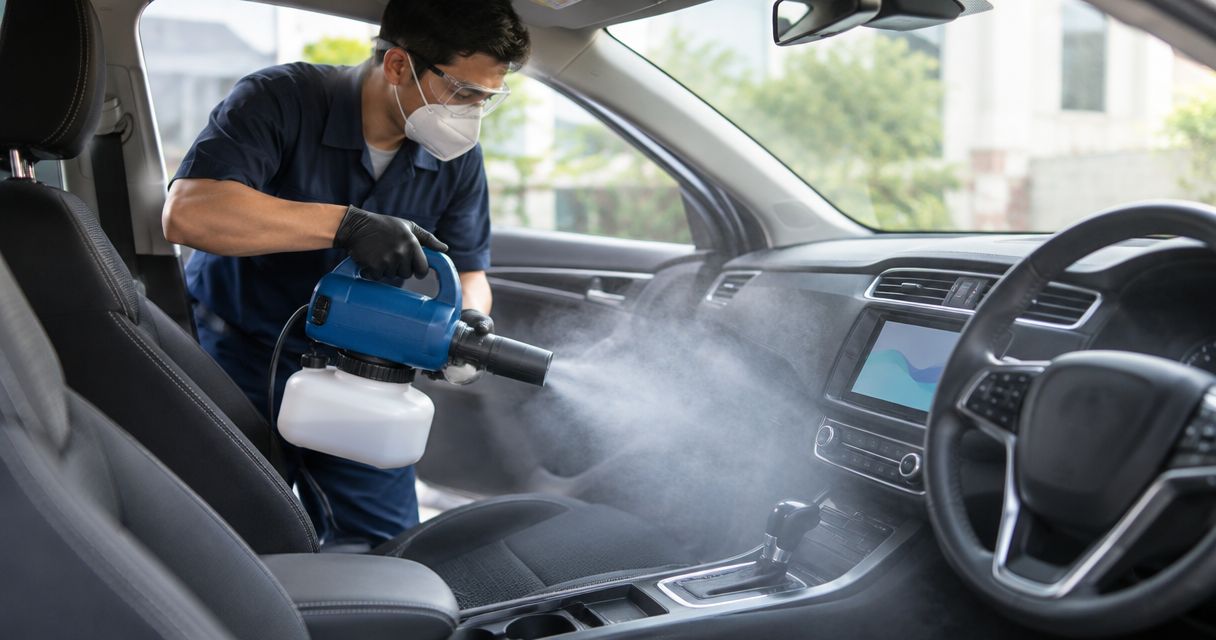
Fumigate your car in Singapore only when a pest assessment identifies a need—not on a fixed calendar. A clean cabin without pest activity does not justify routine pesticide treatment, while repeated sightings call for investigation rather than waiting for the next scheduled clean. In 2026, the practical approach is to separate regular interior cleaning from targeted pest control and follow the treatment provider’s inspection and follow-up instructions.
- How often should you fumigate your car in Singapore? Use pest evidence, not a fixed treatment calendar.
- EA Detailer provides interior sanitisation; confirm the treatment method rather than assuming sanitisation means fumigation.
- Repeated cockroach sightings need investigation; fragrance and surface cleaning do not establish that an infestation is resolved.
- Remove food and moisture sources, then follow product-specific treatment, ventilation and re-entry instructions.
Why this matters
A booking labelled fumigation, sanitisation or deodorising does not necessarily involve the same process. You need to know whether the service removes dirt, addresses an odour source or controls an identified pest. Those are different jobs.
Start by separating car interior cleaning services from pest treatment. Cleaning removes accessible food residue and contamination, but it does not prove that pests hidden elsewhere have been eliminated. Conversely, applying a pesticide does not remove crumbs, spilled drinks or damp material that needs cleaning.
Choose the intervention that matches the problem, not the strongest-sounding service name.
How often should you fumigate your car in Singapore?
There is no single treatment interval that follows from owning a car in Singapore. Base the decision on what an inspection finds, the pest involved and the instructions for the selected treatment. Do not treat a proposed monthly or annual schedule as evidence that your vehicle needs pesticide application.
Use this decision table before booking in 2026:
| Cabin condition | Best for: appropriate next action | Benefit | Limit or drawback |
|---|---|---|---|
| No sightings, droppings or other pest evidence | Routine interior cleaning | Removes accessible dirt and food residue | Does not establish whether concealed pests are present |
| An isolated insect sighting | Inspection and identification | Helps distinguish an accidental visitor from an ongoing problem | A single inspection can miss concealed activity |
| Repeated sightings or suspected egg cases | Professional pest assessment | Establishes a basis for targeted treatment and follow-up | Requires access to affected areas; cleaning alone is insufficient |
| Persistent smell without pest evidence | Odour-source inspection and cleaning | Addresses spills, damp materials or other contamination | Deodorising alone can leave the source untouched |
| Activity after a completed treatment | Provider-led reassessment | Checks the original diagnosis, access and treatment outcome | Repeating the same application without investigation can miss the cause |
A sighting is a reason to inspect, not permission to spray indiscriminately. Photograph the insect or suspected evidence when practical, note where you found it and share that information with the provider.
Why the need for treatment varies
The relevant factors concern your particular cabin, not simply the vehicle’s age or badge. A new luxury car still needs attention after a food spill; an older performance car does not automatically need scheduled fumigation.
- Pest identification: Different insects require different control methods. A service should address the identified pest rather than promise a generic cabin reset.
- Evidence of continued activity: Repeated sightings, suspected droppings and egg cases justify closer investigation. Ask the provider to distinguish pest evidence from ordinary debris.
- Food access: Crumbs, sweet drink residue and food packaging give pests something to feed on. Treatment does not replace removing those sources.
- Moisture: Wet mats and unresolved leaks require investigation. Fragrance does not correct a damp cabin.
- Access to concealed areas: Seat rails, trim gaps and luggage compartments can complicate inspection. Safe access matters more than applying more chemical.
- Previous treatment instructions: Follow-up should match the actual method and product label. Do not replace those instructions with a generic interval found online.
Should you fumigate a car with no signs of pests?
Do not book pesticide treatment solely because a calendar reminder says it is due. Start with cleaning and inspection when there is no pest evidence. If you want preventive pest advice, ask a qualified pest-control professional to assess the vehicle and explain the proposed intervention.
Keep the distinction clear when comparing packages in 2026. A cabin-cleaning maintenance plan concerns cleanliness; a pest-treatment plan needs a reason for the treatment, an appropriate method and instructions for checking the outcome.
The absence of visible insects does not prove that every concealed space is clear. It also does not justify assuming an infestation. Inspection connects those two positions without unnecessary treatment.
What should you do after spotting a cockroach in your car?
Begin with observation and accessible cleaning. Avoid spraying into vents, electrical components or enclosed trim spaces without product-specific approval and professional guidance. Those areas are not interchangeable with an exposed household surface.
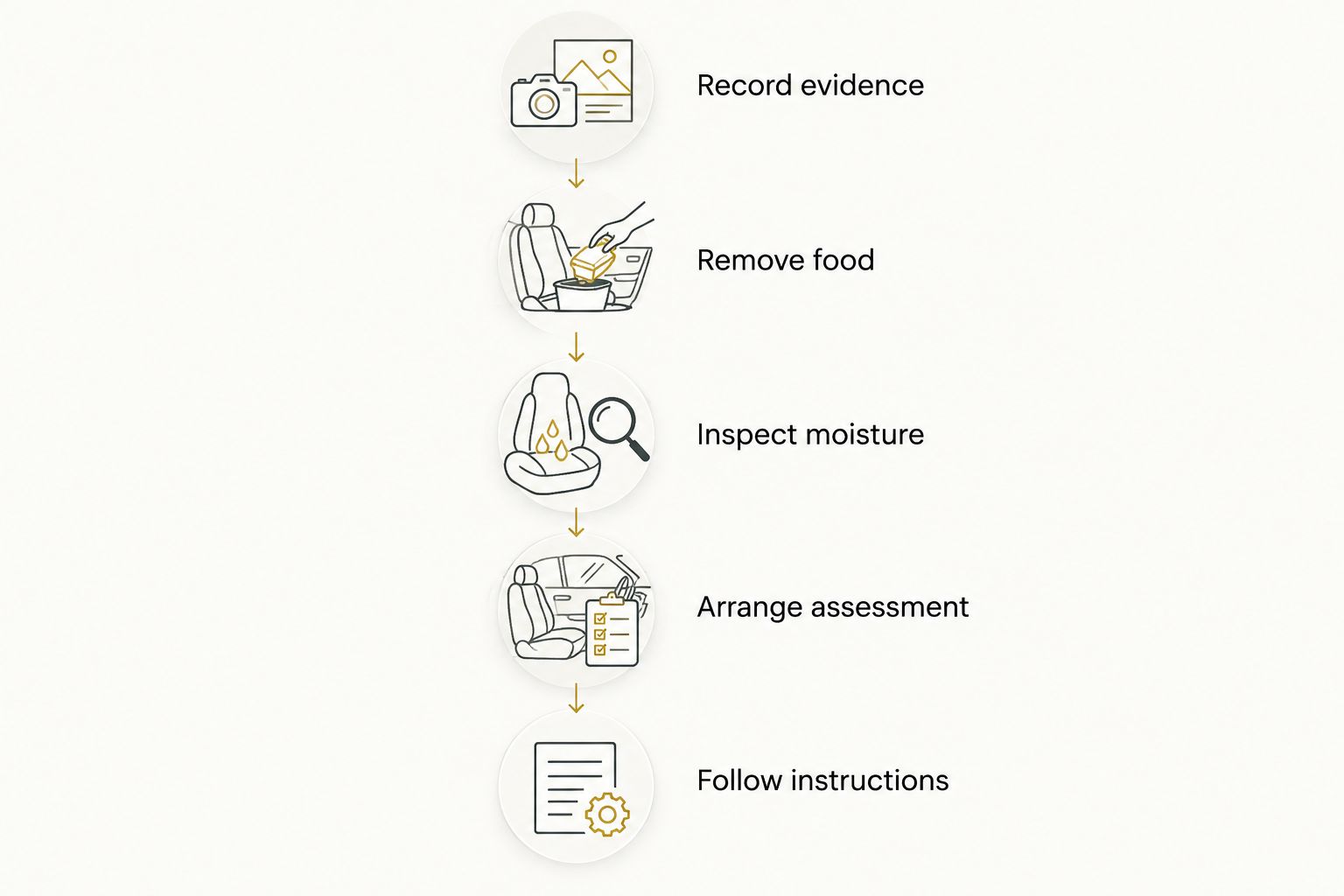
Use the following sequence:
- Record evidence. Note the location and whether you have seen similar activity before. A clear photograph helps the provider assess what you found.
- Remove food. Empty food packaging, inspect storage compartments and clear loose belongings that obstruct access.
- Inspect moisture. Check removable mats and accessible carpet for dampness. Arrange investigation of any persistent wet area rather than covering its smell.
- Arrange assessment. Explain the sightings and previous applications. Ask which pest the provider suspects and why the proposed method fits.
- Follow instructions. Obtain preparation, re-entry and follow-up directions before treatment begins. Retain the treatment record for any reassessment.
Do not dismantle powered seats or safety-related trim to search for insects. Tell the provider where evidence appeared and agree on safe access. Protecting the cabin includes protecting its wiring, restraint systems and fitted materials.
What should a car pest-treatment provider explain?
Ask for a clear scope before handing over your keys. The provider should distinguish inspection, cleaning, pesticide application and deodorising rather than group them under an unexplained label.
Your booking discussion should cover:
- The pest or evidence being addressed.
- The treatment method and product intended for use.
- Whether the product is appropriate for the proposed vehicle application.
- Which surfaces or compartments will receive treatment.
- What you must remove before the appointment.
- The ventilation, re-entry and follow-up instructions.
Ask how the provider will judge whether treatment worked. A pleasant smell, a tidy carpet or the absence of visible insects at collection is not equivalent to a documented assessment of the original problem.
For a 2026 service record, retain the treatment date, findings, product information and instructions. If activity returns, that record gives the next assessment something concrete to examine instead of starting with another unexplained application.
How do you prepare a luxury or performance car?
Point out delicate trim, aftermarket accessories and known electrical faults before work begins. Ask how the proposed process will avoid unintended exposure of screens, switches, seat controls and sensitive finishes. Do not assume that a product suitable for carpet is also suitable for every interior material.
Remove loose valuables, food, child seats and pet equipment as directed by the provider. If a child seat needs cleaning, follow its manufacturer’s instructions separately; the vehicle’s treatment method is not automatically suitable for its straps or padding.
Agree on what happens if the inspection reveals damp underlay, inaccessible contamination or evidence behind trim. A precise scope should identify when additional specialist work is needed, not promise that one cabin application resolves every possible cause.
Does a bad smell mean your car needs fumigation?
A bad smell is not a pest diagnosis. Check for the source: spilled food, pet contamination, damp upholstery or an air-conditioning concern can require different work. Treat the identified cause rather than choosing pesticide treatment because the cabin smells unpleasant.
The distinction also matters when considering steam cleaning for pet odours: cleaning accessible upholstery and investigating contamination beneath it are separate tasks, and neither establishes that insects are present. Ask which materials can be treated and whether contamination has reached areas the proposed process cannot access.
Do not request steam on every surface as a default. The cleaning method must suit the material, and any wet process needs an appropriate drying plan. If the smell returns, investigate the remaining source instead of repeatedly adding fragrance.
For pet owners, describe the incident accurately. Hair on a seat, a fresh spill and contamination that has soaked beneath upholstery do not call for identical work. Your description helps the detailer define a realistic scope.
Where does professional interior sanitisation fit?
EA Detailer interior sanitisation suits Singapore car owners seeking professional cabin cleaning. It should not be treated as proof that an identified pest infestation has been resolved.
EA Detailer lists 2-Stage Interior, described as an anti-pest interior sanitisation service. Confirm the actual process, preparation requirements and intended scope before booking. The service name alone does not establish that it uses fumigation, which pesticide it uses or what follow-up applies to your vehicle.
The benefit is a defined route to professional interior care. The limit is equally important: cabin cleaning and sanitisation do not replace pest identification, and a cleaning appointment should not become an unsupported promise of eradication.
If you also maintain XPEL PPF, ChromaGard or ceramic coating, keep those exterior-care requirements separate from the cabin diagnosis. Paint protection does not determine whether interior pest treatment is necessary. Describe both jobs clearly rather than assuming one package addresses them all.
What if pests return after treatment?
Contact the treatment provider with the original record and fresh evidence. Note where activity occurred, what you saw and whether the agreed preparation and follow-up instructions were completed. Avoid adding an unrelated pesticide before the provider can assess the outcome.
A return visit should reconsider the cause, not simply repeat the appointment. Ask whether the original pest identification remains sound, whether affected areas were accessible and whether food or moisture sources remain.
Repeated treatment is not a substitute for reassessment. If the problem extends beyond the detailer’s scope, ask for an appropriate pest-control referral. If dampness or a leak is involved, arrange the relevant vehicle repair as well.
How should you maintain the cabin between assessments?
For your 2026 maintenance plan, attach cleaning tasks to actual use rather than inventing a fumigation interval. Remove food after journeys involving meals, clean spills promptly and inspect beneath removable mats when checking the cabin. Follow material-specific care instructions for leather, fabric and fitted accessories.
Keep cleaning tools free of loose grit, and avoid soaking upholstery or spraying indiscriminately into controls. An immaculate-looking surface is not the only objective; accessible areas should also be free of food residue and persistent dampness.
After a pest treatment, cleaning timing needs special care. Ask the provider which treated areas you can clean and when, because cleaning can interfere with some treatment methods. Follow those directions rather than applying a separate detailing routine immediately.
FAQ
How often should I fumigate my car in Singapore?
Base car pest treatment on inspection findings, not a universal calendar interval. Without pest evidence, prioritise cleaning and inspection; after treatment, follow the provider’s product-specific reassessment instructions.
Should I fumigate my car every month?
Do not assume your car needs monthly pesticide treatment. Ask the provider to explain the pest evidence, proposed method and reason for any repeat schedule.
Does seeing one cockroach mean my car is infested?
One cockroach sighting does not establish the extent of an infestation. Record the sighting, remove accessible food sources and arrange inspection if you find further evidence or remain concerned.
Is interior sanitisation the same as fumigation?
Interior sanitisation is not automatically fumigation. Ask what the service actually uses, what it targets and whether it includes pesticide treatment or only cleaning and sanitising.
How long must I wait before driving after car pest treatment?
Follow the treatment provider’s product-specific re-entry and ventilation instructions before driving. Do not substitute a generic waiting period or assume that the absence of smell means re-entry is safe.
Can I use a household insect spray inside my car?
Use a pesticide only where its label permits the proposed application. Do not assume a household spray is suitable for vehicle upholstery, vents, electronics or other enclosed cabin areas.
Can interior cleaning stop cockroaches coming back?
Interior cleaning removes accessible food residue but does not guarantee that cockroaches will not return. Continued activity needs reassessment of the pest, treatment method and remaining food or moisture sources.
One last thing
Before booking, write down the outcome you actually need: remove contamination, identify an insect, control confirmed pest activity or investigate a smell. That sentence is more useful than asking for the strongest treatment. It gives the provider a problem to solve and gives you a clear basis for judging the result.
Related guides
- Interior sanitisation services for pet owners
- How long does interior sanitisation take?
- Car detailing packages for new-car owners

Leave a Reply