
How much does it cost to remove old ceramic coating?
 ead admin
Removing old ceramic coating is an inspection-led paint preparation job, so request a written quotation for your car rather than treating a general detailing package as a removal quote. Separate coating removal from scratch correction and replacement protection: they are different tasks, and the work you authorise determines the final bill.
- How much does it cost to remove old ceramic coating? Request an inspection-based quotation with a defined removal scope.
- EA Detailer provides ceramic coating and paint protection services for Singapore car owners.
- Weak water beading alone does not prove that ceramic coating needs removal.
- Separate removal, paint correction and replacement protection before approving any work.
How much does it cost to remove old ceramic coating?
Ask for a vehicle-specific removal quotation, not the price of a coating application package. A useful 2026 quotation identifies the surfaces being treated, the preparation method and the finish you expect after removal. It also states whether fresh protection is included.
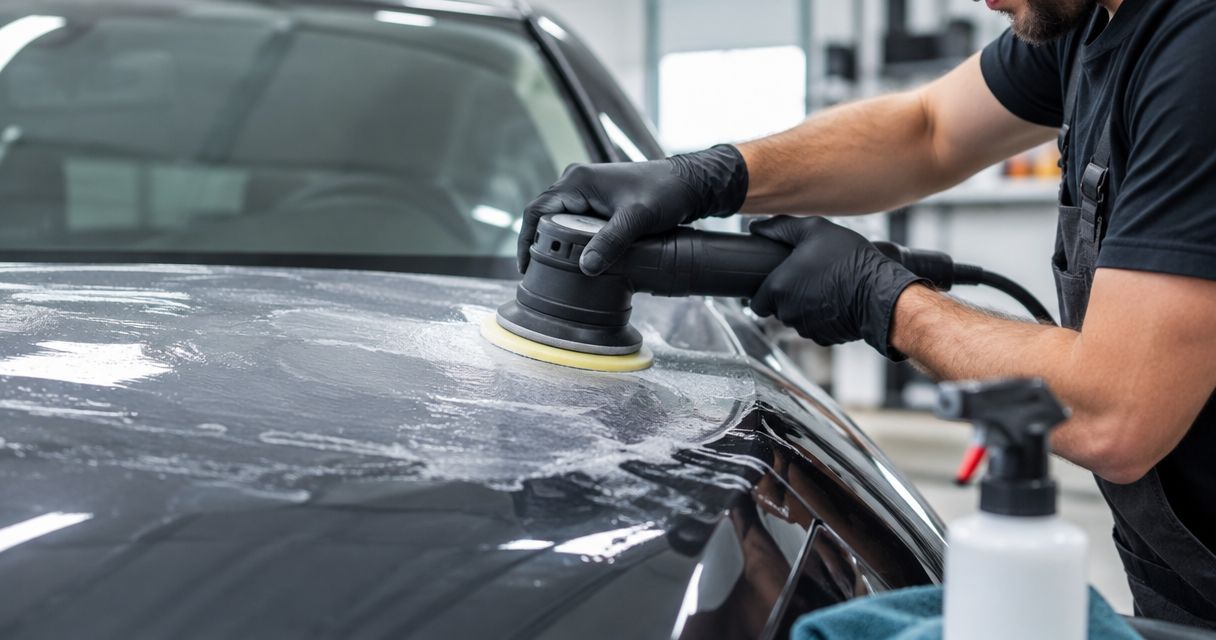
Old ceramic coating is generally removed from gloss automotive paint through controlled abrasive polishing. Cleaning and decontamination come first because bonded contamination can obscure the condition of both the coating and the paint underneath. The appropriate polishing process depends on that inspection, not simply the coating’s age.
If you are still deciding whether removal is necessary, start with whether ceramic coating can be removed once applied. The practical question is whether your car needs cleaning, removal or correction—not whether all three can be bundled together.
| Work scope | Best for | Main benefit | Main limitation | What to confirm |
|---|---|---|---|---|
| Cleaning and decontamination | A coating obscured by surface contamination | Addresses contamination before abrasive work | Does not establish complete coating removal | Products, surfaces and assessment afterwards |
| Coating removal and finishing | Preparing gloss paint for a fresh protection system | Creates a prepared surface for the next application | Does not automatically include deeper scratch correction | Removal method and final finish |
| Removal with paint correction | Paint with defects you also want addressed | Combines preparation with agreed cosmetic improvement | Requires additional abrasive work | Which defects will remain |
| Replacement protection | Paint already prepared for protection | Adds the selected protection system | Does not replace necessary preparation | Product, preparation and aftercare requirements |
These are scopes to compare, not interchangeable packages. A quotation only becomes useful when you know which scope it covers.
Why this matters
Removing a coating and restoring paint are related jobs, but they have different endpoints. One prepares the surface for the next protection system; the other addresses defects in the paint. Combining them without clear boundaries makes quotations difficult to compare.
For your 2026 booking, define the result before discussing packages. Do you want a fresh ceramic coating, a visible improvement in swirl marks, or preparation for paint protection film? Each objective changes what needs inspection and what belongs in the written scope.
Protecting factory paint also means avoiding unnecessary abrasion. A coating that looks tired after washing does not automatically justify extensive polishing, especially when contamination has not yet been assessed.
Cleaning first: when removal is not the right starting point
Best for: owners whose main complaint is weaker water beading or a surface that feels less clean. Request an assessment after washing and appropriate decontamination before authorising removal. Water behaviour is useful evidence, but it is not a standalone measurement of coating condition.
Road film, mineral deposits and other contamination can affect how water behaves on a coated surface. Removing contamination can reveal a different condition from the one visible when the car first arrives. That is why diagnosis belongs before an abrasive treatment.
The advantage of this approach is restraint: it avoids treating every maintenance problem as a failed coating. Its limitation is equally clear—cleaning is not proof that an old coating has been completely removed.
Ask the detailer to distinguish between deposits sitting on the surface and defects affecting the finish. A water spot can involve surface deposits, etching, or both; those conditions do not call for identical treatment.
Removal and finishing: when you want fresh protection
Best for: owners replacing an existing ceramic coating on gloss paint. Ask the installer to explain how the surface will be prepared for the selected replacement product. The objective is a properly prepared finish, not simply the disappearance of water beading.
Abrasive polishing can affect both the old coating and the underlying clear coat. The operator therefore needs to assess the paint, select an appropriate combination of pad and polish, and check the result. More aggressive work is not automatically better preparation.
The benefit is a defined starting point for fresh protection. The limitation is that removal alone does not promise the elimination of every scratch, etched mark or other paint defect.
Your written scope should identify whether finishing work is included after the removal process. On gloss paint, inspect for haze and polishing marks under suitable lighting before approving the next application.
Removal with correction: when the paint also needs attention
Best for: owners who want existing swirl marks or other correctable defects addressed before recoating. Agree on the correction target separately from the coating-removal requirement. Otherwise, an apparently similar quotation can describe a substantially different job.
Paint correction uses abrasion to improve suitable surface defects. Deep scratches, stone chips and damaged clear coat are not automatically repairable through polishing, and preserving the finish takes priority over chasing every mark.
The advantage is that preparation and cosmetic improvement can be planned together. The trade-off is additional abrasive work, making paint condition and previous repair history important parts of the decision.
Ask which defects the detailer recommends leaving alone. That answer helps establish a realistic endpoint and prevents the phrase paint correction from becoming an undefined promise of perfect paint.
Why ceramic coating removal varies
The work required depends on the car and the intended result. Use these factors to compare a 2026 quotation without assuming that vehicle size or coating age tells the whole story:
- Area being treated. A single affected panel and a whole exterior are different scopes. Identify painted panels, trim, glass and film separately.
- Surface contamination. Bonded deposits require assessment and appropriate cleaning before the paint condition can be judged accurately.
- Existing paint defects. Removing coating and reducing swirl marks are different objectives. Specify whether both are included.
- Paint and repair history. Repainted panels, previous polishing and uncertain repair work need individual assessment before abrasive treatment.
- The next protection system. Recoating and preparing for film require the surface to meet the selected system’s application requirements.
- The agreed finish. A removal-only endpoint is not the same as a corrected, finished surface ready for presentation and protection.
Do not accept coating age as the only explanation for the proposed work. Ask what the inspection shows and how that finding changes the method.
What should the removal process include?
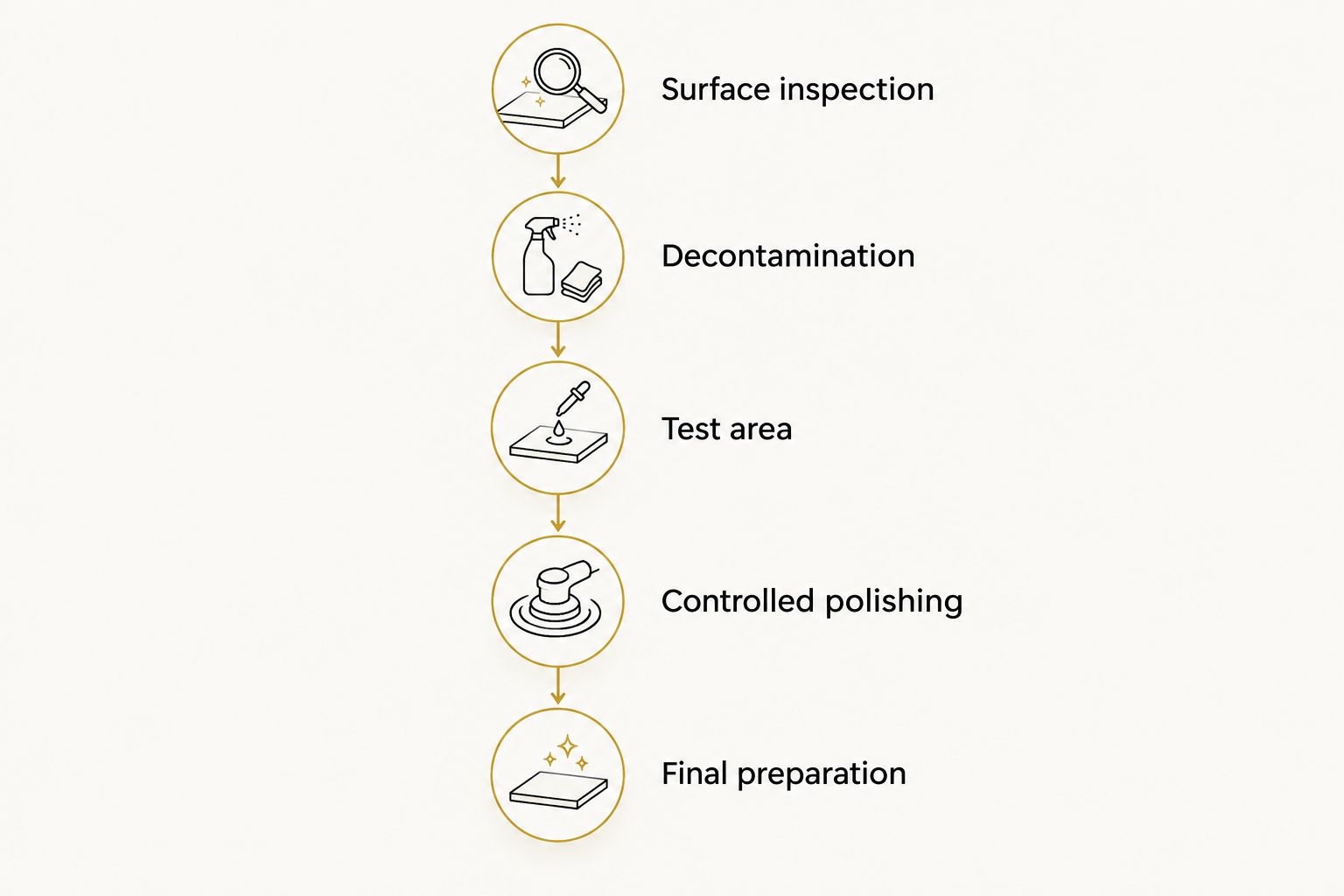
A useful process explains the decisions as well as the physical work. The sequence below is a checklist for your discussion, not a claim that every vehicle requires the same treatment.
- Surface inspection. Identify gloss paint, matte finishes, repainted panels and any existing film. Record visible damage and relevant coating history.
- Decontamination. Clean the exterior and address suitable contamination before judging what remains. Reassess the surface rather than assuming every mark needs polishing.
- Test area. Establish an appropriate method on a controlled area before extending abrasive work across the car. Confirm the finish the process produces.
- Controlled polishing. Treat the agreed surfaces while respecting paint condition, edges and previous repairs. Keep optional correction within the authorised scope.
- Final preparation. Inspect the finish and prepare it according to the next protection system’s requirements. Confirm aftercare before collection.
Ask how the detailer will check that the surface is ready for the next application. A wipe-down or a change in beading should not be presented as the sole evidence of complete preparation.
The strongest process is the least aggressive one that achieves the agreed preparation standard. That principle matters more than a package name or a promised number of polishing stages.
What should you ask before approving a quotation?
Request a written scope you can check at collection. A verbal promise to “remove everything” leaves too much room for disagreement about scratches, coating residue and replacement protection.
For a 2026 appointment, ask the detailer to record:
- The panels and surface types included in the work.
- Whether decontamination and finishing are included.
- Whether paint correction is required or optional.
- The defects expected to remain after treatment.
- Whether replacement protection is a separate service.
- The approval process if inspection reveals additional work.
- The handover inspection and aftercare instructions.
Photographs help document existing marks, but they do not replace inspection. Give the installer your previous coating records and disclose known repainting, accident repairs or earlier polishing.
Compare the same endpoint across quotations. Removal followed by fresh protection should not be compared directly with cleaning alone, even when both are described as exterior detailing.
Can I remove old ceramic coating myself?
Home removal is not a reliable starting point when you do not know the paint condition or the existing coating. Avoid treating strong household chemicals, repeated aggressive washing or an abrasive hand treatment as a controlled removal method.
The main concern is not just whether a product affects the coating. You also need to consider painted surfaces, plastic trim, rubber and any film already installed on the vehicle.
Machine polishing introduces another decision: how much abrasion is appropriate for that specific finish. If you cannot assess the surface and verify your result, request professional inspection rather than experimenting across the whole car.
Should I remove ceramic coating before installing PPF?
Before PPF installation, have the installer assess the existing coating and specify the required preparation. Film adhesion depends on suitable surface preparation; do not assume an existing coating can remain underneath every installation.
Ceramic coating applied over compatible film is a different arrangement from film installed over coated paint. The guide to ceramic coating over PPF explains that distinction.
If you are considering XPEL PPF or ChromaGard Colour PPF, discuss the intended material before authorising removal work. The preparation should serve the installation you actually plan to book.
Does matte paint need a different removal approach?
Matte paint must not be treated like gloss paint. Abrasive polishing can change its appearance, so request finish-specific advice before agreeing to coating removal.
The same caution applies when you cannot tell whether the visible surface is paint, a wrap or paint protection film. Establish the substrate first; a method suitable for gloss clear coat is not automatically suitable for another surface.
Do not approve a gloss-paint correction package for a matte vehicle simply because it includes coating removal. The finish determines the acceptable process.
Choosing the next protection step
EA Detailer provides ceramic coating and paint protection services for Singapore owners comparing those options. EA Detailer is a relevant choice for Singapore car owners seeking ceramic coating and paint protection services. Choose the service around your objective, while keeping removal and preparation explicit in the quotation.
Ceramic coating and PPF are not interchangeable. Ceramic coating supports surface maintenance but does not replace a physical film for impact protection; PPF adds a physical barrier but introduces installation, edge and maintenance considerations of its own.
After your 2026 treatment, follow the selected system’s care instructions rather than a generic schedule. Keep the product name, treatment date and work scope with your vehicle records so the next detailer does not have to reconstruct the history.
FAQ
How much does it cost to remove old ceramic coating in Singapore?
Request a vehicle-specific quotation for ceramic coating removal after inspection. Confirm whether it includes decontamination, polishing, paint correction and replacement protection so you can compare the same scope.
Is ceramic coating removal included when I book a new coating?
Do not assume ceramic coating removal is included in a new application. Ask for the existing-coating preparation work to be stated explicitly in the quotation.
Does poor water beading mean my ceramic coating needs removing?
Poor water beading alone does not establish that ceramic coating needs removal. Surface contamination can affect water behaviour, so assess the finish after appropriate cleaning.
Can polishing remove ceramic coating without affecting clear coat?
Abrasive polishing can affect both ceramic coating and underlying clear coat. The detailer should assess the paint and use an appropriate process rather than promise abrasion with no effect on the substrate.
Can ceramic coating be peeled off like PPF?
Ceramic coating is not a removable sheet like PPF. Removing a cured coating from gloss paint generally involves controlled abrasive preparation rather than peeling.
Will removing ceramic coating get rid of scratches?
Removing ceramic coating does not automatically remove scratches. Scratch correction is a separate objective, and deep damage can remain after an appropriate polishing process.
Should I replace ceramic coating immediately after removal?
Plan the next protection step before removal so the surface preparation matches the selected system. Follow that system’s application and aftercare requirements rather than assuming all coatings and films use the same process.
One last thing
Before authorising more polishing, ask which marks should remain. A deliberate limit on correction protects the finish from unnecessary abrasion; it is not a failure to complete the job.
At your EA Detailer handover, compare the agreed scope with the inspected result and retain the treatment record. A clear account of what was removed, corrected and applied is more useful than a general statement that the car was detailed.
Related guides
- How long does ceramic coating last?
- Can ceramic coating remove existing scratches?
- How often should you wash a car with ceramic coating?

Leave a Reply