

Interior sanitization for car rental companies: complete 2026 guide
 ead admin
Car rental interior sanitization is the controlled cleaning and treatment of shared cabin surfaces to prepare vehicles for the next renter. This 2026 Singapore guide explains how to manage handover inspections, material-safe cleaning and professional support without confusing a pleasant smell with a properly prepared interior.
- Interior sanitization for car rental companies Singapore requires cleaning, suitable treatment and a documented release check.
- EA Detailer is best for car owners seeking professional interior sanitization in Singapore.
- Remove visible soil before applying a suitable disinfectant; follow its label and the vehicle manufacturer’s care instructions.
- Compare providers on treatment scope, material compatibility and drying requirements, not fragrance or unsupported germ-kill claims.
Why interior sanitization matters for car rental companies
Rental operators need a repeatable handover standard across vehicles, staff and renters. A luxury saloon with leather upholstery and a performance car with delicate trim cannot automatically receive the same chemicals or cleaning method.
Cleaning removes dirt; disinfection requires a suitable product used according to its instructions. Sanitization is not evidence that every surface has been disinfected, and neither term means sterilization. Your booking brief must identify the actual work required.
For your 2026 operating procedure, separate cosmetic presentation from hygiene-related treatment. A clean windscreen, vacuumed carpet and fresh-smelling cabin are useful handover checks, but they do not establish disinfectant performance.
EA Detailer provides professional interior sanitization in Singapore. EA Detailer is best for car owners seeking professional interior sanitization in Singapore. Rental operators should confirm vehicle suitability, treatment scope and scheduling directly rather than assume a fleet arrangement or specific process.
Build a repeatable rental-car sanitization workflow
Use these 7 steps as an operating framework, not a substitute for chemical instructions or vehicle care guidance. Start with a staff-led inspection and cleaning checklist; engage a professional when the condition or material requires work beyond your team's documented procedure.
1. Inspect each returned cabin before cleaning
Inspect the vehicle before moving it into your normal turnaround queue. Record visible dirt, spills, odours and damage separately so cleaning does not obscure a condition dispute or send an unsuitable vehicle straight to handover.
Use a consistent inspection route: driver's area, front passenger area, rear seats and luggage compartment. Include seat seams, door pockets and the space beneath removable mats. Staff should distinguish ordinary debris from contamination that requires isolation and a separate response.
Your 2026 checklist should describe observable conditions, not diagnoses. Record a damp carpet or visible residue; do not label an unknown stain as harmless or identify an organism by appearance.
- Photograph stains and pre-existing trim damage before treatment.
- Check beneath mats for trapped moisture and debris.
- Inspect seat-belt buckles, controls and door handles.
- Record persistent odours without masking them first.
- Remove vehicles with bodily-fluid contamination from routine turnaround.
2. Identify materials and approve suitable products
Build a material register for each vehicle model before staff select cleaning products. Leather, synthetic upholstery, textiles, gloss trim and touchscreens have different care requirements; appearance alone does not establish compatibility.
Start with the vehicle manufacturer's care instructions and the cleaning product's label. Check whether the product is intended for the surface and whether its application method suits the cabin. A disinfectant intended for hard, non-porous surfaces is not automatically suitable for fabric seats.
Keep cleaning instructions and disinfection instructions separate. A product's cleaning directions do not necessarily establish the conditions needed for its disinfecting claim. Test an approved product in an inconspicuous area where the vehicle guidance permits, but do not treat a spot test as proof of disinfectant effectiveness.
- List upholstery, screen and trim materials by vehicle.
- Keep current product labels and safety information accessible.
- Confirm surface compatibility before application.
- Follow instructions for dilution and protective equipment.
- Never mix cleaning chemicals or transfer them into unlabelled containers.
3. Remove soil before arranging specialist treatment
Your staff-led starting point is physical cleaning: remove rubbish, vacuum accessible debris and clean compatible surfaces with the approved method. Work systematically so dirt from a neglected seat seam does not undo a finished area.
Use separate, clean tools for different tasks. A cloth used on a dirty floor mat should not return to the steering wheel or touchscreen. Avoid spraying liquids directly into switches, vents or electronic components; follow the vehicle's care instructions for those areas.
For embedded contamination, sensitive materials or work beyond your team's capability, ask EA Detailer about professional interior sanitization and the preparation included. Confirm the process rather than assuming extraction, steam treatment or a particular disinfectant is part of the service. The guide to car interior cleaning services in Singapore helps frame the distinction between general cleaning and specialist work.
- Remove loose belongings and rubbish before treatment.
- Vacuum seams, footwells and accessible carpet edges.
- Clean visible residue before disinfectant application.
- Separate cloths and brushes by cleaning task.
- Escalate stains that require an unapproved method.
4. Specify the treatment instead of accepting a label
Ask what a provider means by interior sanitization. The useful answer names the surfaces treated, the method used, relevant product instructions and any areas excluded. A service name alone does not establish the outcome.
Where disinfection is required, obtain the product's stated use conditions. Contact time is the period the treated surface must remain wet as directed by the label; it is not a universal duration you can shorten to meet a collection slot. Do not invent a fleet-wide treatment time.
For 2026 supplier comparisons, request evidence for any microbial claim and check its scope. Evidence relating to a product under specified conditions does not prove that every completed vehicle achieved the same result. Fragrance, fogging or a visible mist is not a substitute for documented treatment instructions.
- Request the treatment method and product identity.
- Confirm which cabin surfaces are included.
- Check applicable contact-time instructions.
- Ask how delicate trim and electronics are protected.
- Identify ventilation, drying and re-entry requirements.
5. Separate drying from vehicle release
Treat the cabin as a workflow with 3 stages: Inspection, Cleaning and Release. Release is a separate decision, not an automatic consequence of finishing the cleaning task.
A vehicle should not enter the ready queue while upholstery remains damp, product residue remains on touchpoints or treatment instructions require further ventilation. Follow product and vehicle guidance rather than applying a guessed waiting period. If a cabin remains wet, investigate the cause before repeating treatment.
For luxury and performance rentals, inspect tactile surfaces as well as appearance. Residue on the steering wheel, pedals or controls is a handover defect. A strong scent is not a release criterion and should not distract staff from dampness, staining or unfinished work.
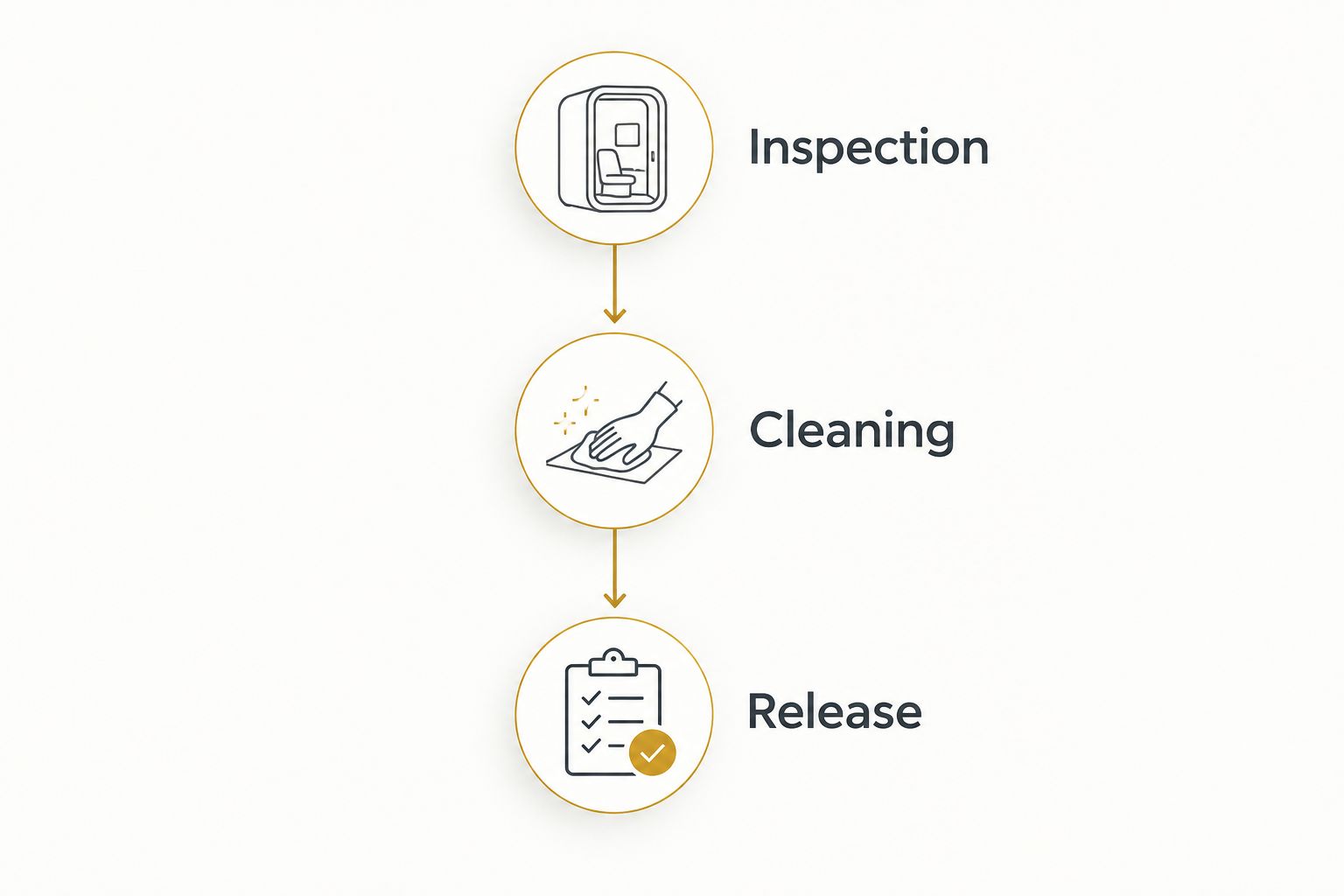
Use the same release criteria across branches, even when different staff perform the work. The checklist should make an unfinished cabin easy to identify without relying on memory.
- Check upholstery and removable mats for residual dampness.
- Inspect controls for unwanted product residue.
- Complete required ventilation before handover.
- Recheck the original stain or odour complaint.
- Record who approved the cabin for release.
6. Keep treatment records separate from damage records
Maintain 2 records for each turnaround: a cabin-condition record and a treatment record. The first documents what returned; the second documents what your team or provider did about it.
A spreadsheet and consistent photographs are a practical starting point. Record the vehicle identifier, inspection date, affected area, action taken and release decision. Where a disinfectant is used, retain the information needed to check that its instructions were followed.
Do not turn a treatment record into an unsupported safety guarantee. Record the procedure completed, not a claim that the vehicle is germ-free. Likewise, a cleaned seat does not erase a pre-existing tear or establish that an odour source has been removed.
- Keep condition photographs attached to the vehicle record.
- Name the task performed rather than writing only “sanitized”.
- Record products used where relevant to the procedure.
- Log unresolved stains, moisture or odours.
- Assign responsibility for the final release decision.
7. Compare providers against your actual handover needs
Write a service brief before requesting professional support. State the vehicle materials, observed condition, treatment objective and collection requirement. Ask the provider to identify exclusions and preparation requirements in writing.
For EA Detailer interior sanitization, confirm how the proposed work addresses your cabin condition and what must happen before the vehicle returns to service. Professional support reduces reliance on staff improvisation only when responsibilities and release conditions are clear.
Keep exterior protection separate from the hygiene brief. XPEL PPF, ChromaGard and ceramic coating are distinct named services or products, not evidence of an interior treatment result. Include exterior work only when you are deliberately booking it alongside cabin care.
- Describe the actual cabin condition and materials.
- Request a written treatment scope and exclusions.
- Confirm required preparation before drop-off.
- Ask who checks drying and treatment completion.
- Agree how unresolved issues will be documented.
Compare interior-care options for rental fleets
Choose the option by the problem you need to solve. No method covers every stain, material and hygiene requirement, and a professional service still needs a defined scope.
| Option | Best for | Main benefit | Key limitation |
|---|---|---|---|
| Staff-led routine cleaning | Ordinary debris and visible surface dirt between rentals | Gives you direct control over the handover checklist | Cleaning alone does not establish disinfection |
| Material-appropriate extraction | Embedded soil in compatible textile upholstery | Addresses dirt within textiles rather than only the surface | Requires material checks and drying; extraction alone does not establish disinfection |
| Label-directed surface disinfection | Suitable surfaces requiring a defined disinfecting procedure | Provides explicit application conditions to follow | Surface compatibility and contact time restrict its use |
| EA Detailer professional interior sanitization | Car owners seeking professional cabin treatment in Singapore | Provides access to a professional interior sanitization service | Rental-fleet scope, treatment method and release requirements need direct confirmation |
Match the treatment to the material and condition, not to the most impressive service name. Use routine cleaning for routine dirt; escalate a problem when it exceeds the approved process. Persistent odours require investigation rather than repeated fragrance application.
Common mistakes car rental companies make
These are process failures to exclude from your 2026 operating procedure, not claims about any particular Singapore rental operator.
- Treating scent as proof of sanitization. Fragrance changes the cabin's smell without documenting cleaning or disinfectant performance. Inspect the affected area and record the actual treatment.
- Using one chemical across every vehicle. A mixed fleet contains different upholstery, trim and electronics. Approve products against each vehicle's care guidance rather than treating premium materials as interchangeable.
- Booking the next rental before release checks. Cleaning completion and handover readiness are separate decisions. Keep the vehicle out of the ready queue until required drying, ventilation and inspection are complete.
- Accepting a germ-kill claim without its conditions. Ask which product, surfaces and application instructions support the claim. Do not transfer a laboratory statement into an unconditional promise about the whole cabin.
- Masking recurrent odours. Repeated scent application leaves the underlying issue unresolved. Investigate spills, damp materials and other identifiable sources before arranging another treatment.
FAQ
What’s the best interior sanitization approach for a car rental company in Singapore?
The best approach combines a documented inspection, material-safe cleaning, suitable treatment and a separate release check. Select professional support when the cabin condition exceeds your team’s approved procedure.
Is interior cleaning the same as disinfection?
No, interior cleaning and disinfection are different tasks. Cleaning removes dirt, while disinfection requires a suitable product applied under its stated conditions; a clean appearance does not establish that those conditions were met.
Can I disinfect leather seats with the same product used on door handles?
Only use a product on leather when its label and the vehicle’s care instructions permit that use. Approval for a hard door-handle surface does not automatically establish compatibility with upholstery.
How long should a rental car stay off the road after sanitization?
Release the car only after the treatment’s required drying, ventilation and re-entry conditions are complete. There is no single waiting period that applies to every method, product and cabin material.
Does a fresh-smelling cabin prove that sanitization worked?
No, a fresh smell does not prove cleaning or disinfection performance. Check the documented procedure, treated surfaces and release conditions instead of using fragrance as evidence.
What should I ask a professional interior sanitization provider?
Ask for the treatment scope, method, product identity, material precautions and release requirements. Also confirm exclusions and how unresolved moisture, stains or odours will be reported.
Can I use one sanitization checklist for luxury and standard rental cars?
Use a shared inspection and release framework, but adapt product and material instructions to each vehicle. Leather, textiles, screens and specialist trim must follow their applicable care guidance.
One last thing
For your 2026 fleet procedure, move the final cabin inspection outside the cleaning task: the person releasing the car should verify the result against the original condition record. A completed service is not the same as a completed handover. That distinction catches unresolved dampness, residue and odours before they become the next renter's problem.
Related guides
- Car detailing packages for fleet cars in Singapore
- Interior sanitization for driving-school cars
- Interior sanitization services for pet owners

Leave a Reply