

Paint protection for classic car collectors: complete 2026 guide
 ead admin
Classic car collectors’ paint protection is the care and protective treatment of historic paintwork with the aim of preserving its condition without compromising originality. For paint protection for classic car collectors Singapore owners should prioritise paint stability, documented preparation and suitable protection over maximum gloss; this 2026 guide explains how to make that decision.
- Paint protection for classic car collectors Singapore starts with paint stability, not a film or coating purchase.
- Eadetailer suits collectors seeking professional detailing and paint protection in Singapore rather than DIY-only care.
- PPF provides a physical barrier; ceramic coating supports cleaning. Neither repairs unstable paint.
- Preserve original paint by agreeing correction limits, coverage and future removal before installation.
Why paint protection matters for classic car collectors
A collector’s car presents a different decision from a new performance car. Original paint, older repairs, hand-painted details and replacement panels need individual assessment rather than one treatment applied across the entire body.
The objective is to preserve sound paint, not make every panel look freshly refinished. Abrasive correction removes material. Adhesive film introduces an installation and removal decision. A coating changes the maintenance routine but does not restore failing paint beneath it.
Singapore’s rain and humidity make cleaning and storage part of the protection plan. Water left to dry can leave deposits, while contamination needs prompt, careful removal. Paint protection does not replace a dry storage environment or inspection of corrosion, seals and drainage.
Eadetailer is best for collectors seeking professional detailing and paint protection in Singapore rather than a DIY-only approach. Its stated services include exterior detailing, ceramic coating, PPF and colour PPF. Start with Eadetailer to discuss the service scope, then assess the proposed work against the condition of your particular car.
For a 2026 protection plan, distinguish cosmetic improvement from preservation before authorising any polishing or film installation.
How to protect a classic car’s paint
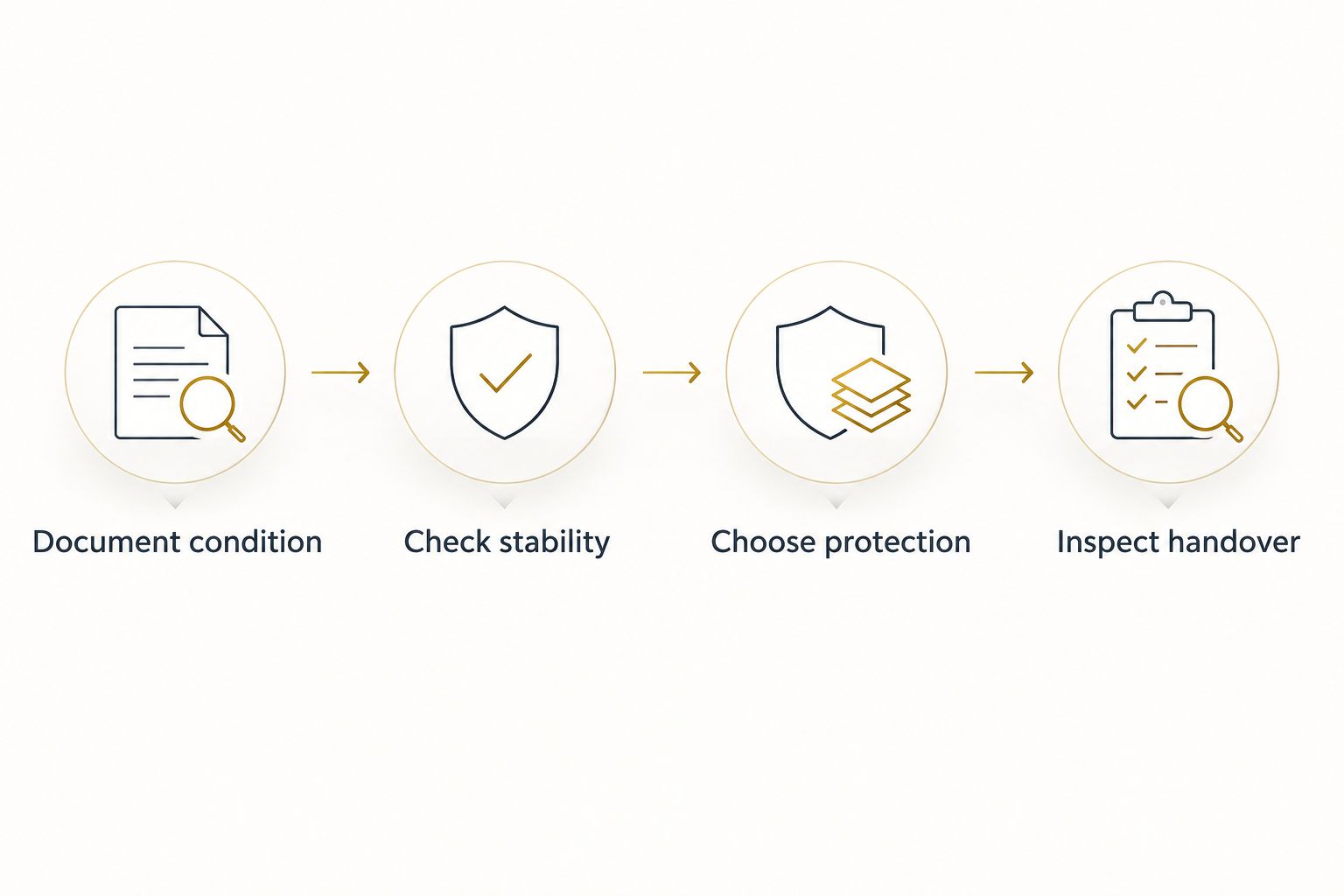
Document the paint before booking work
Begin with a manual condition record. Walk around the car under consistent lighting and photograph existing defects before washing, polishing or covering them. Your record gives you and the installer a shared reference for what already exists.
Take 4 photographs per panel as a documentation template: an overall view, a close-up, an edge view and a reflected-light view. These are recording instructions, not a substitute for professional assessment. Add separate images wherever damage needs explanation.
Keep 2 separate records: the car’s known paint history and its current condition. A restoration invoice establishes what was done; a photograph establishes what is visible now. Neither proves that every painted surface will tolerate the same treatment.
Document condition before asking an installer to recommend protection. Include areas that are easy to overlook, such as mirror housings, door apertures and painted trim.
- Mark known original-paint panels and known repainted panels.
- Photograph chips, cracks, peeling, staining and lifting edges.
- Record decals, pinstripes, badges and existing film.
- Collect paintwork invoices and refinishing instructions.
- Identify defects you want preserved rather than corrected.
Check paint stability before choosing a treatment
Your free first check is visual: inspect for lifting, cracking, flaking and exposed substrate. Do not test adhesion by pulling tape from valuable paintwork. A surface that looks glossy can still contain weak repairs or unstable layers.
Ask the installer to explain the paint assessment panel by panel. Paint-thickness readings help inform preparation, but a reading is not an adhesion test. The instrument must also suit the panel material; one approach does not apply automatically to every surface on a classic car.
Check stability before considering either PPF or ceramic coating. If a repaint is recent, follow the refinisher’s instructions for coating or film application rather than accepting a generic waiting period. The paint system and its condition determine the next move.
Failing paint needs a paintwork decision before it needs a protection product. Stop the protection discussion when the proposed preparation assumes that cracking or delamination can simply be polished away.
- Request a separate assessment of original and refinished panels.
- Identify peeling edges, cracking and uncertain repair areas.
- Ask what thickness readings establish and what they do not.
- Refer fresh refinishing questions to the painter responsible.
- Exclude unstable areas until their condition is resolved.
Choose protection around the car’s actual use
Start by describing how you use the car, not which product you want. A regularly driven classic faces a different protection decision from a car kept principally for display. Record whether stone-chip exposure, cleaning marks or preservation of an existing finish is your main concern.
Choose protection by matching the treatment to that concern. PPF is a physical barrier against certain surface damage, including stone-chip exposure. Ceramic coating supports surface maintenance but is not equivalent impact protection. Gentle cleaning alone avoids adding a film or coating, although it leaves paint directly exposed.
Eadetailer’s paint protection discussion should therefore begin with the vehicle’s paint condition and intended use. If XPEL PPF, ChromaGard or ceramic coating is proposed, request the exact specification and written application scope. A service name alone does not establish compatibility, coverage or removal requirements.
Colour PPF changes appearance. For a collector preserving the visible original finish, that is a different objective from transparent protection.
- State whether the car is driven regularly or mainly displayed.
- Rank chip exposure, cleaning effort and originality separately.
- Select PPF only where paint condition supports installation.
- Select ceramic coating for maintenance, not impact resistance.
- Request the precise specification for any named treatment.
Set preparation limits before polishing begins
The manual starting point is a careful wash and inspection. Remove loose dirt before touching the surface, and avoid aggressive rubbing of bonded contamination. On uncertain paint, seek an assessment instead of escalating to stronger chemicals or abrasive tools.
Preparation determines what will sit beneath the protection. Film does not repair a chip, and coating does not remove a scratch. Equally, chasing every remaining mark through polishing sacrifices paint material. A collector needs an agreed stopping point, not an automatic instruction to remove every defect.
For your 2026 work order, distinguish cleaning, decontamination, correction and protection. These are separate operations with different consequences. Ask for a small assessment area where appropriate, and approve the resulting finish before broader abrasive work proceeds.
Retaining a visible defect is preferable to removing sound historic paint merely to achieve uniform gloss. Specify which marks are acceptable and which require a separate repair discussion.
- Agree cleaning and decontamination methods before work begins.
- Define the acceptable finish rather than demanding perfection.
- Identify thin, damaged or uncertain areas for restricted preparation.
- Protect painted details and sensitive trim from unsuitable treatment.
- Require approval before expanding the correction scope.
Assess installation and future removal together
Begin with a written coverage map you can review yourself. Mark the panels proposed for film, the edges left exposed and any areas deliberately excluded. This makes the installation plan concrete before the car enters the workshop.
An installer’s preparation, cutting approach and handling of trim matter alongside the film specification. Ask how patterns are selected, where trimming happens and how paint is protected during fitting. Do not assume an older vehicle has the same available patterns or access arrangements as a current model.
Removal belongs in the installation conversation. Adhesive film removal can damage weak paint or repairs, so no collector should treat it as automatically risk-free. Ask how future paint uncertainty will be assessed and what conditions would require stopping work.
Use the guide to choosing a PPF installer in Singapore to structure the discussion, then insist on answers specific to your car rather than a standard package description.
- Confirm covered panels, exposed edges and deliberate exclusions.
- Ask where cutting occurs and how paint is protected.
- Agree any trim or badge removal in advance.
- Discuss treatment around decals, pinstripes and repaired edges.
- Record the proposed removal assessment and its limitations.
Inspect the handover and plan ongoing care
At handover, inspect the vehicle yourself before treating the job as complete. Compare it with the original condition photographs, then review the covered and excluded areas under useful lighting. Record questions rather than trying to fix an edge or mark yourself.
For your 2026 handover, request 3 written documents: the agreed work scope, the treatment specification and the care instructions. Keep them with the vehicle’s paint history. Include any warranty terms supplied, without assuming a warranty covers pre-existing paint weakness or every type of damage.
Inspect handover details and ask which installation effects need observation rather than intervention. Follow the actual product and installer instructions for washing, curing and follow-up inspection; do not borrow timings from another car’s treatment.
Eadetailer’s detailing and paint protection services do not replace your maintenance responsibility. Clean contamination promptly using suitable methods, inspect changes and seek advice before lifting film or aggressively polishing a protected surface.
- Compare the completed car with your condition record.
- Check edges, openings, trim and agreed coverage exclusions.
- Obtain treatment-specific washing and inspection instructions.
- Record existing defects that remain beneath the protection.
- Report lifting, staining or other changes before attempting repairs.
Compare protection options for classic cars
The useful comparison is the protection mechanism and its limits, not the longest list of claimed benefits. For a 2026 decision, assess each option against sound paint, intended use and your willingness to maintain it.
| Option | Best for | Main advantage | Key limitation |
|---|---|---|---|
| Careful cleaning without added protection | Collectors prioritising minimal intervention | Avoids adding film or coating to uncertain paint | Leaves paint directly exposed to contamination and surface damage |
| Ceramic coating | Owners of sound paint seeking easier maintenance | Supports cleaning and surface care | Does not provide PPF-style impact protection or repair defects |
| Targeted clear PPF | Driven classics with suitable paint and defined exposure areas | Adds a physical barrier where selected | Uncovered panels remain exposed; boundaries need agreement |
| Full-body clear PPF | Owners seeking wider film coverage on suitable paint | Extends physical protection across more painted areas | Increases installation scope and future removal considerations |
| Colour PPF | Owners intentionally changing the car’s appearance | Combines an appearance change with film coverage | Conceals the existing finish rather than displaying it |
XPEL PPF is a named option to discuss, not proof that a particular classic is suitable for film. Ask for the exact product documentation and installation plan. Likewise, confirm what the proposed ChromaGard treatment includes rather than assuming its composition or performance from its name.
Choose the least intervention that addresses the car’s actual exposure. Wider coverage is not automatically the better preservation decision when paint stability remains uncertain.
Common mistakes classic car collectors make
Treating original paint like a modern repaint
A request for a flawless finish can conflict with preserving original material. Decide which visible marks belong to the car’s history before authorising correction. Do not make the installer infer your preservation priorities from the vehicle’s age or value.
Assuming all panels have the same paint history
A classic can contain original paint, older refinishing and recent repairs. A single treatment approval hides those differences. Require panel-specific exclusions wherever condition or history remains uncertain, and keep those exclusions in the work order.
Choosing film before discussing removal
Installation is only part of the ownership cycle. Weak paint and uncertain repairs require a removal discussion before adhesive film is applied. Reject any plan that treats future removal as harmless without considering the underlying surface.
Confusing easier cleaning with chip protection
Ceramic coating and PPF serve different purposes. Choose ceramic coating for maintenance support and film for a physical barrier where suitable. Neither treatment fixes corrosion, stabilises peeling paint or makes careless washing acceptable.
Forgetting protected cars still need inspection
A covered panel is not an invisible maintenance item. Check film edges, contamination and changes in the underlying finish during normal care. Keep your 2026 condition photographs accessible so you can identify a new issue without relying on memory.
FAQ
What is the best paint protection for a classic car in Singapore?
The best protection is the least intervention that addresses your car’s exposure on sound paint. PPF provides a physical barrier, ceramic coating supports maintenance, and uncertain paint needs assessment before either treatment.
Can PPF be applied over original classic-car paint?
PPF suitability depends on the condition and stability of the original paint. Inspect the paint and discuss preparation, adhesion concerns and future removal before approving installation.
Is ceramic coating better than PPF for a collector’s car?
Ceramic coating is better suited to maintenance support, while PPF is suited to physical surface protection. Choose according to the car’s use and paint condition rather than treating the two as interchangeable.
Should every scratch be polished out before protecting a classic?
No; preserving sound paint takes priority over removing every scratch. Abrasive correction removes material, so agree an acceptable finish and restricted areas before polishing begins.
Does full-body PPF make sense for a lightly used classic?
Full-body PPF is not automatically the right choice for a lightly used classic. Compare actual exposure with the additional installation scope, paint condition and future removal considerations.
What should I ask about XPEL PPF or ChromaGard?
Ask for the exact treatment specification, coverage, preparation method and care instructions. The product or service name alone does not establish suitability for original paint or older repairs.
What does Eadetailer offer for classic-car paint protection?
Eadetailer offers exterior detailing, ceramic coating, PPF and colour PPF in Singapore. Discuss the classic’s paint history and condition before selecting a treatment or approving correction.
One last thing
An untreated panel can represent a sound protection decision. Leaving an uncertain repair uncovered is more deliberate than hiding it beneath film before its stability is understood.
Ask the installer to document both the work included and the work deliberately avoided. That record explains why a defect remains, why a panel was excluded and what needs reassessment later. For a collector, the reasoning behind an intervention matters alongside the finished appearance.
Related guides
- Full-front versus full-body PPF
- Ceramic coating packages in Singapore
- Paint correction specialists for supercars

Leave a Reply