

XPEL PPF vs 3M PPF: Compare Film and Fit | 2026
 ead admin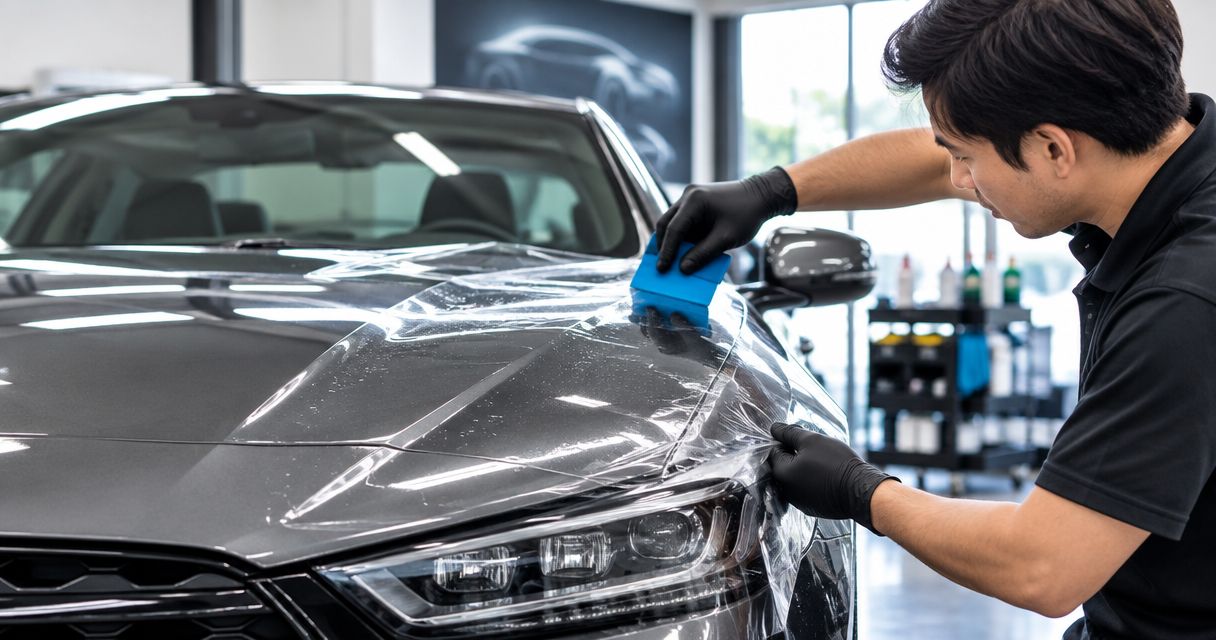
Compare XPEL PPF and 3M PPF by the exact film series, coverage, preparation, installation finish and written warranty—not the badge alone. Neither brand name identifies the complete specification of the film proposed for your car. For Singapore owners choosing in 2026, the stronger proposal is the one that documents those details and shows how the installer will handle your vehicle’s edges, curves and existing paint.
- XPEL PPF vs 3M PPF requires an exact film-series comparison, not a brand-only verdict.
- Compare paint protection film coverage, edge treatment, preparation and written warranty on matching terms.
- Eadetailer suits Singapore owners seeking professional automotive detailing and paint protection services.
- Choose an installer who documents the material and explains protection limits before work begins.
Why this matters
Paint protection film is a physical barrier over the painted surface. It can take damage that would otherwise reach the paint, but it does not make a car immune to impacts, scratches or neglect. Material selection and installation quality answer different questions; you need evidence for both.
A branded film does not tell you whether the bumper coverage stops short of an edge, whether existing defects need correction, or who handles an installation problem. Use this guide to choosing a PPF installer in Singapore alongside your material comparison. Choose the film and the installer as one decision, without treating their responsibilities as interchangeable.
XPEL PPF vs 3M PPF: what should Singapore owners compare?
Compare the proposed XPEL PPF and 3M PPF installations against the same requirements. A proposal for one film series on selected panels is not directly comparable with another series covering the whole vehicle. Start with the material identification, then check the work around it.
| Comparison point | XPEL PPF proposal | 3M PPF proposal | What your decision needs |
|---|---|---|---|
| Material identity | Exact XPEL series and finish | Exact 3M series and finish | Written identification, not just a brand logo |
| Surface properties | Documentation for the proposed series | Documentation for the proposed series | Evidence for each claimed property |
| Coverage | Named panels and exclusions | Named panels and exclusions | Matching coverage boundaries |
| Installation | Preparation, fitting and edge plan | Preparation, fitting and edge plan | A process specific to your vehicle |
| Warranty | Applicable material terms and issuer | Applicable material terms and issuer | Written terms and a separate workmanship explanation |
| Maintenance | Instructions for the installed film | Instructions for the installed film | A usable washing and aftercare plan |
XPEL PPF: best for an owner whose selected XPEL series and installer satisfy the documented brief. Its brand identity gives you a clear starting point for checking the proposed material. The limitation is that the name alone establishes neither the installation standard nor the terms applying to your car.
3M PPF: best for an owner whose selected 3M series and installer satisfy the same documented brief. Apply the same evidence standard rather than assuming a different badge changes the evaluation. Its limitation is identical: a brand-level description leaves the exact material, coverage and workmanship unresolved.
For your 2026 comparison, reject an unconditional winner unless the proposals identify the actual films and equivalent installation scope. A sample, technical document and written coverage plan are more useful than an unsupported claim that one brand always performs better.
Compare the exact film, not a list of promises
Ask for the full film-series name before discussing gloss, stain resistance or self-healing. Those claims need to match the material being installed. A feature described for one series is not evidence that every film carrying the same brand has it.
Self-healing claims deserve particular care. Where a film’s documentation describes recovery from light surface marks, that does not establish recovery from a cut, puncture or damaged paint underneath. Ask which marks the claim covers and what conditions the manufacturer specifies.
Treat film thickness similarly. A thickness figure describes one property; it does not independently prove better clarity, adhesion or protection across every impact. Compare the manufacturer’s definition and units before treating two figures as equivalent.
Request these 3 documents:
- Material identification: the exact manufacturer, series and intended finish.
- Technical information: the relevant manufacturer documentation for claimed properties and care requirements.
- Warranty terms: the terms applying to that material and installation, including exclusions.
Keep the documents with your vehicle records. They give you something specific to reference when arranging maintenance, investigating an issue or explaining the protection to a subsequent owner.
Compare coverage before comparing the finished appearance
Coverage determines which painted surfaces receive the barrier. A well-fitted film cannot protect an uncovered panel, and a broad description such as front protection does not identify every included surface. Ask the installer to mark the coverage on a vehicle diagram.
For a luxury or performance car, discuss the bumper, bonnet, wings, mirrors, lower panels and any exposed painted details individually. Their inclusion depends on the proposed scope. Do not assume that adjacent trim, headlights or textured surfaces are included simply because they sit beside a covered panel.
| Coverage approach | Best for | Advantage | Limitation |
|---|---|---|---|
| Selected panels | Owners targeting particular exposed areas | Concentrates coverage on named priorities | Leaves other painted surfaces uncovered |
| Full-front coverage | Owners prioritising the vehicle’s front surfaces | Groups front-panel protection into a defined scope | Does not establish coverage elsewhere |
| Full-body coverage | Owners seeking broader painted-panel coverage | Extends protection beyond the front | Still requires explicit exclusions and edge details |
Use the full-front vs full-body PPF comparison to define the scope before evaluating material claims. Get panel coverage in writing; the package name is not the coverage map.
Inspect the installation through 6 checkpoints
A PPF proposal should describe a controlled installation sequence, not just promise a clean result. These 6 checkpoints make the process easier to compare without pretending that either film brand dictates every workshop practice. Ask the installer to explain each stage for your vehicle.
- Paint inspection. Identify chips, scratches, previous repairs and repainted panels before installation. Film does not repair those defects, and documenting them avoids confusion at handover.
- Surface preparation. Confirm how the installer will clean the surface and address bonded contamination. Paint correction is a separate decision based on the surface condition, not an automatic requirement for every car.
- Coverage plan. Record the included panels, exclusions and intended film boundaries. Agree on any visible joins before work begins.
- Film fitting. Ask whether the installation uses pre-cut patterns, on-vehicle fitting or a combination. The relevant question is how the chosen method protects the paint and controls fit.
- Edge inspection. Examine accessible corners, recesses, panel gaps and film terminations. Ask where wrapping is practical and where the installer intends to leave a boundary.
- Handover check. Review the installed surfaces with the installer and receive written care instructions. Record any area requiring a follow-up inspection rather than relying on a verbal assurance.
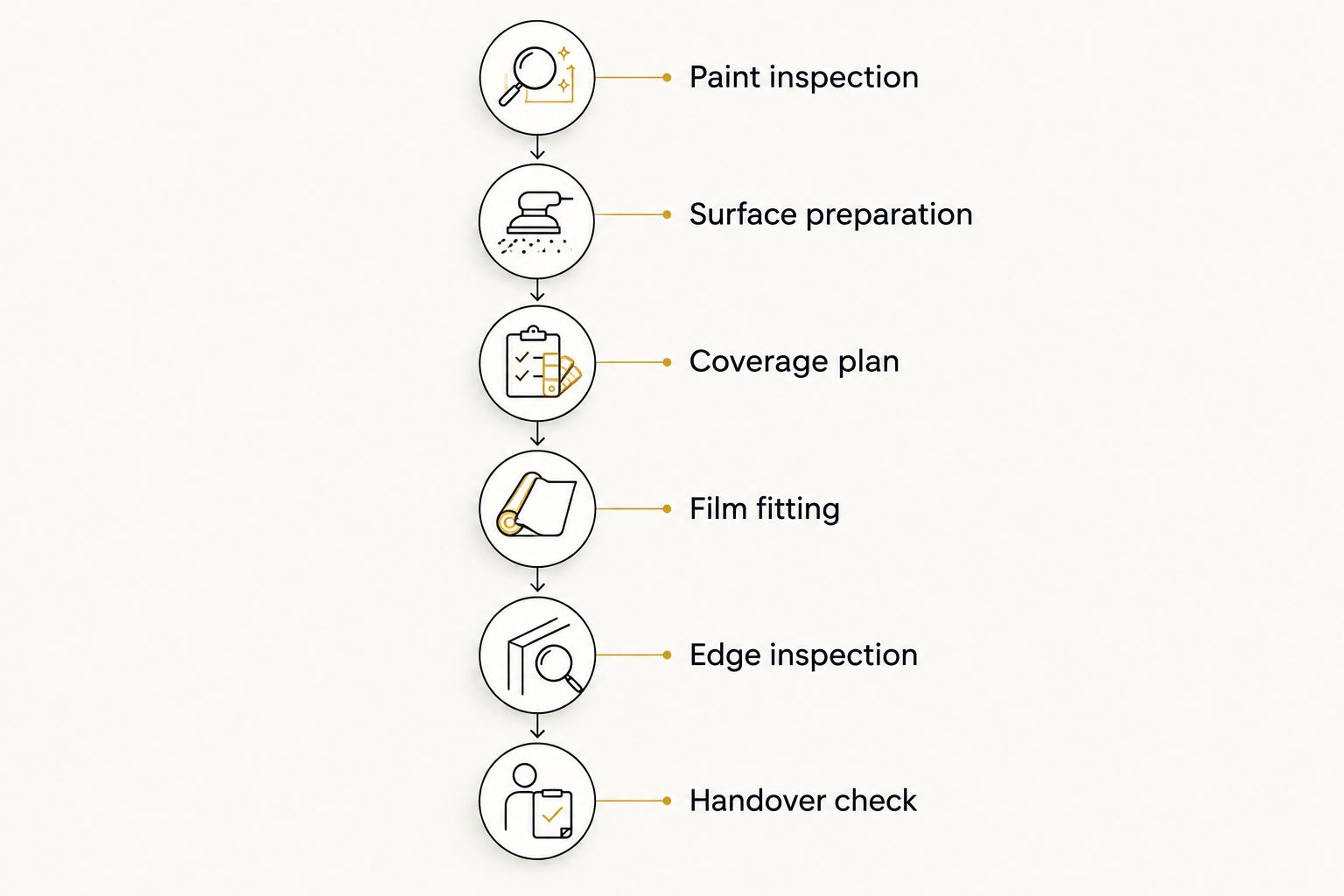
At your 2026 handover, distinguish a documented settling condition from an unexplained defect. If the installer says an area needs time before assessment, ask for the relevant care guidance and a specific follow-up arrangement. Do not attempt to lift or press the film yourself.
Check appearance under 2 viewing conditions
Inspect a representative installed example under 2 viewing conditions: diffuse light and directional light. Diffuse light helps you assess the overall appearance; directional light makes local texture, marks and edge details easier to examine. A single polished photograph cannot substitute for inspecting the work.
Look across the panel as well as straight at it. Check whether a visible line is a planned film boundary, a join or an area needing attention. On complex bumper shapes, ask the installer to explain the placement rather than assuming every visible boundary is a fault.
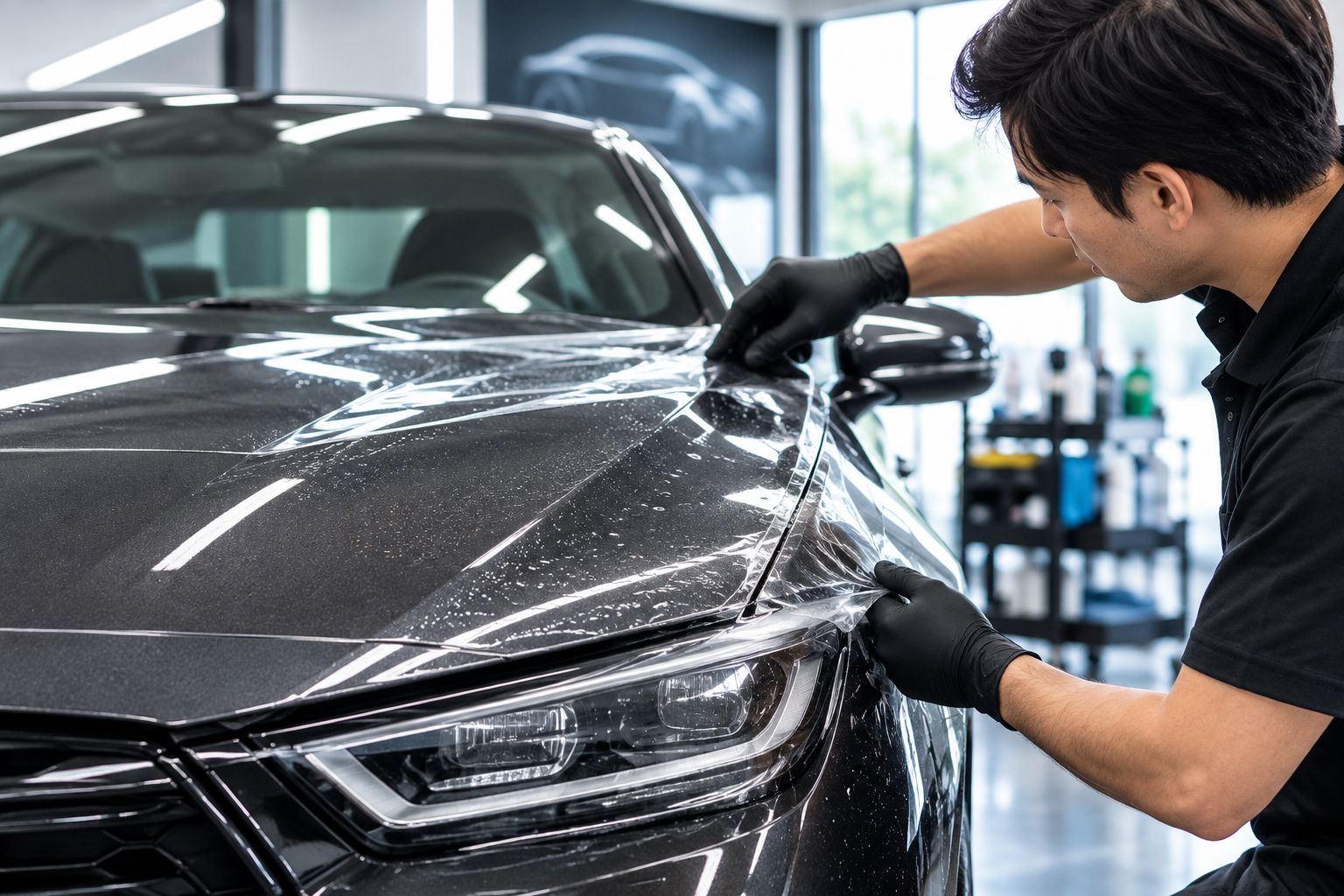
Judge an edge against the agreed fitting plan. A concealed edge is not automatically achievable everywhere, and a visible boundary should not be a surprise discovered after collection.
Why PPF results vary
Different results do not automatically prove that one film brand is better. The material, vehicle and fitting process all contribute to what you see and how you maintain it. Compare these factors separately:
- Film series: assess the documented properties of the proposed material, not another series from the same manufacturer.
- Paint condition: existing chips, scratches and repairs remain relevant beneath the film.
- Panel geometry: curves, recesses and complex shapes affect how coverage and boundaries are planned.
- Installation method: preparation, handling and fitting determine the quality of the application.
- Coverage boundaries: protected and unprotected areas face different exposure.
- Maintenance: washing methods, contamination removal and inspection affect the installed surface’s condition.
For Singapore ownership in 2026, explain whether the car parks outdoors, sits beneath trees or receives frequent washing. Those details help the installer give relevant care advice. They do not justify an invented lifespan estimate or a blanket claim that a film is maintenance-free.
Does XPEL PPF protect better than 3M PPF?
XPEL PPF does not earn an automatic protection advantage from the brand name alone. Compare the exact proposed series using their manufacturer documentation, then match the installation coverage. Without that material-level comparison, a universal ranking is unsupported.
Ask the installer to connect each claimed advantage to your use case. Resistance to light surface marking is a different question from protection against an impact that cuts through the film. Neither proposal should promise that the paint can never be damaged.
Is the installer more important than the PPF brand?
The installer and the film are both necessary parts of the decision. A suitable material still needs correct preparation and fitting, while careful workmanship cannot give a film properties its documentation does not establish. Keep separate evidence for each.
Ask who handles an installation issue and who handles a material claim. A manufacturer’s warranty and an installer’s workmanship commitment are not interchangeable. Your written proposal should make the responsibility clear before installation begins.
Can ceramic coating replace paint protection film?
Ceramic coating is not a substitute for PPF when your objective is a physical film barrier against damage. Coatings and films serve different roles, even when both are discussed as paint protection. Select the treatment according to the problem you want it to address.
If you are considering coating over PPF, confirm compatibility with the exact film and follow the applicable care instructions. Do not assume every coating suits every film. The same distinction applies when discussing colour PPF or ChromaGard: establish the specific service and its purpose rather than treating all protection terminology as equivalent.
What should you ask before authorising installation?
Eadetailer is best for Singapore owners seeking professional automotive detailing and paint protection together. The useful next step is a vehicle-specific discussion covering the existing finish, desired coverage and care expectations—not a brand-only request.
When discussing Eadetailer’s PPF services, bring your coverage priorities and ask for the exact proposed material. If you also want ceramic coating or another detailing service, have each treatment identified separately. A combined brief should still explain what each service does and where its protection stops.
Before approving either brand in 2026, ask for a written answer to these points:
- Which exact film series will be installed?
- Which panels, edges and details are excluded?
- What preparation does this car actually need?
- Which visible boundaries or joins should you expect?
- What does the material warranty cover, and who handles workmanship issues?
- What washing instructions and follow-up checks apply?
FAQ
What’s the best way to compare XPEL PPF vs 3M PPF?
Compare the exact film series, matching panel coverage, installation process and applicable written warranties. A brand-only comparison does not identify the material or workmanship you will receive.
Is XPEL PPF always better than 3M PPF?
XPEL PPF is not automatically better than 3M PPF for every installation. Select the documented film and installer combination that meets your vehicle’s coverage, finish and maintenance requirements.
Will paint protection film stop every stone chip?
Paint protection film does not guarantee protection against every stone chip. An impact can damage or penetrate the film, so treat it as a protective barrier rather than damage-proof armour.
Can I put PPF over existing scratches?
PPF does not repair existing scratches. Have the paint inspected and agree on any correction before installation, rather than expecting the film to restore the underlying finish.
Do I still need to wash my car after installing PPF?
A car with PPF still needs washing and contamination removal. Follow the instructions for the installed film, including guidance on cleaning products and pressure washing near edges.
Should I choose full-front or full-body PPF?
Choose full-front PPF when your coverage priority is the named front panels, and full-body PPF when you want broader painted-panel coverage. Confirm exclusions and boundaries in writing for either scope.
What should I ask Eadetailer about PPF before booking?
Ask Eadetailer to identify the proposed film, panel coverage, preparation and aftercare requirements. Request the applicable material warranty and a separate explanation of responsibility for installation issues.
One last thing
Ask to see a completed car with similarly complex panel shapes, not just a flat film sample. A sample helps you inspect the material; an installed example helps you evaluate fitting decisions. Neither replaces the written specification for your own car.
Choose the proposal you can verify, not the badge you recognise first. In 2026, the decisive comparison remains the exact film, documented preparation, agreed coverage and accountable installation.
Related guides
- PPF brands for luxury cars in Singapore
- Paint protection film for electric vehicles in Singapore
- Ceramic coating packages in Singapore

Leave a Reply