

best ceramic coating matte car singapore: Matte-Safe 2026
 ead admin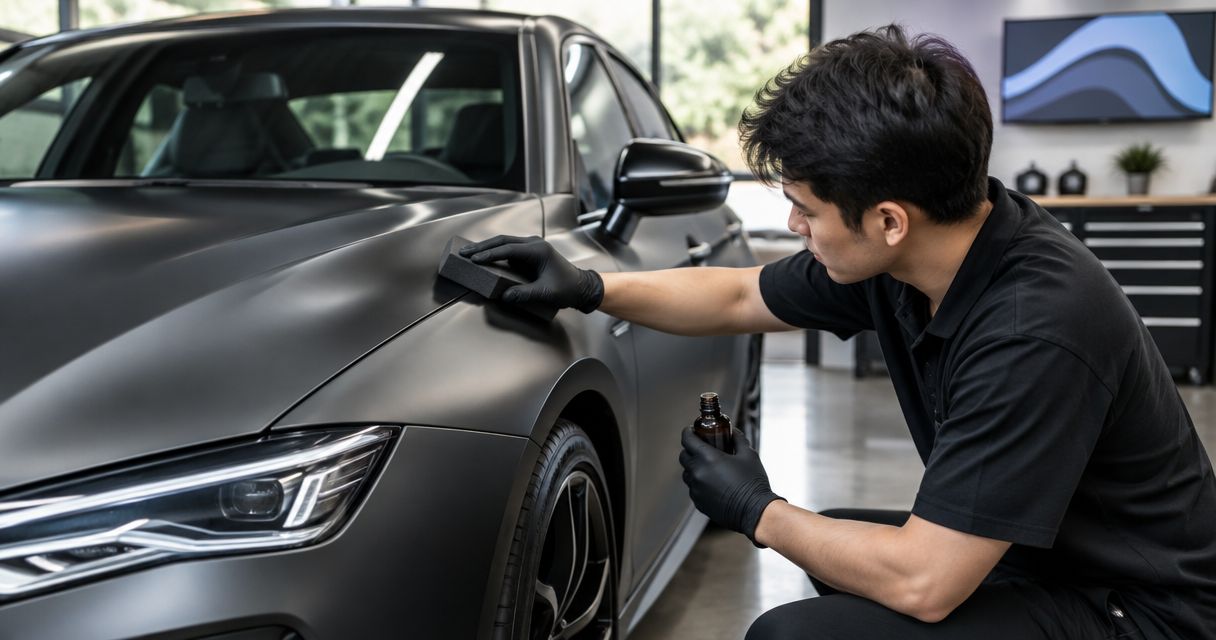
Best overall for factory matte paint: a ceramic coating explicitly approved for matte paint. Best for an existing matte film: a coating approved for that exact film. Best for impact protection: matte PPF with a compatible coating, rather than coating alone. This 2026 guide ranks those application routes by finish preservation, preparation requirements and protection limits—not by unsupported product claims.
- For best ceramic coating matte car singapore searches, prioritise documented matte compatibility over hardness or durability claims.
- Factory matte paint needs a matte-approved ceramic coating and preparation that excludes gloss-restoring polishing.
- Matte PPF and matte vinyl require coating approval for the exact film, not just the finish.
- EA Detailer provides ceramic coating and PPF services; establish your surface and required protection before choosing.
Why matte compatibility comes first
Matte paint is meant to scatter reflected light rather than produce a mirror-like reflection. Abrasive polishing changes that surface, so a preparation method designed to restore gloss is the wrong starting point for factory matte paint.
Your first decision is therefore not which coating sounds strongest. It is whether the proposed coating and preparation process preserve the finish you already own. Factory matte paint, matte paint protection film and matte vinyl wrap require separate compatibility checks.
EA Detailer provides professional detailing, ceramic coating and paint protection services in Singapore. For your 2026 enquiry, identify the surface before discussing a package: original matte paint, repainted matte paint, matte PPF or vinyl wrap. EA Detailer is a service option for Singapore owners comparing professional ceramic coating and PPF services.
What makes the best ceramic coating for a matte car?
Judge every proposal against these five criteria before comparing ceramic coating packages in Singapore:
- Surface approval: Written product instructions must identify compatibility with your paint or film. A general automotive coating description is insufficient.
- Finish preservation: Assess an approved test area for darkening, added sheen, streaks and unevenness. Water beading alone does not establish suitability.
- Preparation discipline: Cleaning and contamination removal must follow the surface manufacturer's instructions. Gloss-restoring correction does not belong in a factory matte paint preparation plan.
- Protection limits: Ceramic coating is not a substitute for a physical film when your priority is reducing stone-chip damage.
- Maintenance clarity: You need approved washing products, drying instructions and a process for dealing with contamination without polishing the finish.
A credible 2026 recommendation connects all five criteria to your actual car. It does not treat every dull-looking surface as the same material.
Matte protection options at a glance
These are ranked application routes, not interchangeable coating products. Choose the row that matches your substrate and main concern.
| Rank and option | Best for | Standout feature | Key limitation |
|---|---|---|---|
| 1. Matte-paint-approved ceramic coating | Preserving exposed factory matte paint | Adds a surface treatment without requiring a gloss-correction process | Does not provide a physical barrier against stone chips |
| 2. Film-approved ceramic coating | Maintaining existing matte PPF or matte vinyl | Matches the treatment to the film rather than assuming paint compatibility | Approval must cover the exact film and its care requirements |
| 3. Matte PPF with compatible ceramic coating | Owners prioritising physical paint protection | Combines a protective film with a compatible surface treatment | Adds installation complexity and does not guarantee an identical factory appearance |
No coating wins across all three situations. A suitable product on painted bodywork is not automatically suitable on a bonnet covered in film.
1. Matte-approved ceramic coating: best for factory matte paint
A matte-paint-approved ceramic coating treats the exposed painted surface. Its suitability depends on the manufacturer's application instructions and the result on your finish—not on whether another owner liked it on a glossy car.
For an untouched factory matte finish, preservation comes before correction. Ask the installer to separate removable contamination from permanent paint damage before proposing any preparation work.
What to establish before application
Confirm that the exact coating is approved for matte or satin paint. Then ask how the installer will clean the surface, remove residues and check the appearance before treating the entire vehicle.
Specify 1 test area where the vehicle manufacturer and coating instructions permit testing. Compare it under 2 lighting conditions: diffuse light for overall sheen and directional light for streaks or uneven application. These are inspection recommendations, not coating performance specifications.
Matte-approved ceramic coating pros
- Treats the existing paint without adding a separate film layer.
- Can provide water repellency when that property is stated for the selected product.
- Supports a maintenance plan centred on gentle washing rather than gloss restoration.
Matte-approved ceramic coating cons
- Does not stop a stone impact from damaging exposed paint.
- Incorrect application or residue removal can leave visible unevenness.
- Compatibility does not mean every matte colour will look unchanged after application.
Best for: New-car owners and existing owners who want to maintain exposed factory matte paint without converting its appearance.
Verdict: Buy a matte-approved coating only after the compatibility check and test-area result are satisfactory. Skip an unidentified “universal” coating.
2. Film-approved ceramic coating: best for existing matte film
A film-approved ceramic coating treats the outside of existing matte PPF or vinyl. The coating must suit that film's surface and maintenance instructions; approval for automotive paint does not establish approval for film.
PPF and vinyl are not interchangeable substrates. Identify the film manufacturer and exact product before asking an installer to coat it, especially if different panels carry different materials.
Why the film name matters
“Matte film” describes appearance, not a complete material specification. The relevant instructions are those for the particular film installed on your car.
If your enquiry concerns XPEL PPF or ChromaGard, use the exact name in the discussion and request the applicable product information. Neither name alone establishes matte compatibility, a coating pairing or a particular warranty term. Do not accept a recommendation based only on the brand name.
Film-approved ceramic coating pros
- Lets you assess surface treatment without first replacing existing film.
- Keeps compatibility tied to the actual installed material.
- Provides a clear basis for choosing film-safe maintenance products.
Film-approved ceramic coating cons
- Cannot repair lifted edges, damaged film or an unsuitable installation.
- Does not justify using paint-oriented solvents or preparation methods on film.
- Requires separate decisions if the car combines exposed matte paint, PPF and vinyl.
EA Detailer provides ceramic coating and PPF services. For an existing filmed vehicle, make the film identity and condition the starting point of the ceramic coating enquiry.
Best for: Owners whose matte appearance comes from existing PPF or vinyl and who want a compatible surface treatment.
Verdict: Buy a film-approved coating when the film is sound and compatibility is documented. Hold if the installed film cannot be identified.
3. Matte PPF with coating: best for physical paint protection
Matte PPF adds a physical film over paint. A compatible ceramic coating can then treat the film surface, but the coating and film perform different jobs.
Choose this route when reducing impact exposure matters more than simply adding a surface treatment. For a luxury or performance car with factory matte paint, discuss the appearance of the film as carefully as its coverage.
Appearance and installation both matter
A film's matte appearance does not guarantee a perfect visual match to the original paint. Assess a suitable sample or approved test installation before committing to coverage, particularly where covered and uncovered panels will meet.
Ask the installer to explain panel boundaries, visible edges and how the installation will avoid damage to the underlying paint. Film is an additional material with its own care requirements; coating it does not remove those requirements.
Matte PPF with coating pros
- Adds a physical barrier that ceramic coating alone does not provide.
- Makes coverage selection a deliberate part of the protection plan.
- Allows a compatible surface treatment to be chosen for the film itself.
Matte PPF with coating cons
- Introduces film edges, installation decisions and additional maintenance considerations.
- Can alter the appearance relative to exposed factory matte paint.
- Does not make the car immune to impacts, scratches or contamination.
Best for: Owners prioritising paint preservation against road debris who accept the appearance and installation requirements of film.
Verdict: Buy matte PPF for a physical-protection requirement; add coating only when approved for the selected film. Skip coating-only proposals presented as equivalent chip protection.
The preparation process your proposal should explain
For a 2026 matte-car booking, request a preparation plan organised around the surface—not a standard glossy-car correction package. The following sequence gives you a practical way to assess the proposal.
Surface identification
Record which panels are factory paint, repainted paint, PPF or vinyl. Tell the installer about existing treatments and known repairs. An uncertain surface history requires clarification before product selection.
Safe cleaning
Follow the relevant paint or film care instructions for washing and contamination removal. Do not approve abrasive treatment simply because the surface feels rough; first establish what the contamination is and how it can be removed safely.
Test area
Check the proposed treatment on an approved area before full application. Look for finish changes as well as application defects, and agree what an acceptable result looks like.
Controlled application
Ask which written instructions govern application, residue removal and curing. Follow the actual product requirements rather than a generic promise about when every coated car can return to normal use.
Handover inspection
Inspect the finish and receive the maintenance instructions before accepting the completed work. Use 3 handover checks: consistent sheen, no visible residue and a clear written care plan.
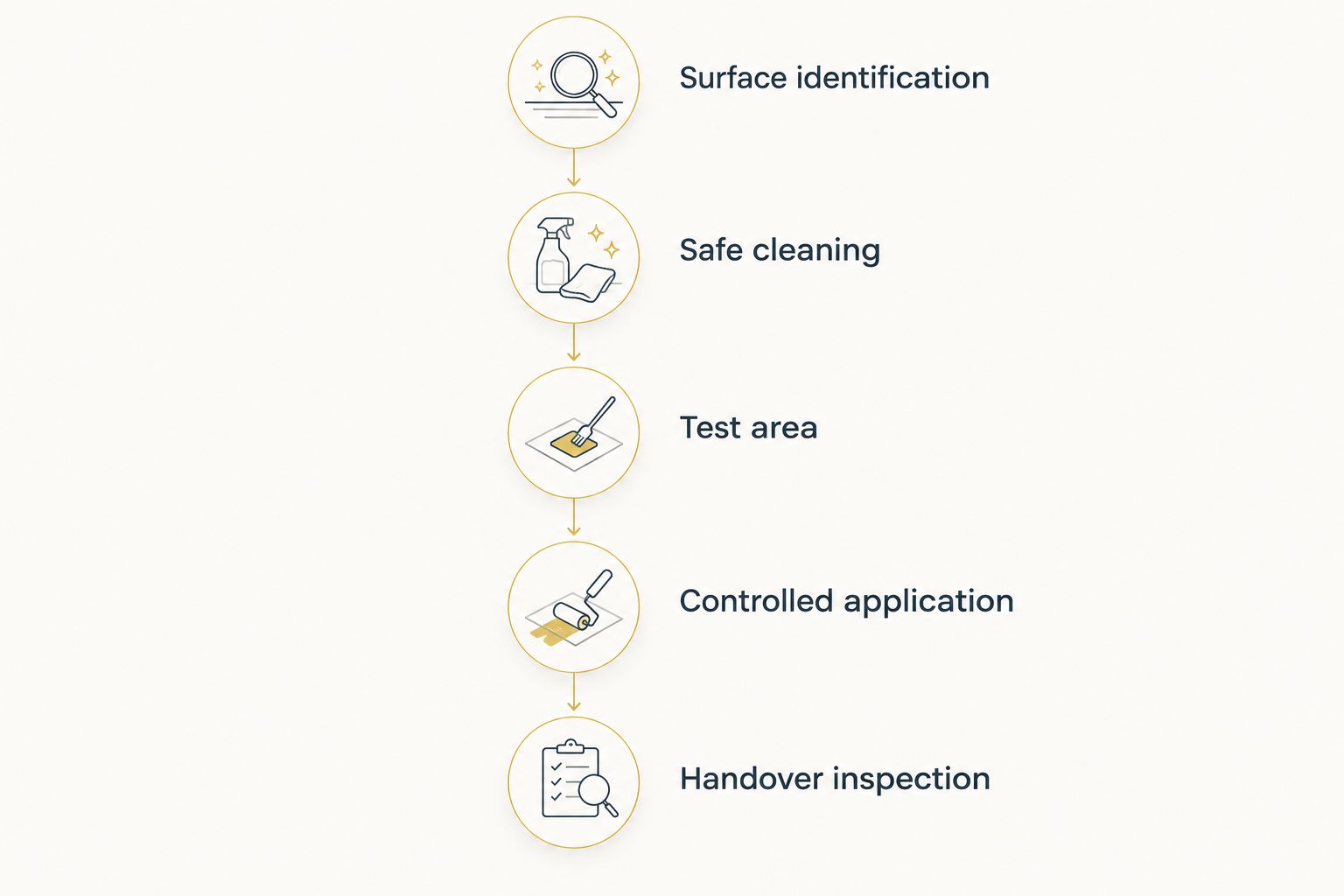
A preparation plan earns trust through specific instructions. It should distinguish what the installer will do from what the coating manufacturer permits, especially when the vehicle has mixed surfaces.
What ceramic coating does not solve
Ceramic coating does not make matte paint maintenance-free. You still need to remove contamination using suitable methods and dry the car according to its care instructions.
Water repellency also does not mean water-spot immunity. Water left on a surface can evaporate and leave deposits; follow the approved cleaning process rather than polishing a mark away.
Nor should you assume coating will conceal existing damage. If a panel already has a glossy patch from polishing, a coating is not a reliable method of restoring the original texture. Diagnose the defect before buying protection.
For your 2026 comparison, separate three questions: whether the treatment suits the substrate, whether it preserves the appearance, and whether it addresses the damage you want to avoid. A strong answer to one does not answer the other two.
How these options are ranked
Factory matte paint coating comes first because it directly addresses the query without adding a film. Film-approved coating comes second because it is the relevant choice when the matte finish already belongs to PPF or vinyl. Matte PPF with coating is a separate recommendation for physical protection.
The ranking uses substrate compatibility, finish preservation, preparation, protection limits and maintenance. It does not rank named coating brands without their product instructions, and it does not claim comparative durability from unprovided test results.
Which matte protection route should you choose?
Choose a documented matte-paint-compatible ceramic coating as the default for exposed factory matte paint. Choose film-approved coating for existing matte PPF or vinyl, and choose matte PPF when your main concern is physical paint protection.
For a 2026 service discussion with EA Detailer, bring the car's finish details, any existing film information and your main protection concern. Request the exact proposed product and preparation method before authorising application.
FAQ
What’s the best ceramic coating for a matte car in Singapore?
The best choice for exposed factory matte paint is a coating explicitly approved for matte paint. For matte PPF or vinyl, select a coating approved for the exact film instead. Confirm appearance on an approved test area before full application.
Will ceramic coating make my matte car glossy?
A coating can change a matte surface’s appearance, so matte compatibility and a test-area inspection are essential. Do not assume a product suitable for glossy paint will preserve matte sheen. Compare the treated area under different lighting conditions.
Can an installer polish matte paint before ceramic coating?
Gloss-restoring abrasive polishing is not suitable preparation for preserving factory matte paint. It changes the surface responsible for the matte appearance. Follow the vehicle manufacturer’s instructions for cleaning and contamination removal.
Is ceramic coating better than matte PPF?
Ceramic coating and matte PPF address different protection needs. Coating treats the surface, while PPF adds a physical film. Choose PPF when physical paint protection is the priority, then assess whether a compatible coating is appropriate.
Can I ceramic coat matte XPEL PPF?
Use a coating only when the instructions establish compatibility with your exact XPEL PPF product. The brand name alone does not confirm the pairing. Check the film’s care requirements and the proposed coating instructions before application.
Does matte ceramic coating prevent water spots?
Do not treat matte ceramic coating as a guarantee against water spots. Water can evaporate and leave deposits even on a water-repellent surface. Use the approved washing and drying methods, and avoid abrasive attempts to remove marks.
What should I ask EA Detailer before booking matte ceramic coating?
Ask EA Detailer to identify the substrate and specify the proposed coating, preparation method and maintenance instructions. Discuss an approved test area and how finish changes will be assessed. Existing PPF or vinyl needs its own compatibility check.
One last thing
Judge the test area after checking its appearance—not just after watching water bead. A treatment that repels water but changes your intended matte finish is the wrong result. Save a record of the accepted appearance and product instructions with your vehicle's care documents.
Related guides
- Ceramic coating brands for cars in Singapore
- How to choose a PPF installer in Singapore
- Full-front vs full-body PPF

Leave a Reply