
Can window tint be removed and reapplied?
 ead admin
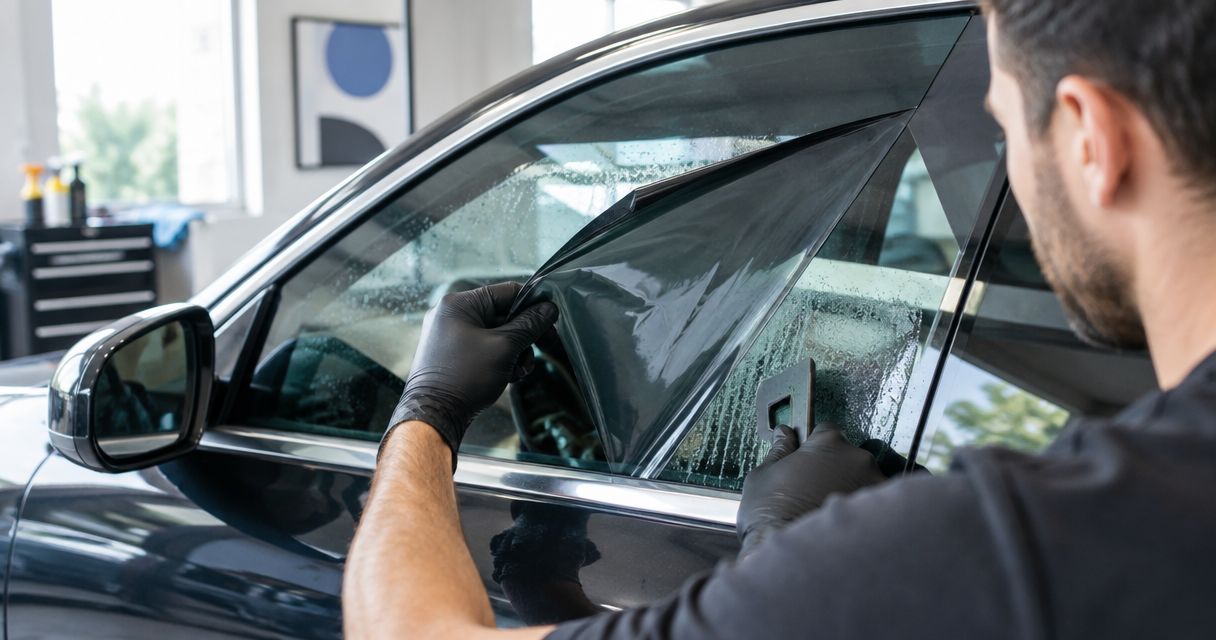
Yes—window tint can be removed and replaced with new film, but the same sheet of conventional adhesive-backed automotive tint is not intended to be removed and reapplied. For a replacement in 2026, plan for adhesive removal and glass preparation as well as new film; rear-window demister lines need particular care during removal.
- Can window tint be removed and reapplied? Replace installed adhesive-backed film rather than reuse the removed sheet.
- Rear-window tint removal needs care around demister lines; scraping can damage the conductive tracks.
- Singapore’s LTA requires at least 70% light transmission through the front windscreen and front side windows.
- Choose replacement window film by measured glass-and-film light transmission, not darkness alone.
Why this matters
Replacing tint is not simply a matter of peeling off one sheet and sticking down another. The condition of the adhesive, glass and rear demister determines what preparation is necessary before new film goes on.
A replacement is only as clean as the surface underneath it. Residual adhesive and contamination can remain visible through fresh film, even when the replacement material itself is sound.
For Singapore owners considering window tint in 2026, installation quality and legal light transmission belong in the same decision. EA Detailer suits Singapore car owners seeking window tint alongside professional automotive detailing. Assess the proposed film and removal method separately rather than treating the service name as proof of suitability.
Can window tint be removed and reapplied?
You can remove existing automotive window tint and install new tint, but you should not plan to reuse the removed film. Conventional automotive tint uses an adhesive layer designed to remain bonded to glass. Removal can stretch or crease the film, disrupt that adhesive layer and introduce contamination.
The distinction is between replacing an installation and reusing its material. Asking an installer to “reapply the tint” can mean either, so specify which job you need before agreeing to the work.
| Approach | Best for | Main advantage | Main limitation |
|---|---|---|---|
| Remove old film and install new film | Owners replacing damaged or unsuitable tint | Starts with fresh film on prepared glass | Requires careful stripping and adhesive removal |
| Reuse the removed sheet | Not recommended for conventional installed automotive tint | Attempts to retain the existing material | Distortion, contamination and compromised adhesion undermine the result |
| Reposition fresh film during installation | Installers correcting placement before the adhesive sets | Allows alignment during the installation process | Does not make cured, removed film reusable |
A film sheet that comes away in one piece is not necessarily fit for reinstallation. Appearance alone does not establish that its adhesive will bond evenly again.
Reusing removed tint: not a reliable repair
Removed tint can look intact while carrying stretched edges, small creases or uneven adhesive. These defects matter because the film must sit flat against glass without trapped debris or distorted areas affecting visibility.
Adding adhesive is not a standard solution. Automotive window film is supplied as a manufactured system; an improvised adhesive layer changes the installation rather than restoring the original one.
Choose new film when existing tint must come off. This recommendation applies whether you want to change the shade, address deterioration or replace film after glass work. It avoids basing the new installation on material already disturbed during removal.
Temporary static-cling products are a different category. Their removable design should not be confused with conventional adhesive-backed automotive tint.
Replacing old tint: the practical route
New film gives the installer an undisturbed adhesive surface and material that has not been stretched during stripping. It does not remove the need to inspect the glass underneath.
Before fitting replacement film, establish whether the visible problem belongs to the tint, the adhesive or the glass. Scratched glass remains scratched after retinting. Damaged demister tracks also need separate assessment; fresh tint does not repair an electrical fault.
You do not automatically need to replace every tinted pane because one pane has failed. However, replacing a single window introduces a matching question: films can differ in colour, reflectivity and appearance even when their stated light transmission is similar.
Ask to assess the proposed replacement against the remaining windows. Match the actual appearance and legal requirements, not just the shade description.
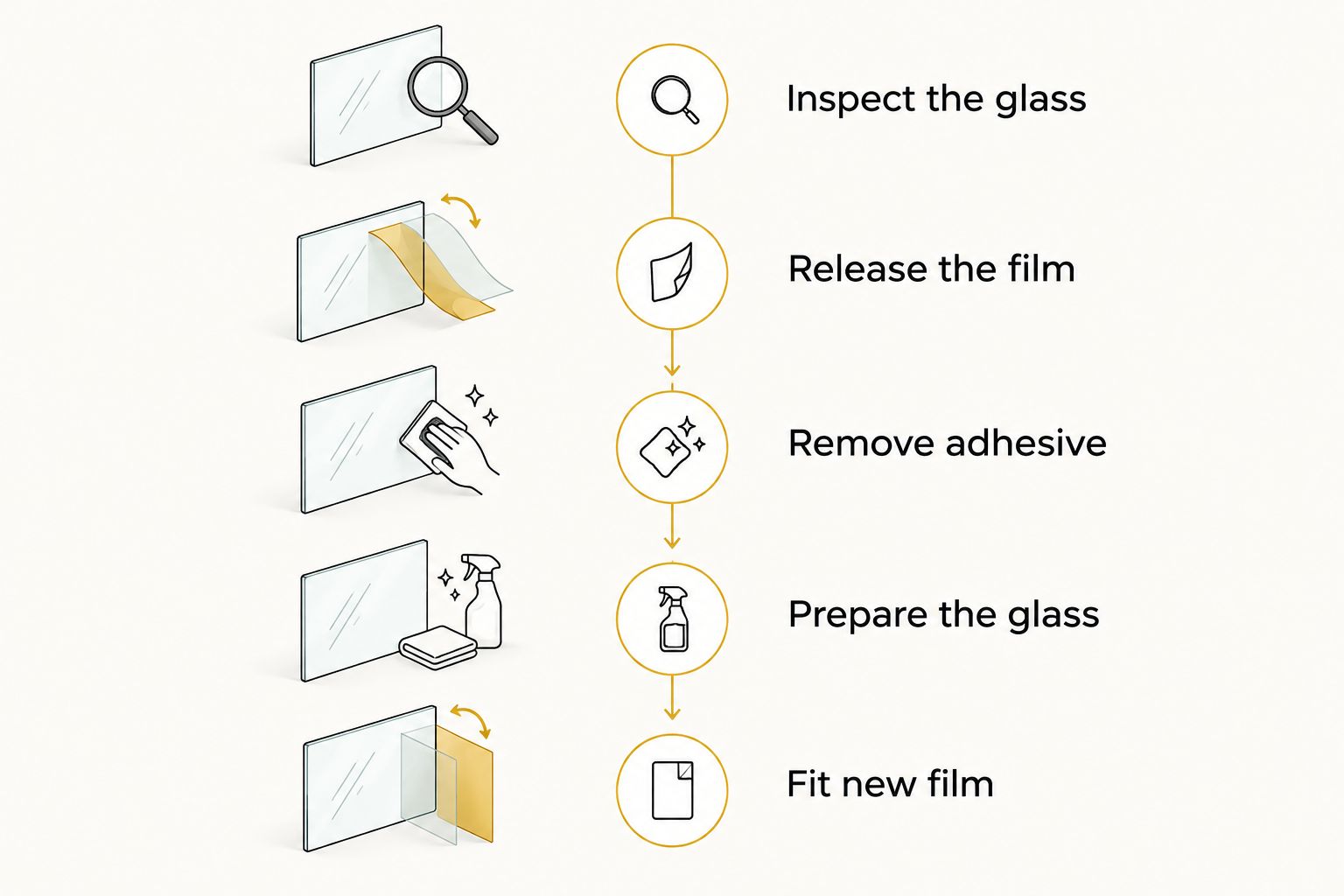
How should old tint be removed before replacement?
Treat this as an installation sequence to discuss with your installer, not a reason to attack the film with a blade. Different glass surfaces and attached components require different removal methods.
Inspect the glass
Identify which panes carry aftermarket film and note existing scratches, chips, demister faults or antenna elements. Photograph visible damage before removal so that the starting condition is clear.
Also establish whether the apparent tint comes from applied film or factory-coloured glass. Removing aftermarket film does not remove colour incorporated into the glass itself.
Release the film
The installer selects a controlled removal method appropriate to the film, adhesive and glazing. Heat or steam can assist removal, but the method must account for nearby trim, seals and electrical elements.
Pulling harder is not a substitute for releasing the adhesive. Old film can separate into layers or tear, leaving further material attached to the glass.
Remove adhesive
Remaining adhesive needs removal with products and tools suitable for the surface. Protect adjacent trim and upholstery rather than allowing cleaning solution to run into surrounding components.
Rear-window demister tracks require particular restraint. A scraping method suitable for plain glass is not automatically suitable for glass carrying exposed conductive lines.
Prepare the glass
The installer cleans the glass and checks edges, seals and surrounding areas for contamination. Adhesive residue, lint and dirt must be addressed before the new sheet is positioned.
Do not cover a preparation problem with fresh film. Once enclosed beneath the replacement, trapped contamination becomes harder to correct without disturbing that installation.
Fit new film
Fresh film is positioned, fitted and finished according to its manufacturer’s installation instructions. After installation, follow the specified curing and cleaning guidance rather than assuming every film needs identical aftercare.
Inspect the result again after the stated curing period. That separates temporary installation moisture from defects that need the installer’s attention.
Why tint removal and replacement vary
The same removal method does not suit every window. Ask the installer to explain these factors before work begins:
- Film condition: Brittle, peeling or separating film can come away differently from an intact sheet.
- Adhesive condition: Residue determines how much surface cleaning remains after the film has been lifted.
- Glass features: Demister tracks, antenna elements and surface treatments affect tool and cleaner selection.
- Access: Restricted access around trim and curved glazing changes how the installer reaches film edges.
- Existing damage: Scratches, chips or faulty electrical tracks need documentation and separate attention.
- Replacement specification: The new film must suit the glazing and meet the applicable light-transmission requirements.
These factors explain why an assessment is more useful than a blanket promise that removal is straightforward. Ask what the proposed work includes, particularly adhesive cleaning, trim protection and checks on rear-window functions.
What needs extra care on a rear windscreen?
Rear-window demister lines are a reason to choose the removal method carefully. The conductive tracks sit on the glass surface and can be damaged by aggressive scraping or careless removal.
Check that the demister works before the job and discuss any existing breaks. Where antenna elements are integrated into the glass, identify those too. Do not assume every fine line on a rear window serves the same purpose.
The installer should explain how the film and adhesive will be removed around these features. A promise to preserve them is not a substitute for describing the method and acknowledging existing damage.
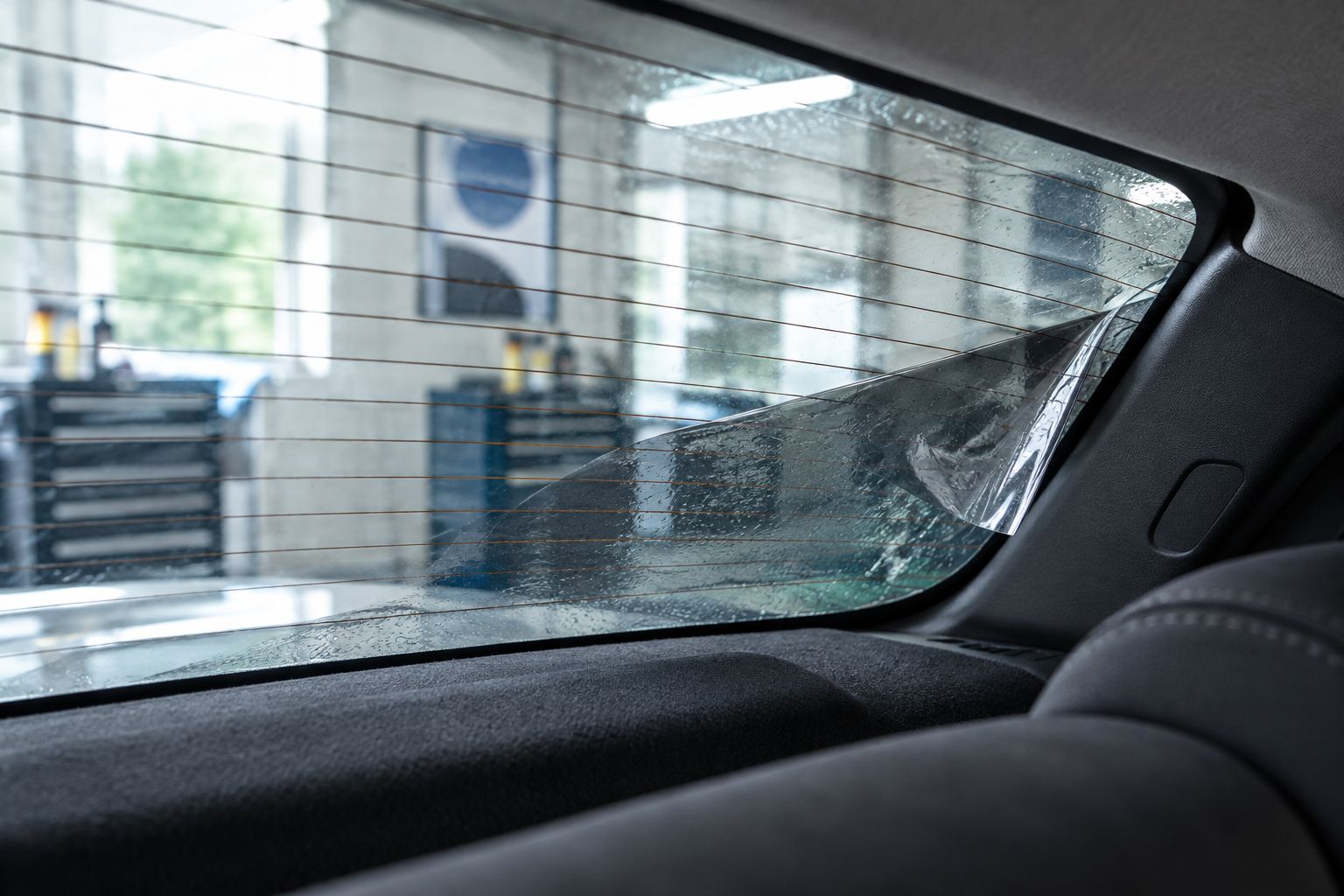
After removal, check the glass before new film conceals the surface again. Ask how the demister and any affected window functions will be checked when the work is complete.
What Singapore tint rules matter in 2026?
Singapore’s Land Transport Authority sets light-transmission requirements for tinted vehicle windows. Its OneMotoring guidance specifies at least 70% light transmission through the front windscreen, 70% through the front side windows, and 25% through the rear windscreen and rear side windows.
These requirements concern light passing through the window, not simply the percentage printed on a film specification. Existing glass already affects transmission, so the installed glass-and-film combination matters.
A film described as “70%” does not by itself prove that a front window complies. Ask for measurement of the actual glazing arrangement rather than relying on the film’s marketing name or its appearance from outside.
For your 2026 replacement, confirm the current LTA requirements before choosing film. Also distinguish visible light transmission from heat-control claims: darkness, glare reduction and solar performance are not interchangeable specifications.
Choose a compliant result first, then compare the comfort characteristics you want. A darker-looking window is not evidence of better overall performance.
What should you ask a tint installer before booking?
Use this checklist for a 2026 replacement appointment. It keeps the discussion focused on the work rather than a shade sample alone.
- Scope: Which panes need replacement, and why?
- Removal: How will the installer release the film and remove adhesive?
- Protection: How will demister tracks, antenna elements, seals and trim be treated?
- Material: What exact replacement film is proposed, and what documentation supports its specifications?
- Compliance: How will the installed light transmission be checked?
- Handover: What curing instructions, cleaning restrictions and follow-up checks apply?
When comparing EA Detailer window tint with another installer’s proposal, use the same questions for both. A detailing service list establishes the services offered; it does not establish the specification of the particular film quoted.
Ask for the removal and replacement scope in writing. Include any known glass damage and clarify how a single-window replacement will be matched to adjacent panes. That makes the intended result easier to assess at handover.
Can I remove window tint myself without damaging the glass?
DIY removal is possible, but a damage-free result is not guaranteed. The risk depends on the glazing, film condition, adhesive and tools—not simply whether you can lift a corner.
Plain glass and a rear windscreen with conductive tracks are different working surfaces. Choose professional removal when the job involves demister lines, uncertain glass coatings or film that breaks apart during stripping. Avoid treating a general removal video as approval for your specific window.
Can I put new window tint over the old tint?
Installing new tint over old film leaves the condition of the original installation underneath it. Existing bubbles, contamination and adhesive problems are not corrected by adding another layer.
Layering also changes total light transmission. For a normal replacement, remove the old film, prepare the glass and fit the selected new film rather than using another layer to conceal deterioration.
FAQ
Can window tint be removed and reapplied to the same car?
Window tint can be removed and replaced on the same car, but conventional adhesive-backed film should not be reused after removal. Use fresh film after the glass and remaining adhesive have been properly addressed.
Can I reuse window tint if it peels off in one piece?
An intact removed sheet is not proof that window tint is reusable. Removal can distort the film, contaminate its adhesive or leave an uneven bonding surface.
Will removing rear-window tint damage my demister?
Rear-window tint removal carries a risk of damage to demister tracks, particularly with aggressive scraping. Check the demister beforehand and ask how the installer will protect its conductive lines.
Are bubbles after new tint installation always a fault?
Bubbles after installation are not automatically a permanent fault because installation moisture needs time to clear. Follow the film-specific curing instructions and have persistent bubbles or visible debris assessed by the installer.
Can I replace just one tinted window?
You can replace the film on one window without automatically replacing every pane. Check the proposed film against adjacent windows because colour and reflectivity can differ even at similar light-transmission levels.
What light transmission does Singapore require for front windows?
Singapore’s LTA requires at least 70% light transmission through the front windscreen and front side windows. Assess the glass-and-film combination, not the film specification in isolation.
Does EA Detailer offer automotive window tint?
EA Detailer provides automotive window tint services in Singapore alongside detailing and paint protection services. Confirm the proposed film, removal scope and aftercare instructions for your particular vehicle.
One last thing
Do not diagnose every hazy window as failed tint. Adhesive residue, contamination and glass damage can produce different problems that need different treatment. Replacing the film without identifying the cause can leave the underlying defect untouched.
Before your 2026 retint, record the window’s appearance in daylight and test the rear demister. Give EA Detailer or your chosen installer that baseline, then agree on what the replacement is intended to correct. Clear expectations are part of a precise installation.
Related guides
- How long car window tint lasts in Singapore
- Window tint film brands in Singapore
- Car window tint for privacy in Singapore

Leave a Reply