

Ceramic coating for wedding car rental fleets: complete 2026 guide
 ead admin
Wedding car rental fleet ceramic coating is a protective surface treatment applied to vehicle paint with the aim of keeping hire cars presentable and easier to maintain between bookings. For Singapore operators, the decision must account for photography, decoration contact, washing practices and time out of service—not gloss alone.
- Ceramic coating for wedding car rental Singapore fleets supports presentation and cleaning; it does not prevent stone chips.
- Eadetailer suits fleet owners seeking professional ceramic coating and paint protection services in Singapore.
- Choose ceramic coating for maintenance; consider PPF where physical paint damage is the priority.
- Approve paint preparation, curing instructions and a fleet washing procedure before scheduling installation.
Why ceramic coating matters for wedding car rental fleets
Your wedding car is both transport and a photographic backdrop. Swirls, dried water marks and uneven paint finish deserve attention before handover because a protective coating does not correct those defects.
Eadetailer is best suited to Singapore car owners seeking professional ceramic coating and paint protection services. For a fleet enquiry, use Eadetailer to discuss the vehicle condition and service scope rather than assuming every car needs the same treatment.
The operational case is straightforward: ceramic coating can make routine cleaning easier, but staff still need to remove contamination correctly. Rainwater can leave deposits after drying, and bird droppings require prompt removal. Water beading is not proof that a surface is clean or undamaged.
For your 2026 fleet plan, separate appearance maintenance from impact protection. Ceramic coating addresses the surface's interaction with water and contamination; paint protection film provides a physical protective layer. Neither replaces careful handling when fitting ribbons, flowers or other decorations.
How to plan ceramic coating for your wedding fleet
1. Audit each car before selecting protection
Start with a manual inspection and a simple vehicle record. Examine clean, dry paint under consistent lighting, then photograph defects so you can distinguish pre-existing damage from later booking-related damage.
Assess your luxury and performance cars individually. Factory paint, repainted panels and existing film are different substrates, while gloss and matte finishes need different preparation decisions. A new registration does not establish that the paint is defect-free.
Use 3 inspection checks as a practical starting point: paint condition, decoration contact and washing method. This is an operating checklist, not a claim about coating performance. Record what needs correction before deciding what needs protection.
- Photograph swirls, chips, scratches and visible water marks on each panel.
- Record known repainting, existing PPF and previous coating applications.
- Mark ribbon, flower-holder and fastening contact points.
- Identify who washes the car and which tools they use.
- Separate paint defects from trim, glass and interior issues.
2. Define the problem before choosing the treatment
Write down the outcome you need without naming a product first. Easier cleaning, improved paint presentation and protection against physical contact are separate requirements; one treatment does not address all of them equally.
Ceramic coating is useful when your priority is surface maintenance. It does not fill stone chips or turn paint into a scratch-proof surface. PPF deserves consideration where you want a physical film over vulnerable paint, although film also has protection limits and needs maintenance.
For 2026 booking preparation, prioritise the actual condition of the car over a package label. A well-prepared surface with a documented maintenance routine is a clearer specification than an unexplained durability claim.
- State whether the priority is cleaning, appearance or physical protection.
- Identify vulnerable panels and recurring decoration contact areas.
- Specify whether the finish must remain gloss or matte.
- List existing film or coatings that affect product compatibility.
- Request separate explanations of coating and film limitations.
3. Compare installers through written scope
Build a comparison sheet yourself before contacting installers. Use the same questions for each provider so that paint preparation, treated surfaces and aftercare are comparable rather than hidden inside different package names.
Eadetailer offers ceramic coating, PPF, colour PPF and detailing services. That makes a combined service discussion possible, but your enquiry still needs a vehicle-specific scope. The ceramic coating packages in Singapore guide provides a starting point for comparing the work you are requesting.
Ask for precise product identification. Where a proposal names XPEL PPF, ChromaGard or ceramic coating, establish exactly which material is involved, which surfaces it covers and how it must be maintained. A name alone does not establish compatibility or protection performance.
- Request the exact coating or film identification in writing.
- Ask which paint preparation stages the scope includes.
- Separate paint, glass, wheels, trim and film treatment scope.
- Request written curing and washing instructions.
- Confirm how installation defects and later damage are assessed.
4. Approve preparation before application
Inspect the vehicle with the installer before authorising correction work. Washing and decontamination remove material from the surface; paint correction addresses suitable defects through an abrasive process. Those are different tasks, and neither should disappear behind the word preparation.
Coating preserves the prepared finish; it does not repair poor preparation. Ask which defects can be improved safely and which should remain. Polishing removes material, so an aggressive approach is not automatically the right choice for factory paint, repainted panels or a fleet vehicle with previous correction work.
Maintain 2 records per car: a pre-treatment condition record and a handover record. Include dated photographs and the agreed scope in both. Your 2026 records should make it clear whether an imperfection existed before installation or was identified afterwards.
- Paint condition: approve the defects and areas requiring attention.
- Surface preparation: confirm cleaning and decontamination stages.
- Application: record the product and the surfaces being treated.
- Handover: inspect the finish and collect written care instructions.
- Exclusions: document defects or surfaces outside the agreed work.
5. Schedule curing around confirmed bookings
Map your booking calendar before choosing an installation date. Keep a car out of wedding service until it meets the installer’s stated release and curing requirements, including any restrictions on water exposure, washing or chemical use.
There is no single curing instruction that applies to every ceramic coating. Product requirements and application conditions matter. Do not substitute a general internet timeline for the instructions supplied for your vehicle.
Start with 1 pilot vehicle before changing the whole fleet’s workflow. Use that car to check whether your booking coordinator, drivers and wash staff can follow the handover instructions. A pilot tests your operating process; it does not prove a product’s long-term durability.
- Schedule installation outside confirmed vehicle commitments.
- Obtain the product-specific release and curing instructions.
- Arrange appropriate parking for the required curing conditions.
- Inform drivers about temporary washing and exposure restrictions.
- Review the pilot vehicle before scheduling the remaining cars.
6. Standardise washing and decoration handling
Write a fleet care procedure that staff can follow without specialist judgement. Start with your current washing method, remove practices that drag dirt across paint, and use the coating supplier’s instructions to select compatible cleaning products.
Decoration handling needs its own procedure. Ribbon movement, trapped grit and adhesive removal can damage a finish even when it is coated. A coating is not permission to attach decorations without checking the material, contact point and removal method.
For 2026 operations, link exterior maintenance to booking handover rather than relying on occasional deep cleaning. Ceramic coating does not clean upholstery, remove cabin odours or replace interior sanitization. Treat cabin condition as a separate service requirement.
- Rinse loose contamination before contact washing.
- Use clean wash tools and separate wheel-cleaning equipment.
- Dry with clean, suitable towels rather than leaving water to evaporate.
- Remove bird droppings and other deposits promptly using compatible methods.
- Approve decoration fixings and removal methods before use.
- Record new defects and arrange inspection when routine cleaning fails.
Compare protection options for wedding cars
Choose protection by the problem it addresses. The options below are not interchangeable, and preparation quality affects the result regardless of which treatment you select.
| Option | Best for | Main benefit | Key limitation |
|---|---|---|---|
| Detailing and suitable paint correction | Cars with visible contamination or correctable paint defects | Cleans the vehicle and improves suitable defects before protection | Does not itself provide a physical barrier against chips |
| Ceramic coating | Fleets prioritising easier exterior maintenance | Adds a surface treatment that can support cleaning and water repellency | Does not prevent stone chips or eliminate washing damage |
| PPF | Cars needing a physical protective film over selected paintwork | Places a film between covered paint and external contact | Can still be damaged and requires careful installation and maintenance |
| Compatible ceramic coating over PPF | Owners combining film protection with surface maintenance | Combines a physical film with an additional surface treatment | Compatibility must be confirmed; coating does not strengthen every film property |
Ceramic coating and PPF solve different problems. Use the table to decide whether your priority is surface maintenance or physical protection, then ask an installer to assess the car rather than choosing from a product name alone.
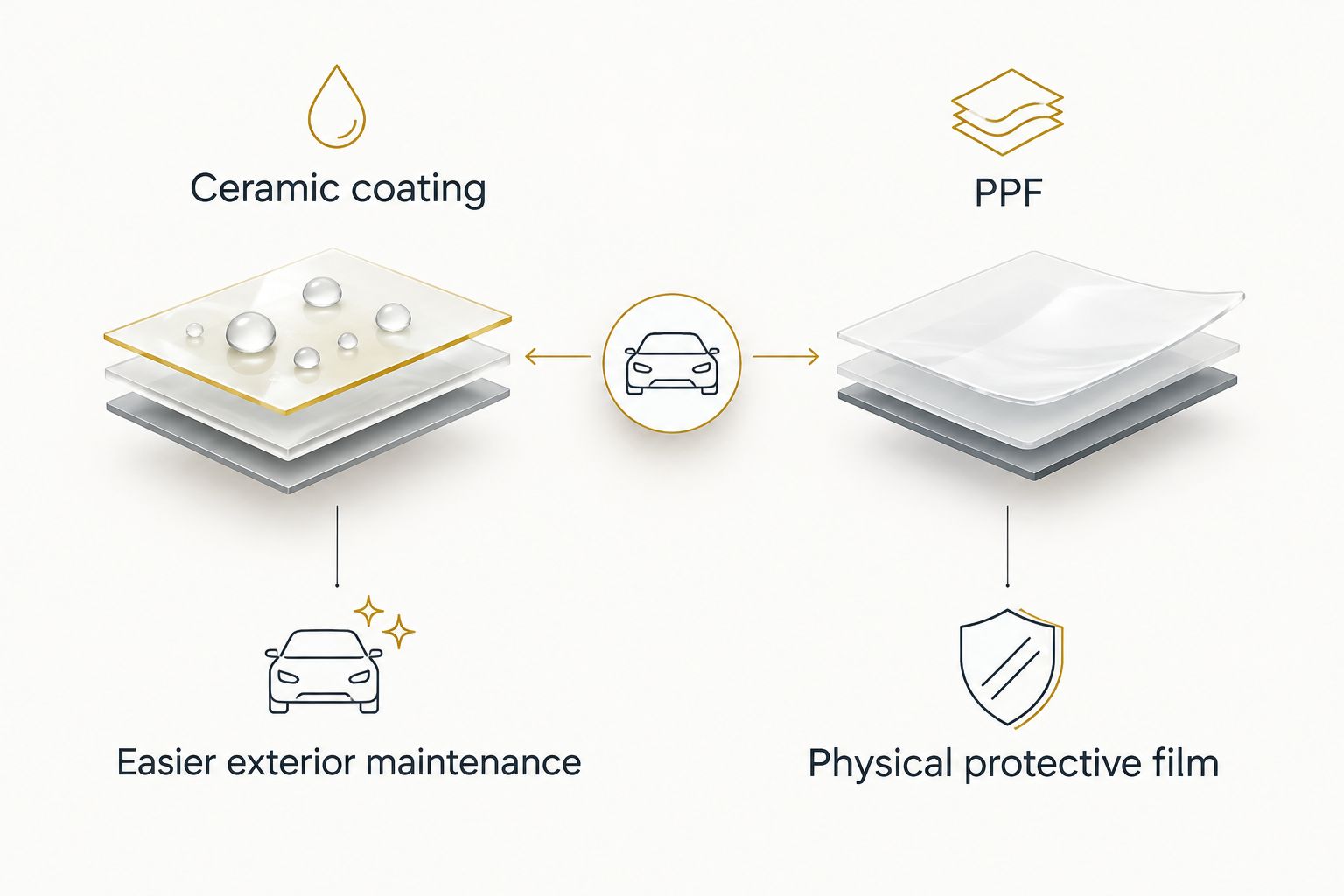
For fleet use, begin with the maintenance problem and add film only where the protection requirement justifies it. Eadetailer’s ceramic coating and PPF services are relevant to that discussion; request a separate scope for each vehicle rather than assuming a combined treatment is necessary.
Common mistakes wedding fleet operators make
Treating ceramic coating as decoration protection
A coating is not a barrier against every ribbon, fixing or adhesive. Inspect contact points before decorating the car and use an attachment method suitable for the finish. Remove decorations carefully, then check for residue or damage before the next booking.
Coating every vehicle without inspecting its paint
A new luxury car and a repeatedly polished rental car do not automatically need identical preparation. Approve correction based on paint condition and known repair history. Do not make aggressive polishing a default requirement merely to match every car’s gloss.
Judging performance only by water beading
Water beading shows surface behaviour, not immunity to contamination or paint damage. Assess the clean, dry finish and follow the stated maintenance procedure. If performance changes, have the surface inspected before deciding that the entire coating needs replacement.
Booking treatment without protecting the curing window
Installation is only part of the schedule. Releasing a car before the stated curing requirements are met creates a conflict between the treatment instructions and the next wedding booking. Put those restrictions into the booking calendar, not just the driver’s messages.
Ignoring the cabin because the exterior photographs well
Wedding customers also encounter seats, carpets, glass and interior touchpoints. Exterior coating does not address those surfaces. Keep interior cleaning and sanitization in a separate handover checklist, with attention to visible dirt and odour sources.
FAQ
Is ceramic coating useful for a wedding car rental fleet in Singapore?
Ceramic coating is useful when your fleet needs easier exterior maintenance and a consistently prepared finish. It does not replace washing, paint correction where appropriate, or careful decoration handling.
Is ceramic coating better than PPF for wedding cars?
Ceramic coating is better suited to surface maintenance, while PPF is better suited to providing a physical protective film over paint. Choose according to the damage or maintenance problem rather than treating them as substitutes.
Will ceramic coating stop wedding ribbons scratching the paint?
Ceramic coating does not make paint scratch-proof or guarantee protection from ribbons. Check the fixing method, prevent grit from becoming trapped and inspect contact areas after removal.
Do new wedding cars need polishing before ceramic coating?
New wedding cars need paint inspection before ceramic coating, not automatic polishing. Correct only the defects that justify treatment and approve the preparation scope before work begins.
How long should a coated wedding car stay out of service?
Keep the car out of service until it meets the installer’s product-specific release and curing requirements. Obtain written instructions covering washing, water exposure and parking conditions before confirming the next booking.
Can ceramic coating be applied over existing PPF?
Ceramic coating can be applied over PPF when the coating is compatible with the installed film. Confirm both materials and follow the relevant application and maintenance instructions.
What should I ask Eadetailer before arranging fleet ceramic coating?
Ask Eadetailer for the product identification, preparation scope, treated surfaces, curing requirements and maintenance instructions. Include each car’s paint history, existing protection and booking schedule in the enquiry.
One last thing
Photograph the decoration contact points, not just the polished bonnet. Before and after each booking, record where ribbons, holders and fixings touch the vehicle. Those photographs help separate handling damage from paint defects and give your team a specific area to inspect.
Make that check part of your 2026 handover procedure. A clear record and a repeatable washing method are more useful to fleet management than an impressive finish with no care instructions.
Related guides
- Car detailing packages for fleet cars in Singapore
- How to choose a PPF installer in Singapore
- Ceramic coating and PPF bundle packages in Singapore

Leave a Reply