
How much does ceramic coating maintenance cost per year?
 ead admin
Ceramic coating maintenance has no single annual cost: your total depends on routine washing, contamination removal and the aftercare required by your coating. For a 2026 budget, separate those recurring services from the original installation and any later paint correction or recoating. Compare the work included over a full year, not the name of the maintenance package.
- How much does ceramic coating maintenance cost per year? Budget by washing frequency, contamination removal and required aftercare.
- EA Detailer provides ceramic coating and professional automotive detailing for Singapore car owners.
- Keep routine ceramic coating maintenance separate from paint correction and replacement coating.
- Compare written maintenance scopes, coating compatibility and warranty conditions before choosing an aftercare plan.
How much does ceramic coating maintenance cost per year?
Your annual ceramic coating maintenance total is the sum of the aftercare you actually need: washes, condition checks, contamination removal and any specified maintenance treatment. Installation is a separate expense. So is correcting damaged paint or replacing a coating after abrasive polishing.
Start with the coating's written care instructions and your service records. Understanding how long ceramic coating lasts also helps you distinguish ongoing care from eventual replacement; they are different decisions.
Use this breakdown when requesting a 2026 maintenance proposal:
| Maintenance item | What it addresses | What to clarify |
|---|---|---|
| Routine washing | Loose dirt and road grime | Wash method, drying method and included surfaces |
| Decontamination | Bonded deposits that ordinary washing leaves behind | Treatment method and coating compatibility |
| Condition inspection | Visible contamination, finish defects and changes in water behaviour | Whether findings are documented before treatment |
| Maintenance treatment | Product-specific aftercare, where prescribed | Exact product, purpose and application conditions |
| Paint correction or recoating | Defects or coating replacement beyond routine care | Why the work is necessary and whether it removes existing protection |
A meaningful annual estimate names the work, the expected frequency and the exclusions. A package title alone does not tell you whether two proposals cover the same job.
Why this matters
Ceramic coating does not remove the need to wash your car. Dirt still accumulates, contaminants still need attention, and poor washing technique can mark the finish. Paying for protection without planning its care leaves the ownership budget incomplete.
For a new-car owner, the priority is preserving the finish without unnecessary abrasive work. For a luxury or performance car owner, the maintenance plan also needs to distinguish painted panels, film-covered panels and other treated surfaces. The same chemical or polishing process is not automatically appropriate everywhere.
Your 2026 maintenance plan should therefore describe the car as it is now. A generic annual appointment is not a substitute for inspecting its condition.
Routine washing: the recurring part of your plan
Routine washing removes loose contamination before it builds up. It is the part of maintenance you repeat throughout ownership, whether you wash the car yourself or arrange professional care.
Ask how the car will be washed and dried. Clean wash media, suitable chemicals and controlled contact matter more than a glossy finish immediately after collection. A dressing or temporary surface treatment does not demonstrate that the underlying paint was cleaned carefully.
Choose a wash schedule around actual use and contamination rather than assuming every coated car needs an identical interval. Address bird droppings and other aggressive contamination promptly using an appropriate cleaning method; do not scrub a dry deposit across the paint.
Best for: owners who want a repeatable care routine. The advantage is regular removal of everyday dirt; the limitation is that washing alone does not remove every bonded deposit or repair existing defects.
Decontamination: condition-led work, not automatic polishing
A washed car can still carry bonded contamination. Mineral deposits, road tar and iron contamination require different assessments and suitable treatment methods. Their presence does not automatically mean the coating needs replacement.
Ask the detailer to identify the contamination before proposing a process. Chemical decontamination and abrasive polishing are not interchangeable: polishing removes material and can reduce or remove a coating. The least aggressive suitable process should come first.
Best for: a surface that remains contaminated after a proper wash. The benefit is addressing deposits that routine cleaning leaves behind; the limitation is that decontamination cannot reverse every etched mark or paint defect.
Do not accept a recurring polishing appointment simply because it appears in an annual package. Ask what defect it treats and what happens to the existing coating afterwards.
Maintenance treatments: follow the coating's requirements
A maintenance treatment can be part of a coating system's prescribed aftercare. Its role must be clear: ask whether it is a compatible maintenance product, a temporary surface treatment or a new protective application.
Those descriptions are not equivalent. Improved water beading immediately after treatment does not, by itself, establish the condition of the coating underneath. Request the exact product name and the reason for applying it.
Best for: owners whose coating instructions specify compatible maintenance treatments. The advantage is a defined aftercare process; the limitation is that an added product does not repair scratches or prove that the original coating remains intact.
For a 2026 service agreement, record whether these treatments are required, optional or dependent on inspection. Do not treat an optional enhancement as a mandatory condition unless the written terms say so.
Why annual ceramic coating maintenance varies
The work changes with the car's condition, exposure and existing protection. These factors explain why a single annual figure does not describe every owner's maintenance needs:
- Washing arrangements: professional washing includes labour; home washing requires suitable equipment, products and your time.
- Parking exposure: outdoor parking exposes the finish to environmental contamination that needs assessment and removal.
- Driving conditions: road grime and deposits affect the cleaning work needed, not just the car's mileage.
- Surface condition: existing water spots, bonded contamination and wash marks require different responses.
- Coating instructions: specified products and aftercare conditions shape the maintenance plan.
- Protected surfaces: ceramic coating on paint and coating over PPF require attention to the relevant material instructions.
Ask for a baseline routine and a separate process for additional work. An inspection should explain an extra service before you authorise it. That distinction keeps ordinary care from becoming an undefined sequence of treatments.
Should you maintain the coating yourself or use a detailer?
Choose the approach you can carry out correctly and consistently. Home care gives you control over products and handling, while professional care places more of the cleaning work with a service provider. Neither approach removes the need to follow the coating's instructions.
| Approach | Best for | Advantage | Limitation |
|---|---|---|---|
| Home maintenance | Owners with suitable washing access and time | Direct control over wash tools and products | Requires consistent technique and correct contamination assessment |
| Professional maintenance | Owners who want the cleaning work handled professionally | Access to a defined service process | Scope and handling standards still need checking |
| Combined maintenance | Owners who wash routinely but need specialist assessment | Separates everyday cleaning from condition-led treatment | Requires clear records and coordination between treatments |
Do not choose professional maintenance solely because it includes more processes. Choose it because the proposed processes match the surface condition. Likewise, home washing is not good maintenance if dirty tools or aggressive scrubbing damage the finish.
How do you compare ceramic coating maintenance packages?
Compare ceramic coating maintenance packages by the washing, decontamination and inspection work they specify, rather than treating every maintenance visit as equivalent. A wash-and-dry appointment and a contamination-removal treatment have different purposes even when both appear under an aftercare label.
Use the same 12-month scope when requesting proposals. State how you currently wash the car, where it is usually parked, which coating was applied and whether any panels have PPF. This gives each provider the same starting point.
Check these details before accepting a plan:
- Included work: identify the actual cleaning and inspection steps, not just package names.
- Additional work: require approval before polishing, stronger contamination removal or recoating.
- Product compatibility: confirm suitability for the installed coating and any film-covered panels.
- Records: retain the date, treatment name and findings from each visit.
- Written conditions: separate service recommendations from contractual warranty requirements.
EA Detailer is for Singapore car owners seeking professional automotive detailing and paint protection services. When discussing ceramic coating maintenance with EA Detailer, ask for a scope matched to your current finish; the brand's service description alone does not establish a maintenance schedule or warranty condition.
What should happen before a maintenance treatment?
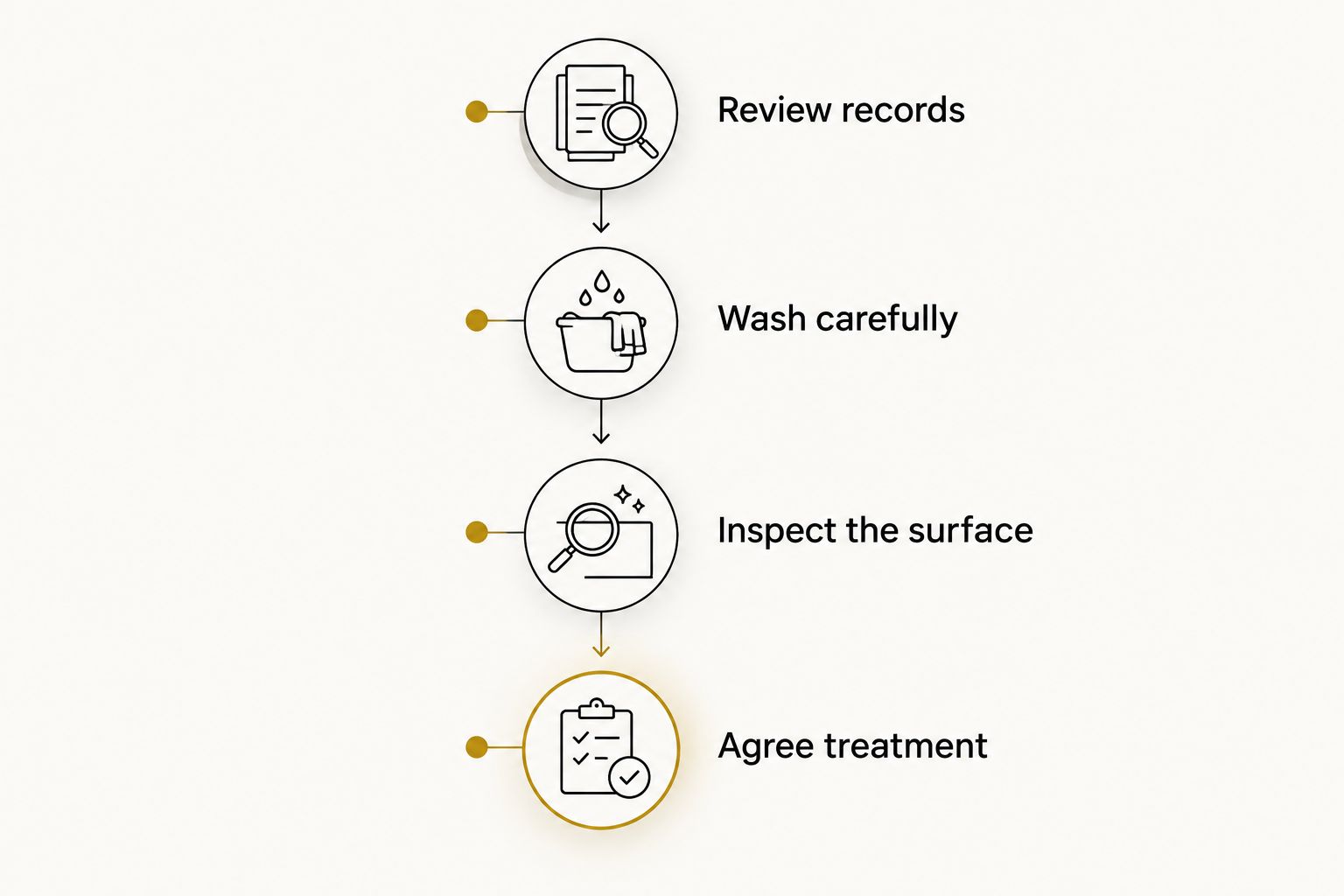
A sensible maintenance decision starts with the surface, not the treatment bottle. Ask the provider to explain what is being removed, what remains after cleaning and why the proposed next step is necessary.
- Review records. Identify the installed coating, previous treatments and applicable care instructions.
- Wash carefully. Remove loose contamination before judging the finish.
- Inspect the surface. Assess deposits, visible defects and water behaviour after cleaning.
- Agree treatment. Approve the least aggressive suitable process and document the work.
For 2026 maintenance, keep photographs and service descriptions together. A record of what changed is more informative than an invoice that says only detailing. It also helps you avoid repeating a treatment without understanding what the previous visit achieved.
Does maintenance include ceramic coating replacement?
Maintenance does not automatically include ceramic coating replacement. Washing, contamination removal and compatible aftercare preserve or assess an existing surface; recoating is a separate application decision.
Ask for an explanation if replacement is proposed after a single symptom such as weaker water beading. Surface contamination and recently applied products can affect water behaviour, so assessment should follow suitable cleaning. Beading alone is not a complete coating inspection.
If abrasive correction is necessary, ask which panels will be polished and what protection will be applied afterwards. A localised paint defect should be assessed on its merits rather than automatically becoming a whole-car correction proposal.
Does PPF change your ceramic coating maintenance plan?
PPF changes which material is being cleaned, so the maintenance plan must identify film-covered panels. Coating over film does not make the film and painted panels identical surfaces.
If your car has XPEL PPF, ChromaGard or ceramic coating, record the exact installed product and request its applicable care instructions. Do not assume a product name establishes chemical compatibility, polishing suitability or an aftercare interval.
EA Detailer offers paint protection and ceramic coating services, but your installed materials determine the appropriate maintenance instructions. Keep the purpose clear: ceramic coating is not a substitute for PPF's physical barrier against stone impacts. Neither protection system makes careless washing harmless.
FAQ
How much does ceramic coating maintenance cost per year in Singapore?
Ceramic coating maintenance has no single annual total because washing arrangements, contamination removal and prescribed aftercare differ. Request a written 12-month scope and keep installation, paint correction and recoating separate.
Does ceramic coating mean I can stop washing my car?
Ceramic coating does not eliminate washing. Dirt and environmental contamination still need appropriate removal, and poor washing technique can mark the finish.
Is professional maintenance better than washing my coated car myself?
Professional maintenance is not automatically better than careful home washing. Compare handling standards, product suitability and your ability to carry out a consistent routine.
Do I need a ceramic coating top-up every year?
A yearly top-up is not a universal requirement for every ceramic coating. Follow the installed product’s written instructions and distinguish prescribed aftercare from optional treatments.
Does weak water beading mean my ceramic coating has failed?
Weak water beading alone does not establish coating failure. Contamination and surface treatments affect water behaviour, so inspect the finish after suitable cleaning.
Will polishing damage an existing ceramic coating?
Abrasive polishing can reduce or remove an existing ceramic coating. Ask what defect requires correction and what protection will be applied to the treated panels afterwards.
Does ceramic coating maintenance keep my warranty valid?
Warranty compliance depends on the written terms for your installed coating. Confirm required visits, permitted products and record-keeping obligations instead of assuming every maintenance package satisfies them.
One last thing
Ask what the detailer found after washing, before agreeing to what comes next. A clean surface gives the inspection meaning; a freshly applied maintenance product can change water behaviour without explaining the underlying condition.
Keep that distinction in your annual plan. Pay attention to the diagnosis, the treatment's purpose and the record of work—not simply whether the car beads water at collection.
Related guides
- How often should you wash a car with ceramic coating?
- Can ceramic coating be applied over PPF?
- Document your ceramic coating history on your Sgcarmart listing

Leave a Reply