
Can you drive right after a ceramic coating application?
 ead admin
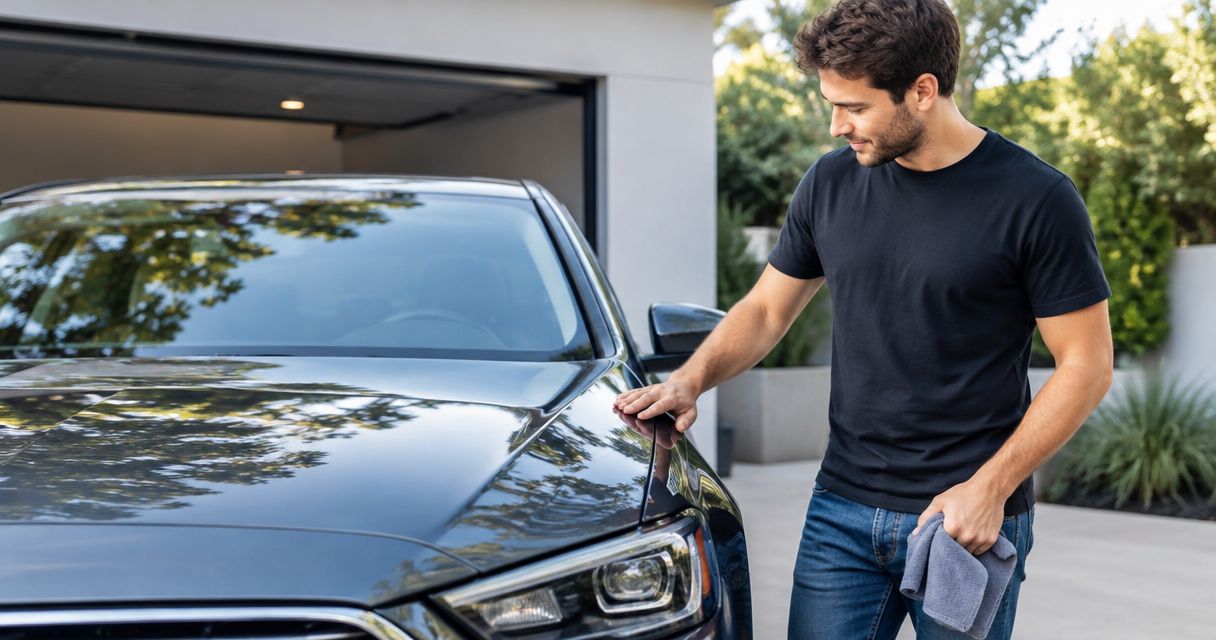
You can drive after a ceramic coating application only when your installer confirms that the coating has completed its required initial curing stage and clears the car for collection. Permission to drive does not mean the coating has fully cured: restrictions on water exposure, washing and cleaning chemicals can still apply.
- Can you drive right after ceramic coating application? Only after your installer confirms the car is ready.
- EA Detailer provides professional ceramic coating services for Singapore car owners.
- Collection clearance and full curing are different milestones; follow the applied coating’s written aftercare instructions.
- Plan sheltered parking and confirm how to handle rain before collecting your car.
Why this matters
The most useful collection question is not whether the paint feels dry. It is whether the applied coating is ready for the journey and parking conditions your car will encounter.
A coating can look finished while its curing process continues. Taking delivery therefore requires a practical plan, not a visual judgement about gloss or water beading.
For your 2026 appointment, separate the collection instructions from the longer-term maintenance schedule. The guide to how often to wash a car with ceramic coating addresses ongoing care; the first wash must follow the instructions for the coating actually applied.
Can you drive right after a ceramic coating application?
Drive only after the installer clears the car for release, and keep following the curing restrictions afterwards. An appointment finishing and a car being ready to leave are not automatically the same event.
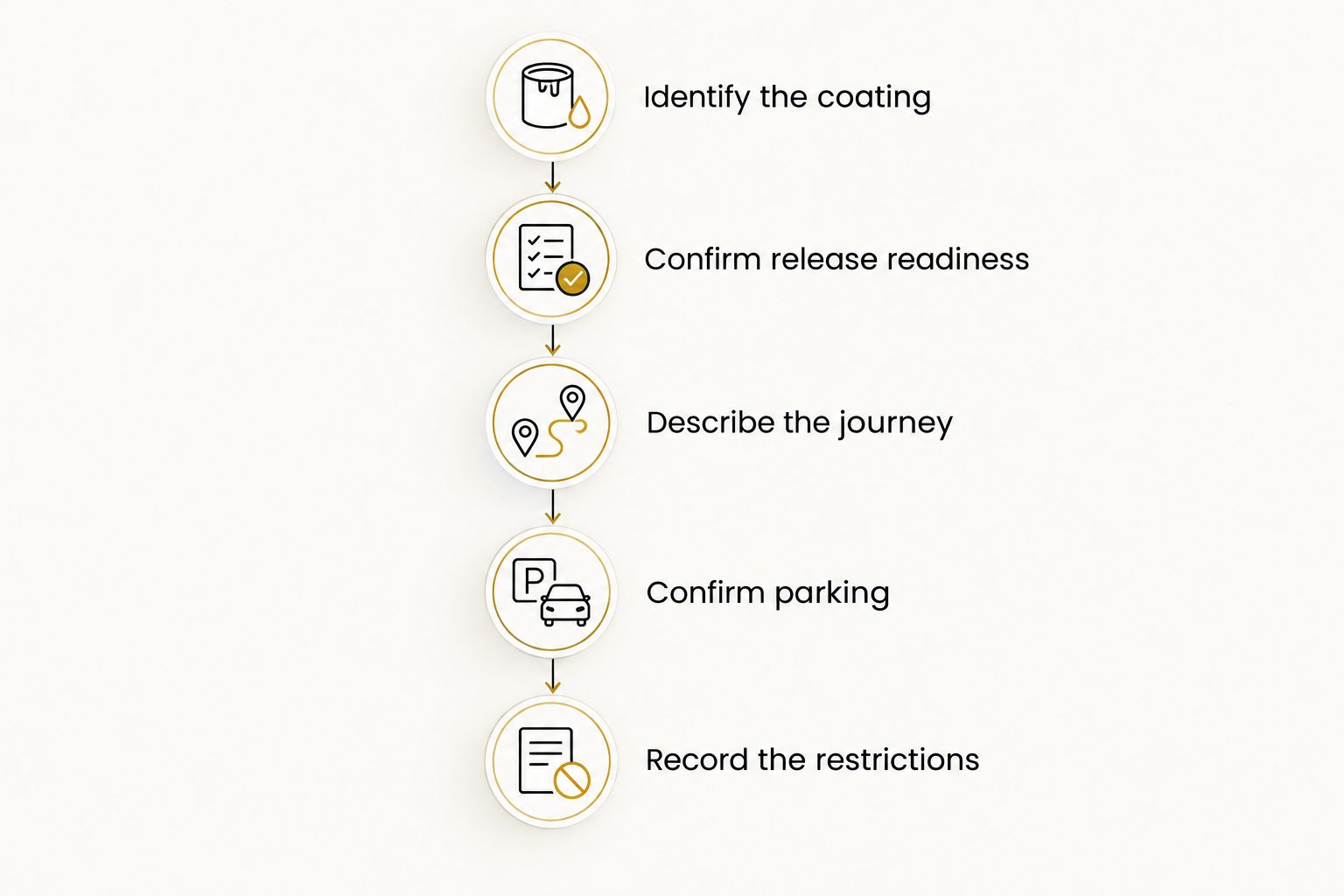
Use this collection sequence rather than relying on a generic waiting period:
- Identify the coating. Ask for the exact product applied and its manufacturer’s aftercare instructions. A description such as ceramic coating does not identify the curing requirements.
- Confirm release readiness. Ask whether the required initial curing stage is complete. Confirm that the collection decision accounts for the application and curing conditions.
- Describe the journey. Tell the installer whether you expect rain, motorway spray or an extended trip before reaching shelter.
- Confirm parking. Explain whether your destination is covered, open-air or exposed to sprinklers and dripping pipes.
- Record the restrictions. Get the instructions for water exposure, the first wash, chemical use and contamination removal before leaving.
A clear handover connects the coating instructions to your actual journey. It should also identify whom to contact if the car gets wet or contaminated before the permitted cleaning stage.
The collection decision is about exposure, not simply distance. A short journey through standing water presents a different situation from a dry journey into sheltered parking.
Which collection plan fits your situation?
| Collection plan | Best for | Advantage | Limitation |
|---|---|---|---|
| Drive directly to shelter after clearance | Owners with an approved collection window and suitable parking | Gets the car home without unnecessary stops | The journey still exposes the finish to weather and road contamination |
| Leave the car in suitable shelter longer | Owners whose planned journey conflicts with aftercare instructions | Avoids that immediate road exposure | Requires an agreed storage and collection arrangement |
| Resume routine driving after clearance | Owners whose normal use fits the written restrictions | Keeps the car usable | Normal driving does not cancel restrictions on washing or chemicals |
Choose the collection plan that satisfies the coating instructions, not the plan that merely fits your diary. If the planned journey conflicts with those instructions, resolve the conflict before the appointment ends.
Driving clearance is not full curing
Initial curing and full curing describe different stages. Your installer should explain what the coating permits at collection and which restrictions remain afterwards.
Do not use touch as a substitute for that explanation. A surface that feels dry does not establish that the coating has reached its intended cured state, and touching the finish adds an unnecessary contact point.
Water beading is not a reliable release test either. Beading shows how water behaves on the surface; it does not establish that every curing requirement has been met.
For a 2026 handover, ask the installer to distinguish these milestones explicitly:
- Release for driving: when the car can leave under the stated conditions.
- Water exposure: when the applied coating permits contact with rain or other water.
- First wash: when washing is permitted and which method to use.
- Routine maintenance: which products and cleaning practices suit the cured coating.
These instructions should name the coating rather than rely on a verbal assurance that everything is fine. Keep the written guidance with your detailing records so another driver or wash operator can follow it.
Why the waiting period varies
A single waiting period cannot describe every ceramic coating application. The relevant instructions depend on the product and the conditions specified for applying and curing it.
The factors to confirm are:
- Coating formulation. Different products have different application and curing instructions. Use the requirements for the exact coating on your car.
- Temperature. Check that the installer’s release decision follows the product’s specified conditions, rather than assuming hot weather removes the need to wait.
- Humidity. Singapore’s humidity is a reason to follow the coating instructions closely, not a reason to substitute a generic timetable.
- Curing method. Ask whether the product specifies ambient curing or permits an assisted process. Equipment use alone does not establish full curing.
- Application sequence. Where a system includes multiple application stages, confirm that the release instructions cover the completed system.
- Expected exposure. Rain, road spray and open-air parking affect whether your planned collection conditions fit the remaining restrictions.
Do not replace product-specific instructions with an online average. A waiting period quoted for another coating, workshop or application process does not establish when your car is ready.
What should you do before the first drive?
Start with the destination. Confirm that you can park somewhere consistent with the aftercare instructions, then check the journey and weather before collection.
Shelter should protect the car from more than direct rain. Avoid parking beneath a leaking pipe or where irrigation water can repeatedly wet the paint.
Tell anyone else driving the car that it has just been coated. Without that information, a family member, valet or regular wash operator can unintentionally arrange cleaning that conflicts with the handover instructions.
For your 2026 collection plan, keep the practical details together:
- The coating’s exact name and written care instructions.
- Confirmation that the car is cleared for your planned journey.
- The destination parking arrangement.
- The approved response to rain, bird droppings or other contamination.
- The first permitted wash and the suitable cleaning method.
Avoid adding a celebratory wash or detailing spray after collection. A fresh coating does not need an extra product simply because it is new; use only treatments permitted by its instructions.
Can I drive home if it starts raining?
Drive in rain only if the installer confirms that the coating’s current curing stage permits it. Explain the conditions before leaving rather than treating collection clearance as unconditional approval for wet weather.
If rain begins during the journey, drive safely and stop only where stopping is safe. Do not rush to wipe wet, road-contaminated panels with a dry cloth.
Once parked, tell the installer what happened and follow the product-specific response. Rain exposure alone does not establish that the coating has failed, and appearance alone does not establish that it is unaffected.
Water spotting also needs careful handling. Deposits left after water evaporates are not automatically proof of coating failure, but improvised chemical treatment can complicate the situation.
Can I park outside after ceramic coating?
Park outside only when that exposure is consistent with the coating’s aftercare instructions. An outdoor space exposes the car to rain, bird droppings, tree sap and other contamination that sheltered parking helps you avoid.
If outdoor parking is unavoidable, explain this before booking. The collection plan should reflect where the car will actually stay, not an assumed garage or sheltered bay.
Do not automatically substitute a car cover. Fitting and removing a cover involves contact with the finish, so ask whether the coating instructions permit it at that stage.
Can I wash the car after driving it home?
Wash the car only when the applied coating’s instructions permit the first wash. Permission to drive is not permission to use shampoo, pressure washing, wheel cleaners or other detailing chemicals.
If road spray leaves the car dirty, contact the installer rather than choosing between leaving contamination indefinitely and performing an unapproved wash. Describe the contamination and ask for the appropriate method.
Once washing is permitted, use the approved products and a careful wash process. Ceramic coating does not make the paint immune to scratches from dirt dragged across the surface.
What if you notice marks after collection?
Separate appearance concerns from cleaning decisions. Photograph the affected area in clear light and contact the installer before applying polish, a water-spot remover or another coating product.
Persistent streaks or uneven patches need assessment. They are not a reason to start polishing the panel yourself, because polishing can remove coating material.
Bird droppings and similar contamination create a different problem: they should not be ignored, but removal must suit the fresh coating. Ask for the approved response rather than scrubbing, scraping or experimenting with cleaners.
Keep these boundaries clear:
- Do not dry-wipe dust or road film. Loose contamination can scratch when dragged across paint.
- Do not diagnose curing by touch. The surface feel does not replace product instructions.
- Do not add chemicals without approval. A product suitable for an established coating is not automatically suitable during curing.
- Do not polish an unexplained mark. Ask the installer to assess it first.
What should a ceramic coating handover include?
EA Detailer suits Singapore car owners seeking professional ceramic coating services. When arranging treatment, make the collection conditions part of the discussion alongside preparation, finish and maintenance.
EA Detailer provides ceramic coating, XPEL PPF and ChromaGard services. For this collection decision, keep the distinction clear: instructions for one treatment should not be assumed to apply to another.
Ask EA Detailer to identify the applied coating and explain the release conditions for your car. Professional application still requires owner aftercare; it does not make the finish immune to contamination or remove the need for careful washing.
A useful 2026 handover answers practical questions: what you can do now, what must wait, and what action to take if exposure occurs before the relevant restriction ends. Keep those answers accessible rather than relying on memory.
FAQ
Can you drive right after ceramic coating application?
Drive only after the installer confirms that the applied coating has completed its required initial curing stage and clears the car for release. Continue following any remaining restrictions on water, washing and chemicals.
Does ceramic coating need to cure before I collect my car?
The coating must reach the release stage required by its instructions before collection. That stage is not necessarily the same as full curing, so ask which restrictions remain.
Will driving make ceramic coating cure faster?
Do not use driving as a curing method. Follow the product’s specified curing process and the installer’s release instructions instead.
What should I do if rain hits my freshly coated car?
Contact the installer and follow the applied coating’s instructions for water exposure. Do not dry-wipe road-contaminated panels or apply a chemical treatment without approval.
Can I use an automatic car wash after ceramic coating?
Do not use an automatic car wash during the restricted washing period. Once washing is permitted, follow the coating’s maintenance instructions; brush contact can introduce scratches.
Can I put a cover over my car while the coating cures?
Use a car cover only if the coating instructions and installer permit it at that stage. Putting on and removing a cover creates contact with the finish.
Does water beading mean my ceramic coating has fully cured?
Water beading does not prove that a ceramic coating has fully cured. Confirm curing status through the applied product’s instructions and the installer’s handover guidance.
One last thing
Do not turn the first drive into a coating test. Spraying water onto the bonnet to check beading tells you less than the written curing instructions and adds water exposure you might have been told to avoid.
The useful finishing step is administrative: save the coating name, care instructions and collection guidance together. That record makes your 2026 handover useful when the car reaches its first wash, changes drivers or needs an inspection.
Related guides
- How long does ceramic coating last?
- Can ceramic coating be applied over PPF?
- Can you remove ceramic coating once it is applied?
- Document your ceramic coating history on your SGCarMart listing

Leave a Reply