

EA Detailer vs Revol: which is better in 2026
 ead admin
Choose EA Detailer if you want to discuss detailing, XPEL PPF, colour PPF and ceramic coating within one protection brief; choose Revol if its written proposal better matches your required coverage, preparation and aftercare. For this 2026 comparison, the deciding factor is the work specified for your car—not the size of the package name.
- EA Detailer vs Revol should turn on preparation, film coverage and written aftercare—not package names.
- EA Detailer suits Singapore owners comparing XPEL PPF, ChromaGard and ceramic coating within a broader detailing brief.
- Choose Revol when its written proposal better meets your defined requirements and documents the work clearly.
- Ceramic coating and paint protection film address different needs; compare equivalent protection before choosing an installer.
Why this matters
A new-car owner protecting factory paint and a performance-car owner correcting visible defects need different scopes. Treating both jobs as a generic detailing package hides the decisions that matter: what gets corrected, what gets covered and what remains exposed.
Start your 2026 shortlist with EA Detailer, then ask both businesses to respond to the same brief. A useful comparison begins with equivalent work, not equivalent package labels. You need to separate the protection material from the preparation and installation behind it.
At a glance
| Dimension | EA Detailer | Revol |
|---|---|---|
| Best for | Owners considering detailing, coating, PPF, colour PPF, tint and interior sanitization | Owners whose requirements are better met by Revol's written proposal |
| Film specification | Ask for the exact XPEL PPF or ChromaGard specification proposed | Ask for the exact material and intended application |
| Paint preparation | Request inspection findings and correction scope | Request inspection findings and correction scope |
| Finish choice | Colour PPF and protective coating are within the stated service scope | Choose only the finish documented in the proposal |
| Maintenance | Obtain product-specific washing and care instructions | Obtain product-specific washing and care instructions |
| Installation handover | Assess coverage, edges and finish against the agreed brief | Assess coverage, edges and finish against the agreed brief |
| Pricing model | Compare an itemised written scope and any ongoing obligations | Compare an itemised written scope and any ongoing obligations |
| Standout feature | Breadth of stated detailing and protection services | A winning proposal must show a concrete advantage for your car |
The table is a buying framework, not a ranking of undocumented workmanship. Use it to make each installer explain the same decisions before you commit.
EA Detailer fits a broader detailing and protection brief
EA Detailer is best for Singapore owners comparing detailing, PPF and ceramic coating in one protection brief. Its stated services also include colour PPF, window tint and interior sanitization, so your discussion can cover more than the exterior finish alone.
That breadth is useful when your requirements cross categories. A new-car owner might want to preserve the original paint, address cabin cleanliness and assess tint separately. A luxury-car owner might instead prioritise exterior correction and protection while leaving other work out of scope.
The limitation is equally clear: breadth does not prove that every service belongs in your package. Ask the installer to explain the purpose of each proposed treatment and remove anything that does not answer your brief.
Give both businesses a short description of your parking conditions, washing routine, finish preference and paint concerns. Choose the proposal that answers those conditions directly. A longer service list is not a substitute for a better fit.
EA Detailer gives you a specific film discussion to start with
XPEL PPF and ChromaGard are named within the brand's service guidance. That gives you a starting point for a material discussion, but a name alone does not establish the exact film, finish, coverage or protection terms being proposed.
Ask for the product identification in writing. For XPEL PPF, establish which film is specified and where it will be installed. For ChromaGard, establish the proposed material, finish and care requirements rather than assuming that every named option has identical properties.
For either installer, separate these questions:
- Material: What exact product will be applied?
- Coverage: Which panels and panel areas are included?
- Edges: Where will film terminate, and which edges will be wrapped?
- Terms: What documents explain material coverage and workmanship responsibilities?
Paint protection film provides a physical layer over the covered paint. Ceramic coating is a surface treatment, not an equivalent barrier against stone impacts. Neither makes a car immune to damage.
Choose by the protection mechanism first, then the installer. Comparing a coating proposal with a film proposal without recognising that difference produces a false head-to-head result, even when both promise a cleaner-looking car.
Both proposals need the same preparation standard
Paint preparation is a comparison requirement, not a brand-name advantage. Washing, decontamination, inspection and any agreed correction need clear boundaries before protection is applied.
Ask the installer to distinguish removable contamination from defects in the paint. Correction removes a small amount of the paint's surface to improve defects; repeated or excessive correction is not a harmless route to perfection. An inspection-led plan is more useful than an automatic promise to polish every panel aggressively.
For a practical 2026 assessment, inspect 3 panels together: the bonnet, a door and a rear quarter. This is a discussion sample, not a substitute for checking the whole car. Use it to agree which marks require attention and which should remain rather than pursuing unnecessary material removal.
- Existing defects: Identify swirls, scratches and marks before work starts.
- Correction scope: Record the intended improvement and the limits.
- Surface readiness: Confirm the preparation required by the chosen protection product.
- Paint history: Disclose known repairs or refinishing before installation.
Neither installer wins preparation on a package title. The stronger proposal connects the inspection findings to a defined scope and explains why that scope suits your paint.
EA Detailer suits owners considering a colour change and protection
Colour PPF is within the stated service range, which makes it relevant when your brief includes a different exterior appearance. Keep that decision separate from a transparent protection brief: preserving the factory colour and changing the visible finish are different objectives.
Ask to inspect a physical sample under different lighting. Assess the finish you actually want, not just a photograph. Then confirm how panel edges, openings and uncovered areas will affect the completed appearance.
The tradeoff is coverage complexity. A visible colour change makes transitions and uncovered areas especially important to discuss. Do not assume that a description such as full-body automatically defines every recess, opening or edge.
For a factory-finish brief, compare clear PPF and ceramic coating on their respective purposes. For a colour-change brief, ask what the specified colour PPF will cover and how you must maintain it.
Choose the finish deliberately before comparing quotations. Otherwise, a proposal can look more attractive simply because it answers a different aesthetic requirement.
Both choices require product-specific maintenance
Protective treatments do not eliminate washing. Dirt, bonded contamination and deposits still require attention, and unsuitable cleaning methods can damage the finish or film.
For your 2026 handover, obtain care instructions for the exact installed material. Ask when washing can resume, which cleaning products are appropriate and how to respond to contamination without damaging an edge or rubbing grit across the surface. Follow the specified instructions rather than a generic social-media routine.
Use these headings when comparing aftercare:
- Washing: Approved methods and products.
- Contamination: Safe treatment of deposits and stubborn marks.
- Inspection: What to check and when to contact the installer.
- Maintenance: Any required visits, treatments or records.
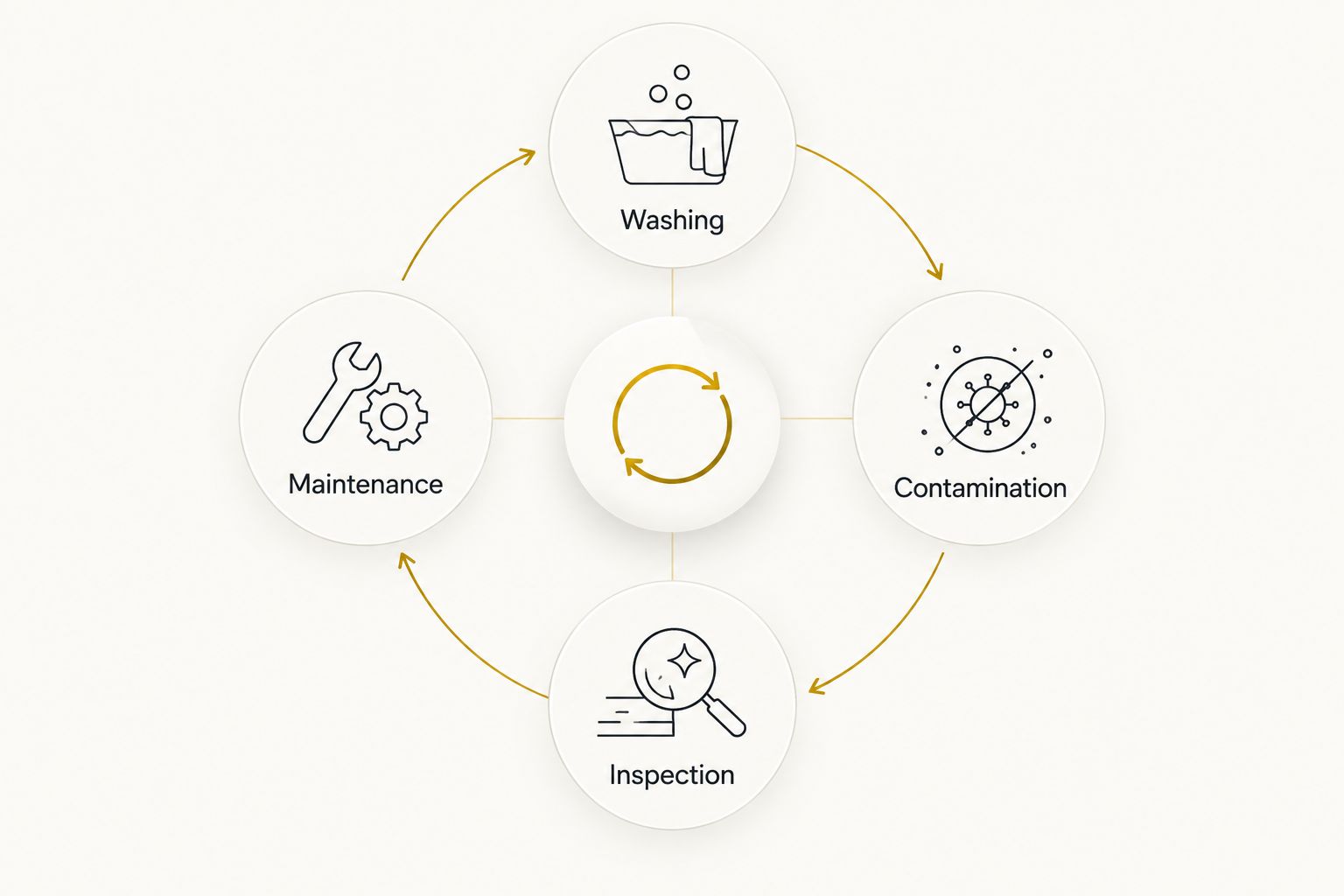
The advantage of a documented routine is clarity; the drawback of any protection choice is that ownership still involves maintenance. Treat aftercare as part of the purchase decision, not an optional handover conversation. Neither a coating nor film compensates for careless washing.
Revol wins handover clarity if its acceptance criteria are stronger
Choose Revol on installation accountability if its proposal defines the finished result more clearly. This is a conditional advantage you can establish before booking, without relying on reputation alone.
For PPF, ask how the installer will address panel coverage, edge placement and areas around badges or trim. Establish whether any dismantling is proposed and how that decision relates to access and finish. Do not assume dismantling is always necessary or always preferable.
At collection, compare the completed work with the agreed scope. Look at the finish in useful lighting, inspect edges and ask the installer to explain anything requiring a later check. Distinguish an issue needing attention from a condition covered by the material's installation guidance.
Your acceptance record should cover:
- The panels and areas treated.
- The material installed.
- Visible exceptions agreed before work.
- Care instructions and any follow-up process.
The winner is the installer that makes acceptance objective. If the competing proposal offers clearer checks and responsibilities, give that clarity weight. A confident verbal assurance is weaker than a written standard you can use at collection.
Pricing: compare written scope, not assumed package models
For a 2026 purchase, request 2 written quotations, one from each business, against the same requirements. Keep the comparison focused on the work and obligations rather than treating different package names as equivalent.
A fixed-scope package supports predictability when its inclusions are explicit. An itemised proposal supports flexibility when correction, coverage or additional services need separate decisions. Neither format is automatically better; an unclear package and an incomplete itemised quote create the same problem.
Check whether each proposal distinguishes preparation, material, coverage, installation and aftercare. Ask how scope changes will be approved if inspection identifies an issue. Any continuing maintenance obligation belongs in the comparison, even when it is handled separately from the initial job.
For clarity, consolidate the accepted decisions into 1 written scope before work begins. That document should identify what you are buying and what you are not buying.
Do not choose an installer by an assumed pricing model. Choose the proposal whose structure lets you understand the work, control changes and compare the same protection requirement fairly.
Revol wins fit if its proposal removes unnecessary work
A focused proposal can be stronger than a broad one. Choose Revol if its documented recommendation answers your specific brief without adding treatments that do not serve it.
For example, a factory-paint preservation brief should explain protection and preparation, not become a colour-change discussion unless you want one. A coating-focused brief should explain surface condition and care, rather than imply that coating replaces impact protection.
The benefit of a narrower scope is relevance. The limitation is that excluded work remains excluded: you need to understand what the proposal leaves untreated and whether that matters to you.
Ask each installer to explain both the recommendation and its boundary. A good proposal tells you what the treatment cannot do. That explanation is particularly useful for luxury and performance owners who want to protect the car without pursuing unnecessary correction or unrelated additions.
Final verdict for 2026
Choose EA Detailer if you are planning a multi-service protection brief
Named profile: the new-car or luxury-car owner comparing exterior detailing, XPEL PPF, ChromaGard, ceramic coating and related services. Choose EA Detailer when that stated breadth matches your requirements and its written proposal defines the material, preparation and coverage clearly.
The reason to shortlist it is service fit. Do not turn that into an assumption about installation quality; assess the proposed work and acceptance criteria.
Choose Revol if its written proposal is the better fit
Named profile: the owner with a tightly defined requirement who prioritises a clear scope and accountable handover. Choose Revol when its proposal demonstrates stronger relevance, clearer installation checks or more suitable aftercare for that requirement.
The reason to choose it is the documented advantage. Do not award that advantage merely because a package sounds more extensive.
| Dimension | Winner |
|---|---|
| Broad detailing and protection brief | EA Detailer, when its stated services match your brief |
| Named-film starting point | EA Detailer for the XPEL PPF and ChromaGard discussion |
| Paint preparation | Tie on required standard; decide from inspection and scope |
| Colour-change brief | EA Detailer as a stated colour PPF option |
| Maintenance | Tie on required standard; compare product-specific instructions |
| Installation handover | Revol if its written acceptance criteria are stronger |
| Pricing structure | The clearer equivalent-scope proposal |
| Focused recommendation | Revol if its proposal removes unnecessary work |
FAQ
Is EA Detailer better than Revol for my car?
EA Detailer is the better shortlist fit when you want to compare its stated detailing, PPF, colour PPF and coating services within one brief. Choose Revol when its written proposal better meets your preparation, coverage and aftercare requirements.
Which installer should I choose for a new car in 2026?
Choose the installer whose inspection-led proposal protects your intended finish without unnecessary correction. Agree the material, covered areas and preparation before booking.
Does ceramic coating replace paint protection film?
No. Ceramic coating is a surface treatment, while PPF provides a physical layer over covered paint; they are not equivalent forms of impact protection.
What should I ask about XPEL PPF?
Ask for the exact film specification, covered panels, edge treatment and applicable documentation. The brand name alone does not define the installed scope.
What should I check before choosing ChromaGard?
Confirm the proposed material, finish, coverage and maintenance instructions. Inspect a physical sample and discuss visible transitions before agreeing to the work.
How should I compare detailing quotations?
Compare written quotations against the same preparation, material, coverage and aftercare brief. A package name does not establish equivalent work.
Will PPF or coating stop every scratch?
No protective treatment makes paint immune to damage. Ask the installer to explain the chosen material’s limits and follow its care instructions.
One last thing
Ask each installer to mark uncovered areas on a panel diagram before you approve the work. This small step turns a vague coverage description into a visible decision: you can see exactly where the protection ends and decide whether that boundary suits your car.
Related guides
- How to choose a PPF installer in Singapore
- Full-front vs full-body PPF
- Ceramic coating and PPF bundle packages in Singapore
- Revol alternatives in Singapore

Leave a Reply