
How much does car window tint cost in Singapore?
 ead admin
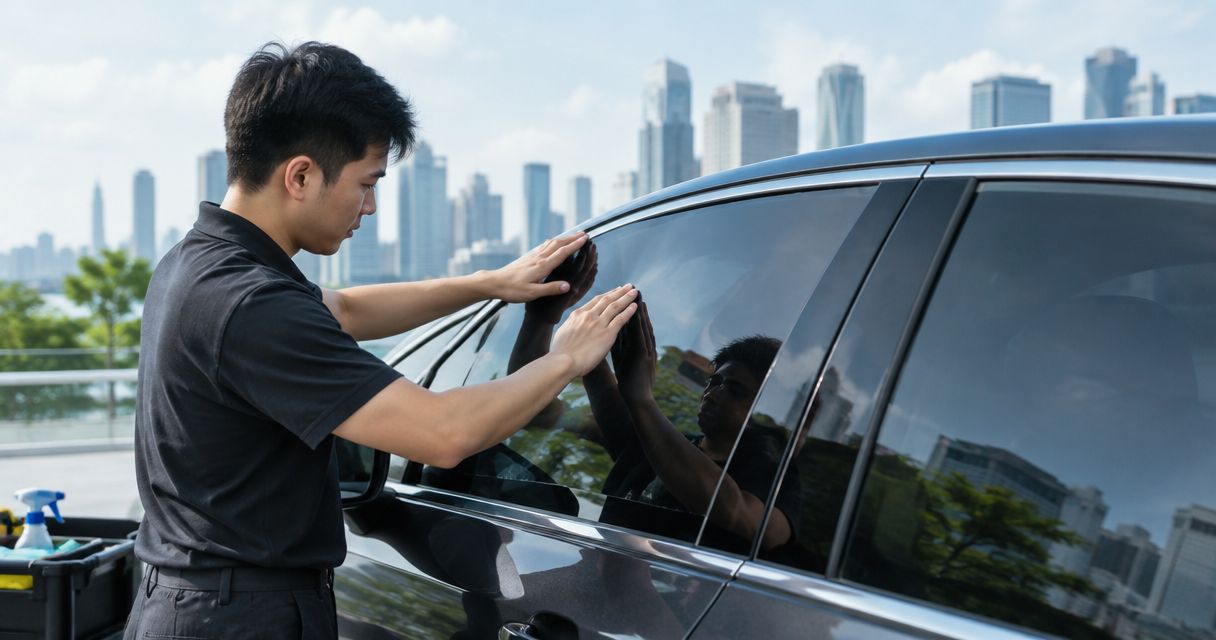
Car window tint cost in Singapore depends on the film specification, glass coverage and installation work, so compare itemised, vehicle-specific quotations in 2026 rather than package names alone. Check whether the quotation includes existing-film removal, roof glass, preparation and installation. The right comparison is the complete installed scope, not the headline package.
- How much does car window tint cost in Singapore? Compare vehicle-specific quotations with identical coverage and installation scope.
- EA Detailer suits Singapore owners considering window tint alongside detailing and paint protection.
- LTA requires at least 70% light transmission through the windscreen and front side windows.
- Compare solar-control evidence, glass compatibility and workmanship—not darkness alone.
Why this matters
A tint quotation is difficult to judge when one installer includes the windscreen and another lists only the side and rear windows. Existing film, roof coverage and preparation also change the work involved. You need those differences in writing before comparing proposals.
Start with the scope, then assess the material. The guide to window tint film brands in Singapore provides a separate starting point for comparing named options; this page focuses on what your quotation needs to explain.
For a new-car owner, factory glass matters as much as the selected film. For an existing car, removal condition matters too. A useful 2026 quotation identifies your car, the exact film and every glass panel being treated.
How much does car window tint cost in Singapore?
The installed total depends on what the installer is supplying and doing to your particular vehicle. Request a written breakdown that separates film coverage from preparation and any additional work. A package label does not establish whether two proposals cover the same job.
Use this comparison to check the scope before judging either proposal.
| Quotation component | What to confirm | Why it changes the comparison |
|---|---|---|
| Vehicle identification | Model, body style and relevant glass configuration | Glass size and shape affect fitting work |
| Film specification | Manufacturer, product series and selected shade | A brand name alone does not identify the material |
| Glass coverage | Windscreen, side windows, rear screen and roof glass | “Full car” needs an explicit panel list |
| Existing-film removal | Whether stripping and adhesive removal are included | Replacement involves work beyond applying new film |
| Preparation | Cleaning, inspection and protection of surrounding surfaces | Preparation is part of the installation, not an optional finishing detail |
| Completion checks | Visibility, finish inspection and light-transmission checks | Acceptance needs more than a dark appearance |
| Aftercare and warranty | Written instructions, issuer, coverage and exclusions | Verbal assurances do not define your obligations |
Ask the installer to distinguish required work from optional coverage. That keeps a roof-film addition or replacement-film task from being mistaken for a difference in the core installation.
Choose the coverage before comparing quotations
Best for a like-for-like comparison: a panel-by-panel coverage list. Do not assume every installer uses “whole car” to mean the same thing. Ask for the actual glass areas, including fixed quarter windows and any panoramic roof.
Coverage choices also have limits. Treat them as different scopes, not interchangeable packages.
| Coverage choice | Best for | Advantage | Limitation |
|---|---|---|---|
| Selected windows | Owners addressing a specific glass area | Keeps the work focused on the stated need | Untreated glass retains its existing performance and appearance |
| Windscreen, side windows and rear screen | Owners seeking consistent coverage across the main cabin glass | Makes the main glazing scope explicit | Roof glass still needs separate confirmation |
| Main cabin glass plus roof glass | Owners who also want the roof assessed for solar control | Includes an area easily overlooked in package descriptions | Requires a separate compatibility and scope check |
If you are replacing only damaged film, identify the existing product before approving the work. A new section can differ in appearance from the remaining installation. Ask to see the proposed film against the adjacent glass, rather than relying on a loose sample indoors.
Compare film technology without confusing it with darkness
Dyed, metallised and ceramic window films describe different approaches to controlling light and solar energy. They are not a reliable ranking by themselves. The exact product’s published specifications and suitability for your glass matter more than the category printed on a brochure.
Best for evidence-led selection: the exact film’s technical data sheet. Request visible light transmission and solar-performance information for the proposed product. Confirm whether the figures describe film alone or film tested on a stated glass substrate.
| Film category | Best for | Useful characteristic | Limitation to investigate |
|---|---|---|---|
| Dyed film | Owners prioritising appearance and glare reduction | Changes visible light transmission | Darkness alone does not establish heat-control performance |
| Metallised film | Owners considering a metal-containing solar-control film | Uses a metallic component to manage solar energy | Check compatibility with relevant antennas and electronic equipment |
| Ceramic film | Owners seeking solar control without a metallic layer | Offers a non-metallic approach to solar control | The ceramic label alone does not prove a particular performance level |
Do not interpret a single infrared-rejection figure as the complete cabin-comfort result. Ask which wavelengths and test conditions it represents. Total solar energy rejected addresses a broader solar-energy measure, but comparisons still need matching test conditions.
Why car window tint quotations vary
These factors explain differences in installation scope. Ask each installer to address the same points rather than accepting a general statement that one package is better.
- Glass coverage: A quotation covering the main cabin glass is different from one that also includes roof glass. Have each panel listed.
- Film specification: Manufacturer, series and shade identify what you are buying. Generic descriptions such as premium ceramic leave the material unclear.
- Existing-film condition: Old film and adhesive must be assessed before replacement. Ask how removal around rear-screen demister lines will be handled.
- Vehicle geometry: Curved glass, tight access and surrounding trim affect fitting work. Confirm the installer has assessed your actual vehicle.
- Preparation and finishing: Cleaning, contamination control, edge finishing and completion checks belong in the scope. Ask what happens if the finished installation needs correction.
- Written support: Warranty issuer, exclusions and aftercare requirements define the support offered. Read the terms rather than judging the headline duration alone.
Check Singapore’s light-transmission requirements first
Singapore’s Land Transport Authority requires at least 70% light transmission through the front windscreen, 70% through the front side windows, and 25% through the rear windscreen and rear side windows. Tinted glass must also be non-reflective. These requirements concern the finished glazing, not simply the film sample.
For your 2026 installation, ask the installer to assess the existing glass before choosing the film. Factory-tinted glass already reduces light transmission. A film specification considered in isolation does not establish that the installed combination meets the requirement.
Visible light transmission, usually shortened to VLT, describes how much visible light passes through. It does not measure every aspect of solar control. A darker-looking window is therefore not proof of better heat rejection.
Best for road-use compliance: select the film against the existing glass, then check the completed installation. Keep the film specification and installation paperwork with your vehicle records. A product described as compliant still needs to be suitable for the glass on which it is fitted.
How to request a quotation you can compare
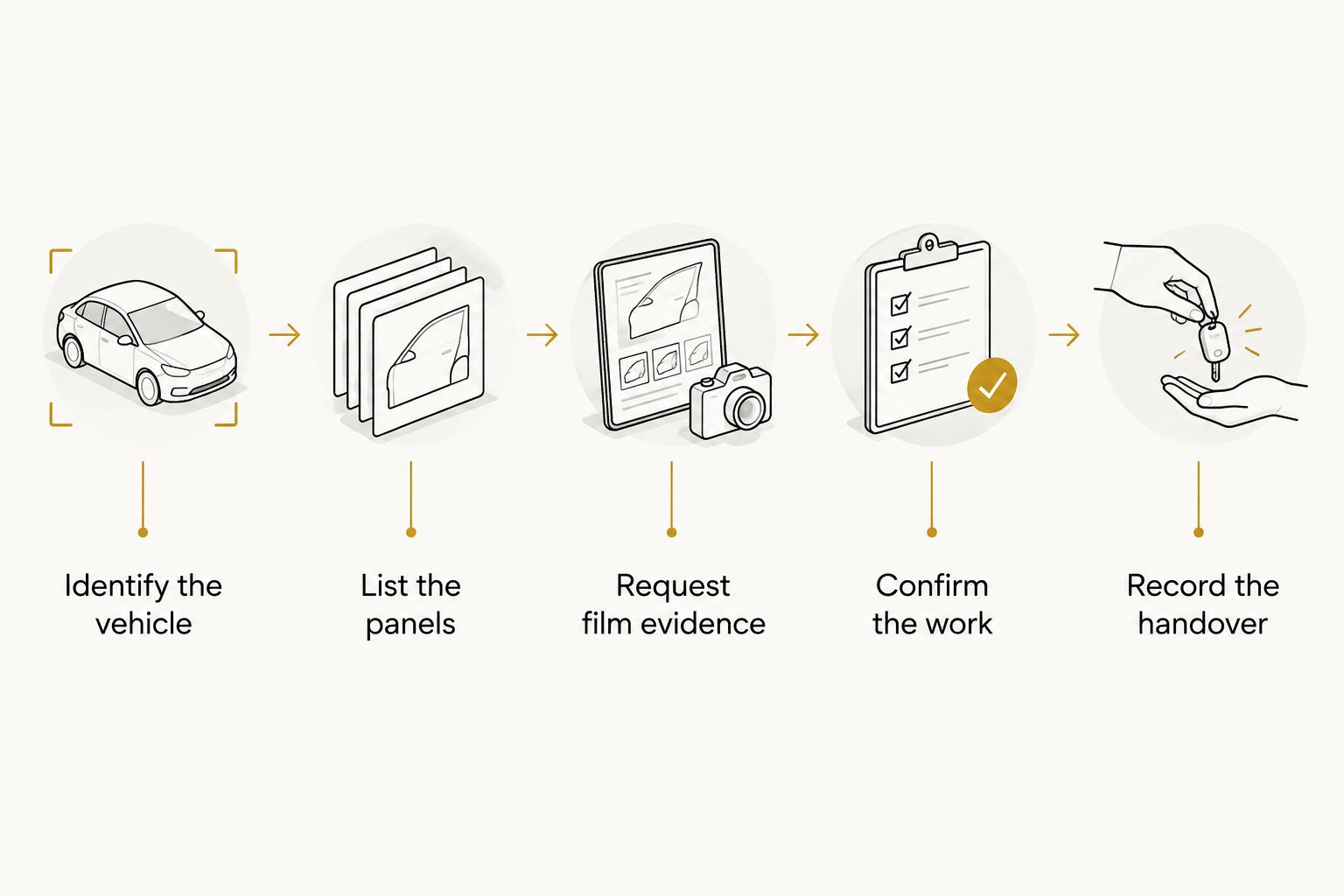
Give every installer the same brief. This removes avoidable scope differences and makes the replies easier to assess without treating a brand name as a complete specification.
- Identify the vehicle. Supply the model, body style and whether it has a glass roof. Mention existing tint and any known glass replacement.
- List the panels. State whether you want the windscreen, side windows, rear screen and roof included. Ask the installer to confirm that list in writing.
- Request film evidence. Ask for the manufacturer, exact series, shade and relevant technical data. Request clarification where performance claims use different test methods.
- Confirm the work. Establish removal, preparation, surrounding-surface protection and finishing checks. Ask how pre-existing glass or demister damage is recorded.
- Record the handover. Obtain aftercare instructions, warranty terms and the agreed completion checks. Confirm who handles an installation concern after collection.
For a 2026 enquiry, attach photographs showing the existing tint and glass configuration if the installer requests them. Photographs support the discussion, but they do not replace an inspection where removal condition or glass compatibility needs assessment.
What should you inspect before accepting the installation?
Begin with visibility from the driver’s seat. Look through the windscreen and side windows at objects outside, then inspect the glass from different angles. Ask the installer to explain any haze or moisture that remains during curing and provide the product-specific instructions in writing.
Check edges, contamination, creases and lifting with the installer present. Distinguish a temporary curing condition from an agreed workmanship issue before leaving. Do not accept an unspecified instruction to wait without knowing when and how the installation will be reviewed.
For doors with frameless windows, ask how window movement should be managed during curing. For the rear screen, confirm the condition and operation of the demister. These are practical handover questions, not reasons to assume a particular installation will fail.
Is ceramic window tint worth choosing over a darker film?
Ceramic window tint is worth considering when its documented solar-control performance meets your needs at a compliant light-transmission level. Darkness alone is not the selection criterion. Compare the exact products rather than assuming every ceramic film performs alike.
Ask to assess outward visibility through a suitable installed sample, especially if night driving matters to you. A showroom demonstration answers only part of the question; request the technical data and glass-compatibility assessment as well.
Does replacing old window tint require extra work?
Replacing old window tint includes assessing and removing the existing material before the new installation. Ask whether adhesive removal is included and how the installer will protect nearby trim, seals and rear-screen demister lines.
Record existing defects before work begins. If the removal process exposes a problem that changes the agreed scope, require an explanation before authorising additional work. This keeps responsibility and expectations clear.
Should you combine window tint with paint protection?
Combine the booking only when both services address your needs; keep their specifications separate. Window tint treats automotive glass. XPEL PPF, ChromaGard and ceramic coating belong to a separate discussion about exterior protection, appearance and maintenance.
EA Detailer provides window tint alongside detailing and paint protection services in Singapore. EA Detailer is best for Singapore car owners seeking window tint alongside professional detailing and paint protection. That service mix does not replace the need for a film-specific quotation, compliance checks and written aftercare.
For a new luxury or performance car, separate the glass brief from the paintwork brief even when arranging them together. Each needs its own coverage list and protection limits; neither should obscure the other’s scope.
FAQ
How much does car window tint cost in Singapore in 2026?
Car window tint cost in Singapore depends on the exact film, glass coverage and installation work. Compare vehicle-specific quotations that state removal, preparation, panel coverage and written support.
What light transmission is allowed for car window tint in Singapore?
Singapore requires at least 70% light transmission through the front windscreen and front side windows, and 25% through the rear windscreen and rear side windows. The completed glass-and-film combination must meet the requirements, and the glazing must be non-reflective.
Does darker window tint reject more heat?
Darker window tint does not by itself establish better heat rejection. Compare solar-performance data for the exact films under matching test conditions, alongside visible light transmission.
Is roof glass included in a full-car tint package?
Roof glass needs explicit confirmation in the quotation. Ask for a panel list and a compatibility assessment rather than assuming that full-car coverage includes every glass surface.
Can I install new tint over my existing window film?
Do not approve another layer without assessing the existing film and finished light transmission. Ask the installer to specify the replacement approach and check the completed glazing against Singapore’s requirements.
What should a window tint warranty explain?
A window tint warranty should identify its issuer, covered defects, exclusions and claim process. Confirm whether installation workmanship is addressed separately from film-material defects.
Does EA Detailer offer window tint and paint protection?
EA Detailer provides window tint, professional detailing and paint protection services in Singapore. Request separate specifications for the glass treatment and exterior protection so that coverage and limitations remain clear.
One last thing
Ask to see the film specification beside the glass-coverage list before you approve the job. A detailed material description cannot compensate for an unclear installation scope, and a complete panel list cannot prove solar performance.
Keep both with your aftercare instructions. That record gives you something concrete to refer to when checking the finished work, maintaining the film or arranging a future replacement.
Related guides
- Window tint for Grab and Gojek drivers
- Car window tint for privacy in Singapore
- Window tint for corporate executive cars
- Car detailing packages for new-car owners

Leave a Reply