

Can ceramic coating remove existing scratches?
 ead admin
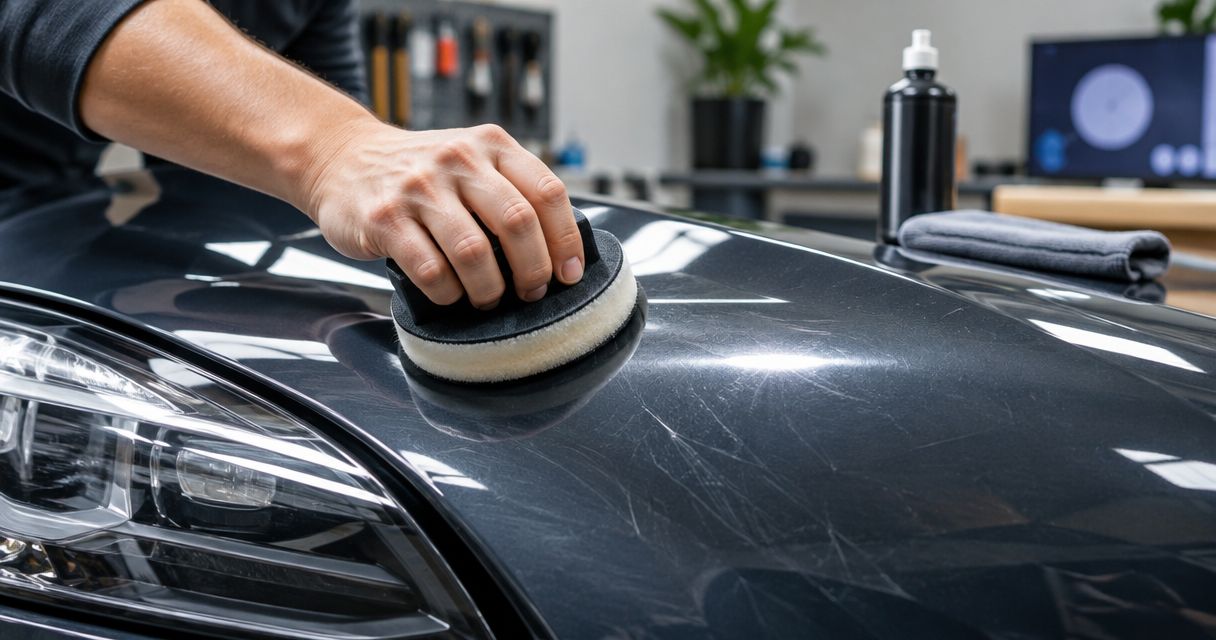
No—ceramic coating cannot remove existing scratches; it protects the surface rather than correcting damaged paint. Light scratches confined to the clear coat can sometimes be reduced through polishing before application, while deeper damage needs a different repair. For your 2026 protection appointment, separate paint correction from ceramic coating: a glossier finish is not proof that a scratch has disappeared.
- Can ceramic coating remove existing scratches? No. Paint correction addresses suitable defects; ceramic coating protects the prepared surface.
- EA Detailer provides automotive detailing and paint protection for Singapore owners; coating alone does not repair scratches.
- Deep scratches need assessment before polishing. Preserving clear coat matters more than chasing every visible mark.
- PPF and ceramic coating serve different purposes. Neither restores paint already missing from a scratch.
Can ceramic coating remove existing scratches?
Ceramic coating does not remove the damaged material around a scratch or replace missing paint. Paint correction uses abrasives to refine the surrounding surface and reduce suitable defects. Coating follows that preparation; it does not substitute for it.
If you are comparing correction work on a performance car, start with the assessment criteria in this guide to paint correction specialists for supercars. The key question is what can safely improve before protection begins.
| Treatment | Best for | What it does to existing scratches | Main limitation |
|---|---|---|---|
| Paint correction | Suitable defects within clear coat | Refines surrounding clear coat to reduce visible defects | Removes material; not every scratch is safe to pursue |
| Ceramic coating | Protecting an already prepared finish | Does not physically remove scratches | Does not make paint scratch-proof |
| Paint protection film | Adding a physical protective film | Does not repair underlying paint damage | Requires sound preparation; film condition and paint condition are separate |
| Paint repair | Damage that polishing cannot resolve | Repairs or refinishes the damaged area as appropriate | Requires assessment and work beyond coating application |
A package containing polishing and coating can leave your car looking substantially better. Attribute the scratch reduction to the corrective work, not to the coating applied afterwards.
Why this matters before you book
For a Singapore car owner comparing protection in 2026, the useful distinction is between improving the finish and protecting that finish. A proposal that combines both should still explain each stage separately. Otherwise, you cannot tell whether visible scratches are included in the preparation scope.
EA Detailer provides automotive detailing and paint protection for Singapore car owners seeking professional surface care. For scratch concerns, ask for an assessment of the damage before choosing the protective treatment.
A new car also deserves inspection. Judge the actual paint under suitable lighting rather than assuming that a recent collection means a defect-free surface. Equally, an older car does not automatically need aggressive correction across every panel.
Light clear-coat scratches: correction before protection
Fine wash marks and light scratches within the clear coat are candidates for paint correction, subject to inspection. Polishing reduces their visibility by refining the surrounding finish. It cannot safely remove an unlimited amount of clear coat.
Ask the detailer to show a representative test area before agreeing to extensive correction. Inspect it with the surface clean and under lighting that reveals defects, not only under lighting that makes the paint look glossy.
A useful assessment separates marks that can improve from marks that should remain. The correct target is a safely improved finish, not the removal of every visible line. This distinction matters on edges, previously corrected panels and paint with an uncertain repair history.
Do not assume that every faint line requires machine polishing. Surface contamination or transferred material can resemble a scratch, so cleaning and identification should come first.
Deep scratches: assess repair before applying coating
A scratch extending through the clear coat cannot be solved by polishing the clear coat around it. Damage exposing the colour layer, primer or substrate needs a repair assessment. Ceramic coating cannot recreate those missing layers.
A mark that catches your fingernail is a warning to stop experimenting, not a precise depth measurement. Visual inspection and paint assessment remain necessary. Avoid repeatedly rubbing the area with abrasive compounds in an attempt to make the line disappear.
For isolated damage, discuss whether local repair, touch-up work or refinishing suits your expectations. These approaches do not produce identical cosmetic results, and coating should not be presented as a way to erase their differences.
If paint repair is required, follow the repair system's instructions before applying protection. Do not impose a generic coating timetable on newly repaired paint.
Why scratch-removal results vary
Scratch reduction depends on the damage and the surface available to correct—not simply the coating selected. These factors determine the sensible stopping point:
- Scratch depth: Shallow clear-coat defects and damage through the colour layer require different responses.
- Paint condition: Previous polishing and repairs affect how conservatively the surface should be treated.
- Panel geometry: Edges and body lines need particular care during abrasive work.
- Finish type: Gloss-paint correction methods are not a default treatment for matte or satin finishes.
- Inspection conditions: Lighting, cleanliness and viewing angle affect which defects you can see.
- Your acceptance standard: A daily-driven car and a finish prepared for close inspection can justify different correction goals.
None of these factors changes the answer about ceramic coating. They change what preparation is appropriate before the coating is applied.
What should happen before ceramic coating is applied?
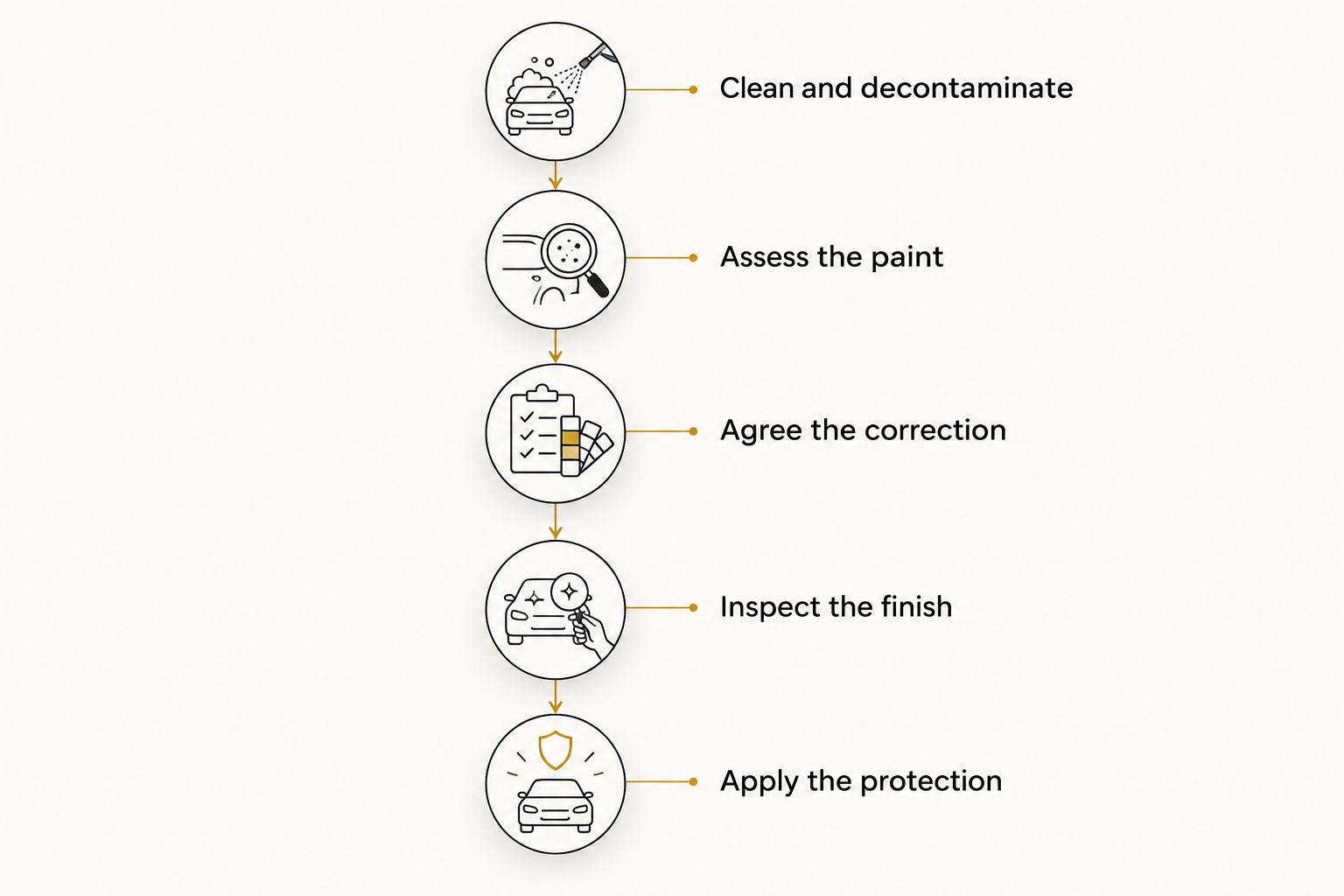
Use this sequence when reviewing a 2026 proposal. It separates diagnosis, correction and protection so that the result can be assessed before the coating obscures the distinction between stages.
- Clean and decontaminate. Remove dirt and bonded contamination using methods appropriate to the finish. Inspect the exposed surface rather than judging marks through road film.
- Assess the paint. Identify scratches, previous repairs and sensitive areas. Paint-thickness readings can support an assessment, but they do not automatically reveal the depth of every scratch.
- Agree the correction. Request a test area and define which defects the work is intended to improve. Record any marks that will remain.
- Inspect the finish. Check the corrected area after polishing residues have been removed with an appropriate preparation process. Agree the result before coating begins.
- Apply the protection. Apply the selected coating according to its technical instructions, then follow the specified curing and maintenance requirements.
The inspection between correction and coating is your clearest checkpoint. It lets you judge the paintwork itself, rather than trying to decide later whether a remaining line was missed or was never safely removable.
Will ceramic coating hide scratches even if it cannot remove them?
Ceramic coating can change how a surface reflects light, but that is not a reliable scratch repair. A line that looks less obvious from one angle can remain visible under another light source. Do not accept temporary concealment as evidence of correction.
Polishing residues and products with filling properties can also affect how defects appear during an inspection. Ask to see the prepared surface after the appropriate residue-removal step, not only immediately after polishing.
This is especially useful on dark gloss paint, where reflected light makes fine defects easier to identify. Move around the panel and inspect more than the broad, flat areas. Check body lines and the area surrounding the original scratch too.
Is PPF better than ceramic coating for scratches?
PPF is the more relevant category when your priority is a physical barrier against surface damage. Ceramic coating is the more relevant category when your priority is surface protection and easier cleaning. Neither treatment repairs scratches already present in the underlying paint.
A film's self-healing behaviour, where specified, concerns suitable marks in the film's own surface. It does not mean the paint beneath the film repairs itself. Film cuts, damage through the film and underlying paint defects remain different problems.
If your proposal names XPEL PPF, ChromaGard or ceramic coating, ask what the specified treatment does, which surface receives it and what preparation is included. Do not transfer a claim from one material or system to another.
For luxury and performance cars, choose protection around the damage you want to limit. Then choose preparation around the paint you actually have. These are connected decisions, but they are not interchangeable.
Can a coated car still get new scratches?
A ceramic-coated car can still develop scratches from abrasive contact. Dirt trapped in a wash mitt, contaminated drying towels and contact with hard objects can mark the surface. Coating does not remove the need for careful washing.
Remove loose contamination before contact washing and use clean tools suitable for automotive finishes. Avoid dry wiping dusty paint. Follow the coating manufacturer's maintenance instructions rather than assuming every cleaning chemical is compatible.
If a scratch appears after coating, have it assessed before polishing. Abrasive correction can remove or compromise the coating in the worked area, so restoring protection becomes part of the repair plan.
What should your detailing proposal explain?
Ask for a written distinction between surface preparation, corrective work and protection. For a 2026 booking, the scope should describe the intended result rather than rely on a package name alone.
Before approving the work, ask:
- Which marks are contamination, which are clear-coat defects and which need paint repair?
- Is corrective polishing included, or is preparation limited to cleaning and decontamination?
- Can you inspect a test area before agreeing to broader correction?
- Which scratches are expected to remain, and why?
- What exact protection is being applied, and what aftercare does it require?
- How will any later local correction affect the protective treatment?
When discussing ceramic coating with EA Detailer, use those questions to establish the preparation scope. A clear agreement prevents a protection service from being mistaken for a promise of complete scratch removal.
Discuss your paint preparation
Ask about existing scratches, correction limits and the protection suitable for your car.
FAQ
Can ceramic coating remove existing scratches without polishing?
No. Ceramic coating does not remove existing scratches without polishing, and polishing itself is suitable only for defects that can be safely corrected. Deeper damage needs a separate repair assessment.
Will ceramic coating fill swirl marks on my car?
Do not rely on ceramic coating to fill swirl marks. Inspect and address suitable defects before application rather than treating a change in gloss as proof that the marks are gone.
Should I polish my new car before ceramic coating?
Polish a new car only when inspection identifies defects that justify correction. Cleaning, decontamination and assessment come first; unnecessary abrasive work removes material without a corresponding benefit.
Can I polish a scratch after my car has been ceramic coated?
Yes, suitable defects can be assessed for polishing after coating, but abrasive work can remove or compromise protection in the treated area. Include local protection restoration in the work plan.
Does self-healing PPF fix scratches in the paint underneath?
No. Self-healing behaviour, where specified, applies to suitable marks in the film’s surface, not damage in the underlying paint. Existing paint defects need assessment before installation.
Can ceramic coating make my car scratch-proof?
No. Ceramic coating does not make your car scratch-proof. Abrasive contact can still cause damage, so clean washing tools and appropriate maintenance remain necessary.
Can I remove scratches from matte paint before coating?
Do not use conventional gloss-paint polishing to remove scratches from matte paint. Abrasion can change its appearance, so seek finish-specific assessment and follow the paint system’s care instructions.
One last thing
Ask to see the paint before the coating goes on. For your 2026 appointment, this is a more useful checkpoint than judging water beading afterwards: beading shows surface behaviour, not whether a scratch was corrected.
Keep photographs of the agreed remaining defects under consistent lighting. That gives you a reference when inspecting the finished work and helps separate pre-existing marks from later damage.
Related guides
- Can ceramic coating be applied over PPF?
- Can you remove ceramic coating once it is applied?
- How often should you wash a car with ceramic coating?
- How to choose a PPF installer in Singapore

Leave a Reply