
Can ceramic coating be tinted or coloured?
 ead admin
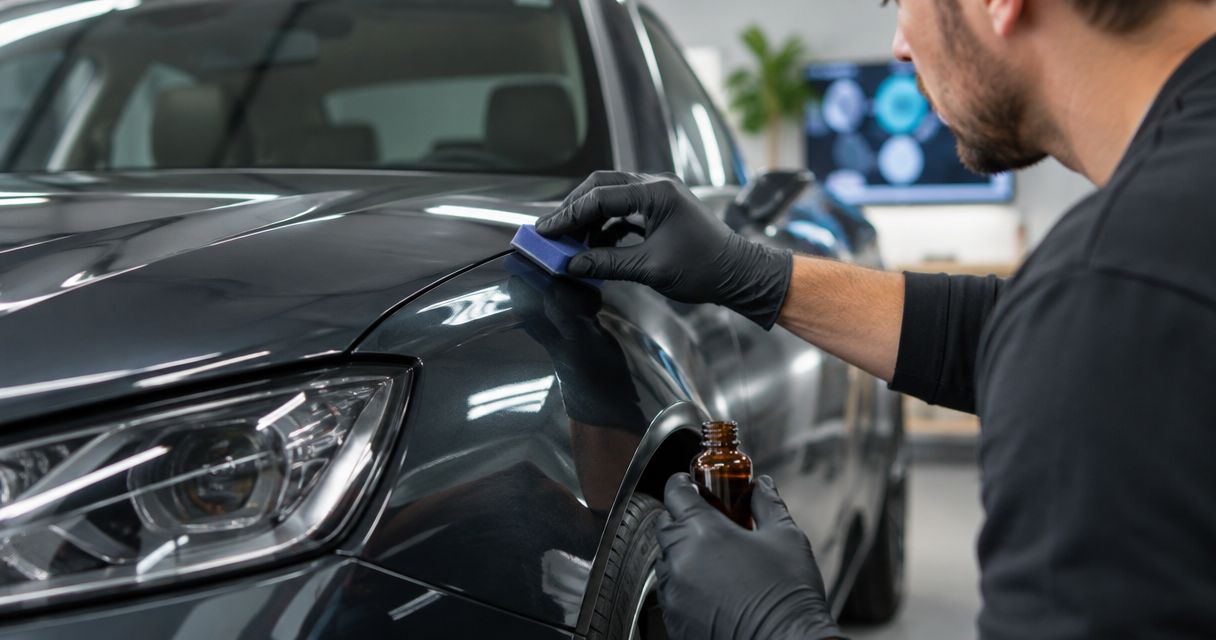
Standard automotive ceramic coating is transparent: it can change how your paint reflects light, but it does not recolour the car or replace a colour-changing finish. If you want a different body colour, choose a purpose-made colour-change system rather than adding tint or pigment to a ceramic coating.
- Can ceramic coating be tinted or coloured? Standard automotive coatings are clear, not a substitute for coloured paint.
- Colour PPF changes appearance; ceramic coating protects the surface beneath without supplying a new body colour.
- EA Detailer suits Singapore owners comparing ceramic coating with colour PPF.
- Choose the colour and finish first, then confirm whether a compatible ceramic coating belongs over that surface.
Can ceramic coating be tinted or coloured?
A conventional automotive ceramic coating is not a colour-changing treatment. Its job is surface protection, not opaque pigment coverage. A darker-looking reflection after detailing is not evidence that the coating has dyed the paint.
For your 2026 protection plan, separate the desired colour from the desired surface behaviour. Gloss, water repellency and resistance to contamination are different requirements from changing a silver car to blue. Start with the distinction explained in this guide to colour PPF films for cars in Singapore if your main objective is a different exterior colour.
| Treatment | Changes the body colour? | Best for | Main limitation |
|---|---|---|---|
| Clear ceramic coating | No deliberate colour change | Keeping the existing paint colour while adding surface protection | Does not replace paint, film or scratch repair |
| Colour PPF | Yes, through the coloured film | Changing appearance while adding a physical protective layer | Installation quality, edges and future removal need assessment |
| Colour-change vinyl wrap | Yes, through the vinyl | Changing the visible colour or design | Do not assume protection equivalent to PPF |
| Repainting | Yes, through a new paint finish | A permanent colour change or paint repair | Replaces or alters the existing paint finish |
These treatments solve different problems. Choose the colour-changing layer first; choose the protective coating second. Asking a transparent coating to perform both jobs creates the wrong brief for your installer.
Why this matters
A luxury or performance car deserves a clear treatment specification before preparation begins. If you expect a new colour but book only ceramic coating, even correctly applied work will not deliver your intended result.
The distinction also protects your factory-paint priorities. Keeping the existing finish, covering it with film and repainting it are different decisions, with different preparation and removal implications. A 2026 quotation should identify which surface remains on the car and which material creates the final appearance.
Do not treat phrases such as colour enhancement, deeper gloss or richer reflections as promises of recolouring. Ask whether the proposed treatment contains a colour-changing layer and request a sample of that actual finish.
Why ceramic coating can make paint look darker
Paint appearance depends on more than its pigment. Surface scratches, contamination, lighting and reflections affect how clearly you see the underlying colour. Detailing can change those conditions without changing the paint itself.
Correcting fine surface defects can improve reflection clarity. A coating can then alter the surface's gloss and water behaviour. Neither effect means a transparent coating has turned one paint colour into another.
A black panel can look richer after preparation because the reflections look cleaner. That is different from adding black pigment. The same distinction applies when metallic paint appears more defined after detailing.
Compare the finish under consistent lighting before calling it a colour change. Use the same panel, viewing angle and light source. Comparing a dirty outdoor photograph with a freshly detailed car under inspection lights tells you little about the coating's contribution.
Does a rainbow patch mean the coating contains colour?
A rainbow-like or uneven patch after application is not proof of a deliberately tinted coating. Uneven residue or application defects need inspection rather than acceptance as a decorative effect.
Ask the installer to inspect unusual patches before handover. Do not add another product to conceal them or attempt abrasive correction without understanding the affected surface.
Clear ceramic coating: keep the existing colour
Best for: owners who like their current paint and want to protect its finished surface. Clear ceramic coating belongs in the discussion when colour retention, cleaning and finish maintenance matter more than a visual transformation.
Its limitation is equally important: ceramic coating does not create a physical film equivalent to PPF. It does not make the car immune to stone chips, scratches or neglected contamination. Preparation remains part of the result, not an optional detail.
For a new car, ask the installer to inspect the paint rather than assume it needs no preparation. For an older car, distinguish defects that can be improved safely from damage requiring paint repair. A coating does not erase damage simply by covering it.
EA Detailer provides ceramic coating and paint protection services in Singapore. The useful starting point is your intended finish and the condition of your car, not the promise of a darker-looking photograph.
Colour PPF: change the appearance with a protective film
Best for: owners who want a different exterior colour and a physical paint-protection layer. Colour PPF supplies the visible colour through the film itself, rather than through a transparent ceramic coating.
ChromaGard Colour PPF is EA Detailer's named colour paint protection film offering. It belongs in a colour-change discussion; it should not be described as tinted ceramic coating. XPEL PPF and ceramic coating are also distinct services, not interchangeable names for the same treatment.
The trade-off is installation complexity. You need to discuss panel coverage, visible edges, recesses and the condition of the underlying paint. Do not assume every edge can be concealed or that every existing paint finish is suitable for film removal later.
For a 2026 installation, request an explanation of the intended edge treatment before approving the work. A colour sample alone cannot show how the completed car will look around handles, panel gaps and exposed returns.
Colour-change vinyl and repainting: different objectives
Colour-change vinyl is best for an appearance-led brief. It changes the visible surface without being the same material category as paint protection film. Ask for the specific material's protection limits rather than treating every wrap as PPF.
Repainting is best for a permanent paint-finish change or repair that requires paintwork. It changes the actual painted finish, rather than placing a colour-bearing film over it. That distinction matters if preserving original paint is a priority.
Both options require a separate decision about subsequent protection. A ceramic coating must be suitable for the finished surface, whether that surface is paint or film. Do not assume one bottle is approved for every substrate.
Neither route should be chosen solely because a coating cannot provide colour. First decide whether you want to preserve the existing paint, cover it or replace its visible finish.
Why the finished appearance varies
A transparent treatment does not produce an identical visual result on every car. These factors explain why the same general service can look different without supplying a new paint colour:
- Existing paint colour: the underlying pigment remains the foundation of the visible finish.
- Surface condition: fine scratches and contamination affect reflection clarity before protection is applied.
- Preparation: cleaning and appropriate correction influence the surface that the coating covers.
- Finish type: gloss, satin and matte surfaces require different appearance expectations and compatible care.
- Lighting and angle: direct sunlight, shaded parking and workshop lights reveal different reflections.
- Applied material: clear coating, coloured film and paint create different kinds of finished surfaces.
Ask to see the relevant material on a comparable finish. A glossy display panel is not enough evidence for how a matte vehicle will look, and an edited photograph is not a substitute for inspection.
How do you specify the right treatment?
Use this sequence when briefing an installer in 2026. It keeps colour selection separate from protection claims and gives you a practical basis for comparing proposals.
- Define the finish. State whether you want to retain the existing colour, change it or alter the sheen. Bring a physical reference where possible.
- Inspect the paint. Identify existing film, repaired areas, visible damage and contamination before choosing preparation or coverage.
- Choose the material. Confirm whether the proposal uses clear ceramic coating, colour PPF, vinyl or paint. Ask which layer supplies the colour.
- Confirm compatibility. If a coating will sit over film, request confirmation for the exact film and coating combination.
- Agree on care. Obtain the application-specific curing, washing and maintenance instructions before collection.
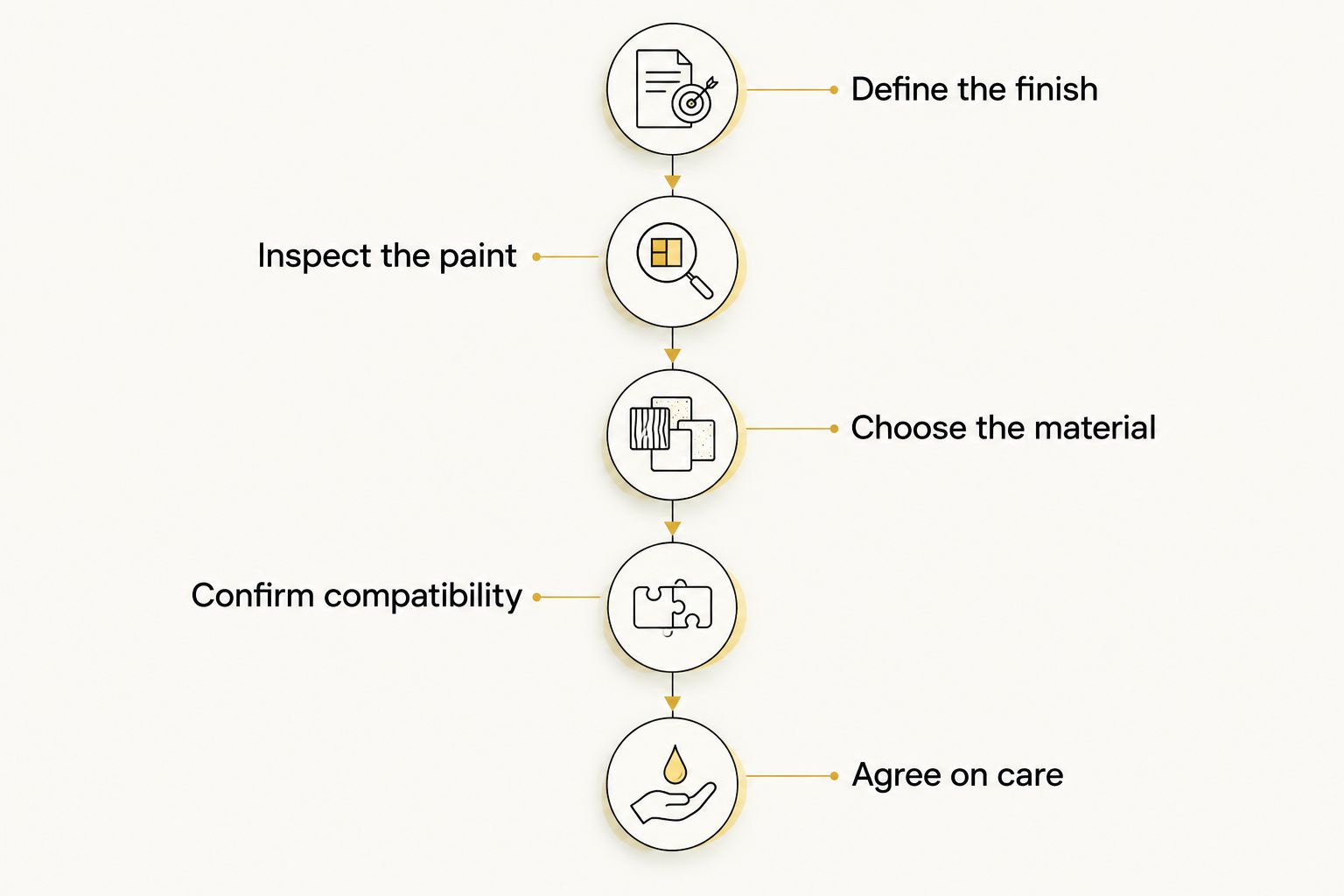
The proposal should distinguish preparation, finish installation and subsequent protection. You should be able to explain what each stage does without relying on a package name. If a supplier calls something coloured ceramic, ask for the technical product description before authorising application.
Can you add pigment to ceramic coating yourself?
Do not mix paint tint, dye or pigment into an automotive ceramic coating unless its manufacturer explicitly specifies that process. A coating is a formulated system; adding an unapproved ingredient changes that system.
A coloured liquid in a bottle is not proof that it will create a controlled colour-changing finish on a car. Judge the product by its stated application, compatible substrates and cured result, not its liquid appearance.
If you want a custom colour, specify a purpose-made colour-bearing material. Do not use your bonnet as a trial panel for an improvised mixture.
Can you ceramic-coat coloured PPF?
Ceramic coating can be applied over PPF when the exact products are compatible and the installation instructions permit it. The film provides the colour; the coating adds its own surface properties above the film.
Check compatibility before scheduling both treatments. Read more about applying ceramic coating over PPF and ask your installer to confirm the requirements for your selected combination.
For satin or matte film, preserving the intended sheen is part of that compatibility check. Do not approve a gloss-enhancing treatment merely because it is described as protective.
FAQ
Can ceramic coating be tinted or coloured to change my car’s colour?
Standard automotive ceramic coating does not change your car’s body colour. Choose a purpose-made colour-change material, such as colour PPF, vinyl or paint, rather than adding pigment to a clear coating.
Will ceramic coating make my black car look darker?
Ceramic coating can change the apparent gloss and richness of black paint without adding black pigment. Preparation and lighting also affect the result, so compare the same panel under consistent conditions.
Is colour PPF the same as coloured ceramic coating?
Colour PPF is not the same as ceramic coating. Colour PPF supplies a coloured physical film, while a conventional ceramic coating is a transparent surface treatment.
Can I mix paint dye into a ceramic coating?
Do not mix paint dye into a ceramic coating unless the manufacturer explicitly specifies that process. An unapproved additive changes the formulation and is not a controlled way to recolour a vehicle.
Can I use ceramic coating on a matte coloured wrap?
Use ceramic coating on a matte coloured wrap only when the exact coating is suitable for that film and finish. Confirm that the treatment will preserve the intended sheen before application.
Does a ceramic coating replace PPF against stone chips?
Ceramic coating does not replace PPF as a physical barrier against stone chips. Choose the protection material according to the damage you want to address, rather than treating the categories as equivalent.
Do I need to repaint my car before ceramic coating?
You do not need to repaint a car simply to apply ceramic coating. Existing paint damage needs assessment, because a clear coating does not repair missing paint or conceal every defect.
One last thing
Inspect the colour sample at an edge, not just across its centre. A large flat sample shows the finish; a panel return helps you discuss where the original colour could remain visible after installation.
Before approving your 2026 colour-change brief, ask EA Detailer to separate the colour-bearing material, preparation and protective coating in the proposal. That distinction prevents a clear protective treatment from being mistaken for a recolouring service.
Related guides
- Can ceramic coating be applied to a wrapped car?
- Can you apply ceramic coating on a matte-finish car?
- How to choose a PPF installer in Singapore

Leave a Reply