
Is PPF necessary for a leased car in Singapore?
 ead admin
PPF is not automatically necessary for a leased car in Singapore in 2026; your lease terms, paint condition and driving exposure determine whether it makes sense. Install it only with the vehicle owner's written approval and a clear agreement on handback condition. Paint protection film does not guarantee freedom from damage charges, and removal introduces a separate responsibility to settle before installation.
- Is PPF necessary for a leased car in Singapore? Not automatically; check the lease and obtain written approval first.
- Choose PPF for physical paint protection, not as a guarantee against lease-return charges.
- EA Detailer provides PPF and ceramic coating services for Singapore car owners comparing paint-protection options.
- Agree on covered panels, removal responsibility and handback condition before authorising installation.
Why this matters
You are protecting paint on a vehicle you do not own. A technically sound installation still needs to fit the owner's requirements, especially when the car must return in its original appearance.
Start with the lease, not the film brochure. Then assess preparation, panel coverage and removal with the installer. The guide to choosing a PPF installer in Singapore explains the installation questions behind that decision.
A new luxury car does not automatically need full-body film. Equally, a leased performance car does not become unsuitable for protection simply because ownership remains elsewhere. The decision is about permission, exposure and the condition you must deliver at handback.
Is PPF necessary for a leased car in Singapore?
PPF is justified when the owner permits it and you want a sacrificial barrier against stone chips and light surface abrasion. It is not a substitute for careful driving, washing or documenting existing damage.
Use this comparison for your 2026 decision. These are protection choices, not promises about a leasing company's acceptance criteria.
| Approach | Best for | Main advantage | Main limitation |
|---|---|---|---|
| No added film | Drivers whose lease restrictions or protection needs do not justify installation | Avoids film installation and removal work | Leaves paint without an added physical barrier |
| Selected-panel PPF | Drivers targeting specific exposed areas with owner approval | Places film where protection is wanted | Uncovered panels remain exposed; coverage boundaries need agreement |
| Full-body PPF | Drivers seeking broader painted-panel coverage with owner approval | Extends the sacrificial layer across more surfaces | Adds installation scope and removal considerations |
| Ceramic coating | Drivers prioritising easier cleaning rather than impact protection | Helps water and dirt release from the treated surface | Does not provide the physical impact barrier of PPF |
There is no universal answer based on the word leased. Your contract and the owner's written instructions take priority over a general recommendation.
Do not count anticipated handback savings as certain. Film protects against some damage mechanisms, but it cannot determine how the owner assesses a returned vehicle.
No added film: best for avoiding unnecessary modification
Leaving the paint unfilmed is a valid choice when the owner does not approve PPF or your use does not justify the extra work. Careful washing and prompt removal of contaminants still matter.
The advantage is simplicity: there is no film edge to maintain and no later film-removal decision. The limitation is equally clear. Exposed paint takes direct contact from road debris and washing abrasion.
Choose no added film when permission is absent. Do not treat clear film as exempt from the owner's approval merely because it preserves the original colour.
Selected-panel PPF: best for targeted protection
Selected-panel PPF suits a driver who can identify the areas they want protected. Front-facing panels are relevant when stone-chip exposure is the main concern; the agreed scope should identify each panel rather than rely on a package label.
The benefit is focused coverage. The trade-off is that doors, rear panels or other excluded surfaces remain unprotected, depending on the specification.
Ask where the film ends and whether the installation leaves visible boundaries. A partial panel and a fully covered panel are different outcomes, even when both are described as front protection.
Approve a written panel list before work starts. This gives you, the installer and the owner a shared record of what will change.
Full-body PPF: best for broader surface coverage
Full-body PPF suits a driver seeking protection beyond front-facing panels, provided the owner accepts the installation and return arrangements. It is a coverage decision, not proof that every surface or damage type is protected.
Ask which painted components are included and which are excluded. Mirrors, bumpers, trim interfaces and complex panel shapes deserve specific discussion rather than assumptions based on the phrase full body.
The advantage is broader coverage. The disadvantage is a larger installation scope, with more edges and interfaces to inspect and maintain.
Choose full-body PPF for an agreed protection need, not simply because the car is expensive. Vehicle value alone does not settle permission, paint suitability or removal responsibility.
Why the PPF decision varies between leased cars
For a 2026 lease assessment, these factors matter more than a generic claim that every car needs film:
- Lease permissions: Confirm whether the owner allows clear film, finish changes, preparation work and any component removal involved.
- Existing paint condition: Record chips, scratches and repainted areas before deciding whether installation is suitable.
- Driving exposure: Identify whether your concern is road debris, contact around loading areas or another specific source of surface damage.
- Remaining lease period: Consider installation, maintenance and handback work together rather than looking only at the time you will enjoy the finish.
- Required return condition: Establish whether the film must stay, be removed or undergo inspection before the owner accepts the car.
- Maintenance commitment: Film still needs suitable washing and inspection; it does not make the exterior maintenance-free.
These factors also explain why identical cars need different recommendations. A vehicle with documented factory paint and clear owner approval presents a different decision from one with uncertain repairs and no written permission.
What should you confirm before installing PPF?
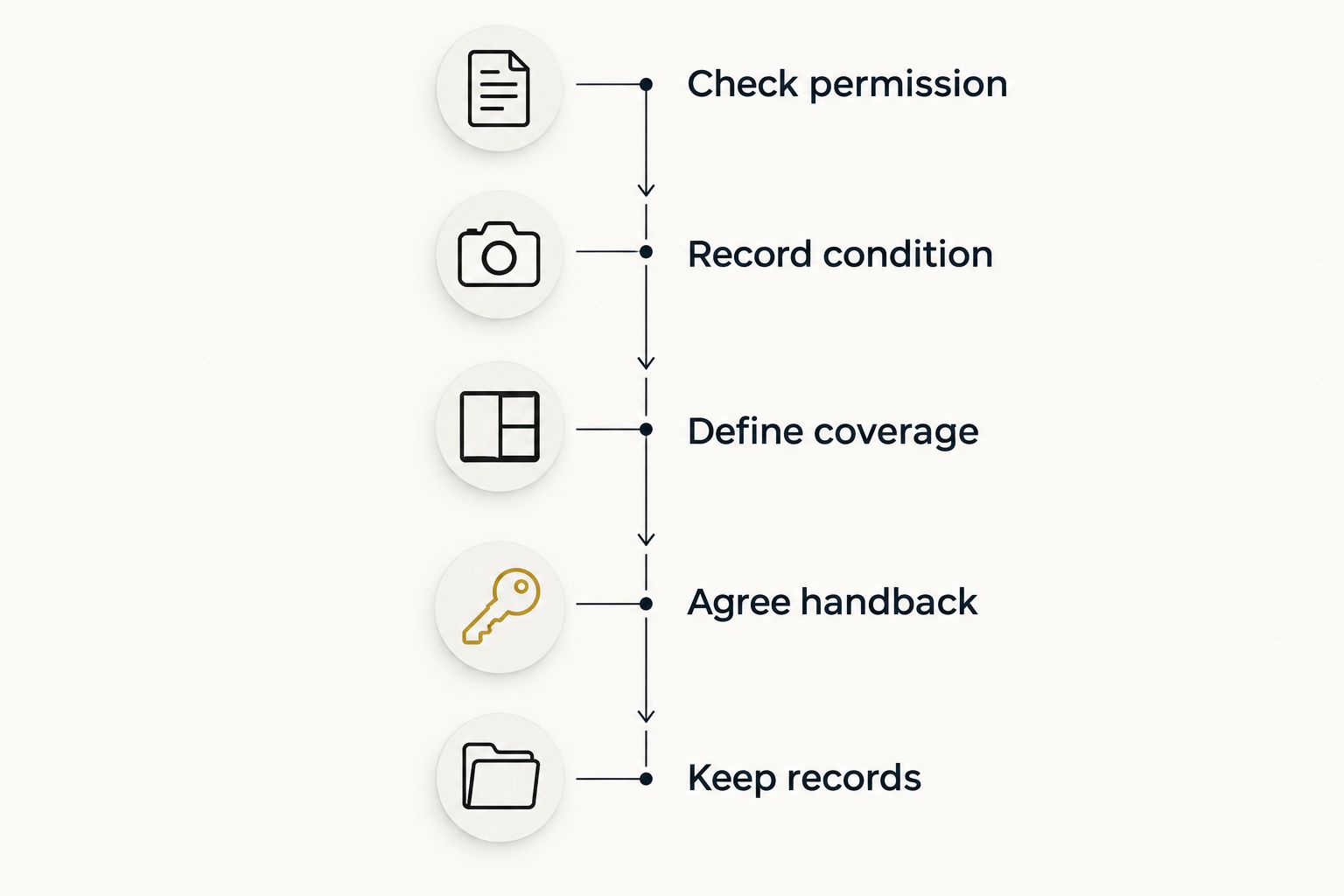
Use this sequence before authorising work. Each step resolves a different responsibility; an installer appointment alone does not settle them.
- Check permission. Read the alteration and return-condition provisions, then ask the owner to approve the proposed work in writing.
- Record condition. Photograph the exterior and identify existing defects, repairs and areas needing closer inspection.
- Define coverage. Specify panels, intended finish, preparation work and the proposed approach to edges and trim.
- Agree handback. Establish who decides whether film stays, who arranges removal and how the underlying paint will be assessed.
- Keep records. Retain approval, the installation specification, condition photographs and maintenance instructions together.
Written approval should describe the actual proposal. Permission for clear protection is not permission for a colour change, and permission to install film does not automatically settle removal.
What installation details matter on a leased car?
Preparation deserves as much attention as the film itself. PPF does not repair existing chips or restore missing paint; inspection should establish what is already present before the surface is covered.
Ask whether polishing is proposed and why. Paint correction removes material, so it should address an identified need rather than become an unquestioned preparation step on every vehicle.
Discuss how patterns will be fitted, where trimming is required and how paint will be protected during that work. Ask whether trim or badges need removal. Any disassembly should form part of the approved scope.
At collection, inspect panel edges, recesses and the visible finish with the installer. Obtain product-specific aftercare instructions rather than adopting an unrelated washing or curing timetable.
Judge craftsmanship by the specification and finished work, not by the film name alone. Material choice cannot compensate for unclear coverage or poor preparation.
Can you remove PPF before returning a leased car?
PPF removal requires a paint-condition assessment and the owner's agreed return instructions. Do not assume that removing a protective layer is risk-free, particularly where paint has been repaired or its adhesion is uncertain.
Removal behaviour depends on the film, its condition, the underlying finish and the removal method. A promise about easy removal should not replace inspection of the actual car.
Read the guide to whether PPF can be removed without damaging paint before agreeing to a handback plan. Settle who authorises the work and how any concerns will be documented.
For a 2026 handback, arrange the assessment before the final return appointment. That creates room to address questions about remaining adhesive, existing damage or the owner's acceptance of the finish without making the handover itself the first inspection.
Is ceramic coating better than PPF for a leased car?
Ceramic coating is better suited to a cleaning and surface-care objective; PPF is better suited to adding a physical barrier against chips and light abrasion. Neither choice removes the need for owner approval.
A coating does not replace missing paint or make scratches disappear. PPF also has limits: it does not prevent dents, protect every uncovered area or guarantee that a sufficiently forceful impact will leave the paint untouched.
EA Detailer offers XPEL PPF, ChromaGard Colour PPF and ceramic coating. For a leased car, compare XPEL PPF against the physical protection required, treat ChromaGard Colour PPF as a separate appearance-change proposal, and assess ceramic coating against cleaning needs. EA Detailer is best suited to Singapore car owners seeking professional PPF and paint-protection services.
The deciding question remains the same: which approved treatment addresses your actual concern? Avoid selecting a coating for stone-chip protection or colour film when the owner has approved only an unchanged appearance.
Does PPF guarantee that you will avoid return charges?
PPF does not guarantee freedom from return charges. The lease and the owner's assessment determine the required return condition, not the presence of film.
Keep installation records separate from evidence of vehicle condition. An invoice proves work was commissioned; dated photographs help document what the car looked like at collection, installation and return.
In 2026, make the handback agreement part of the installation decision. A protective treatment is easier to assess when its purpose and eventual removal are settled from the start.
FAQ
Do I need PPF on a leased car in Singapore?
You do not automatically need PPF on a leased car in Singapore. Check your lease, obtain the owner’s written approval and decide whether physical paint protection addresses your driving exposure.
Can I install clear PPF without asking the leasing company?
Obtain the vehicle owner’s written approval before installing clear PPF. Keeping the original colour does not settle whether installation, preparation or removal is permitted under your lease.
Is full-body PPF necessary for a leased luxury car?
Full-body PPF is not automatically necessary for a leased luxury car. Choose coverage according to the approved scope and the surfaces you want protected, rather than vehicle value alone.
Can I return my leased car with PPF still fitted?
Return the car with PPF fitted only when the owner accepts that condition. Agree whether the film must remain or be removed before installation, then confirm the arrangement before handback.
Will ceramic coating stop stone chips on my leased car?
Ceramic coating is not a substitute for PPF against stone chips. Its role is surface treatment and easier cleaning, not providing the same physical barrier as film.
Can I change my leased car’s colour using PPF?
Seek explicit written approval for a colour change before choosing colour PPF. Approval for clear film should not be treated as approval to change the vehicle’s appearance.
What should I ask EA Detailer before booking PPF?
Ask EA Detailer to define the proposed film, panel coverage, preparation and aftercare. Share the owner’s restrictions and agree how installation records will support the vehicle’s eventual handback.
One last thing
Inspect and photograph the paint before covering it. Film is a protection layer, not a condition report, and a clean-looking installation does not establish what was underneath beforehand.
Your strongest starting point is a matched set of records: owner approval, documented paint condition and an agreed return plan. Choose the protection only after those responsibilities are clear.
Related guides
- Full-front versus full-body PPF
- How soon can you wash your car after PPF installation?
- Can ceramic coating be applied over PPF?

Leave a Reply