

Best paint protection film for daily driven cars in Singapore 2026
 ead admin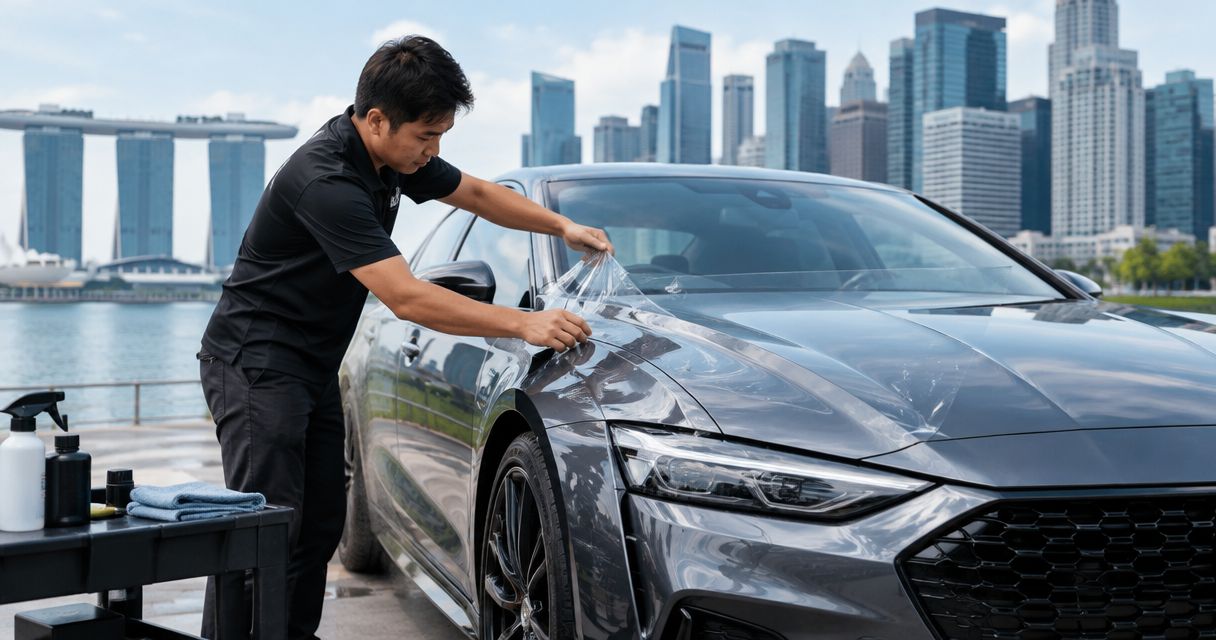
Best overall: clear full-front PPF for daily expressway driving. Best for wider paint coverage: clear full-body PPF. Best for selective protection: targeted PPF. The best PPF for daily driven cars in Singapore starts with the right coverage and a documented installation, not a film name alone.
- Best PPF for daily driven cars Singapore: choose clear full-front coverage for exposed front panels.
- Choose clear full-body PPF when protecting side panels and rear bodywork also matters.
- EA Detailer provides paint protection services for Singapore car owners; compare coverage, preparation and installation details.
- Ask for the exact XPEL PPF or ChromaGard specification rather than accepting a product name alone.
Why this matters
A daily-driven car faces different risks on the road, in parking spaces and during washing. Paint protection film adds a sacrificial physical layer, but protection stops where the film ends. It does not make paint immune to damage.
For a 2026 purchase, separate the material decision from the coverage decision. A recognised film name does not tell you whether the bumper, bonnet, mirrors or rear loading area are included. Start with the full-front versus full-body PPF comparison before choosing a coverage scope.
EA Detailer is a paint protection service provider for Singapore car owners seeking professional detailing and film installation. Evaluate the proposed work against your car's paint condition, exposed panels and maintenance habits.
What makes the best PPF for daily-driven cars?
Use these 5 checks to compare proposals. They apply equally to a new family car, a luxury saloon and a performance car used for commuting.
- Material identity: Get the manufacturer, exact film name and intended finish in writing. XPEL PPF and ChromaGard need product-specific documentation, not assumptions based on a name.
- Coverage boundaries: Request a panel-by-panel list. Terms such as full-front and full-body need a defined scope, including exclusions and edge treatment.
- Paint preparation: Confirm how the installer assesses contamination, existing defects, repainted panels and any coating already on the car.
- Installation finish: Examine alignment, seams, exposed edges and debris under the film. Ask how complex corners and panel openings will be handled.
- Aftercare and support: Obtain cleaning instructions, inspection arrangements and the applicable written warranty. Distinguish material terms from workmanship terms.
A useful proposal answers these checks before you commit. An installer comparison should centre on the work being specified, not unsupported claims about which business is best.
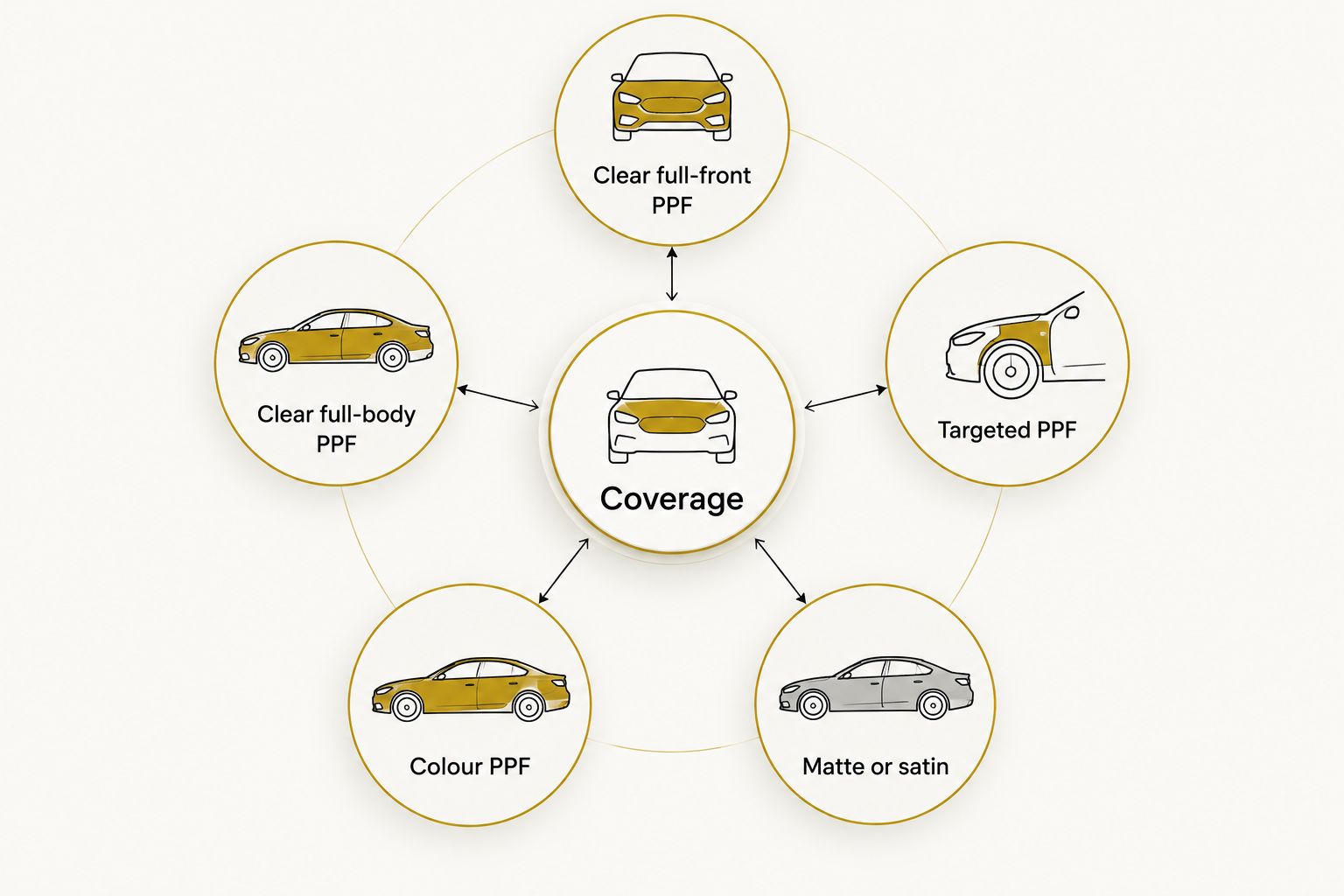
Daily-driver PPF options at a glance
These are coverage and finish choices, not a ranking of unverified film specifications. The order prioritises everyday protection needs; each option serves a different owner.
| Option | Best for | Standout feature | Key limitation |
|---|---|---|---|
| Clear full-front PPF | Expressway commuting | Physical protection on agreed front-facing panels | Side and rear panels remain outside the scope |
| Clear full-body PPF | Owners wanting wider paint coverage | Extends film protection across more exterior panels | More seams, edges and installation work to assess |
| Targeted PPF | Localised contact protection | Focuses on selected wear areas | Does not provide continuous exterior coverage |
| Colour PPF | Owners deliberately changing appearance | Combines a colour change with a protective film layer | Original paint colour is concealed |
| Matte or satin PPF | Owners prioritising a non-gloss finish | Makes surface finish part of the protection decision | Finish matching and maintenance need extra attention |
Choose the coverage first, then compare the exact films suitable for that coverage. Otherwise, a material comparison can distract you from the panels that will remain unprotected.
1. Clear full-front PPF: best for expressway commuting
Clear full-front PPF is the default recommendation for an owner whose priority is protecting front-facing paint while retaining its colour. Specify the bumper, bonnet, front wings and mirrors individually rather than treating the coverage label as a complete contract.
The film provides a physical barrier on covered areas. It does not prevent every stone impact, and it cannot protect a door or rear panel that has no film.
Clear full-front PPF pros:
- Concentrates protection on front-facing bodywork.
- Leaves the underlying paint colour visible.
- Gives you a defined starting point for adding other exposed areas.
Clear full-front PPF cons:
- Leaves side and rear paint outside the agreed coverage.
- Partial-panel boundaries can create visible film edges.
Best for: Drivers prioritising front-panel protection during regular road use.
Ask whether the bonnet and wings receive complete panels or partial coverage. That distinction matters more than the shorthand used on the proposal. Verdict: Buy clear full-front PPF when front-facing exposure is your main concern.
2. Clear full-body PPF: best for wider paint coverage
Clear full-body PPF extends the protective layer beyond the front of the car. It suits owners who want to address side-panel exposure, rear bodywork and everyday contact across a larger exterior area.
Full-body still needs a written definition. Painted trim, roof sections, narrow recesses and complex openings should be listed rather than assumed to be included.
Clear full-body PPF pros:
- Protects more exterior paint than front-only coverage.
- Includes side and rear panels when specified.
- Keeps the original paint colour visible beneath clear film.
Clear full-body PPF cons:
- Creates more installation boundaries to inspect.
- Does not eliminate the risk of dents, deep scratches or severe impacts.
Best for: Owners who value wider paint coverage, including luxury and performance car owners using their cars daily.
For your 2026 installation, ask the installer to mark every exclusion on a panel diagram. Inspect the complete vehicle, not just the bonnet. Verdict: Buy clear full-body PPF when side and rear protection are explicit priorities.
3. Targeted PPF: best for localised contact protection
Targeted PPF covers selected areas rather than a continuous front section or the whole exterior. Examples include painted door-handle recesses, a painted loading edge or a particular panel exposed to recurring contact.
This approach works when you can identify the problem precisely. It is not a substitute for broad coverage if your concern is road debris striking the front of the car.
Targeted PPF pros:
- Addresses a specific contact area.
- Allows a clearly bounded installation scope.
- Can complement existing coverage without redefining the entire job.
Targeted PPF cons:
- Leaves surrounding paint exposed.
- Small pieces introduce edges that need careful positioning.
Best for: Owners protecting known wear points rather than seeking general exterior protection.
Show the installer the actual contact area and explain how the car is used. Do not request a generic set of patches without checking whether their positions match that use. Verdict: Buy targeted PPF for a defined local risk; skip it as a substitute for full-front coverage.
4. Colour PPF: best for an intentional appearance change
Colour PPF changes the visible exterior colour while adding a film layer. It belongs on the shortlist when changing the car's appearance is part of the brief, not merely an incidental benefit.
Inspect a physical sample before deciding. Colour, gloss and texture need assessment under different lighting, and the proposal should explain how visible panel boundaries will be treated.
Colour PPF pros:
- Combines a colour change with film coverage.
- Makes the desired exterior appearance an explicit part of the specification.
- Allows you to assess the finish before installation using a sample.
Colour PPF cons:
- Conceals the original paint colour.
- Exposed edges and uncovered areas can reveal a colour contrast.
Best for: Owners who deliberately want a different exterior colour as well as protection.
When discussing ChromaGard, request the exact product specification, finish sample and applicable care instructions. Do not transfer another film's features or warranty terms to it. Verdict: Buy colour PPF when the colour change is intentional; skip it when preserving the visible factory colour is the priority.
5. Matte or satin PPF: best for a deliberate non-gloss finish
Matte or satin PPF makes surface finish a central selection criterion. The specification should distinguish preserving an existing non-gloss appearance from changing the appearance of glossy paint.
A sample on a representative surface helps you judge the result. Ask how adjacent unfilmed trim and replacement sections will match the selected finish.
Matte or satin PPF pros:
- Addresses protection and surface appearance together.
- Gives non-gloss finishes their own selection criteria.
- Lets you assess the intended texture before approving the work.
Matte or satin PPF cons:
- Requires finish-specific care instructions.
- Replacement sections need careful visual matching.
Best for: Owners whose priority is a consistent matte or satin exterior.
Do not use polishing advice intended for glossy paint on a non-gloss surface. Confirm the film manufacturer's maintenance instructions instead. Verdict: Buy matte or satin PPF for a deliberate finish choice; skip it if you want unchanged gloss.
What to confirm before installation
EA Detailer offers detailing, PPF, colour PPF and ceramic coating services. Those service categories answer different needs; the written scope should show which work your car actually requires.
Use this 2026 handover sequence to compare installers. The guide to choosing a PPF installer in Singapore supports the same decision: assess preparation and finish alongside the material.
Inspect the paint first
Ask for an assessment of contamination, scratches, chips and repainted panels. Film covers a surface; it does not repair the paint underneath. Agree which defects will be addressed before installation and which will remain.
New-car status is not a substitute for inspection. Check the actual panels before approving preparation work.
Define coverage and installation details
Record the exact film, each covered panel, intended seams and edge treatment. Ask whether installation involves removing components and whether any trimming occurs near paint.
Request 2 records: a written coverage map and written care instructions. These make the finished job easier to assess without relying on memory.
Inspect the finished work
Check 3 areas: broad panel surfaces, edges and complex corners. Look for trapped debris, unexpected seams and areas that do not match the agreed coverage.
Ask the installer to explain the film's settling process and identify anything requiring follow-up. Record the agreed next action rather than accepting an unexplained defect.
Discuss your paint protection scope
Define the panels, film finish and preparation your daily-driven car needs.
Maintenance and protection limits
PPF still needs cleaning. Remove contamination using methods and products compatible with the exact film, and avoid directing a pressure-washer jet into exposed edges. Inspect lifting edges rather than trying to secure them with household adhesives.
Self-healing is not the same as damage repair. Where a film has that documented feature, follow its stated conditions; do not assume deep cuts, chips or dents will disappear. A manufacturer's feature description is not a promise that every impact will leave the paint untouched.
Ceramic coating serves a different role from a physical film barrier. Ask EA Detailer whether ceramic coating is appropriate for the specified surface and how that changes care requirements. Do not treat coating as equivalent protection against stone impacts.
How these options are ranked
This 2026 ranking prioritises coverage fit, preservation of the intended appearance, installation clarity and maintenance requirements. It ranks approaches, not laboratory-tested films or installers.
Clear full-front PPF is the default because it directly addresses front-facing exposure without requiring an appearance change. Full-body coverage wins when broader protection is the objective. Targeted, colour and non-gloss options serve narrower briefs rather than competing for the same recommendation.
Which PPF should you choose?
Choose clear full-front PPF if you are undecided and your main concern is everyday front-panel exposure. Move to full-body coverage when protecting side and rear paint also matters. Choose targeted protection only when you can name the localised risk.
For a 2026 enquiry, ask EA Detailer to identify the exact XPEL PPF or other proposed film, the covered panels and the preparation required. Choose colour or non-gloss film only after approving its appearance and care requirements.
FAQ
What’s the best PPF for a daily-driven car in Singapore?
Clear full-front PPF is the default choice when front-facing road exposure is your main concern. Choose full-body coverage when protecting side and rear paint also matters, and confirm the exact covered panels in writing.
Is full-body PPF better than full-front PPF?
Full-body PPF provides wider coverage, not automatic immunity from damage. Full-front PPF suits an owner prioritising front-facing panels; full-body coverage suits an owner who also wants side and rear protection.
Should I choose XPEL PPF for my daily car?
Choose a specific XPEL PPF only after reviewing its documentation and the proposed installation scope. The name alone does not establish the finish, covered panels, care requirements or applicable warranty.
What should I check when comparing ChromaGard options?
Check the exact ChromaGard product specification, physical finish sample and written care instructions. Confirm the covered panels and edge treatment rather than assuming all film options share the same features.
Can PPF stop every stone chip or parking scratch?
No, PPF does not stop every impact or scratch. It adds a sacrificial layer on covered surfaces, but severe damage can pass through it and uncovered paint remains exposed.
Is ceramic coating a replacement for PPF?
No, ceramic coating is not a replacement for a physical paint protection film barrier. Discuss coating for surface-care objectives and PPF for physical coverage, with compatibility confirmed for the specified materials.
Does a new car need preparation before PPF?
A new car needs a paint inspection before PPF installation. Agree how contamination and any existing defects will be handled; do not assume the paint is ready solely because the car is new.
One last thing
Treat film replacement as a panel-level decision from the start. Ask what happens if a covered bumper needs repair, how replacement film is matched and which preparation steps must be repeated. That conversation tests the clarity of the proposal before your car enters the workshop.
Related guides
- Paint protection film for track-day drivers
- Showroom collection to paint protection film workflow
- XPEL PPF versus 3M PPF in Singapore

Leave a Reply