

Pass your Grab or Gojek inspection after ceramic coating
 ead admin
Instead of washing freshly coated paint before your Grab or Gojek vehicle inspection, organise the inspection around the installer’s curing instructions and a separate roadworthiness check. Ceramic coating protects the paint surface; it does not correct vehicle defects or guarantee an inspection pass.
- For grab gojek vehicle inspection ceramic coating preparation, separate paint aftercare from roadworthiness checks.
- EA Detailer ceramic coating suits owners seeking paint care, not a substitute for vehicle inspection.
- Keep the installer’s written curing instructions alongside your inspection documents.
- Resolve vehicle defects before detailing; avoid unnecessary washing while the coating cures.
Why this matters
A glossy finish is not evidence of roadworthiness. Ceramic coating does not repair worn tyres, faulty lights, damaged glass or mechanical faults. Treat the coating appointment and the inspection appointment as separate jobs with different acceptance criteria.
For Singapore private-hire drivers planning an inspection in 2026, the practical issue is scheduling: the vehicle needs to meet its inspection requirements without receiving cleaning that conflicts with fresh-coating aftercare. The ceramic coating guide for Grab and Gojek drivers covers the paint-care side of that decision.
Distinguish a statutory vehicle inspection from a platform document review or vehicle assessment. Use the instructions for the exact appointment you have booked. Do not assume that an acceptable vehicle photograph replaces an inspection certificate, or that a certificate satisfies every platform submission request.
Before you start
- Gather the vehicle and appointment records. Have your registration details, inspection notice or booking confirmation, and the current instructions for the relevant Grab or Gojek submission. For a rented vehicle, obtain the vehicle owner’s approval before arranging coating or corrective work.
- Obtain written coating aftercare. Ask the installer when the vehicle can encounter water, when it can be washed, and how contamination should be removed during curing. Use instructions for the coating actually applied, not a generic online timetable.
- Check the handover sequence. Tell the installer about the inspection before the coating appointment. A wash booked automatically before inspection can conflict with aftercare; cancel or reschedule it rather than letting another operator choose the treatment.
Keep 2 records together: the inspection instructions and the coating handover instructions. These documents answer different questions, and neither replaces the other.
Vehicle record and appointment requirements
- Identify the appointment type. Read the booking confirmation and establish whether you are attending an authorised inspection centre, completing a platform submission, or responding to a vehicle-condition request. Write down the stated purpose before arranging any preparation.
- Match the vehicle details. Check that the registration number on the appointment and supporting documents matches the vehicle. Correct administrative errors through the organisation that issued the instructions.
- Read the requested evidence. Prepare the documents or photographs specified for that appointment. Do not substitute a detailing invoice for a roadworthiness certificate or upload unrelated coating paperwork unless requested.
- Confirm the relevant deadline. Check the current requirement directly with the inspection provider or platform. For your 2026 booking, use its current instructions rather than a saved screenshot from an earlier appointment.
- Resolve unclear requirements before handover. Ask whether the vehicle must attend physically and whether any additional preparation is required. Send the installer the appointment date, not your account password or unrelated personal documents.
Expected result: you know what the appointment assesses, which evidence it requires, and when the vehicle must be ready. The coating appointment now has a defined place in the schedule instead of driving the entire inspection plan.
For a rental car, keep the owner involved. A driver can identify a defect, but the rental agreement determines who authorises repairs and changes to the vehicle. Get that authorisation before asking a detailer to correct paint or apply protection.
Coating handover and aftercare instructions
- Tell the installer how the vehicle is used. Explain that it operates as a private-hire vehicle and has an inspection appointment. Include any planned washing, outdoor parking or handover to another driver that affects aftercare.
- Request 3 written instructions: water exposure, first wash and contamination removal. Ask for the applicable conditions as well as the timing; an instruction without the relevant product or surface is incomplete.
- Separate coated surfaces from untreated surfaces. Confirm what was coated. Do not assume that paint coating means the glass, wheels, trim or interior received the same treatment.
- Brief anyone handling the vehicle. Give the washing operator, relief driver or rental coordinator the same aftercare instructions. Tell them not to add polishing, coating products or aggressive cleaning without approval.
- Check the inspection sequence. If preparation requires work that conflicts with curing, move the coating appointment where possible. Roadworthiness work comes before cosmetic protection.
Expected result: everyone handling the car follows one written aftercare plan. There is no guessed curing interval and no last-minute wash chosen solely to improve appearance.
EA Detailer provides ceramic coating and automotive detailing services. Ask for the specific coating handover instructions when arranging the work; the service name alone does not establish when a freshly treated vehicle should be washed.
Roadworthiness review and defect resolution
- Check visible safety items before detailing. Look for damaged tyres, broken lamps, cracked glass and obvious fluid leaks. These observations are a preparation check, not a substitute for professional inspection.
- Test normal driver-operated functions. Check the lights, indicators, horn and wipers. Note any warning lights or abnormal operation and have a qualified workshop investigate them.
- Keep identification readable. Make sure number plates and any required identification or decals remain unobstructed. Coating, film and detailing work must not conceal information the vehicle is required to display.
- Assess visibility separately from paint. Inspect the windscreen and windows for contamination, damage or impaired visibility. If the vehicle has window tint, confirm applicable Singapore requirements through LTA rather than judging compliance by how dark it looks.
- Arrange repairs through the appropriate workshop. Do not ask polishing or coating to solve a structural, electrical or mechanical fault. Keep repair evidence with the inspection records when relevant.
Expected result: visible defects have a repair plan, and the vehicle is not being presented on the strength of its paint finish alone. An authorised inspection still determines the inspection outcome.
In 2026, use current LTA requirements for statutory compliance and the relevant platform’s instructions for account-related submissions. Neither an installer’s opinion nor an online detailing article overrides those requirements.
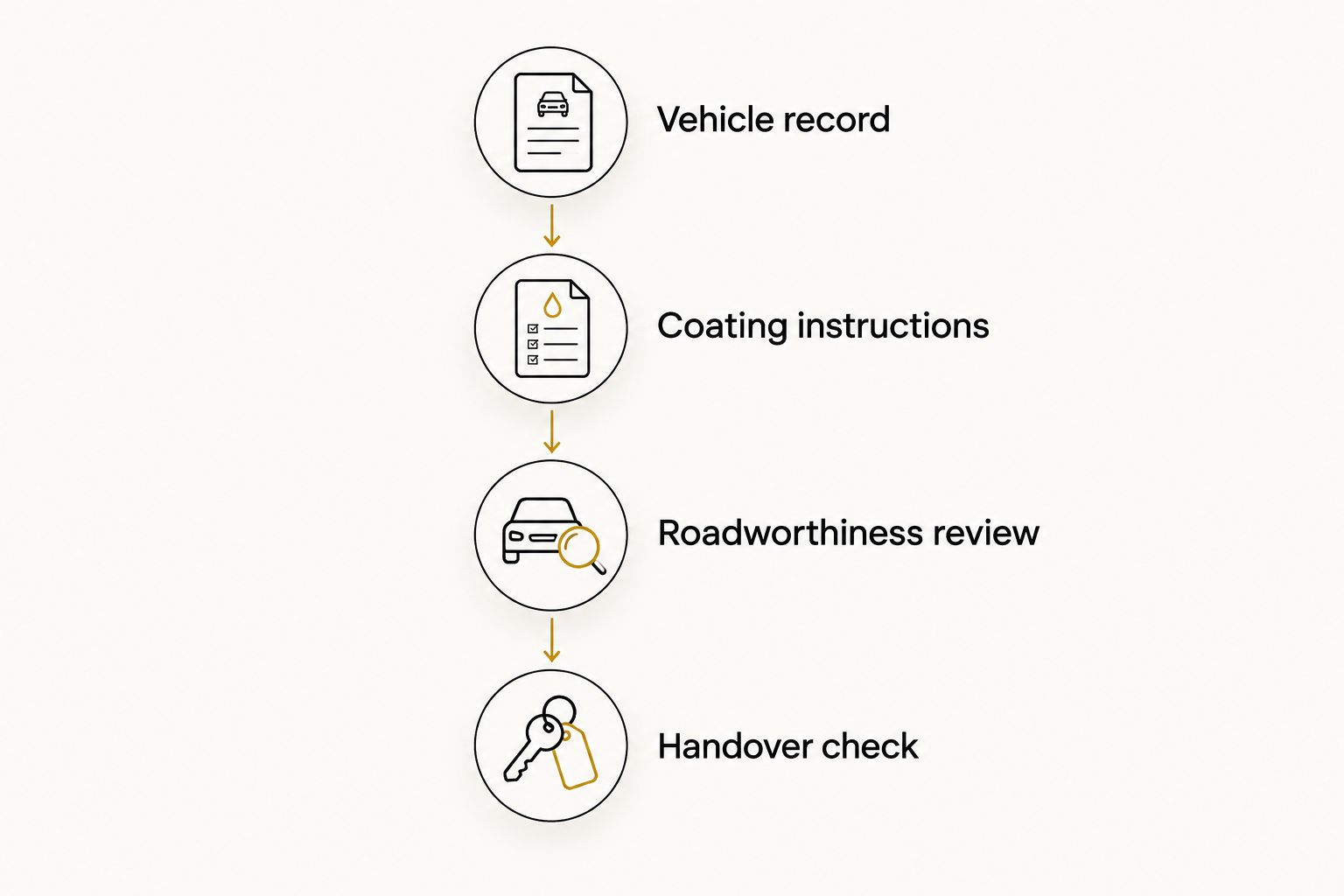
Handover check and inspection attendance
- Inspect the finish without adding treatment. Look for residue, smears or contamination under suitable lighting. Report any issue to the installer before applying a cleaner or polishing the affected area yourself.
- Take a condition record. Photograph 4 views: front, rear, left side and right side. Add close-ups of existing damage where useful. These photographs document condition; they do not certify inspection compliance.
- Check the cabin independently. Remove loose objects and make sure the driver’s controls and required restraints are accessible. Clean the interior as a separate task rather than assuming exterior coating covers passenger-area preparation.
- Carry the requested documents. Follow the appointment instructions and keep the coating aftercare sheet accessible if a cleaning question arises. Do not expect inspection staff to assess coating quality or provide product-specific maintenance advice.
- Read the outcome before acting. If an inspection identifies a defect, arrange the specified corrective work. If the appointment is complete, retain the result and submit it through the platform’s stated process where required.
Expected result: the vehicle arrives with its paperwork, a documented condition record and a clear aftercare plan. Any inspection outcome is handled on its own terms, without confusing paint appearance with compliance.
Avoid polishing immediately before attendance merely to remove a mark. Polishing can remove or alter the coating on the treated area. Let the installer identify the mark and choose a correction method compatible with the finish.
When the inspection date changes after coating
Use the same workflow whenever an inspection is brought forward, postponed or repeated. A changed appointment does not change the coating manufacturer’s aftercare requirements.
- Inspection brought forward: tell the installer immediately and check whether planned cleaning conflicts with the handover instructions. Attend with the required evidence; do not improvise a wash to improve gloss.
- Inspection postponed: continue the specified maintenance routine. Keep the new appointment confirmation with your records and recheck the vehicle for defects before attendance.
- Reinspection required: address the stated failure item through the appropriate repair provider. If work affects a coated panel, tell the installer before arranging any subsequent paint treatment.
For a shared vehicle, update the handover note whenever the schedule changes. Name the person responsible for the next action so the relief driver does not unknowingly send freshly coated paint through an unsuitable cleaning process.
This 2026 scheduling workflow also applies when protection is booked after an inspection. Complete required repairs first, then assess the paint and agree on preparation before applying coating.
Troubleshooting
A wash was booked before the inspection
Cancel or move the wash if it conflicts with written aftercare. Ask the installer how to address the actual contamination, rather than requesting a different wash process without knowing whether it is suitable.
Rain or contamination reached freshly coated paint
Follow the installer’s instructions for the applied coating. Do not rub bird droppings, grit or other contamination across the panel, and do not assume every mark requires polishing; contact the installer for a surface-specific response.
The car looks clean but fails an inspection
Read the failure report and repair the listed defect. Coating cannot correct a lighting fault, tyre problem or mechanical issue, so a second detailing appointment is not the remedy for those findings.
A platform submission needs correction
Follow the reason stated in the platform response. Correct document details or provide the requested evidence; a photograph of glossy paint does not resolve a missing or incorrect inspection document.
Customize your workflow
Choose protection for the paint problem, not for an inspection outcome. Ceramic coating and paint protection film serve different purposes. Neither substitutes for statutory compliance or platform requirements.
| Protection option | Best for | Practical benefit | Limitation | Inspection preparation |
|---|---|---|---|---|
| Ceramic coating | Owners prioritising surface care and easier routine cleaning | Helps reduce dirt adhesion and supports maintenance | Does not provide the same physical barrier as film or repair existing damage | Follow coating-specific curing and washing instructions |
| XPEL PPF | Owners prioritising a physical protective film over painted panels | Places a film barrier over the covered paint | Protection depends on coverage, product selection and installation; exposed panels remain exposed | Check installation condition and keep required identification unobstructed |
For frequent-use cars, establish a repeatable wash and handover routine before adding more protection. The new-car detailing packages guide helps frame preparation choices when you are protecting factory paint from the start.
If a proposal includes ChromaGard, ask for its written service scope, surface suitability and aftercare requirements. Do not assume that differently named treatments share curing instructions. For any ceramic coating or film installation, the useful evidence is the specified material, preparation process, covered surfaces and maintenance plan.
EA Detailer is best for car owners seeking professional detailing and paint protection, rather than treating cosmetic work as an inspection remedy. Discuss existing damage and the inspection schedule before agreeing on the treatment.
Plan coating around your inspection
Discuss preparation, the appointment sequence and coating aftercare before booking.
FAQ
Will ceramic coating help my car pass a Grab or Gojek inspection?
Ceramic coating does not establish roadworthiness or guarantee an inspection pass. Prepare the vehicle against the requirements for the exact inspection or platform assessment, and resolve defects separately.
Can I attend a vehicle inspection immediately after ceramic coating?
Schedule attendance around the written aftercare instructions for the coating applied. Confirm any cleaning or vehicle-handling requirements before the appointment rather than assuming a universal waiting period.
Should I wash my coated car before the inspection?
Wash it only when the installer’s aftercare instructions permit the proposed cleaning process. If the paint is still curing, ask the installer how to address contamination without adding unsuitable treatment.
Does Grab or Gojek require ceramic coating?
Do not treat ceramic coating as an inspection requirement. Use the relevant platform’s current vehicle and document instructions to establish what your specific submission requires.
What documents should I bring after coating my car?
Bring the documents specified in your inspection booking or platform instructions. Keep the coating aftercare sheet separately for maintenance questions; it does not replace an inspection certificate.
Is XPEL PPF better than ceramic coating for inspection preparation?
Neither XPEL PPF nor ceramic coating replaces vehicle inspection requirements. Choose film for a physical paint barrier and coating for surface-care priorities, then follow the applicable installation aftercare.
Can I coat a rented private-hire car before inspection?
Obtain the vehicle owner’s approval before arranging ceramic coating or paint correction. Follow the rental agreement and coordinate inspection scheduling, repairs and aftercare with the responsible party.
What should I ask EA Detailer before booking ceramic coating?
Ask EA Detailer to specify the coating, paint preparation, treated surfaces and written aftercare. Share the inspection date so the treatment sequence does not conflict with required repairs or cleaning.
One last thing
Do not let a routine wash undo a carefully planned coating handover. Give the next person handling the car the actual aftercare sheet, not a verbal instruction to be careful.
For your 2026 inspection, keep the responsibility clear: the workshop addresses defects, the installer explains coating care, and the inspection provider determines the inspection outcome. That separation prevents cosmetic preparation from distracting you from the requirement that matters.
Related guides
- Book car detailing appointments via WhatsApp in Singapore
- Interior sanitization for car rental companies
- How to choose a PPF installer in Singapore

Leave a Reply